English
- Afrikaans
- Albanian
- Amharic
- Arabic
- Armenian
- Azerbaijani
- Basque
- Belarusian
- Bengali
- Bosnian
- Bulgarian
- Catalan
- Cebuano
- Corsican
- Croatian
- Czech
- Danish
- Dutch
- English
- Esperanto
- Estonian
- Finnish
- French
- Frisian
- Galician
- Georgian
- German
- Greek
- Gujarati
- Haitian Creole
- hausa
- hawaiian
- Hebrew
- Hindi
- Miao
- Hungarian
- Icelandic
- igbo
- Indonesian
- irish
- Italian
- Japanese
- Javanese
- Kannada
- kazakh
- Khmer
- Rwandese
- Korean
- Kurdish
- Kyrgyz
- Lao
- Latin
- Latvian
- Lithuanian
- Luxembourgish
- Macedonian
- Malgashi
- Malay
- Malayalam
- Maltese
- Maori
- Marathi
- Mongolian
- Myanmar
- Nepali
- Norwegian
- Norwegian
- Occitan
- Pashto
- Persian
- Polish
- Portuguese
- Punjabi
- Romanian
- Russian
- Samoan
- Scottish Gaelic
- Serbian
- Sesotho
- Shona
- Sindhi
- Sinhala
- Slovak
- Slovenian
- Somali
- Spanish
- Sundanese
- Swahili
- Swedish
- Tagalog
- Tajik
- Tamil
- Tatar
- Telugu
- Thai
- Turkish
- Turkmen
- Ukrainian
- Urdu
- Uighur
- Uzbek
- Vietnamese
- Welsh
- Bantu
- Yiddish
- Yoruba
- Zulu

Telephone: +86 13120555503
Email: frank@cypump.com


Apr . 01, 2024 17:55 Back to list
zj slurry pump Performance Engineering
Introduction
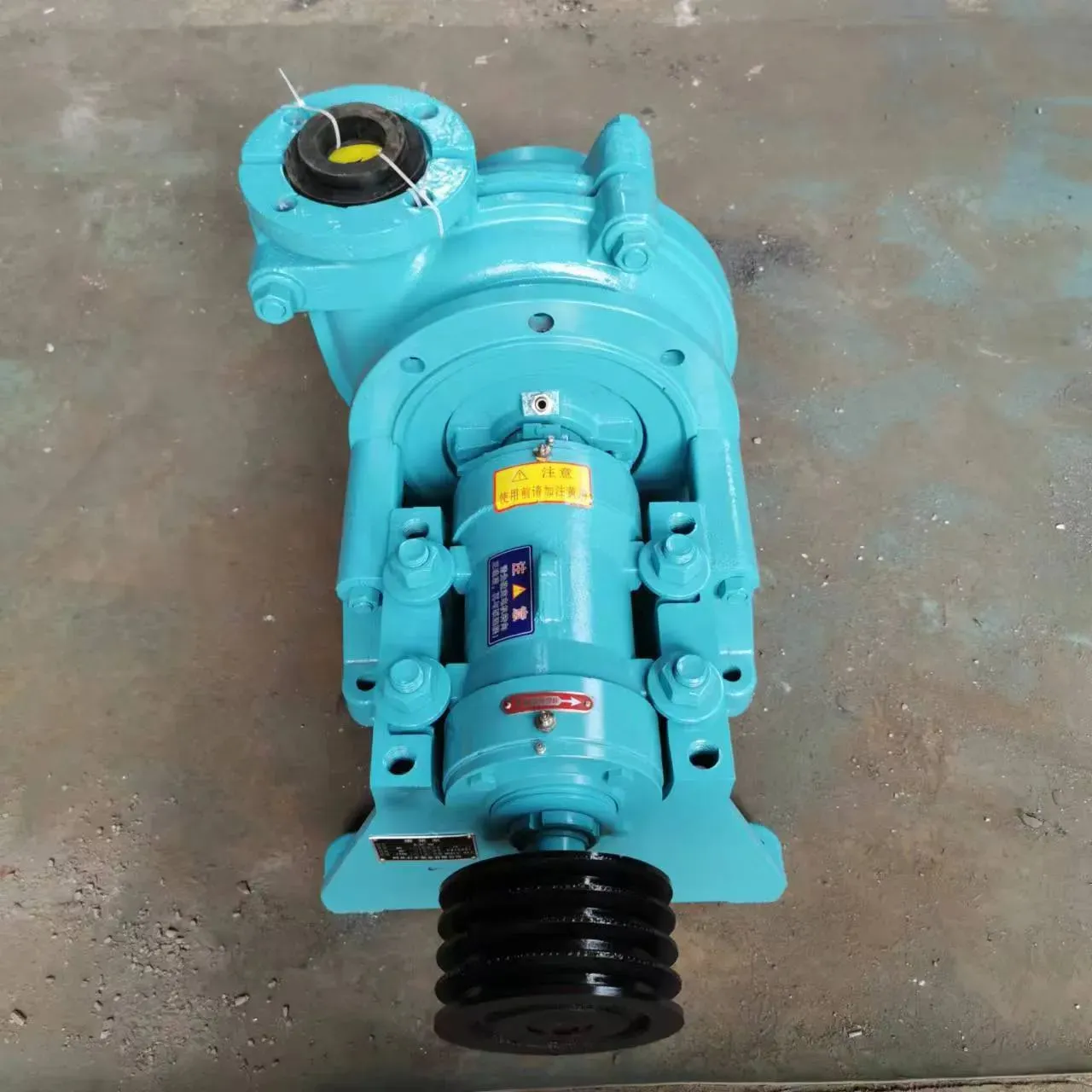
The ZJ slurry pump is a centrifugal pump specifically designed for the arduous task of transporting abrasive and highly erosive slurries. Its technical position within the industrial chain lies between the initial material extraction/processing stage and subsequent processing or disposal phases. Commonly employed in mining, wastewater treatment, dredging, and chemical processing, the ZJ pump addresses a critical need for reliable and efficient solid-liquid handling. Core performance characteristics are defined by its abrasion resistance, high solids handling capacity, and ability to operate efficiently across a wide range of slurry concentrations. Unlike standard centrifugal pumps, ZJ pumps feature hardened materials, specialized impeller designs, and robust sealing systems tailored to withstand the corrosive and abrasive nature of slurries. The primary pain point addressed is premature pump failure due to wear, reduced efficiency from solids buildup, and high maintenance costs associated with frequent component replacement. Its performance is fundamentally governed by the slurry’s solid particle size, concentration, specific gravity, and the fluid’s viscosity.
Material Science & Manufacturing
ZJ slurry pump construction typically utilizes high-chrome cast iron (A532 Grade 1 Class 30) for the pump casing, impeller, and liner, owing to its exceptional abrasion resistance. The chrome content, generally ranging from 26% to 30%, forms hard chromium carbides within the iron matrix, significantly enhancing wear resistance. Alternatives include specialized alloys like duplex stainless steels (e.g., UNS S31803, S32205) for handling highly corrosive slurries. The manufacturing process begins with pattern making for casting, followed by sand casting utilizing silica sand and appropriate binders. Impellers are often manufactured using investment casting for complex geometries and tighter tolerances. Critical parameters during casting include controlled cooling rates to minimize residual stress and precise chemical composition verification. Welding, when employed for repairs or fabrication of larger components, necessitates using low-hydrogen electrodes (e.g., E7018) and pre- and post-weld heat treatment to maintain material integrity and prevent cracking. Shaft materials are typically high-strength alloy steels (e.g., 4140, 4340) undergoing quenching and tempering for optimal hardness and toughness. Sealing components utilize materials like Viton, EPDM, or PTFE based on the slurry’s chemical composition and temperature. Liners, commonly rubber or polyurethane, are bonded to the pump casing using vulcanization or adhesive bonding, providing an additional layer of protection against abrasion and corrosion. A key manufacturing challenge is achieving consistent material hardness throughout the casting, necessitating rigorous quality control throughout the entire production cycle.
Performance & Engineering
The performance of a ZJ slurry pump is primarily dictated by hydraulic principles and the characteristics of the transported slurry. Force analysis considers impeller centrifugal force, pressure differentials, and hydrodynamic forces exerted by the slurry on the impeller and casing. Cavitation, a significant concern, occurs when the absolute pressure at the impeller inlet drops below the vapor pressure of the liquid, leading to vapor bubble formation and subsequent implosion, causing erosion. Net Positive Suction Head Required (NPSHr) is a critical parameter, ensuring sufficient pressure at the pump inlet to prevent cavitation. Environmental resistance is addressed through material selection (e.g., corrosion-resistant alloys for acidic or alkaline slurries) and protective coatings. The pump’s design must adhere to stringent compliance requirements, including hydraulic efficiency standards (ISO 9906), safety regulations (EN 12100), and environmental protection standards relating to leakage and noise emission. Specific engineering details involve impeller vane angles optimized for solids handling, casing volute geometry designed for efficient flow, and seal design minimizing slurry leakage. Pump curves, illustrating head-capacity relationships, are essential for proper pump selection and system design. Maintenance access is crucial, and designs incorporate features like split casings and easily replaceable liners. Dynamic balancing of the impeller is critical to minimize vibration and extend bearing life. The selection of appropriate bearing types (e.g., deep groove ball bearings, tapered roller bearings) depends on the radial and axial loads imposed by the slurry.
Technical Specifications
| Parameter | Unit | Typical Range (ZJ Series) | Material (Typical) |
|---|---|---|---|
| Flow Rate | m³/h | 10 - 1500 | High-Chrome Cast Iron |
| Head | m | 5 - 70 | High-Chrome Cast Iron |
| Solid Handling Size | mm | Up to 150 | High-Chrome Cast Iron / Rubber Liner |
| Slurry Concentration (Weight %) | % | Up to 70 | Duplex Stainless Steel (Optional) |
| Pump Casing Pressure | MPa | Up to 3.0 | High-Chrome Cast Iron |
| Operating Temperature | °C | -20 to 120 | Viton / EPDM (Seal Material) |
Failure Mode & Maintenance
Common failure modes in ZJ slurry pumps include impeller wear, liner degradation, seal failure, and bearing failure. Impeller wear is primarily caused by abrasive particles impacting the vanes, leading to erosion and reduced pump efficiency. Liner degradation, particularly in rubber liners, results from abrasive wear and chemical attack. Seal failure often stems from abrasive particles damaging the seal faces or chemical incompatibility causing swelling or degradation of the seal material. Bearing failure can occur due to excessive loads, improper lubrication, or contamination. Fatigue cracking in the pump casing can develop under cyclical loading and stress corrosion. Failure analysis typically involves visual inspection, metallurgical analysis (e.g., microstructure examination, hardness testing), and wear pattern analysis. Preventative maintenance is crucial and includes regular visual inspections for wear, lubrication of bearings, seal replacement based on operating hours, and liner replacement when wear exceeds acceptable limits. Monitoring vibration levels can indicate bearing wear or impeller imbalance. Flushing the pump with clean water during shutdown prevents slurry solidification within the pump. Selecting the correct impeller and liner materials for the specific slurry composition significantly extends pump life. Proper system design, including strainers and filters upstream of the pump, minimizes abrasive particle size and concentration, reducing wear rates. Replacement parts should meet or exceed original equipment manufacturer (OEM) specifications to ensure compatibility and performance.
Industry FAQ
Q: What is the impact of slurry particle size distribution on pump wear rates?
A: A wider particle size distribution, particularly with larger particle sizes, significantly increases abrasion and wear rates. Larger particles possess greater kinetic energy upon impact and cause more severe erosion. Reducing particle size through upstream classification or screening is crucial for minimizing wear and extending pump life. The shape of the particles also matters; angular particles are more abrasive than rounded particles.
Q: How does the slurry's specific gravity affect pump performance and power consumption?
A: Higher slurry specific gravity increases the hydraulic load on the pump, resulting in reduced flow rate and increased power consumption. Pumps handling denser slurries require larger motors and may exhibit lower efficiencies. Proper pump selection, considering the slurry's specific gravity, is vital for optimal performance and energy efficiency.
Q: What are the common causes of seal failure in abrasive slurry applications?
A: Abrasive particles infiltrating the seal faces are the primary cause of seal failure. Incorrect seal material selection for the slurry’s chemical composition also contributes. Mechanical seal damage due to vibration or misalignment can accelerate failure. Proper seal flushing and lubrication are essential for extending seal life.
Q: What maintenance practices are critical for extending the life of a ZJ slurry pump liner?
A: Regular inspection for wear is paramount. Rotating liners periodically (180 degrees) can equalize wear distribution. Avoiding sudden slurry velocity changes reduces shock loading on the liner. Selecting the appropriate liner material (rubber, polyurethane, ceramic) for the specific slurry is crucial.
Q: How does the pump’s impeller design impact its ability to handle solids without clogging?
A: Impeller designs with wider flow passages and open or recessed impellers are better suited for handling solids without clogging. Impeller vane angles are optimized to minimize solids accumulation and promote smooth flow. A non-clog impeller design prevents slurry buildup and maintains consistent pump performance.
Conclusion
The ZJ slurry pump represents a crucial technology in industries requiring robust and reliable solid-liquid handling. Its performance hinges upon meticulous material selection, optimized hydraulic design, and adherence to rigorous manufacturing processes. Understanding the interplay between slurry characteristics, pump parameters, and potential failure modes is paramount for maximizing pump life and minimizing operational costs. The choice of high-chrome cast iron, coupled with strategic liner materials, provides a foundational defense against abrasion and corrosion.
Future advancements in ZJ slurry pump technology are likely to focus on enhanced impeller designs for improved hydraulic efficiency, the incorporation of advanced monitoring systems for predictive maintenance, and the development of novel materials with superior abrasion and corrosion resistance. Furthermore, integration with smart control systems will optimize pump operation based on real-time slurry conditions, reducing energy consumption and maximizing pump uptime, ultimately driving down total cost of ownership.
-
Precision at the Pump: How Better Machining Protects Flow and Uptime
News2026-11-20
-
Why Pump Reliability Begins Before the First Drop of Fluid
News2026-11-20
-
Beyond the Pump: Designing Safer Access Around Critical Water Infrastructure
News2026-11-20
-
Why Pumping Stations Depend on the Infrastructure Beneath the Pumps
News2026-11-20
-
Beyond the Pump Room: How Smarter Loading Protects Industrial Equipment
News2026-11-19
-
When Pumps Stop: Designing More Resilient Power for Critical Pumping Systems
News2026-11-19
-
The Hidden Role of Dust and Gas Monitoring in Reliable Pump Operations
News2026-11-19
-
The Hidden Role of Mineral Compounds in Extending Industrial Pump Lifespan
News2026-10-12
-
Why Pump System Reliability Depends on Precision Hose Assembly Methods
News2026-09-15
-
How Advanced Imaging Films Are Transforming Pump Component Quality Control
News2026-08-25
-
How Advanced Filtration Protects Pump Systems from Premature Wear and Costly Downtime
News2026-08-25
-
How Steel Material Selection Drives Pump Reliability in Heavy-Duty Systems
News2026-08-25
-
Ensuring Pump System Efficiency: The Role of High-Quality Pipe Fittings and Tubing
News2026-08-24
-
Optimizing Fluid Dynamics and Material Consistency in Industrial Processing
News2026-08-18
-
Innovations and Challenges in Hydraulic Systems for Heavy Machinery
News2026-08-13




