English
- Afrikaans
- Albanian
- Amharic
- Arabic
- Armenian
- Azerbaijani
- Basque
- Belarusian
- Bengali
- Bosnian
- Bulgarian
- Catalan
- Cebuano
- Corsican
- Croatian
- Czech
- Danish
- Dutch
- English
- Esperanto
- Estonian
- Finnish
- French
- Frisian
- Galician
- Georgian
- German
- Greek
- Gujarati
- Haitian Creole
- hausa
- hawaiian
- Hebrew
- Hindi
- Miao
- Hungarian
- Icelandic
- igbo
- Indonesian
- irish
- Italian
- Japanese
- Javanese
- Kannada
- kazakh
- Khmer
- Rwandese
- Korean
- Kurdish
- Kyrgyz
- Lao
- Latin
- Latvian
- Lithuanian
- Luxembourgish
- Macedonian
- Malgashi
- Malay
- Malayalam
- Maltese
- Maori
- Marathi
- Mongolian
- Myanmar
- Nepali
- Norwegian
- Norwegian
- Occitan
- Pashto
- Persian
- Polish
- Portuguese
- Punjabi
- Romanian
- Russian
- Samoan
- Scottish Gaelic
- Serbian
- Sesotho
- Shona
- Sindhi
- Sinhala
- Slovak
- Slovenian
- Somali
- Spanish
- Sundanese
- Swahili
- Swedish
- Tagalog
- Tajik
- Tamil
- Tatar
- Telugu
- Thai
- Turkish
- Turkmen
- Ukrainian
- Urdu
- Uighur
- Uzbek
- Vietnamese
- Welsh
- Bantu
- Yiddish
- Yoruba
- Zulu

Telephone: +86 13120555503
Email: frank@cypump.com


Apr . 01, 2024 17:55 Back to list
wholesale slurry pumps Technical Dimension and Performance Analysis
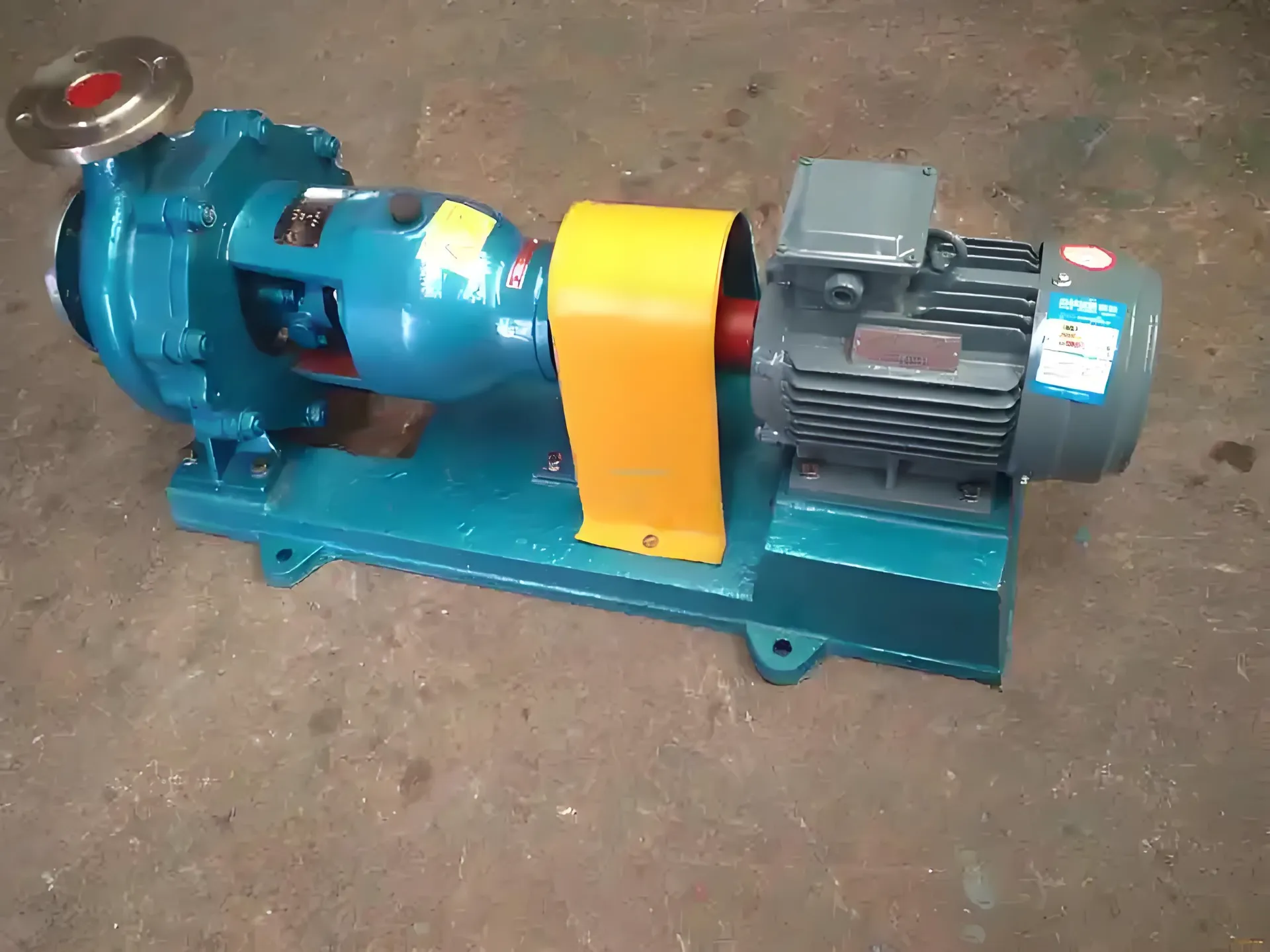
Slurry Pumps: Technical Dimension and Performance Analysis
Slurry pumps are specialized centrifugal pumping systems engineered to transport fluids containing high concentrations of suspended solid particles, known as slurries. Positioned as critical infrastructure in the mid-stream of mining, dredging, and chemical processing industrial chains, these pumps must resolve the fundamental paradox of fluid dynamics: maintaining high volumetric flow rates while resisting the extreme abrasive and corrosive forces exerted by particulate matter. The technical core of a slurry pump lies in its ability to manage the rheological properties of the medium—including viscosity, yield stress, and particle size distribution—while preventing premature component degradation. From a systemic perspective, wholesale slurry pumps are categorized based on their impeller design (open, semi-open, or closed) and their lining materials, which are selected based on the Mohs hardness of the transported solids and the pH value of the carrier liquid.
Material Science & Manufacturing
The longevity of a slurry pump is fundamentally determined by the material science of its wetted parts. To combat erosive wear, high-chrome white irons (ASTM A532) are typically employed for impellers and liners. These alloys contain high percentages of chromium (20% to 30%), which forms hard M7C3 carbides within a martensitic matrix, providing a hardness often exceeding 60 HRC. For applications involving acidic or alkaline slurries, high-performance elastomers such as Natural Rubber (NR) or Polyurethane (PU) are utilized. Natural rubber is preferred for fine-particle slurries due to its high resilience and ability to "absorb" particle impacts, whereas polyurethane offers superior tear strength and abrasion resistance for medium-sized particulates.
Manufacturing processes focus on precision casting and rigorous heat treatment. The investment casting process is utilized to ensure the complex geometries of the impeller vanes are maintained, reducing turbulence and cavitation risks. Post-casting, a controlled quenching and tempering cycle is applied to the high-chrome alloys to optimize the balance between hardness and fracture toughness. Furthermore, the casing is often designed as a double-wall structure: an outer pressure-bearing shell made of ductile iron or carbon steel, and an inner replaceable liner. This modular design ensures that the structural integrity of the pump is maintained while allowing for the economical replacement of wear-prone components.
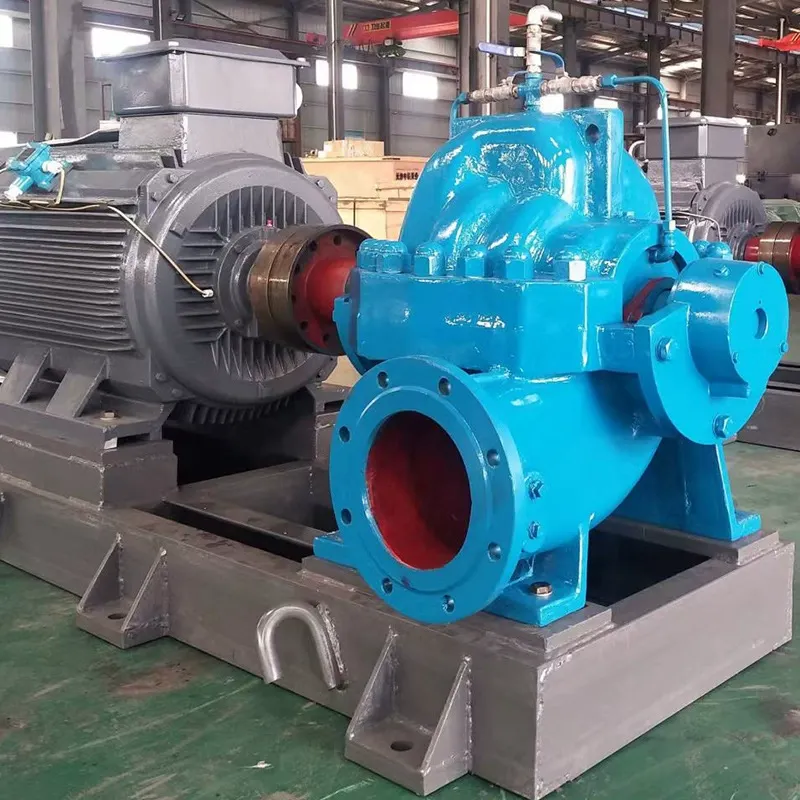
Performance & Engineering
Engineering a slurry pump requires a deep analysis of the "Critical Settling Velocity" to prevent solids from depositing in the pipeline, which would lead to clogging and catastrophic pressure spikes. The pump's hydraulic performance is governed by the Net Positive Suction Head required (NPSHr), which must be carefully balanced against the Net Positive Suction Head available (NPSHa) to prevent cavitation. In slurry applications, cavitation is exacerbated by the presence of solids, which can cause localized "pitting" and accelerate the erosion of the impeller eye.
Force analysis within the pump focuses on the impingement angle of the particles. According to the laws of erosion-corrosion, maximum material loss occurs when particles strike the surface at an angle of 20° to 40°. Engineers optimize the vane profile to minimize these high-impact zones and maintain a laminar flow transition. Additionally, sealing engineering is paramount; slurry pumps typically employ specialized expeller seals or mechanical seals with external flushing systems (API Plan 32 or 54) to prevent abrasive particles from infiltrating the bearing housing, which would otherwise lead to immediate shaft seizure.
Technical Specifications
| Component/Parameter | High-Chrome Alloy (ASTM A532) | Natural Rubber Liner | Polyurethane Liner | Hardened Stainless Steel |
|---|---|---|---|---|
| Hardness (HRC/Shore A) | 60 - 65 HRC | 60 - 70 Shore A | 90 - 95 Shore A | 45 - 55 HRC |
| Max Particle Size (mm) | Up to 100 mm | Up to 10 mm | Up to 30 mm | Up to 50 mm |
| Abrasion Resistance | Excellent (Coarse) | Excellent (Fine) | Very High (Medium) | Moderate |
| Chemical Compatibility | Moderate (pH 4-10) | Good (Alkaline) | Moderate | Excellent (Acidic) |
| Operating Temp (°C) | -20 to 250°C | -20 to 70°C | -30 to 80°C | -40 to 300°C |
| Typical Application | Mining Tailings | Coal Washing | Sand Dredging | Chemical Slurries |
Failure Mode & Maintenance
Failure analysis of slurry pumps typically reveals three primary modes: erosive wear, corrosive degradation, and fatigue-induced cracking. Erosive wear is most prominent at the impeller vanes and the volute tongue, where high fluid velocities increase the kinetic energy of the impacting particles. Corrosive degradation occurs when the protective oxide layer of the metal is mechanically stripped away by the slurry, exposing fresh metal to chemical attack—a synergistic effect known as erosion-corrosion. Fatigue cracking often manifests in the shaft or bearing housings due to the unbalanced radial loads caused by uneven wear of the impeller.
Professional maintenance protocols necessitate the implementation of a "Wear Monitoring Program." This involves the use of ultrasonic thickness gauges to measure the remaining wall thickness of the liners without dismantling the pump. When the liner thickness reaches a predetermined minimum (usually 20% of original thickness), replacement is mandatory to protect the outer casing. Furthermore, lubrication systems must be monitored for particulate contamination using oil analysis; the presence of metallic shards indicates seal failure and requires immediate intervention to prevent total system seizure.
Industry FAQ
Q: How do we determine whether to choose a rubber-lined or a high-chrome pump for a specific slurry?
A: The decision is based on particle size and hardness. High-chrome alloys are superior for large, coarse, and highly abrasive particles (e.g., crushed ore) because they resist cutting and gouging. Natural rubber is more effective for fine, sandy particles (e.g., coal tailings) because the material's elasticity allows it to bounce particles back into the flow rather than being eroded by them.
Q: What is the impact of slurry density on the pump's efficiency and motor load?
A: An increase in slurry density increases the fluid's viscosity and specific gravity, which directly raises the Brake Horsepower (BHP) required by the motor. If the density exceeds the design limit, the pump may experience a drop in head and flow rate, potentially leading to motor overload or "plugging" if the velocity falls below the critical settling limit.
Q: Why is "cavitation" more destructive in slurry pumps than in clean water pumps?
A: In clean water, cavitation creates vapor bubbles that collapse and cause pitting. In slurry, these collapsing bubbles occur in the presence of abrasive solids. The shockwaves from the bubble collapse strip the material's surface, while the solids act as grinding agents, exponentially accelerating the material loss in a process called cavitation-erosion.
Q: How does the "expeller seal" function to protect the bearings?
A: An expeller seal is a centrifugal device mounted on the shaft that creates a high-pressure zone. This pressure forces the slurry away from the stuffing box and back into the pump casing, creating a dynamic barrier that prevents abrasive particles from migrating toward the bearing housing and packing gland.
Q: What are the signs that a slurry pump impeller needs immediate replacement?
A: The primary indicators are a significant decrease in discharge pressure (head loss), an increase in vibration levels due to hydraulic imbalance, and a noticeable increase in power consumption for the same volumetric flow rate, signifying a loss of hydraulic efficiency due to vane wear.
Conclusion
The technical efficacy of wholesale slurry pumps is predicated on the precise synchronization of material selection, hydraulic geometry, and operational parameters. By integrating high-chrome alloys and specialized elastomers with robust engineering designs, these systems can withstand the dual threats of abrasion and corrosion. The transition from reactive maintenance to a predictive, data-driven wear monitoring approach is essential for maximizing the Mean Time Between Failures (MTBF) and reducing the Total Cost of Ownership (TCO) in heavy industrial applications.
Looking forward, the industry is moving toward the integration of smart sensors for real-time erosion tracking and the development of nano-composite liners to further extend component life. Procurement managers and engineers must prioritize not only the initial capital expenditure but the long-term metallurgical compatibility of the pump with the specific rheology of their medium to ensure sustainable and efficient slurry transport operations.
-
Effluent vs Sump Pump Performance Analysis
News2026-05-22
-
effluent septic pump Performance Engineering
News2026-05-22
-
best sewer pumps Performance Engineering
News2026-05-22
-
best sewer pump Performance Analysis
News2026-05-22
-
best sewage pumps Performance Engineering
News2026-05-22
-
basement bathroom sewage pump Material Science Manufacturing
News2026-05-21
-
wastewater treatment plant pumps Material Science Manufacturing
News2026-05-21
-
waste water pump for basement Material Science Manufacturing
News2026-05-21
-
sump pump sewage Performance Analysis
News2026-05-21
-
sump pump for sewage Material Science and Manufacturing
News2026-05-21
-
sump pump for septic systems Material Science Manufacturing
News2026-05-20
-
sump pump and ejector pump Material Science Manufacturing
News2026-05-20
-
sewage treatment plant pumps Performance Analysis
News2026-05-20
-
sewage tank pump Material Science and Manufacturing
News2026-05-20
-
sewage pump for septic tank Performance Analysis
News2026-05-20




