English
- Afrikaans
- Albanian
- Amharic
- Arabic
- Armenian
- Azerbaijani
- Basque
- Belarusian
- Bengali
- Bosnian
- Bulgarian
- Catalan
- Cebuano
- Corsican
- Croatian
- Czech
- Danish
- Dutch
- English
- Esperanto
- Estonian
- Finnish
- French
- Frisian
- Galician
- Georgian
- German
- Greek
- Gujarati
- Haitian Creole
- hausa
- hawaiian
- Hebrew
- Hindi
- Miao
- Hungarian
- Icelandic
- igbo
- Indonesian
- irish
- Italian
- Japanese
- Javanese
- Kannada
- kazakh
- Khmer
- Rwandese
- Korean
- Kurdish
- Kyrgyz
- Lao
- Latin
- Latvian
- Lithuanian
- Luxembourgish
- Macedonian
- Malgashi
- Malay
- Malayalam
- Maltese
- Maori
- Marathi
- Mongolian
- Myanmar
- Nepali
- Norwegian
- Norwegian
- Occitan
- Pashto
- Persian
- Polish
- Portuguese
- Punjabi
- Romanian
- Russian
- Samoan
- Scottish Gaelic
- Serbian
- Sesotho
- Shona
- Sindhi
- Sinhala
- Slovak
- Slovenian
- Somali
- Spanish
- Sundanese
- Swahili
- Swedish
- Tagalog
- Tajik
- Tamil
- Tatar
- Telugu
- Thai
- Turkish
- Turkmen
- Ukrainian
- Urdu
- Uighur
- Uzbek
- Vietnamese
- Welsh
- Bantu
- Yiddish
- Yoruba
- Zulu

Telephone: +86 13120555503
Email: frank@cypump.com


Apr . 01, 2024 17:55 Back to list
wholesale slurry pump Performance Engineering
Introduction
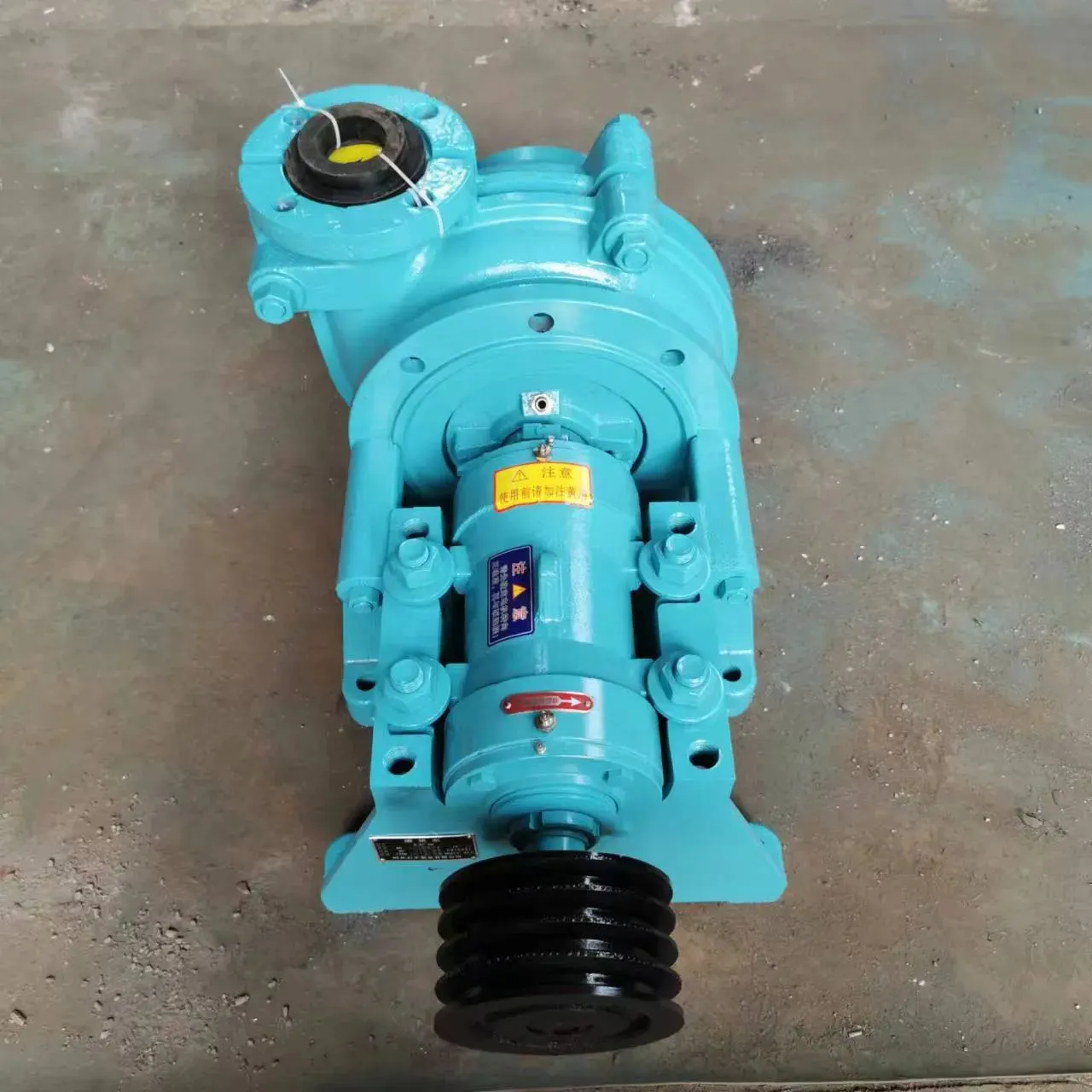
Wholesale slurry pumps are centrifugal pumps specifically designed for handling abrasive, corrosive, and erosive fluids typically found in mining, wastewater treatment, chemical processing, and dredging applications. Positioned within the fluid handling segment of the industrial equipment chain, these pumps bridge the gap between fluid source and processing/disposal. Their core performance is defined by flow rate, head (pressure), solids handling capability, and resistance to material degradation. Unlike standard centrifugal pumps, slurry pumps are engineered with robust construction, often featuring hardened materials and specialized impeller designs to maximize service life in demanding environments. A key pain point for industries relying on slurry pumps is balancing operational efficiency with the high cost of maintenance and replacement stemming from abrasive wear. Procurement managers are often challenged with identifying pumps offering optimal total cost of ownership – encompassing initial cost, energy consumption, maintenance intervals, and eventual replacement schedules.
Material Science & Manufacturing
The construction of wholesale slurry pumps relies heavily on material science to withstand the inherent aggressiveness of transported slurries. Pump casings are frequently manufactured from high-chromium cast iron (typically 27% Cr) due to its exceptional abrasion resistance. The chromium carbides formed within the iron matrix impart hardness and resilience. Impellers, the rotating component responsible for generating flow, are often constructed from either high-chromium cast iron or specialized alloys like duplex stainless steels (e.g., 2205, 2507) for enhanced corrosion resistance in acidic or saline environments. Shafts are commonly manufactured from alloy steels (e.g., 4140, 4340) and hardened to prevent wear and fatigue. Seals are critical, with options ranging from mechanical seals utilizing silicon carbide or tungsten carbide faces to packing glands. The manufacturing process typically begins with sand casting for the casing and impeller, followed by machining to precise tolerances. Welding processes, such as shielded metal arc welding (SMAW) or gas tungsten arc welding (GTAW), are used for joining components and applying wear-resistant overlays. Critical parameters include proper heat treatment post-welding to minimize stress concentration and maintain material integrity, and precise balancing of the impeller to reduce vibration and extend bearing life. The chemical compatibility between pump materials and the slurry being handled must be rigorously assessed to prevent galvanic corrosion or material dissolution. For example, pairing carbon steel with a slurry containing chlorides will accelerate corrosion. Dimensional accuracy during machining is crucial, as excessive clearances can lead to increased wear and reduced pump efficiency.
Performance & Engineering
Slurry pump performance is governed by principles of fluid mechanics, specifically centrifugal pump theory and the behavior of non-Newtonian fluids. The pump’s head-capacity curve, a graphical representation of pressure versus flow rate, is fundamental to system design. Key engineering considerations include solids handling capability, which is dictated by impeller design (open, semi-open, or closed) and the diameter of the pump passages. Larger passages are necessary to prevent clogging with large solids. Net Positive Suction Head Required (NPSHr) is a critical parameter to prevent cavitation – the formation of vapor bubbles that can damage the impeller. Cavitation occurs when the absolute pressure at the pump inlet drops below the vapor pressure of the liquid. Force analysis involves evaluating radial loads imposed by the impeller on the bearings, as well as axial thrust generated by pressure differences across the impeller. Bearing selection must account for these loads and the expected pump operating speed. Environmental resistance is crucial, especially in outdoor installations. Pumps are often coated with protective layers (e.g., epoxy coatings) to prevent corrosion and weathering. Compliance requirements vary by region and application. For example, pumps used in potable water applications must meet NSF/ANSI 61 standards for materials safety. Electrical components must comply with relevant electrical codes (e.g., IEC, NEMA). The pump’s hydraulic efficiency is paramount for minimizing energy consumption and reducing operational costs. Proper impeller design and volute geometry are essential for maximizing efficiency. System curve matching – aligning the pump’s performance curve with the system’s resistance curve – optimizes performance and prevents pump overload.
Technical Specifications
| Parameter | Unit | Typical Range (Small Slurry Pump) | Typical Range (Large Slurry Pump) |
|---|---|---|---|
| Flow Rate | m³/hr | 5 – 50 | 200 – 1500 |
| Head (Pressure) | m | 10 – 40 | 50 – 150 |
| Solids Handling Size | mm | Up to 25 | Up to 150 |
| Pump Speed | RPM | 500 – 1500 | 500 – 1800 |
| Power | kW | 1.5 – 7.5 | 30 – 200 |
| Casing Material | - | High-Chromium Cast Iron | High-Chromium Cast Iron / Alloy Steel |
Failure Mode & Maintenance
Slurry pump failures commonly stem from abrasive wear, corrosion, erosion, and mechanical fatigue. Abrasive wear, the most prevalent failure mode, occurs as hard particles within the slurry impact the pump components, gradually removing material. This is especially pronounced in the impeller and casing. Corrosion, driven by chemical reactions between the slurry and pump materials, weakens the metal structure. Erosion, a combined effect of abrasion and corrosion, accelerates material loss. Mechanical fatigue can lead to cracking and eventual failure of the shaft, impeller, or casing due to cyclic stresses. Failure analysis typically involves visual inspection for wear patterns, non-destructive testing (NDT) methods like ultrasonic testing (UT) to detect cracks, and metallurgical analysis to determine the root cause of failure. Preventative maintenance is crucial and includes regular inspection of wear components, lubrication of bearings, seal replacement, and impeller balancing. Rotating the pump and replacing liners can redistribute wear patterns. Implementing a robust slurry analysis program to understand the slurry's composition and abrasiveness is paramount for selecting appropriate pump materials and predicting maintenance intervals. Monitoring pump vibration levels can provide early warning signs of bearing wear or impeller imbalance. Proper installation, including alignment of the pump and motor, is essential to minimize stress on the pump components. In situations where excessive wear is unavoidable, consider using hardfacing techniques (applying wear-resistant coatings) to extend component life.
Industry FAQ
Q: What is the impact of slurry particle size distribution on pump selection?
A: Particle size distribution significantly influences pump selection. Larger particle sizes necessitate pumps with larger passage ways to prevent clogging. A broader distribution with a high percentage of larger particles requires a more robust impeller design and increased power to maintain flow rate. Ignoring particle size can lead to frequent pump blockages and reduced efficiency.
Q: How does the slurry's specific gravity affect pump performance?
A: Higher specific gravity slurries require pumps with greater power to deliver the same flow rate and head. The pump's motor must be sized accordingly to overcome the increased weight of the fluid. Density also impacts NPSHr calculations, potentially requiring adjustments to prevent cavitation.
Q: What are the advantages of using a vertical slurry pump versus a horizontal slurry pump?
A: Vertical slurry pumps are often preferred when space is limited or when the slurry source is below the pump location. They require less floor space and simplify suction lift issues. Horizontal pumps are generally easier to maintain, as components are more accessible. The choice depends heavily on the specific site conditions and operational requirements.
Q: What are the key considerations for selecting the appropriate pump seal type?
A: Seal selection depends on the slurry’s abrasiveness, corrosivity, and the operating pressure. Mechanical seals offer superior sealing performance but are more susceptible to damage from abrasive particles. Packing glands are more tolerant of abrasives but require regular adjustment and are prone to leakage. Seal flush plans are essential to remove abrasives and maintain seal integrity.
Q: How does pump speed affect wear rates and energy consumption?
A: Higher pump speeds generally increase wear rates due to increased impact forces from abrasive particles. However, lower speeds may reduce flow rate and head. Optimal speed is a trade-off between wear and efficiency. Variable frequency drives (VFDs) allow for speed control, enabling optimization of pump performance and energy consumption based on varying process demands.
Conclusion
The selection and application of wholesale slurry pumps demand a thorough understanding of fluid mechanics, material science, and failure modes. Optimizing pump performance necessitates careful consideration of the slurry's characteristics – particle size distribution, specific gravity, abrasiveness, and corrosivity – alongside operating parameters like flow rate, head, and NPSHr. A proactive maintenance strategy focused on regular inspections, component replacement, and slurry analysis is crucial for maximizing pump uptime and minimizing total cost of ownership.
Future trends in slurry pump technology include the development of advanced materials with improved wear and corrosion resistance, the integration of predictive maintenance systems utilizing sensor data and machine learning, and the optimization of impeller designs for enhanced hydraulic efficiency. Continued research and development in these areas will drive further improvements in slurry pump performance and reliability, enabling industries to tackle increasingly challenging fluid handling applications.
-
Precision at the Pump: How Better Machining Protects Flow and Uptime
News2026-11-20
-
Why Pump Reliability Begins Before the First Drop of Fluid
News2026-11-20
-
Beyond the Pump: Designing Safer Access Around Critical Water Infrastructure
News2026-11-20
-
Why Pumping Stations Depend on the Infrastructure Beneath the Pumps
News2026-11-20
-
Beyond the Pump Room: How Smarter Loading Protects Industrial Equipment
News2026-11-19
-
When Pumps Stop: Designing More Resilient Power for Critical Pumping Systems
News2026-11-19
-
The Hidden Role of Dust and Gas Monitoring in Reliable Pump Operations
News2026-11-19
-
The Hidden Role of Mineral Compounds in Extending Industrial Pump Lifespan
News2026-10-12
-
Why Pump System Reliability Depends on Precision Hose Assembly Methods
News2026-09-15
-
How Advanced Imaging Films Are Transforming Pump Component Quality Control
News2026-08-25
-
How Advanced Filtration Protects Pump Systems from Premature Wear and Costly Downtime
News2026-08-25
-
How Steel Material Selection Drives Pump Reliability in Heavy-Duty Systems
News2026-08-25
-
Ensuring Pump System Efficiency: The Role of High-Quality Pipe Fittings and Tubing
News2026-08-24
-
Optimizing Fluid Dynamics and Material Consistency in Industrial Processing
News2026-08-18
-
Innovations and Challenges in Hydraulic Systems for Heavy Machinery
News2026-08-13




