English
- Afrikaans
- Albanian
- Amharic
- Arabic
- Armenian
- Azerbaijani
- Basque
- Belarusian
- Bengali
- Bosnian
- Bulgarian
- Catalan
- Cebuano
- Corsican
- Croatian
- Czech
- Danish
- Dutch
- English
- Esperanto
- Estonian
- Finnish
- French
- Frisian
- Galician
- Georgian
- German
- Greek
- Gujarati
- Haitian Creole
- hausa
- hawaiian
- Hebrew
- Hindi
- Miao
- Hungarian
- Icelandic
- igbo
- Indonesian
- irish
- Italian
- Japanese
- Javanese
- Kannada
- kazakh
- Khmer
- Rwandese
- Korean
- Kurdish
- Kyrgyz
- Lao
- Latin
- Latvian
- Lithuanian
- Luxembourgish
- Macedonian
- Malgashi
- Malay
- Malayalam
- Maltese
- Maori
- Marathi
- Mongolian
- Myanmar
- Nepali
- Norwegian
- Norwegian
- Occitan
- Pashto
- Persian
- Polish
- Portuguese
- Punjabi
- Romanian
- Russian
- Samoan
- Scottish Gaelic
- Serbian
- Sesotho
- Shona
- Sindhi
- Sinhala
- Slovak
- Slovenian
- Somali
- Spanish
- Sundanese
- Swahili
- Swedish
- Tagalog
- Tajik
- Tamil
- Tatar
- Telugu
- Thai
- Turkish
- Turkmen
- Ukrainian
- Urdu
- Uighur
- Uzbek
- Vietnamese
- Welsh
- Bantu
- Yiddish
- Yoruba
- Zulu

Telephone: +86 13120555503
Email: frank@cypump.com


Apr . 01, 2024 17:55 Back to list
wholesale slurry pump cover plate Manufacturing Specification and Performance Analysis
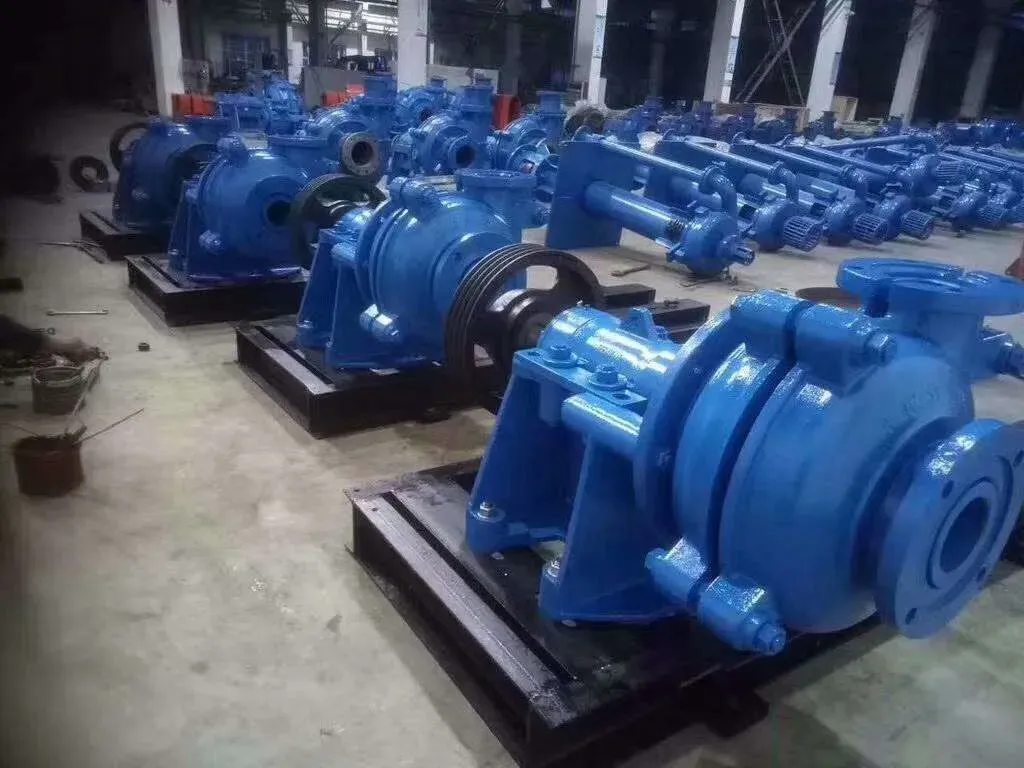
Slurry Pump Cover Plate Manufacturing Specification and Performance Analysis
The slurry pump cover plate serves as a critical structural and sealing component within the fluid-handling architecture of centrifugal slurry pumps. Positioned typically at the interface between the pump casing and the stuffing box or the impeller housing, its primary technical function is to maintain hydraulic integrity, ensure the precise axial positioning of internal rotating elements, and protect the pump's bearing housing from the ingress of abrasive media. In the industrial supply chain, the wholesale slurry pump cover plate is not merely a replacement part but a precision-engineered barrier designed to withstand extreme erosive wear and high-pressure fluctuations common in mining, dredging, and chemical processing. The technical efficiency of a cover plate directly influences the Mean Time Between Failures (MTBF) of the entire pumping system by preventing leakage and reducing the risk of shaft misalignment caused by structural deformation under load.
Material Science & Manufacturing
The selection of materials for slurry pump cover plates is governed by the "Tribological Triangle" of hardness, toughness, and corrosion resistance. Given that these components are exposed to high-velocity streams of particulate matter (such as silica, alumina, or iron ore), standard carbon steels are insufficient. The industry standard emphasizes High-Chromium (Hi-Cr) White Iron and duplex stainless steels.
1. Metallurgical Composition: High-Chromium alloys (typically 25% to 28% Cr) are utilized to form a network of M7C3 carbides within a martensitic matrix. This microstructure provides a hardness typically ranging from 58 to 65 HRC, which is essential for resisting micro-ploughing and abrasive scouring. For environments involving acidic or saline slurries, Super Duplex Stainless Steel (ASTM A890) is employed to prevent pitting and stress corrosion cracking (SCC).
2. Manufacturing Process Flow: The production of a professional-grade cover plate involves a rigorous sequence of thermal and mechanical operations:
- Precision Casting: Utilizing vacuum investment casting or sand casting to achieve near-net shape, reducing the need for extensive machining that could disrupt the surface grain structure.
- Heat Treatment: A critical phase involving austenitizing followed by rapid quenching and tempering. This process optimizes the distribution of carbides and relieves internal stresses induced during casting.
- CNC Machining: Precision grinding of the mating surfaces is mandatory to achieve a flatness tolerance of ±0.05mm, ensuring a hermetic seal when torqued against the casing.
- Surface Treatment: In extreme cases, tungsten carbide (WC) thermal spraying is applied to high-turbulence zones of the cover plate to further extend the wear life.
Performance & Engineering
From an engineering perspective, the cover plate must resolve the conflict between structural rigidity and sealing flexibility. The primary force analysis involves the containment of internal hydraulic pressure and the management of axial thrust loads transferred through the pump shaft.
1. Fluid Dynamics and Erosion Control: The internal geometry of the cover plate is designed to minimize turbulence. High-velocity eddies at the cover plate interface can lead to "localized cavitation," where vapor bubbles collapse and strip the material surface. Engineering the cover plate with streamlined contours reduces the Reynolds number at the boundary layer, thereby decreasing the erosion rate.
2. Sealing Mechanics: The cover plate integrates with O-rings or graphite gaskets. The engineering challenge lies in maintaining a constant compression load across the sealing surface despite thermal expansion. Using materials with matched coefficients of thermal expansion (CTE) between the cover plate and the pump volute is essential to prevent seal blowout during temperature spikes.
3. Compliance and Structural Integrity: The component must comply with strict pressure vessel standards. This involves calculating the minimum wall thickness required to prevent deformation under maximum allowable working pressure (MAWP), ensuring that the safety factor remains above 2.0 to account for unpredictable surge pressures in the pipeline.
Technical Specifications
| Material Grade | Hardness (HRC) | Tensile Strength (MPa) | Corrosion Resistance |
|---|---|---|---|
| High Chrome (A05) | 58 - 62 | 850 - 1100 | Moderate (Oxidizing) |
| Duplex SS (2205) | 25 - 30 | 620 - 800 | Excellent (Chloride) |
| Hardened Alloy Steel | 45 - 52 | 900 - 1200 | Low (Requires Coating) |
| Ceramic Composite | 70 - 80 | Variable | Extreme (Chemical) |
| Ni-Hard Cast Iron | 50 - 55 | 700 - 900 | Moderate |
| Super Chrome (A07) | 63 - 67 | 900 - 1200 | High (Abrasive) |
Failure Mode & Maintenance
Failure analysis of slurry pump cover plates typically reveals four primary degradation mechanisms:
1. Erosive Wear (Scouring): This occurs when the slurry velocity exceeds the critical threshold, causing particles to mechanically remove material from the plate surface. This is identified by a "washboard" pattern on the inner face. Solution: Upgrade to a higher chromium content alloy or apply a ceramic liner.
2. Fatigue Cracking: Cyclic loading due to pump vibration or intermittent start-stop cycles can induce stress fractures, particularly around the bolt holes. Solution: Implement a strict torque sequence during installation to ensure uniform load distribution and use vibration-damping mounts.
3. Galvanic Corrosion: When a cover plate of one metallurgy is mated with a casing of another, an electrochemical cell is created in the presence of an electrolyte (the slurry). Solution: Ensure metallurgical compatibility or use insulating gaskets to break the electrical circuit.
4. Seal Failure/Delamination: Degradation of the gasket or the warping of the plate surface leads to leakage. Solution: Regular inspection of the mating surface flatness using a dial indicator; resurface the plate via precision grinding if deviation exceeds 0.1mm.
Industry FAQ
Q: How do we determine if the cover plate should be High-Chrome or Duplex Stainless Steel?
A: The decision is based on the ratio of abrasion to corrosion. If the slurry contains high concentrations of hard minerals (silica) but low acidity, High-Chrome is superior due to its hardness. If the environment is highly corrosive (e.g., sulfuric acid) but the particles are softer, Duplex Stainless Steel is required to prevent chemical degradation.
Q: What is the impact of improper bolt torquing on the cover plate's lifespan?
A: Improper torquing leads to uneven compressive stress, which can cause the cover plate to warp or develop stress-corrosion cracks. More critically, it creates "leak paths" that allow abrasive slurry to enter the stuffing box, leading to rapid failure of the mechanical seals and bearings.
Q: Can a cover plate be refurbished, or must it always be replaced?
A: Depending on the wear depth, refurbishment is possible. For erosive wear, the surface can be built up using Hardfacing (Laser Cladding or PTA welding) with a cobalt-based alloy, followed by precision machining to restore the original dimensions.
Q: How does slurry viscosity affect the wear rate of the cover plate?
A: Higher viscosity generally reduces the impact velocity of particles against the cover plate, potentially slowing erosive wear. However, it can increase the hydraulic load and pressure drop, which may increase the structural stress on the plate and its fasteners.
Q: What are the signs that a cover plate is nearing the end of its service life?
A: The most prominent signs are increased leakage at the pump junctions, a noticeable drop in pump discharge pressure (indicating internal recirculation), and visible thinning of the plate walls during scheduled ultrasonic thickness testing.
Conclusion
The technical integrity of the slurry pump cover plate is fundamental to the operational stability of industrial slurry handling systems. By integrating advanced material science—specifically the optimization of M7C3 carbides in high-chromium alloys—and adhering to precision manufacturing tolerances, the cover plate transforms from a simple closure component into a high-performance engineering barrier. Its ability to resist the dual threats of abrasive erosion and chemical corrosion is the primary determinant of the pump's overall efficiency and maintenance cycle.
Moving forward, the industry is shifting toward hybrid material composites and smart monitoring, where embedded sensors may one day detect wall thinning in real-time. For procurement and engineering teams, the focus must remain on the strict alignment of material specifications with the specific chemical and physical properties of the pumped media to ensure maximum longevity and minimized operational downtime.
-
basement bathroom sewage pump Material Science Manufacturing
News2026-05-21
-
wastewater treatment plant pumps Material Science Manufacturing
News2026-05-21
-
waste water pump for basement Material Science Manufacturing
News2026-05-21
-
sump pump sewage Performance Analysis
News2026-05-21
-
sump pump for sewage Material Science and Manufacturing
News2026-05-21
-
sump pump for septic systems Material Science Manufacturing
News2026-05-20
-
sump pump and ejector pump Material Science Manufacturing
News2026-05-20
-
sewage treatment plant pumps Performance Analysis
News2026-05-20
-
sewage tank pump Material Science and Manufacturing
News2026-05-20
-
sewage pump for septic tank Performance Analysis
News2026-05-20
-
Sewage Pump and Tank Performance Analysis
News2026-05-19
-
Sewage Ejector Pump Replacement Performance Analysis
News2026-05-19
-
sewage ejector pump for basement bathroom Material Science Manufacturing
News2026-05-19
-
sewage ejection pump Material Science and Manufacturing
News2026-05-19
-
in line sewage pump Performance Analysis
News2026-05-19




