English
- Afrikaans
- Albanian
- Amharic
- Arabic
- Armenian
- Azerbaijani
- Basque
- Belarusian
- Bengali
- Bosnian
- Bulgarian
- Catalan
- Cebuano
- Corsican
- Croatian
- Czech
- Danish
- Dutch
- English
- Esperanto
- Estonian
- Finnish
- French
- Frisian
- Galician
- Georgian
- German
- Greek
- Gujarati
- Haitian Creole
- hausa
- hawaiian
- Hebrew
- Hindi
- Miao
- Hungarian
- Icelandic
- igbo
- Indonesian
- irish
- Italian
- Japanese
- Javanese
- Kannada
- kazakh
- Khmer
- Rwandese
- Korean
- Kurdish
- Kyrgyz
- Lao
- Latin
- Latvian
- Lithuanian
- Luxembourgish
- Macedonian
- Malgashi
- Malay
- Malayalam
- Maltese
- Maori
- Marathi
- Mongolian
- Myanmar
- Nepali
- Norwegian
- Norwegian
- Occitan
- Pashto
- Persian
- Polish
- Portuguese
- Punjabi
- Romanian
- Russian
- Samoan
- Scottish Gaelic
- Serbian
- Sesotho
- Shona
- Sindhi
- Sinhala
- Slovak
- Slovenian
- Somali
- Spanish
- Sundanese
- Swahili
- Swedish
- Tagalog
- Tajik
- Tamil
- Tatar
- Telugu
- Thai
- Turkish
- Turkmen
- Ukrainian
- Urdu
- Uighur
- Uzbek
- Vietnamese
- Welsh
- Bantu
- Yiddish
- Yoruba
- Zulu

Telephone: +86 13120555503
Email: frank@cypump.com


Apr . 01, 2024 17:55 Back to list
wholesale metal lined slurry pump Performance Analysis and Manufacturing Specifications
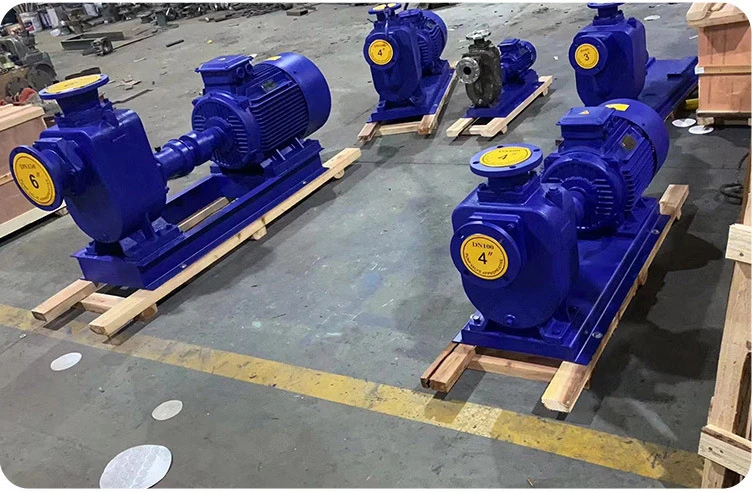
Metal Lined Slurry Pump Performance Analysis and Manufacturing Specifications
The metal lined slurry pump is a critical piece of heavy-duty industrial machinery engineered specifically for the transport of highly abrasive, corrosive, and high-density fluids—commonly referred to as slurries. Positioned at the intersection of hydraulic engineering and materials science, these pumps are indispensable in mining, mineral processing, dredging, and chemical manufacturing. Unlike standard centrifugal pumps, the metal lined slurry pump utilizes specialized liners to decouple the structural integrity of the pump casing from the sacrificial wear surface. This technical architecture ensures that the pump can maintain operational efficiency despite constant bombardment by particulate matter, thereby reducing the total cost of ownership (TCO) through extended mean time between failures (MTBF) and modular component replacement.
Material Science & Manufacturing
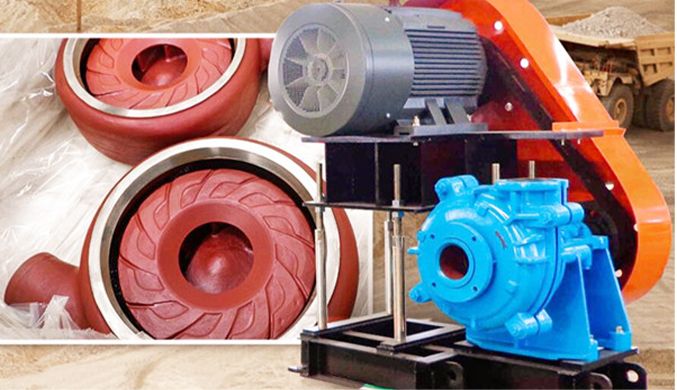
The longevity of a metal lined slurry pump is predicated on the metallurgical synergy between the outer casing and the internal liner. The primary challenge in slurry transport is the simultaneous occurrence of abrasive wear and chemical corrosion, a phenomenon known as corrosion-erosion. To combat this, materials are selected based on hardness (measured via Rockwell C scale) and chemical stability.
High-Chromium Cast Irons (ASTM A532): For extreme abrasion, 27% Cr white iron is typically employed. The microstructure consists of hard M7C3 carbides embedded in a martensitic matrix, providing a hardness typically exceeding 60 HRC. This prevents the "plowing" effect of sharp mineral particles on the pump wall.
Hardened Alloy Steels: In applications where impact resistance is as critical as abrasion resistance, manganese steels or specialized duplex stainless steels are utilized to prevent brittle fracture under high-velocity particulate impact.
Manufacturing Process Flow:
1. Precision Casting: The casing is produced via sand casting or investment casting to ensure structural uniformity.
2. Centrifugal Lining: In some high-end models, metal lining is applied via centrifugal casting to create a dense, pore-free protective layer.
3. CNC Machining: Critical mating surfaces, such as the impeller seat and bearing housings, are machined to tolerances of ±0.05mm to minimize internal leakage and vibration.
4. Heat Treatment: Controlled quenching and tempering are applied to the liners to optimize the balance between hardness and toughness, avoiding internal stresses that could lead to premature cracking.
Performance & Engineering
Engineering a slurry pump requires a rigorous force analysis of the fluid dynamics within the volute. The primary objective is to maximize the flow rate while minimizing the local velocity at the liner walls, as abrasive wear is proportional to the cube of the fluid velocity (V³).
Hydraulic Efficiency and Impeller Design: The impeller is designed with a specific vane geometry to prevent sedimentation and clogging. Semi-open or fully closed impellers are selected based on the particle size distribution of the slurry. The "gap" between the impeller and the liner is a critical engineering parameter; too wide a gap leads to recirculation and accelerated wear, while too narrow a gap increases the risk of jamming.
Mechanical Sealing and Lubrication: To prevent the abrasive slurry from infiltrating the bearing housing, a combination of an expeller seal and a gland packing system is often implemented. The expeller creates a centrifugal barrier that pushes the slurry away from the shaft, while the packing provides the final seal. In high-pressure applications, mechanical seals with silicon carbide or tungsten carbide faces are mandatory.
Environmental Resistance: For pumps operating in acidic or alkaline environments, the metal lining is further treated with specialized coatings or replaced with high-nickel alloys to prevent pitting and stress corrosion cracking (SCC).
Technical Specifications
| Parameter Dimension | Standard Duty Specification | Heavy Duty Specification | Extreme Duty Specification | Measurement Standard |
|---|---|---|---|---|
| Liner Material | High Chrome Iron (27% Cr) | Tungsten Carbide Composite | Ceramic-Metal Matrix | ASTM A532 / ISO 182 |
| Max Flow Rate (m³/h) | 450 | 800 | 1,200 | ISO 5199 |
| Operating Pressure (Bar) | 6.0 | 12.0 | 20.0 | ASME B73.1 |
| Hardness (Rockwell C) | 58 - 62 HRC | 65 - 70 HRC | >75 HRC (Vickers equiv) | ASTM E18 |
| Particle Size Limit (mm) | ≤ 10 mm | ≤ 25 mm | ≤ 50 mm | Internal Sieve Test |
| MTBF (Operational Hours) | 4,000 - 6,000 | 8,000 - 12,000 | 15,000+ | Industry Benchmark |
Failure Mode & Maintenance
Understanding the failure modes of metal lined slurry pumps is essential for implementing a predictive maintenance strategy. The most common failure modes include:
1. Cavitation Erosion: Occurs when the Net Positive Suction Head Available (NPSHa) falls below the NPSH Required (NPSHr). The resulting collapse of vapor bubbles creates micro-jets that pit the metal liner, often mistaken for chemical corrosion. Maintenance requires adjusting the suction piping or increasing the head of the feed tank.
2. Abrasive Thinning (Wall Wear): The gradual loss of liner thickness due to the sliding action of particles. Once the liner reaches its "wear limit" (typically 20-30% of original thickness), it must be replaced to prevent the slurry from breaching the structural outer casing.
3. Fatigue Cracking: Repeated thermal cycling or vibration caused by impeller imbalance can lead to stress fractures in the brittle high-chrome liners. This is mitigated by precise dynamic balancing of the impeller to G2.5 standards.
4. Delamination: In composite metal linings, a mismatch in the Coefficient of Thermal Expansion (CTE) between the lining and the base metal can cause the liner to peel away. This is prevented by utilizing intermediate bonding layers during the casting process.
Professional Maintenance Protocol:
- Vibration Analysis: Monthly monitoring of bearing housings using accelerometers.
- Ultrasonic Thickness Testing: Periodic measurement of liner thickness at high-velocity zones (the volute tongue).
- Lubrication Audit: Ensuring synthetic lubricants are free of particulate contamination.
Industry FAQ
Q: How do we determine the optimal liner material for a specific mineral slurry?
A: The selection depends on the "Abrasion-Corrosion Index." We analyze the Mohs hardness of the particles and the pH of the fluid. For high-hardness particles (e.g., quartz) in neutral pH, 27% Cr iron is ideal. If the slurry is acidic, we pivot to Duplex stainless steel or high-nickel alloys to prevent accelerated chemical leaching of the binder phase.
Q: What is the impact of slurry density on the pump's mechanical seal life?
A: Increased density raises the viscosity and the particulate load, which increases the frictional heat and wear on seal faces. To mitigate this, we implement an external flush system (API Plan 32 or 54) to keep the seal faces clean and cooled, preventing "dry running" and premature failure.
Q: Can a metal lined pump be retrofitted with a rubber liner, and what are the trade-offs?
A: Yes, provided the casing geometry allows it. Rubber liners excel in handling fine particles (slurry < 2mm) and corrosive chemicals, but they fail rapidly under high-impact conditions or temperatures exceeding 70°C. Metal liners are mandatory for coarse particles and high-temperature applications.
Q: Why is the pump experiencing excessive vibration despite new bearings?
A: This is often due to uneven wear of the impeller or the liner, which shifts the center of mass and creates hydraulic imbalance. We recommend a full internal inspection and a dynamic balance check of the rotating assembly to ensure it meets ISO 1940 standards.
Q: How does the "critical speed" of the pump affect the liner longevity?
A: Operating too close to the pump's critical speed induces resonance, which increases the impact velocity of particles against the liner walls. By optimizing the RPM via a Variable Frequency Drive (VFD), we can move the operating point away from the resonance zone, significantly extending liner life.
Conclusion
The operational efficiency of a metal lined slurry pump is not merely a result of raw power, but a sophisticated balance of material hardness, hydraulic optimization, and precision manufacturing. By utilizing high-chromium alloys and adhering to strict casting and machining tolerances, these pumps effectively mitigate the destructive forces of abrasion and corrosion, ensuring stable throughput in the most demanding industrial environments.
Looking forward, the integration of IoT-based wear sensors and advanced computational fluid dynamics (CFD) will allow for real-time monitoring of liner degradation. Procurement managers and engineers should prioritize the synergy between material specification and actual fluid characteristics to maximize equipment lifespan and reduce unplanned downtime in the global industrial supply chain.
-
basement bathroom sewage pump Material Science Manufacturing
News2026-05-21
-
wastewater treatment plant pumps Material Science Manufacturing
News2026-05-21
-
waste water pump for basement Material Science Manufacturing
News2026-05-21
-
sump pump sewage Performance Analysis
News2026-05-21
-
sump pump for sewage Material Science and Manufacturing
News2026-05-21
-
sump pump for septic systems Material Science Manufacturing
News2026-05-20
-
sump pump and ejector pump Material Science Manufacturing
News2026-05-20
-
sewage treatment plant pumps Performance Analysis
News2026-05-20
-
sewage tank pump Material Science and Manufacturing
News2026-05-20
-
sewage pump for septic tank Performance Analysis
News2026-05-20
-
Sewage Pump and Tank Performance Analysis
News2026-05-19
-
Sewage Ejector Pump Replacement Performance Analysis
News2026-05-19
-
sewage ejector pump for basement bathroom Material Science Manufacturing
News2026-05-19
-
sewage ejection pump Material Science and Manufacturing
News2026-05-19
-
in line sewage pump Performance Analysis
News2026-05-19




