English
- Afrikaans
- Albanian
- Amharic
- Arabic
- Armenian
- Azerbaijani
- Basque
- Belarusian
- Bengali
- Bosnian
- Bulgarian
- Catalan
- Cebuano
- Corsican
- Croatian
- Czech
- Danish
- Dutch
- English
- Esperanto
- Estonian
- Finnish
- French
- Frisian
- Galician
- Georgian
- German
- Greek
- Gujarati
- Haitian Creole
- hausa
- hawaiian
- Hebrew
- Hindi
- Miao
- Hungarian
- Icelandic
- igbo
- Indonesian
- irish
- Italian
- Japanese
- Javanese
- Kannada
- kazakh
- Khmer
- Rwandese
- Korean
- Kurdish
- Kyrgyz
- Lao
- Latin
- Latvian
- Lithuanian
- Luxembourgish
- Macedonian
- Malgashi
- Malay
- Malayalam
- Maltese
- Maori
- Marathi
- Mongolian
- Myanmar
- Nepali
- Norwegian
- Norwegian
- Occitan
- Pashto
- Persian
- Polish
- Portuguese
- Punjabi
- Romanian
- Russian
- Samoan
- Scottish Gaelic
- Serbian
- Sesotho
- Shona
- Sindhi
- Sinhala
- Slovak
- Slovenian
- Somali
- Spanish
- Sundanese
- Swahili
- Swedish
- Tagalog
- Tajik
- Tamil
- Tatar
- Telugu
- Thai
- Turkish
- Turkmen
- Ukrainian
- Urdu
- Uighur
- Uzbek
- Vietnamese
- Welsh
- Bantu
- Yiddish
- Yoruba
- Zulu

Telephone: +86 13120555503
Email: frank@cypump.com


Apr . 01, 2024 17:55 Back to list
wholesale high head slurry pump suppliers Performance Analysis
Introduction
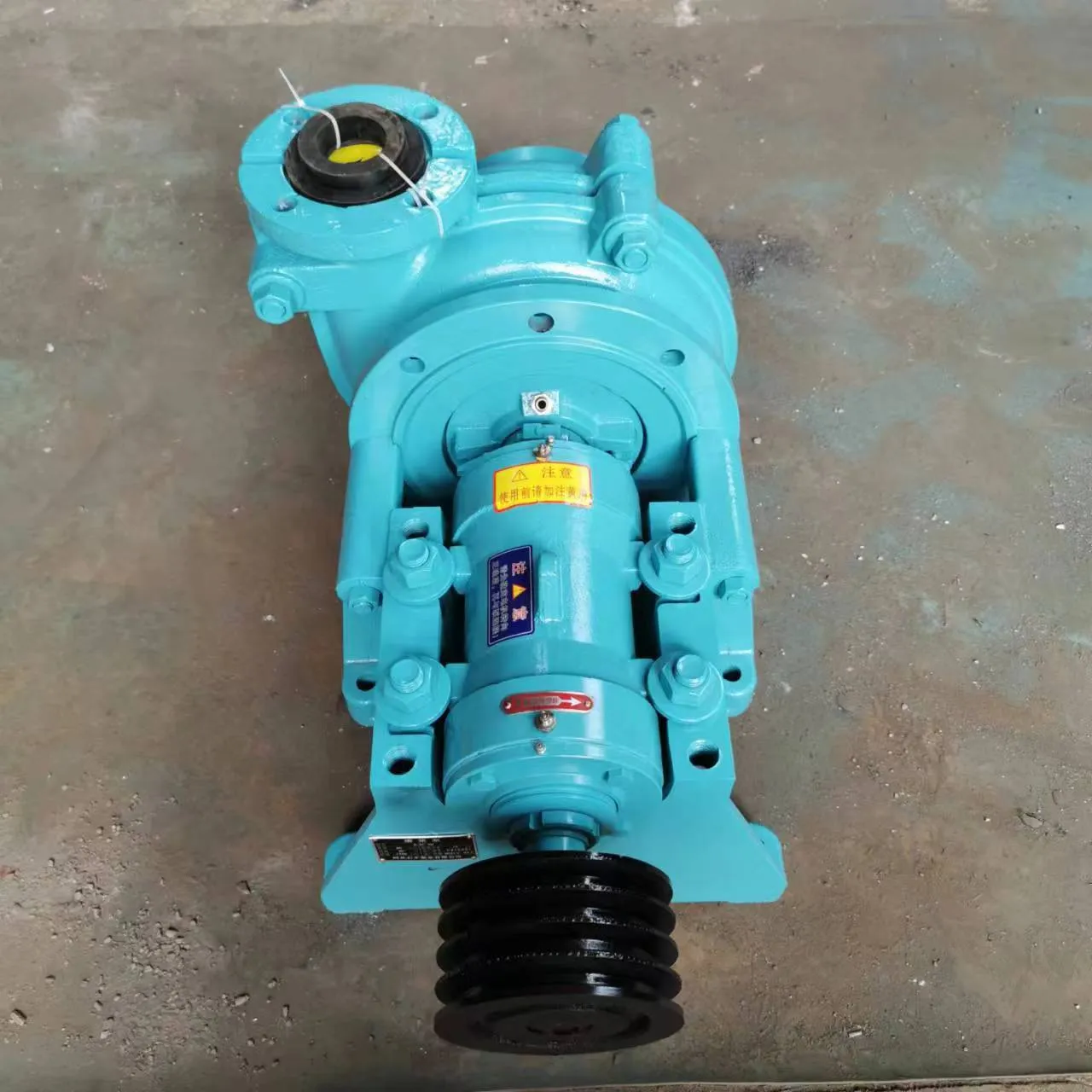
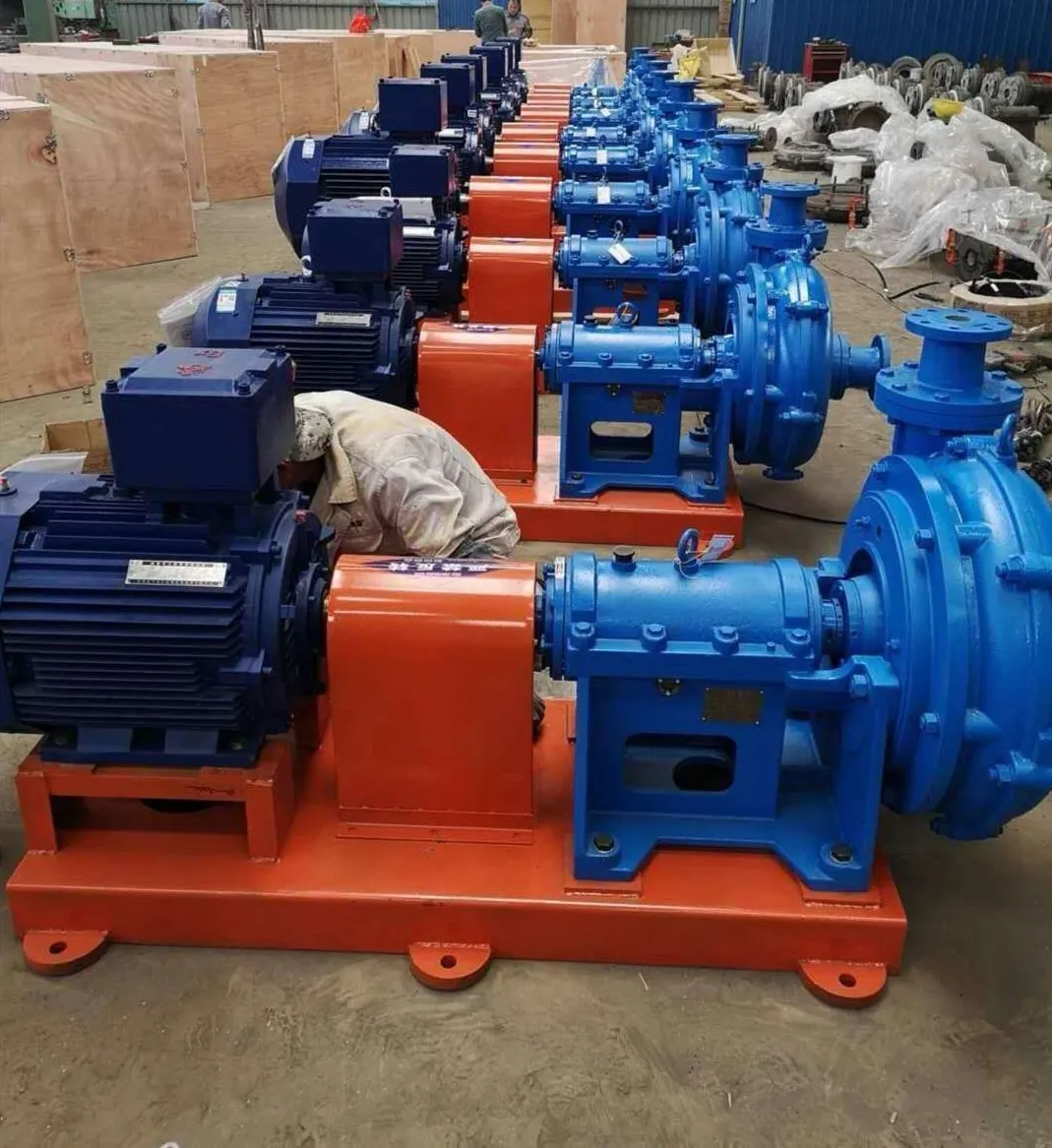
High head slurry pumps are critical components in numerous industrial processes, designed for the efficient and reliable transportation of abrasive and corrosive slurries at significant vertical heights. Wholesale suppliers of these pumps serve industries ranging from mining and mineral processing to wastewater treatment, dredging, and chemical handling. These pumps are distinguished by their robust construction and hydraulic design, enabling them to overcome substantial head pressures while maintaining flow rates appropriate for the specific application. The performance characteristics are heavily reliant on impeller design, casing configuration, and the selection of appropriate materials to withstand wear and chemical attack. This guide provides an in-depth technical overview of high head slurry pumps, covering material science, manufacturing processes, performance parameters, failure modes, and relevant industry standards, specifically geared towards informed procurement decisions.
Material Science & Manufacturing
The core components of a high head slurry pump—casing, impeller, and volute liner—are commonly constructed from high-chrome cast iron alloys (typically 27-30% chromium content). This material selection stems from its exceptional resistance to abrasive wear, a paramount concern when handling solid-laden slurries. The chromium carbides formed during the casting process provide a hard, wear-resistant surface. Other materials frequently employed include: stainless steel (304, 316, duplex grades) for corrosive environments; ceramic materials (alumina, zirconia) for extreme abrasion resistance in specialized applications; and rubber linings (natural rubber, EPDM) for cushioning impact and reducing noise. Manufacturing typically involves investment casting for complex impeller geometries, followed by heat treatment to optimize hardness and toughness. Casings are produced via sand casting or centrifugal casting, ensuring structural integrity under high pressure. The impeller’s hydrodynamic profile is critical; Computational Fluid Dynamics (CFD) analysis is extensively used to refine blade angles and optimize flow patterns. Welding processes, such as shielded metal arc welding (SMAW) or submerged arc welding (SAW), are used for joining casing sections and integrating wear-resistant liners. Strict quality control measures, including non-destructive testing (NDT) like radiography and ultrasonic testing, are essential to detect defects in castings and welds. Parameter control during heat treatment (temperature, holding time, cooling rate) directly impacts the material's microstructure and thus its wear resistance and tensile strength.
Performance & Engineering
High head slurry pump performance is dictated by several key engineering considerations. Head (expressed in meters or feet) is the vertical distance the pump can lift the slurry, directly related to impeller diameter, rotational speed, and fluid velocity. Flow rate (expressed in m³/h or gpm) represents the volume of slurry delivered per unit time, influenced by impeller design and casing geometry. Pump efficiency—the ratio of hydraulic power output to shaft power input—is paramount for minimizing energy consumption. Force analysis involves evaluating stresses within the pump casing and impeller due to internal pressure and external loads. Finite Element Analysis (FEA) is used extensively to predict stress concentrations and optimize component design to prevent failure. Environmental resistance is a crucial factor; pump materials must be selected to withstand the specific chemical composition and temperature of the slurry. Compliance requirements vary by region, encompassing safety standards (CE marking in Europe, UL listing in North America) and environmental regulations concerning noise emissions and energy efficiency. Cavitation, the formation and collapse of vapor bubbles within the pump, is a significant concern. Proper Net Positive Suction Head Available (NPSHa) calculation and pump placement are essential to avoid cavitation damage. Pump curves, which graphically depict head, flow rate, and efficiency, are indispensable tools for selecting the appropriate pump for a given application. Proper piping layout is vital to minimize head losses and ensure stable pump operation.
Technical Specifications
| Parameter | Unit | Typical Range (Standard Duty) | Typical Range (Heavy Duty) |
|---|---|---|---|
| Maximum Head | m | 30 - 80 | 80 - 150 |
| Maximum Flow Rate | m³/h | 50 - 200 | 150 - 400 |
| Maximum Solids Size | mm | 25 - 50 | 50 - 100 |
| Pump Speed | RPM | 1450 - 2900 | 1450 - 1750 |
| Casing Material | - | High Chrome Iron | Stainless Steel (Duplex) |
| Impeller Material | - | High Chrome Iron | High Chrome Iron/Ceramic |
Failure Mode & Maintenance
High head slurry pumps are susceptible to various failure modes. Abrasive wear is the most prevalent, leading to impeller erosion, casing wall thinning, and liner degradation. Cavitation damage manifests as pitting and erosion on impeller blades and casing surfaces. Corrosion, particularly in acidic or alkaline slurries, results in material loss and reduced component strength. Fatigue cracking can occur in the pump shaft or casing due to cyclical loading. Mechanical seal failure leads to leakage and potential pump seizure. Bearing failure is often caused by improper lubrication or overloading. Regular maintenance is crucial to mitigate these risks. This includes periodic inspection of impeller and casing wear, lubrication of bearings, replacement of mechanical seals, and monitoring of vibration levels. Non-destructive testing (NDT) methods, such as visual inspection, dye penetrant testing, and ultrasonic testing, can detect early signs of wear or cracking. Preventive maintenance schedules should be based on operating hours and slurry characteristics. For severe abrasive applications, frequent impeller replacement or liner refurbishment is necessary. Proper slurry preparation (screening, classification) can reduce the concentration of abrasive solids and extend pump life. Implementing a condition monitoring program, utilizing sensors to track parameters like vibration, temperature, and pressure, can provide early warning of potential failures and enable proactive maintenance interventions.
Industry FAQ
Q: What is the impact of slurry solids concentration on pump selection?
A: Higher solids concentrations dramatically increase abrasive wear rates. Selecting a pump with a larger impeller passage and more wear-resistant materials (e.g., high chrome iron, ceramic) is crucial. Reduced pump speed can also help minimize wear, although it may necessitate a larger pump to achieve the desired flow rate.
Q: How does the slurry's specific gravity affect pump performance?
A: Higher specific gravity slurries increase the head requirement for the pump. The pump must be sized to deliver the necessary head at the desired flow rate. Motor power requirements will also increase proportionally.
Q: What are the advantages and disadvantages of using rubber liners in slurry pumps?
A: Rubber liners provide excellent cushioning and noise reduction, and are effective in handling mildly abrasive slurries. However, they have limited chemical resistance and are susceptible to wear in highly abrasive applications. They are also prone to degradation from temperature extremes.
Q: What is the significance of NPSH (Net Positive Suction Head) in slurry pump operation?
A: Insufficient NPSH can lead to cavitation, which damages the impeller and reduces pump performance. Ensuring adequate NPSHa (Net Positive Suction Head Available) is critical for reliable operation. This involves careful consideration of pump placement, suction piping design, and slurry characteristics.
Q: How do I determine the optimal impeller speed for a given slurry application?
A: Optimal impeller speed is a balance between maximizing efficiency and minimizing wear. Lower speeds generally reduce wear but may require larger impellers to maintain flow. CFD analysis and wear modeling can assist in determining the optimal speed based on slurry characteristics and pump design.
Conclusion
The selection and maintenance of high head slurry pumps require a thorough understanding of material science, hydraulic principles, and the specific characteristics of the slurry being handled. Choosing the appropriate materials, optimizing pump design, and implementing a robust preventive maintenance program are essential for maximizing pump life and minimizing downtime. Wholesale suppliers play a critical role in providing technical expertise and supporting customers in making informed decisions.
Continued advancements in pump design, materials technology, and condition monitoring techniques will further enhance the performance and reliability of high head slurry pumps in demanding industrial applications. Prioritizing long-term cost of ownership, encompassing energy efficiency and reduced maintenance intervals, will be a key driver in future pump procurement strategies.
-
Precision at the Pump: How Better Machining Protects Flow and Uptime
News2026-11-20
-
Why Pump Reliability Begins Before the First Drop of Fluid
News2026-11-20
-
Beyond the Pump: Designing Safer Access Around Critical Water Infrastructure
News2026-11-20
-
Why Pumping Stations Depend on the Infrastructure Beneath the Pumps
News2026-11-20
-
Beyond the Pump Room: How Smarter Loading Protects Industrial Equipment
News2026-11-19
-
When Pumps Stop: Designing More Resilient Power for Critical Pumping Systems
News2026-11-19
-
The Hidden Role of Dust and Gas Monitoring in Reliable Pump Operations
News2026-11-19
-
The Hidden Role of Mineral Compounds in Extending Industrial Pump Lifespan
News2026-10-12
-
Why Pump System Reliability Depends on Precision Hose Assembly Methods
News2026-09-15
-
How Advanced Imaging Films Are Transforming Pump Component Quality Control
News2026-08-25
-
How Advanced Filtration Protects Pump Systems from Premature Wear and Costly Downtime
News2026-08-25
-
How Steel Material Selection Drives Pump Reliability in Heavy-Duty Systems
News2026-08-25
-
Ensuring Pump System Efficiency: The Role of High-Quality Pipe Fittings and Tubing
News2026-08-24
-
Optimizing Fluid Dynamics and Material Consistency in Industrial Processing
News2026-08-18
-
Innovations and Challenges in Hydraulic Systems for Heavy Machinery
News2026-08-13




