English
- Afrikaans
- Albanian
- Amharic
- Arabic
- Armenian
- Azerbaijani
- Basque
- Belarusian
- Bengali
- Bosnian
- Bulgarian
- Catalan
- Cebuano
- Corsican
- Croatian
- Czech
- Danish
- Dutch
- English
- Esperanto
- Estonian
- Finnish
- French
- Frisian
- Galician
- Georgian
- German
- Greek
- Gujarati
- Haitian Creole
- hausa
- hawaiian
- Hebrew
- Hindi
- Miao
- Hungarian
- Icelandic
- igbo
- Indonesian
- irish
- Italian
- Japanese
- Javanese
- Kannada
- kazakh
- Khmer
- Rwandese
- Korean
- Kurdish
- Kyrgyz
- Lao
- Latin
- Latvian
- Lithuanian
- Luxembourgish
- Macedonian
- Malgashi
- Malay
- Malayalam
- Maltese
- Maori
- Marathi
- Mongolian
- Myanmar
- Nepali
- Norwegian
- Norwegian
- Occitan
- Pashto
- Persian
- Polish
- Portuguese
- Punjabi
- Romanian
- Russian
- Samoan
- Scottish Gaelic
- Serbian
- Sesotho
- Shona
- Sindhi
- Sinhala
- Slovak
- Slovenian
- Somali
- Spanish
- Sundanese
- Swahili
- Swedish
- Tagalog
- Tajik
- Tamil
- Tatar
- Telugu
- Thai
- Turkish
- Turkmen
- Ukrainian
- Urdu
- Uighur
- Uzbek
- Vietnamese
- Welsh
- Bantu
- Yiddish
- Yoruba
- Zulu

Telephone: +86 13120555503
Email: frank@cypump.com


Apr . 01, 2024 17:55 Back to list
wholesale high head slurry pump Performance Engineering
Introduction
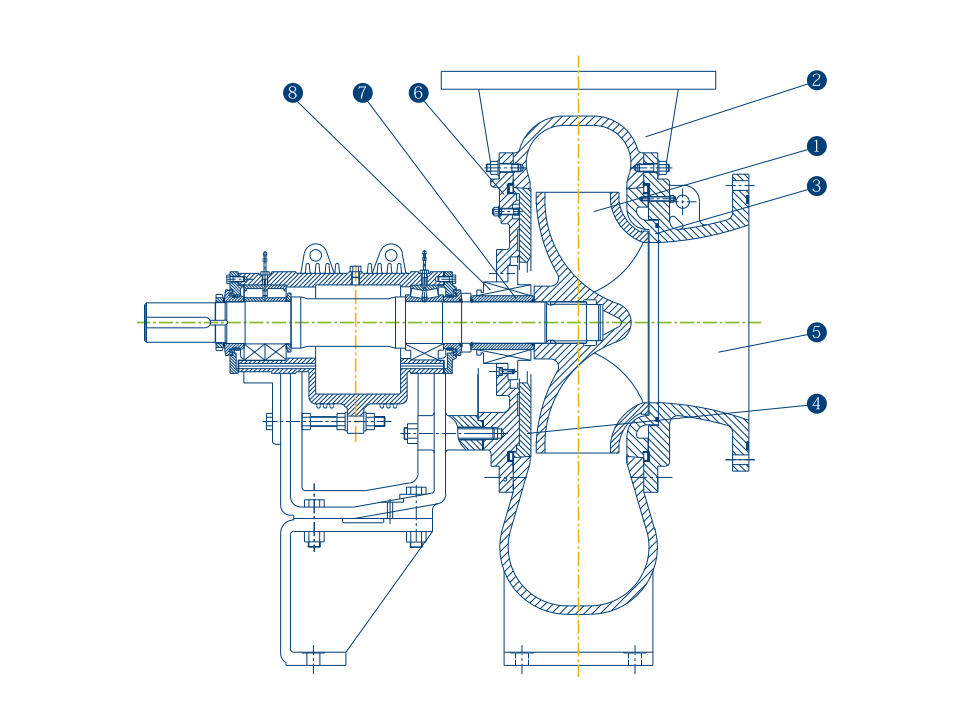
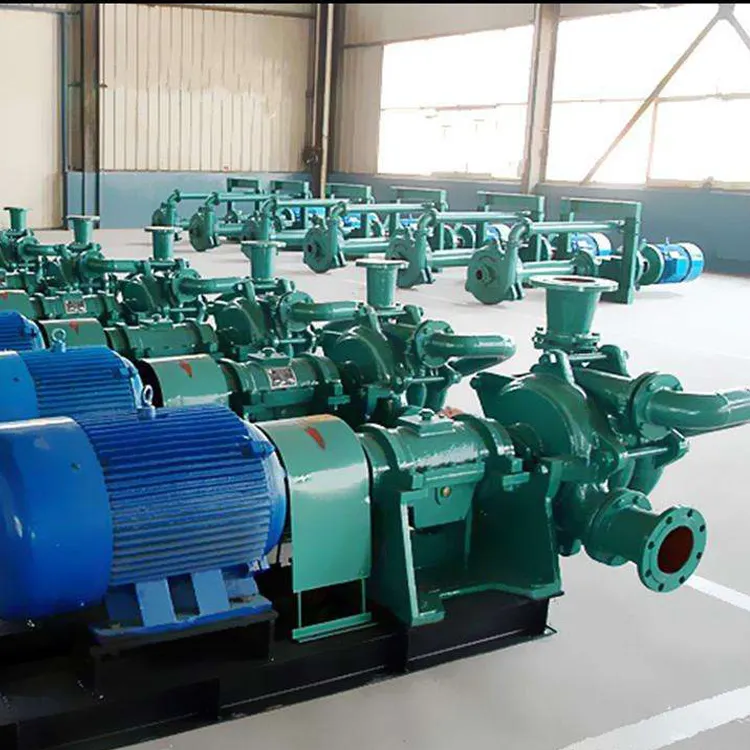
High head slurry pumps are centrifugal pumps specifically engineered for the transportation of abrasive, erosive, and corrosive slurries across significant vertical distances. Their technical position within the industry chain falls between upstream mining/processing operations and downstream processing or waste management facilities. Unlike standard centrifugal pumps, these units are built with robust materials and specialized hydraulic designs to withstand the severe conditions inherent in slurry handling. Core performance characteristics are defined by head (the height the slurry is lifted), flow rate (volume of slurry moved per unit time), and solids handling capability (maximum particle size and concentration the pump can process). A primary industry pain point is premature wear due to abrasive particles; therefore, material selection and impeller design are paramount. The rising demand for efficient and reliable slurry handling in mineral processing, wastewater treatment, and power generation drives the need for increasingly sophisticated high-head slurry pump technology. Optimization focuses on maximizing pump efficiency while minimizing total cost of ownership through extended component life and reduced maintenance.
Material Science & Manufacturing
The primary materials used in high head slurry pump construction are high-chromium cast irons (typically 26-28% Cr), specialized stainless steels (Duplex, Super Duplex, 316), and elastomer linings (natural rubber, synthetic rubber). High-chromium cast irons offer exceptional abrasion resistance due to the formation of hard chromium carbides within the microstructure. Stainless steels provide superior corrosion resistance, crucial in applications handling acidic or alkaline slurries. Elastomer linings offer a cost-effective solution for handling highly abrasive slurries, providing a sacrificial layer that protects the underlying metal components.
Manufacturing processes vary depending on component. Pump casings are typically manufactured via sand casting or investment casting. Sand casting is suitable for larger, simpler geometries, while investment casting allows for more complex designs with tighter tolerances. Impellers are often manufactured using centrifugal casting or lost wax casting. Welding processes, specifically shielded metal arc welding (SMAW) and flux-cored arc welding (FCAW), are employed for joining various components. Precise heat treatment is critical to achieve desired material properties, including hardness, tensile strength, and ductility. Critical parameters controlled during manufacturing include chemical composition verification, microstructure analysis, dimensional accuracy, and non-destructive testing (NDT) – radiographic testing (RT), ultrasonic testing (UT), and liquid penetrant testing (PT) – to detect defects. Shaft alignment is also a key parameter, ensuring smooth operation and minimizing bearing wear. The quality of surface finish on the impeller vanes also impacts hydraulic efficiency and resistance to erosion.
Performance & Engineering
The performance of a high head slurry pump is fundamentally governed by the principles of fluid mechanics, specifically the Bernoulli equation and the affinity laws. Force analysis considers hydraulic forces (pressure differentials, shear stresses), inertial forces (acceleration of the slurry), and gravitational forces. Cavitation is a significant concern, particularly at high heads and flow rates. It occurs when the absolute pressure at the pump inlet drops below the vapor pressure of the slurry, forming vapor bubbles that collapse violently, causing erosion damage. Net Positive Suction Head Required (NPSHr) must be carefully considered during pump selection and system design to prevent cavitation. Environmental resistance is addressed through material selection (corrosion resistance) and protective coatings (epoxy, polyurethane). Compliance requirements vary depending on the application and geographical location, but often include adherence to hydraulic institute standards, API standards (specifically API 610 for centrifugal pumps), and local environmental regulations regarding emissions and discharge. Functional implementation involves detailed hydraulic design of the impeller and volute casing to maximize efficiency and minimize wear. The impeller geometry directly impacts the head-capacity curve and the pump's ability to handle solids. Seal design (mechanical seals, packing glands) is critical for preventing leakage and maintaining pump efficiency.
Technical Specifications
| Parameter | Unit | Typical Range (Standard Duty) | Typical Range (Heavy Duty) |
|---|---|---|---|
| Head | m | 50-150 | 150-400 |
| Flow Rate | m³/h | 20-200 | 100-500 |
| Maximum Solids Size | mm | 25-50 | 50-100 |
| Slurry Concentration (Wt%) | % | Up to 30 | Up to 60 |
| Pump Material (Casing) | - | HT250 (High Chromium Iron) | Duplex Stainless Steel |
| Pump Material (Impeller) | - | High Chromium Iron | Super Duplex Stainless Steel with Hardfacing |
Failure Mode & Maintenance
Common failure modes in high head slurry pumps include impeller erosion, casing wear, seal failure, bearing failure, and shaft cracking. Impeller erosion is caused by the impact of abrasive particles, leading to loss of material and reduced pump performance. Casing wear occurs similarly, but is often concentrated in areas of high velocity flow. Seal failure results in leakage and loss of efficiency, typically caused by abrasive particles damaging the seal faces or improper installation. Bearing failure can be caused by lubrication failure, misalignment, or excessive load. Shaft cracking is a more serious failure mode, often resulting from fatigue stress or corrosion.
Preventative maintenance is crucial for extending pump life. Regular inspections should include visual checks for wear, vibration analysis to detect bearing issues, and lubrication checks. Scheduled maintenance should include impeller and casing replacement, seal replacement, and bearing replacement. Failure analysis should be conducted on failed components to identify the root cause of failure and implement corrective actions. Considerations for minimizing failures include proper pump selection for the specific application, appropriate slurry preparation (screening, desanding), and proper system design to minimize NPSHr and flow velocity. The use of wear-resistant materials and protective coatings can also significantly extend component life. Implementing a condition monitoring system with sensors to track parameters like vibration, temperature, and pressure can allow for predictive maintenance and prevent catastrophic failures.
Industry FAQ
Q: What is the impact of slurry particle size distribution on pump selection and performance?
A: Particle size distribution directly affects abrasion rates and pump efficiency. A wider distribution with larger particles increases abrasion, requiring more wear-resistant materials and potentially reducing pump life. Larger particle sizes can also reduce pump efficiency by increasing flow resistance. Pump selection must consider the maximum particle size and concentration to ensure proper solids handling capability.
Q: How does slurry viscosity affect pump performance and power consumption?
A: Higher slurry viscosity increases flow resistance, reducing pump capacity and increasing power consumption. Pumps handling viscous slurries require more powerful motors and may need to be operated at lower speeds to maintain acceptable performance. Selecting a pump with a larger impeller diameter can help mitigate the effects of viscosity.
Q: What are the key considerations for selecting a pump material for a corrosive slurry?
A: Material selection must be based on the chemical composition of the slurry and its concentration. Stainless steels (Duplex, Super Duplex) and specialized alloys (Hastelloy) are commonly used for corrosive slurries. Testing the material's corrosion resistance in a simulated slurry environment is recommended. Elastomer linings can also provide a protective barrier against corrosion.
Q: What is the role of the pump's suction lift in preventing cavitation?
A: Suction lift is the vertical distance between the pump inlet and the slurry source. Excessive suction lift reduces the available NPSHa (Net Positive Suction Head Available), increasing the risk of cavitation. Pump selection must ensure that NPSHa is greater than NPSHr by a sufficient margin to prevent cavitation. Minimizing suction lift and optimizing the suction piping layout are also important.
Q: How does pump speed impact wear rates and energy consumption?
A: Higher pump speeds generally increase wear rates due to increased impact velocity of abrasive particles. However, lower speeds can reduce capacity. Optimizing pump speed is a trade-off between wear and performance. Variable Frequency Drives (VFDs) can be used to adjust pump speed to match the specific application requirements and minimize energy consumption.
Conclusion
High head slurry pumps represent a critical component in numerous industrial processes requiring the efficient and reliable transportation of abrasive and corrosive slurries. Understanding the fundamental principles of fluid mechanics, material science, and failure modes is essential for proper pump selection, operation, and maintenance. The ongoing development of advanced materials, improved hydraulic designs, and predictive maintenance technologies continues to drive improvements in pump performance and lifespan.
Future trends in high head slurry pump technology will likely focus on further optimization of impeller designs for enhanced solids handling capability, the integration of smart sensors and data analytics for condition monitoring, and the development of more durable and corrosion-resistant materials. Implementing proactive maintenance strategies and adhering to relevant industry standards will be crucial for maximizing pump uptime and minimizing total cost of ownership.
-
Precision at the Pump: How Better Machining Protects Flow and Uptime
News2026-11-20
-
Why Pump Reliability Begins Before the First Drop of Fluid
News2026-11-20
-
Beyond the Pump: Designing Safer Access Around Critical Water Infrastructure
News2026-11-20
-
Why Pumping Stations Depend on the Infrastructure Beneath the Pumps
News2026-11-20
-
Beyond the Pump Room: How Smarter Loading Protects Industrial Equipment
News2026-11-19
-
When Pumps Stop: Designing More Resilient Power for Critical Pumping Systems
News2026-11-19
-
The Hidden Role of Dust and Gas Monitoring in Reliable Pump Operations
News2026-11-19
-
The Hidden Role of Mineral Compounds in Extending Industrial Pump Lifespan
News2026-10-12
-
Why Pump System Reliability Depends on Precision Hose Assembly Methods
News2026-09-15
-
How Advanced Imaging Films Are Transforming Pump Component Quality Control
News2026-08-25
-
How Advanced Filtration Protects Pump Systems from Premature Wear and Costly Downtime
News2026-08-25
-
How Steel Material Selection Drives Pump Reliability in Heavy-Duty Systems
News2026-08-25
-
Ensuring Pump System Efficiency: The Role of High-Quality Pipe Fittings and Tubing
News2026-08-24
-
Optimizing Fluid Dynamics and Material Consistency in Industrial Processing
News2026-08-18
-
Innovations and Challenges in Hydraulic Systems for Heavy Machinery
News2026-08-13




