English
- Afrikaans
- Albanian
- Amharic
- Arabic
- Armenian
- Azerbaijani
- Basque
- Belarusian
- Bengali
- Bosnian
- Bulgarian
- Catalan
- Cebuano
- Corsican
- Croatian
- Czech
- Danish
- Dutch
- English
- Esperanto
- Estonian
- Finnish
- French
- Frisian
- Galician
- Georgian
- German
- Greek
- Gujarati
- Haitian Creole
- hausa
- hawaiian
- Hebrew
- Hindi
- Miao
- Hungarian
- Icelandic
- igbo
- Indonesian
- irish
- Italian
- Japanese
- Javanese
- Kannada
- kazakh
- Khmer
- Rwandese
- Korean
- Kurdish
- Kyrgyz
- Lao
- Latin
- Latvian
- Lithuanian
- Luxembourgish
- Macedonian
- Malgashi
- Malay
- Malayalam
- Maltese
- Maori
- Marathi
- Mongolian
- Myanmar
- Nepali
- Norwegian
- Norwegian
- Occitan
- Pashto
- Persian
- Polish
- Portuguese
- Punjabi
- Romanian
- Russian
- Samoan
- Scottish Gaelic
- Serbian
- Sesotho
- Shona
- Sindhi
- Sinhala
- Slovak
- Slovenian
- Somali
- Spanish
- Sundanese
- Swahili
- Swedish
- Tagalog
- Tajik
- Tamil
- Tatar
- Telugu
- Thai
- Turkish
- Turkmen
- Ukrainian
- Urdu
- Uighur
- Uzbek
- Vietnamese
- Welsh
- Bantu
- Yiddish
- Yoruba
- Zulu

Telephone: +86 13120555503
Email: frank@cypump.com


Apr . 01, 2024 17:55 Back to list
weir slurry pumps Technical Analysis and Manufacturing Specifications
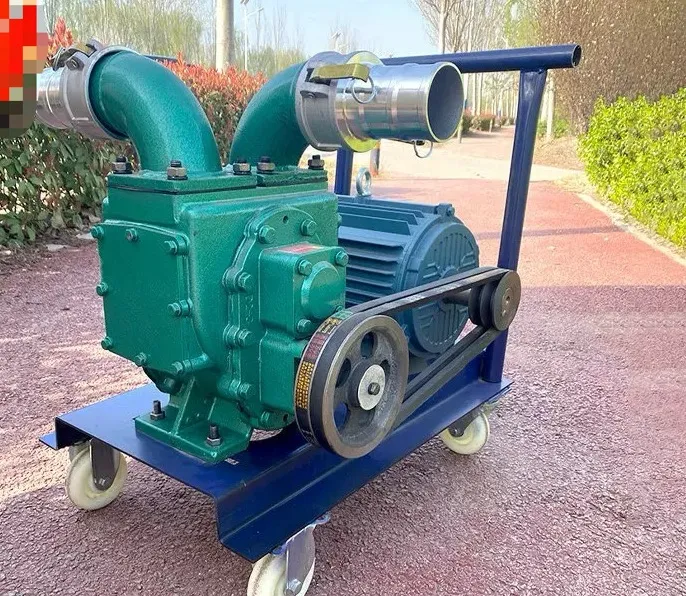
Weir Slurry Pumps: Technical Analysis and Manufacturing Specifications
Weir slurry pumps represent a critical engineering solution in the transport of abrasive, corrosive, and high-density fluids across the mining, mineral processing, and industrial dredging sectors. Positioned as the primary kinetic energy source in a slurry circuit, these pumps are designed to handle non-Newtonian fluids—mixtures containing solid particles suspended in a liquid carrier. The technical challenge inherent in slurry pumping is the simultaneous management of hydrodynamic efficiency and extreme tribological wear. Unlike standard centrifugal pumps, weir slurry pumps must operate under conditions of intense impingement erosion and corrosive chemical attack. The core performance of these systems is defined by their ability to maintain a consistent volumetric flow rate while minimizing the rate of material loss in the impeller and liner, ensuring operational stability in high-tonnage industrial environments.
Material Science & Manufacturing
The longevity of weir slurry pumps is fundamentally dependent on the metallurgical composition of their wetted parts. The primary industry challenge is "erosive wear," where high-velocity particles collide with the pump surface. To counter this, high-chromium white irons (ASTM A532) are employed. These alloys typically contain 25% to 28% chromium, creating a microstructure of hard M7C3 carbides embedded in a martensitic matrix. The high hardness (typically 600+ Brinell) provides the necessary resistance to abrasion, while the chromium content ensures a passive oxide layer to mitigate corrosive oxidation.
Manufacturing processes utilize precision investment casting to ensure geometric accuracy of the impeller vanes, which is critical for reducing turbulence and localized cavitation. The pump casing undergoes a rigorous "liner replacement" design strategy, where removable wear liners—made from either high-chrome alloys or natural rubber—are inserted into a robust steel outer shell. Rubber liners are specifically utilized for finer particles (below 0.1mm) as they exhibit an elastic rebound effect, absorbing the kinetic energy of the impact rather than resisting it through hardness. Key parameter control during manufacturing involves the heat treatment cycle of the chromium alloys; quenching and tempering are strictly monitored to avoid the formation of brittle phases that could lead to catastrophic fracture under hydraulic shock.
Performance & Engineering
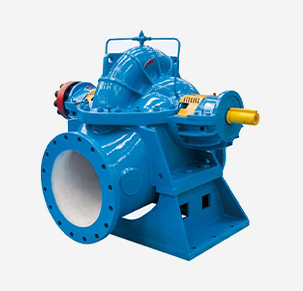
Engineering a slurry pump requires a complex force analysis, primarily focusing on the interaction between the fluid velocity and the particle trajectory. The "critical settling velocity" is the primary engineering constraint; if the flow velocity drops below this threshold, particles precipitate, leading to sedimentation and total pipe blockage. To prevent this, weir slurry pumps are engineered with optimized hydraulic profiles that maintain a turbulent flow regime, ensuring particles remain in suspension.
Environmental resistance is managed through advanced sealing systems. Because slurry is inherently abrasive, standard mechanical seals fail rapidly. Therefore, "expeller seals" or "gland packing with external flush water" are implemented. The expeller seal uses a centrifugal mechanism to create a pressure barrier, pushing the slurry away from the shaft entry and preventing contaminated fluid from reaching the bearing housing. Furthermore, compliance with vibration and noise standards is achieved through the use of heavy-duty reinforced bases and precision-balanced impellers, which reduce the radial load on the shaft and prevent premature fatigue of the bearings.
Technical Specifications
| Parameter Dimension | High-Chrome Alloy Spec | Natural Rubber Spec | Duplex Stainless Steel | Performance Metric |
|---|---|---|---|---|
| Hardness (HB/Shore A) | 600 - 650 HB | 60 - 70 Shore A | 250 - 300 HB | Abrasion Resistance |
| Max Particle Size (mm) | Up to 100mm | Up to 2mm | Up to 20mm | Handling Capacity |
| Corrosion Resistance | Moderate (Acidic) | High (General) | Extreme (Chloride) | Chemical Stability |
| Operational Temp (°C) | -20 to 150°C | -10 to 70°C | -40 to 200°C | Thermal Range |
| Wear Life Factor | High (Coarse Slurry) | High (Fine Slurry) | Moderate (Corrosive) | MTBF Analysis |
| Surface Roughness (Ra) | 3.2 - 6.3 μm | N/A (Elastic) | 0.8 - 1.6 μm | Hydraulic Efficiency |
Failure Mode & Maintenance
Failure analysis of weir slurry pumps typically reveals three primary degradation modes: cavitation erosion, abrasive wear, and fatigue cracking. Cavitation occurs when the Net Positive Suction Head Available (NPSHa) falls below the Required (NPSHr), creating vapor bubbles that implode against the impeller surface, causing "pitting." Abrasive wear is most prevalent at the volute tongue and the impeller eye, where velocity gradients are highest. Fatigue cracking often originates at the shaft-impeller interface due to cyclic loading caused by unbalanced slurry density.
Professional maintenance involves a "Predictive Maintenance" (PdM) approach. Vibration analysis is used to detect bearing wear or impeller imbalance before failure. For the wear liners, ultrasound thickness gauging is employed to monitor the remaining wall thickness without dismantling the pump. When replacing liners, it is imperative to ensure a vacuum-tight fit; any gap between the liner and the casing allows slurry to seep into the outer shell, causing "hidden corrosion" and potential casing rupture. The impeller must be dynamically balanced to ISO 1940 standards during every rebuild to prevent shaft deflection.
Industry FAQ
Q: How do we determine whether to use a chrome or rubber liner for a specific slurry application?
A: The selection depends on the particle size and the nature of the abrasion. High-chrome alloys are required for coarse, sharp-edged particles that cause "cutting" wear. Natural rubber is superior for fine particles that cause "scrubbing" wear, as the elastic property of rubber allows the material to deform and recover, significantly extending the life of the liner.
Q: What is the primary cause of premature impeller failure in high-density slurry pumping?
A: The most common cause is the combination of cavitation and abrasive impingement. When the pump is operated far from its Best Efficiency Point (BEP), internal recirculation creates low-pressure zones. This facilitates cavitation, which strips the protective oxide layer from the metal, leaving the raw surface exposed to rapid abrasive wear.
Q: How does the slurry concentration affect the pump's NPSH requirements?
A: As slurry concentration increases, the apparent viscosity of the fluid rises, increasing the frictional head loss in the suction piping. This reduces the NPSHa. Therefore, for high-density slurries, the pump must be installed with a higher suction head or a larger diameter suction pipe to prevent cavitation.
Q: Why is the "expeller seal" preferred over traditional mechanical seals in weir slurry pumps?
A: Mechanical seals rely on a thin lubricating film between two flat faces. Abrasive particles in the slurry penetrate this film, causing rapid scoring and seal failure. An expeller seal uses a rotating disk to centrifugally propel the fluid away from the shaft, creating a virtual seal that requires no contacting parts in the slurry stream.
Q: What are the indicators that a slurry pump is operating in a "settling" condition?
A: Indicators include a gradual increase in motor current (Amperage), a decrease in discharge pressure, and an increase in vibration levels. This suggests that solids are accumulating in the volute or the discharge line, increasing the rotational resistance and disrupting the hydraulic balance.
Conclusion
The technical efficacy of weir slurry pumps is predicated on the synergistic integration of advanced metallurgy and fluid dynamics. By leveraging high-chromium alloys and precision-engineered hydraulic profiles, these systems successfully mitigate the destructive forces of abrasion and corrosion. The transition from reactive to predictive maintenance, underpinned by ultrasonic gauging and vibration analysis, ensures that operational downtime is minimized while the structural integrity of the pump is preserved under extreme loading conditions.
Looking forward, the industry is moving toward the integration of smart sensors and variable frequency drives (VFDs) to optimize the flow velocity in real-time, further reducing wear and energy consumption. For procurement and engineering teams, the priority must remain on the precise matching of liner materials to slurry characteristics, as this remains the most significant variable in determining the total cost of ownership and the lifecycle performance of the pumping system.
-
sump pump for septic systems Material Science Manufacturing
News2026-05-20
-
sump pump and ejector pump Material Science Manufacturing
News2026-05-20
-
sewage treatment plant pumps Performance Analysis
News2026-05-20
-
sewage tank pump Material Science and Manufacturing
News2026-05-20
-
sewage pump for septic tank Performance Analysis
News2026-05-20
-
Sewage Pump and Tank Performance Analysis
News2026-05-19
-
Sewage Ejector Pump Replacement Performance Analysis
News2026-05-19
-
sewage ejector pump for basement bathroom Material Science Manufacturing
News2026-05-19
-
sewage ejection pump Material Science and Manufacturing
News2026-05-19
-
in line sewage pump Performance Analysis
News2026-05-19
-
effluent sump pump Performance Analysis
News2026-05-18
-
best grinder pump for sewage Performance Engineering
News2026-05-18
-
basement waste water pump Performance Engineering
News2026-05-18
-
sump pump sewer Performance Analysis
News2026-05-18
-
sump pump for sewer Performance Analysis
News2026-05-18




