English
- Afrikaans
- Albanian
- Amharic
- Arabic
- Armenian
- Azerbaijani
- Basque
- Belarusian
- Bengali
- Bosnian
- Bulgarian
- Catalan
- Cebuano
- Corsican
- Croatian
- Czech
- Danish
- Dutch
- English
- Esperanto
- Estonian
- Finnish
- French
- Frisian
- Galician
- Georgian
- German
- Greek
- Gujarati
- Haitian Creole
- hausa
- hawaiian
- Hebrew
- Hindi
- Miao
- Hungarian
- Icelandic
- igbo
- Indonesian
- irish
- Italian
- Japanese
- Javanese
- Kannada
- kazakh
- Khmer
- Rwandese
- Korean
- Kurdish
- Kyrgyz
- Lao
- Latin
- Latvian
- Lithuanian
- Luxembourgish
- Macedonian
- Malgashi
- Malay
- Malayalam
- Maltese
- Maori
- Marathi
- Mongolian
- Myanmar
- Nepali
- Norwegian
- Norwegian
- Occitan
- Pashto
- Persian
- Polish
- Portuguese
- Punjabi
- Romanian
- Russian
- Samoan
- Scottish Gaelic
- Serbian
- Sesotho
- Shona
- Sindhi
- Sinhala
- Slovak
- Slovenian
- Somali
- Spanish
- Sundanese
- Swahili
- Swedish
- Tagalog
- Tajik
- Tamil
- Tatar
- Telugu
- Thai
- Turkish
- Turkmen
- Ukrainian
- Urdu
- Uighur
- Uzbek
- Vietnamese
- Welsh
- Bantu
- Yiddish
- Yoruba
- Zulu

Telephone: +86 13120555503
Email: frank@cypump.com


Apr . 01, 2024 17:55 Back to list
weir slurry pumping handbook Engineering Specifications and Fluid Dynamics
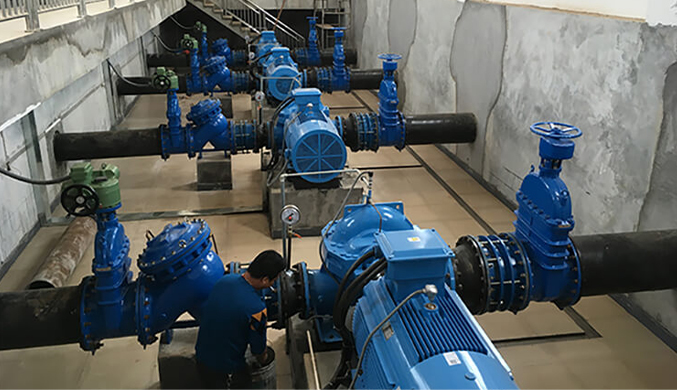
Weir Slurry Pumping Handbook: Engineering Specifications and Fluid Dynamics
The transport of abrasive slurries—complex fluids consisting of solid particulates suspended in a liquid carrier—represents one of the most challenging operational requirements in the mining, dredging, and chemical processing industries. The Weir slurry pumping handbook framework focuses on the critical intersection of centrifugal pump hydraulics and material science. In the industrial chain, slurry pumping systems serve as the primary conduit for moving tailings, mineral concentrates, and ore slurries from extraction points to processing plants. The core performance of these systems is measured by their ability to maintain a critical carrying velocity to prevent solids deposition while minimizing the erosive wear on internal components. Understanding the rheological behavior of the slurry, including Newtonian and non-Newtonian flow characteristics, is essential for optimizing the Total Dynamic Head (TDH) and ensuring the longevity of the pumping infrastructure under extreme abrasive conditions.
Material Science & Manufacturing
The manufacturing of slurry pumps necessitates materials that exhibit an exceptional balance of hardness and toughness to withstand both impingement erosion and sliding abrasion. High-chrome white irons (ASTM A532) are the industry standard for liners and impellers due to their martensitic matrix embedded with primary M7C3 carbides, providing a hardness typically exceeding 600 HB. For applications involving highly acidic or corrosive slurries, duplex stainless steels or specialty rubber linings (natural rubber or nitrile) are employed. The rubber lining functions through an elastic deformation mechanism, where the material absorbs the kinetic energy of impacting particles rather than resisting them through hardness, effectively eliminating corrosion-erosion synergy.
The manufacturing process involves precision investment casting for impellers to ensure hydraulic efficiency and minimize turbulence-induced wear. Key parameter control during the casting process focuses on the cooling rate to control the carbide size and distribution; excessive cooling leads to brittle structures, while insufficient cooling results in coarse carbides that are easily plucked from the matrix. Furthermore, the machining of wear plates and shafts involves cryogenic treatment and precision grinding to achieve tolerances within microns, ensuring that the gap between the impeller and the suction liner is minimized to prevent recirculation and internal erosion.
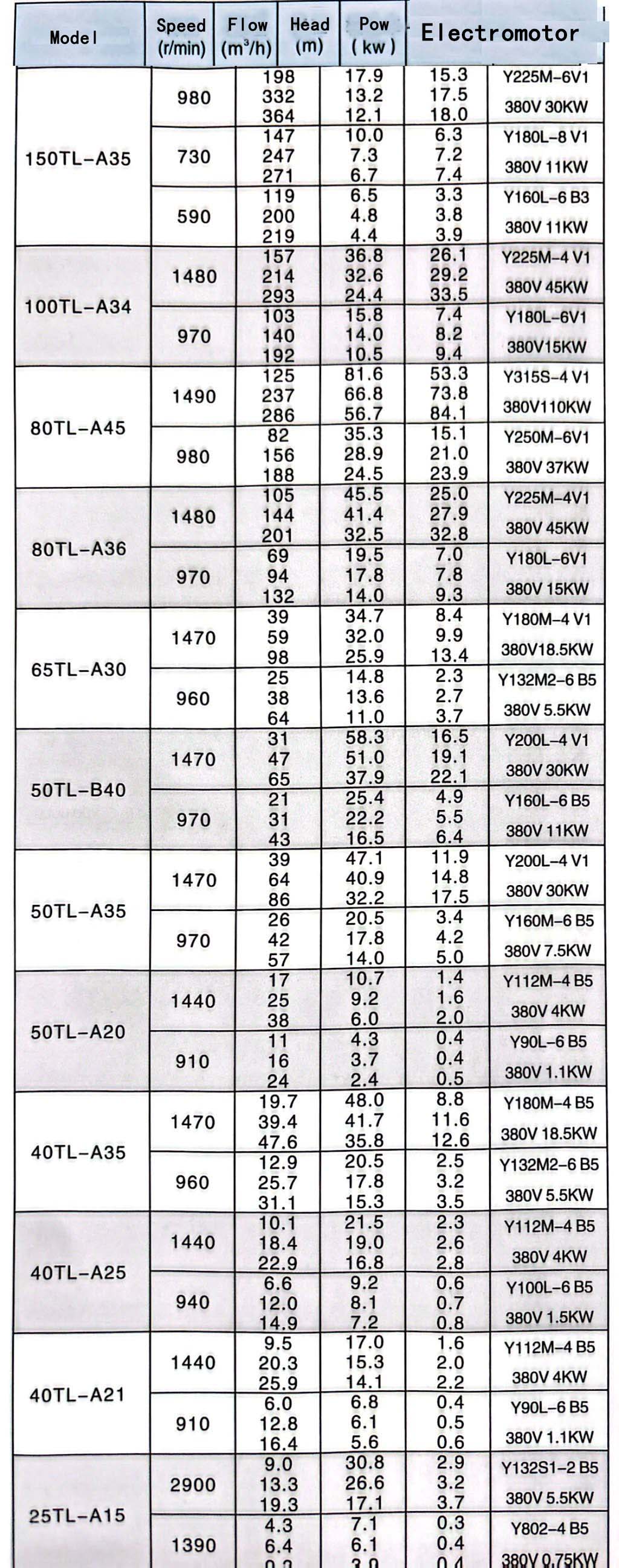
Performance & Engineering
Engineering a slurry pumping system requires a rigorous force analysis of the fluid-solid interaction. The most critical parameter is the Critical Settling Velocity (Vc), the minimum velocity required to keep solids suspended. If the actual flow velocity falls below Vc, sedimentation occurs, leading to pipeline blockage and increased friction losses. Engineers utilize the Durand equation or modified Hazen-Williams formulas to calculate these thresholds based on particle size distribution, slurry density (specific gravity), and viscosity.
Environmental resistance is addressed through the selection of mechanical seals or gland packing systems designed to handle leaked abrasive particles. The implementation of an external flushing system (clean water injection) is often required to prevent solids from entering the seal faces, which would otherwise lead to rapid face degradation. From a compliance perspective, the system must adhere to stringent vibration standards to prevent fatigue failure of the pump housing and supporting structures. Hydraulic performance is further optimized by adjusting the impeller diameter and the pump speed (VFD control) to match the system curve, thereby avoiding operation far from the Best Efficiency Point (BEP), which typically accelerates wear due to increased internal turbulence.
Technical Specifications
| Material Grade | Hardness (HB/HRC) | Corrosion Resistance | Primary Application |
|---|---|---|---|
| High Chrome (27% Cr) | 620 - 680 HB | Moderate | High-abrasion mineral slurries |
| Duplex Stainless Steel | 250 - 300 HB | Excellent | Corrosive/Abrasive chemical slurries |
| Natural Rubber Lining | 60 - 70 Shore A | High (Chemical dependent) | Fine particles, low-pressure transport |
| Hardened Alloy Steel | 450 - 550 HB | Low | Heavy-duty ore handling |
| Ceramic Alumina | 1200+ HV | Very High | Ultra-abrasive precision pumping |
| High Silica Iron | 550 - 600 HB | Moderate | General purpose industrial slurry |
Failure Mode & Maintenance
Failure analysis in slurry pumping typically reveals four primary modes: erosive wear, cavitation, fatigue cracking, and chemical degradation. Erosive wear is most prevalent at the impeller vanes and the volute tongue, where high-velocity fluid impinges on the surface. Cavitation occurs when the Net Positive Suction Head Available (NPSHa) drops below the Net Positive Suction Head Required (NPSHr), causing vapor bubbles to collapse and pit the metal surface, which then accelerates erosive wear. Fatigue cracking often originates from misalignment of the pump and motor shafts, leading to cyclic loading on the bearings and shaft.
Professional maintenance protocols involve the implementation of a Predictive Maintenance (PdM) strategy. This includes ultrasonic thickness gauging of the volute liner to determine the remaining wall thickness without dismantling the pump. Vibration analysis is used to detect bearing wear and impeller imbalance. To mitigate failure, operators should employ a "wear-part replacement schedule" based on the calculated wear rate of the specific slurry. For rubber-lined pumps, inspection for delamination (separation of rubber from the steel shell) is critical, as any void can lead to rapid "ballooning" and subsequent rupture under pressure.
Industry FAQ
Q: How is the critical carrying velocity determined for a non-Newtonian slurry?
A: For non-Newtonian fluids, the apparent viscosity changes with the shear rate. We utilize a rheometer to establish the flow curve (shear stress vs. shear rate) and apply the Bingham Plastic or Power Law model to calculate the yield stress. The critical velocity is then determined by ensuring the shear stress at the pipe wall exceeds the yield stress of the slurry plus the settling force of the largest particle size fraction.
Q: Why does rubber lining fail in high-pressure applications compared to high-chrome alloys?
A: Rubber is an elastomer; under extreme pressure, it can undergo permanent deformation or "blow-out" if the bonding agent fails or if there are voids in the lining. High-chrome alloys provide structural rigidity and resist deformation, making them suitable for high-pressure discharge, whereas rubber is preferred for lower-pressure, highly abrasive, or corrosive environments where impact energy absorption is required.
Q: What is the impact of solids concentration (Cw) on pump efficiency?
A: As the concentration by weight (Cw) increases, the slurry density increases, which raises the power requirement (Brake Horsepower) to maintain the same flow rate. High concentrations also increase the viscosity, leading to higher friction losses in the piping and a decrease in the pump's hydraulic efficiency due to increased internal skin friction and turbulence.
Q: How do we prevent "sanding-in" during pump shutdown?
A: To prevent solids from settling and blocking the pump or pipeline during shutdown, a flushing sequence must be implemented. This involves switching the slurry feed to a clean water source to purge all solids from the system before the pump is fully stopped. In critical systems, automated flush valves are integrated into the PLC logic to ensure this process is completed regardless of operator intervention.
Q: Which seal type is most effective for heavy-duty slurry service?
A: An expeller seal (or an external mechanical seal with a pressurized flush) is most effective. The expeller creates a centrifugal barrier that flings the slurry away from the shaft end, preventing particles from reaching the atmospheric seal. When combined with a clean water flush (API Plan 32 or 54), it ensures that no abrasive solids penetrate the sealing interface.
Conclusion
The engineering of slurry pumping systems is a multidisciplinary challenge that requires the synchronization of fluid mechanics, metallurgy, and mechanical design. By precisely calculating the critical carrying velocity and selecting materials based on the specific erosive-corrosive profile of the medium, operators can significantly extend the Mean Time Between Failures (MTBF) and reduce the Total Cost of Ownership (TCO). The transition from reactive to predictive maintenance, underpinned by thickness gauging and vibration analysis, is essential for maintaining operational continuity in high-throughput industrial environments.
Looking forward, the integration of Computational Fluid Dynamics (CFD) and smart sensors will allow for real-time optimization of pump speeds based on varying slurry densities. The industry must continue to evolve toward more sustainable material solutions and energy-efficient hydraulic designs to meet increasing environmental regulations and operational demands. Ultimately, the rigor applied to the initial specification and the discipline maintained during maintenance define the success of any slurry transport infrastructure.
-
sump pump for septic systems Material Science Manufacturing
News2026-05-20
-
sump pump and ejector pump Material Science Manufacturing
News2026-05-20
-
sewage treatment plant pumps Performance Analysis
News2026-05-20
-
sewage tank pump Material Science and Manufacturing
News2026-05-20
-
sewage pump for septic tank Performance Analysis
News2026-05-20
-
Sewage Pump and Tank Performance Analysis
News2026-05-19
-
Sewage Ejector Pump Replacement Performance Analysis
News2026-05-19
-
sewage ejector pump for basement bathroom Material Science Manufacturing
News2026-05-19
-
sewage ejection pump Material Science and Manufacturing
News2026-05-19
-
in line sewage pump Performance Analysis
News2026-05-19
-
effluent sump pump Performance Analysis
News2026-05-18
-
best grinder pump for sewage Performance Engineering
News2026-05-18
-
basement waste water pump Performance Engineering
News2026-05-18
-
sump pump sewer Performance Analysis
News2026-05-18
-
sump pump for sewer Performance Analysis
News2026-05-18




