English
- Afrikaans
- Albanian
- Amharic
- Arabic
- Armenian
- Azerbaijani
- Basque
- Belarusian
- Bengali
- Bosnian
- Bulgarian
- Catalan
- Cebuano
- Corsican
- Croatian
- Czech
- Danish
- Dutch
- English
- Esperanto
- Estonian
- Finnish
- French
- Frisian
- Galician
- Georgian
- German
- Greek
- Gujarati
- Haitian Creole
- hausa
- hawaiian
- Hebrew
- Hindi
- Miao
- Hungarian
- Icelandic
- igbo
- Indonesian
- irish
- Italian
- Japanese
- Javanese
- Kannada
- kazakh
- Khmer
- Rwandese
- Korean
- Kurdish
- Kyrgyz
- Lao
- Latin
- Latvian
- Lithuanian
- Luxembourgish
- Macedonian
- Malgashi
- Malay
- Malayalam
- Maltese
- Maori
- Marathi
- Mongolian
- Myanmar
- Nepali
- Norwegian
- Norwegian
- Occitan
- Pashto
- Persian
- Polish
- Portuguese
- Punjabi
- Romanian
- Russian
- Samoan
- Scottish Gaelic
- Serbian
- Sesotho
- Shona
- Sindhi
- Sinhala
- Slovak
- Slovenian
- Somali
- Spanish
- Sundanese
- Swahili
- Swedish
- Tagalog
- Tajik
- Tamil
- Tatar
- Telugu
- Thai
- Turkish
- Turkmen
- Ukrainian
- Urdu
- Uighur
- Uzbek
- Vietnamese
- Welsh
- Bantu
- Yiddish
- Yoruba
- Zulu

Telephone: +86 13120555503
Email: frank@cypump.com


Apr . 01, 2024 17:55 Back to list
Water Well Pump Service Performance Engineering
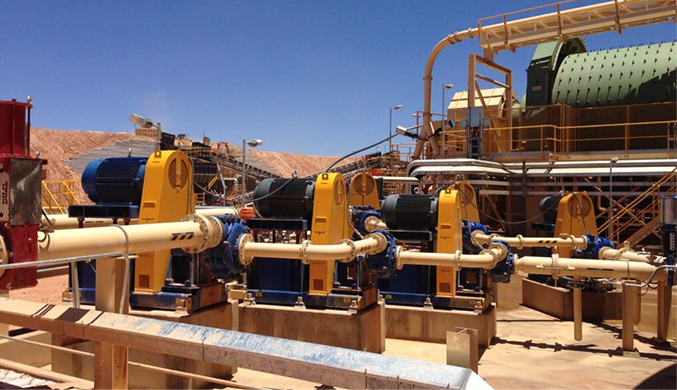
Introduction
Water well pump service encompasses the installation, maintenance, repair, and eventual replacement of submersible and jet pumps utilized to extract groundwater from aquifers. This field is critical for potable water supply, irrigation, industrial processes, and dewatering applications. The industry chain positions pump service providers between pump manufacturers, well drilling contractors, and end-users – ranging from individual homeowners to large agricultural operations and municipalities. Core performance metrics include flow rate (gallons per minute – GPM), total dynamic head (TDH) – representing the total height water must be lifted, pump efficiency, power consumption, and longevity. A primary industry pain point is the prevalence of corrosion and scaling within wells, leading to premature pump failure and costly repairs. Another significant challenge lies in accurately diagnosing pump issues remotely, minimizing downtime and associated costs. The increasing demand for groundwater coupled with declining aquifer levels necessitates advanced pump technologies and proactive maintenance strategies.
Material Science & Manufacturing
Water well pumps are predominantly constructed from cast iron, stainless steel (specifically 304, 316, and duplex grades), and engineered plastics like Noryl. Cast iron provides cost-effectiveness and machinability, but is susceptible to corrosion; therefore, it's often coated with epoxy or polyurethane. Stainless steel offers superior corrosion resistance, particularly crucial in aggressive water chemistries. Noryl, a polyphenylene oxide (PPO) composite, is employed for impellers and diffusers due to its high strength-to-weight ratio, resistance to hydraulic shock, and chemical inertness. Manufacturing processes vary based on component. Pump housings are typically produced via sand casting, followed by machining to precise tolerances. Impellers utilize investment casting or injection molding (for Noryl parts). Motor stators are wound with copper wire and encapsulated in epoxy resin. Key parameter control focuses on material composition (verified through spectroscopic analysis), casting integrity (radiographic inspection), machining precision (coordinate measuring machines – CMM), and epoxy encapsulation quality (dielectric strength testing). Weld integrity, critical for pump connections, is assured through non-destructive testing (NDT) methods like ultrasonic testing and liquid penetrant inspection. Furthermore, proper heat treatment of metal components is essential to achieve optimal mechanical properties and prevent stress corrosion cracking.
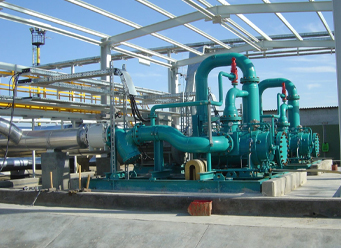
Performance & Engineering
Pump performance is governed by hydraulic principles, specifically Bernoulli's equation and the affinity laws. Force analysis involves evaluating radial and axial loads on the pump shaft and bearings. Environmental resistance concerns center around corrosion from dissolved minerals (iron, manganese, sulfides), abrasion from sand and silt, and the potential for galvanic corrosion when dissimilar metals are in contact. Compliance requirements include National Electrical Manufacturers Association (NEMA) standards for motor efficiency and safety, and local regulations pertaining to well construction and water quality. Functional implementation involves careful pump selection based on well characteristics (static water level, drawdown, well diameter), required flow rate, and total dynamic head. Pump curves, provided by manufacturers, illustrate the pump's performance characteristics across a range of flow rates and heads. Proper electrical grounding is vital to prevent electrical shock hazards and protect the pump motor from damage. Furthermore, variable frequency drives (VFDs) are increasingly employed to optimize pump performance, reduce energy consumption, and mitigate water hammer effects. The design of the check valve is crucial to prevent backflow and water column separation, which can cause significant stress on the pump and piping.
Technical Specifications
| Pump Type | Horsepower (HP) | Flow Rate (GPM) | Total Dynamic Head (ft) |
|---|---|---|---|
| Submersible | 3 | 20-40 | 100-200 |
| Submersible | 5 | 30-60 | 150-300 |
| Submersible | 10 | 50-100 | 250-450 |
| Jet Pump (Shallow Well) | 1 | 10-20 | 25-50 |
| Jet Pump (Deep Well) | 3 | 20-40 | 100-200 |
| Stainless Steel Submersible | 7.5 | 40-70 | 200-350 |
Failure Mode & Maintenance
Common failure modes include bearing failure (due to lack of lubrication or contamination), impeller damage (from abrasion or fatigue), motor winding failure (from overheating or insulation breakdown), and seal failure (leading to water ingress). Corrosion and scaling contribute significantly to pump degradation, particularly in aggressive water chemistries. Fatigue cracking can occur in pump shafts and housings due to cyclic loading. Delamination of epoxy coatings reduces corrosion resistance. Oxidation of electrical connections increases resistance and can lead to motor failure. Preventive maintenance is crucial and includes regular well inspections (to assess water quality and static water level), pump performance monitoring (flow rate, pressure, amperage), bearing lubrication, seal replacement, and electrical connection checks. When diagnosing a pump failure, a thorough investigation is necessary, including checking the power supply, testing the motor windings, inspecting the pump intake for blockage, and analyzing the water for contaminants. Periodic pump pull testing and cleaning removes accumulated scale and debris, extending pump life. Proper storage of replacement parts in a dry environment prevents corrosion and ensures readiness for repairs.
Industry FAQ
Q: What is the typical lifespan of a submersible well pump?
A: The lifespan of a submersible well pump typically ranges from 7 to 15 years, depending on water quality, usage frequency, and maintenance practices. Pumps operating in corrosive water or experiencing frequent start-stop cycles tend to have shorter lifespans. Regular maintenance, including cleaning and inspection, can significantly extend pump life.
Q: How do I determine the correct pump size for my well?
A: Determining the correct pump size requires calculating the required flow rate and total dynamic head. Flow rate depends on water demand, while total dynamic head considers the static water level, drawdown, friction losses in the piping, and any elevation changes. Pump curves should be consulted to select a pump that delivers the desired flow rate at the calculated head.
Q: What are the signs that my well pump is failing?
A: Signs of a failing well pump include reduced water pressure, fluctuating water flow, noisy operation (grinding or humming sounds), tripped circuit breakers, and the pump cycling on and off frequently. These symptoms may indicate a blockage, motor failure, or other mechanical issues.
Q: What can be done to prevent corrosion in a well pump?
A: Corrosion can be mitigated by selecting pumps constructed from corrosion-resistant materials (e.g., stainless steel), using sacrificial anodes, and installing a water treatment system to remove corrosive elements from the water. Regular inspection of pump components for signs of corrosion is also crucial.
Q: What is the role of a pressure tank in a well water system?
A: The pressure tank stores water under pressure, reducing pump cycling and maintaining consistent water pressure throughout the system. It acts as a buffer, preventing the pump from turning on and off with every small water demand, which prolongs pump life and reduces energy consumption.
Conclusion
Effective water well pump service relies on a comprehensive understanding of material science, hydraulic principles, and electrical systems. Proactive maintenance strategies, coupled with the selection of appropriate pump technologies and materials for specific well conditions, are paramount to ensuring reliable water supply and minimizing operational costs. The industry's continued focus on corrosion prevention, remote diagnostics, and energy efficiency will drive innovation and improve the longevity of these critical systems.
Looking ahead, advancements in sensor technology and data analytics will enable predictive maintenance programs, anticipating pump failures before they occur. The integration of smart pump controllers with variable frequency drives will further optimize performance and reduce energy consumption. Furthermore, the development of more durable and corrosion-resistant materials will continue to extend pump lifespan and lower the total cost of ownership.
-
Precision at the Pump: How Better Machining Protects Flow and Uptime
News2026-11-20
-
Why Pump Reliability Begins Before the First Drop of Fluid
News2026-11-20
-
Beyond the Pump: Designing Safer Access Around Critical Water Infrastructure
News2026-11-20
-
Why Pumping Stations Depend on the Infrastructure Beneath the Pumps
News2026-11-20
-
Beyond the Pump Room: How Smarter Loading Protects Industrial Equipment
News2026-11-19
-
When Pumps Stop: Designing More Resilient Power for Critical Pumping Systems
News2026-11-19
-
The Hidden Role of Dust and Gas Monitoring in Reliable Pump Operations
News2026-11-19
-
The Hidden Role of Mineral Compounds in Extending Industrial Pump Lifespan
News2026-10-12
-
Why Pump System Reliability Depends on Precision Hose Assembly Methods
News2026-09-15
-
How Advanced Imaging Films Are Transforming Pump Component Quality Control
News2026-08-25
-
How Advanced Filtration Protects Pump Systems from Premature Wear and Costly Downtime
News2026-08-25
-
How Steel Material Selection Drives Pump Reliability in Heavy-Duty Systems
News2026-08-25
-
Ensuring Pump System Efficiency: The Role of High-Quality Pipe Fittings and Tubing
News2026-08-24
-
Optimizing Fluid Dynamics and Material Consistency in Industrial Processing
News2026-08-18
-
Innovations and Challenges in Hydraulic Systems for Heavy Machinery
News2026-08-13




