English
- Afrikaans
- Albanian
- Amharic
- Arabic
- Armenian
- Azerbaijani
- Basque
- Belarusian
- Bengali
- Bosnian
- Bulgarian
- Catalan
- Cebuano
- Corsican
- Croatian
- Czech
- Danish
- Dutch
- English
- Esperanto
- Estonian
- Finnish
- French
- Frisian
- Galician
- Georgian
- German
- Greek
- Gujarati
- Haitian Creole
- hausa
- hawaiian
- Hebrew
- Hindi
- Miao
- Hungarian
- Icelandic
- igbo
- Indonesian
- irish
- Italian
- Japanese
- Javanese
- Kannada
- kazakh
- Khmer
- Rwandese
- Korean
- Kurdish
- Kyrgyz
- Lao
- Latin
- Latvian
- Lithuanian
- Luxembourgish
- Macedonian
- Malgashi
- Malay
- Malayalam
- Maltese
- Maori
- Marathi
- Mongolian
- Myanmar
- Nepali
- Norwegian
- Norwegian
- Occitan
- Pashto
- Persian
- Polish
- Portuguese
- Punjabi
- Romanian
- Russian
- Samoan
- Scottish Gaelic
- Serbian
- Sesotho
- Shona
- Sindhi
- Sinhala
- Slovak
- Slovenian
- Somali
- Spanish
- Sundanese
- Swahili
- Swedish
- Tagalog
- Tajik
- Tamil
- Tatar
- Telugu
- Thai
- Turkish
- Turkmen
- Ukrainian
- Urdu
- Uighur
- Uzbek
- Vietnamese
- Welsh
- Bantu
- Yiddish
- Yoruba
- Zulu

Telephone: +86 13120555503
Email: frank@cypump.com


Apr . 01, 2024 17:55 Back to list
Water Pump Service Performance Analysis

Introduction
Water pump service encompasses the comprehensive suite of diagnostic, repair, and preventative maintenance procedures necessary to ensure the reliable operation of centrifugal, positive displacement, and submersible water pumps. Critical across diverse industries – including municipal water treatment, agricultural irrigation, oil and gas, power generation, and building HVAC systems – pump failures can result in significant operational downtime, costly repairs, and potential safety hazards. This guide provides a detailed examination of the material science, manufacturing considerations, performance parameters, failure modes, and maintenance protocols associated with professional water pump service. The core performance metrics defining pump suitability include flow rate (GPM), head (feet), power consumption (HP), and Net Positive Suction Head Required (NPSHr). Understanding these variables is crucial for optimal system integration and longevity.
Material Science & Manufacturing
Water pump construction commonly utilizes cast iron (ASTM A48 Class 30), stainless steel (304, 316 – ASTM A240), and engineered polymers such as polypropylene (PP) and polyvinyl chloride (PVC). Cast iron, due to its affordability and machinability, forms the housings and volutes. However, it’s susceptible to corrosion. Stainless steel is chosen for its superior corrosion resistance, particularly in aggressive fluid environments. Polymer materials are frequently employed for impellers and casings in applications handling corrosive liquids or where weight reduction is paramount. Manufacturing processes vary depending on component and material. Impellers are typically investment cast or created through precision machining. Casings are generally produced via sand casting or centrifugal casting. Welding (SMAW, GTAW, FCAW – AWS D1.1) is utilized extensively in repair scenarios and for joining dissimilar metal components. Key parameter control during manufacturing includes dimensional accuracy (governed by ISO 2768 standards), surface finish (Ra values influencing hydraulic efficiency), and heat treatment (critical for achieving desired material hardness and tensile strength). The selection of elastomer materials for seals and O-rings (Nitrile, Viton, EPDM – ASTM D2000) is governed by chemical compatibility with the pumped fluid and temperature ranges.
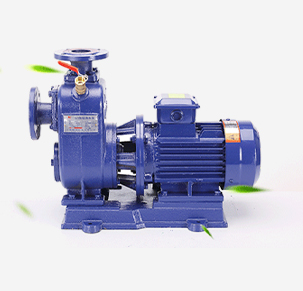
Performance & Engineering
Water pump performance is fundamentally dictated by hydraulic principles, specifically Bernoulli’s equation and the affinity laws. Force analysis during operation reveals significant stresses on the impeller, shaft, and bearings, necessitating robust mechanical design. Environmental resistance is a critical factor. Pumps operating outdoors are subjected to temperature fluctuations, UV degradation (for polymer components), and potential freezing conditions. Corrosion prevention strategies, including cathodic protection and the application of protective coatings (epoxy, polyurethane – SSPC standards), are essential. Compliance requirements vary by region and application. Municipal water systems demand compliance with NSF/ANSI 61 standards for materials in contact with potable water. Oil and gas applications require adherence to API 610 centrifugal pump standards. Hydraulic efficiency is paramount; minimizing energy consumption requires careful impeller design, optimized volute geometry, and tight clearances between rotating and stationary components. Bearing selection and lubrication (grease or oil – ISO 3448) are critical for minimizing friction and wear. Vibration analysis (ISO 10816) is employed to detect bearing faults and misalignment.
Technical Specifications
| Pump Type | Flow Rate (GPM) | Head (ft) | Power (HP) |
|---|---|---|---|
| Centrifugal | 50-5000 | 20-500 | 1-500 |
| Positive Displacement (Rotary) | 1-1000 | 10-1000 | 0.5-200 |
| Submersible | 10-10000 | 50-1000 | 2-750 |
| Turbine | 100-50000 | 100-2000 | 50-2000 |
| Diaphragm | 1-200 | 5-100 | 0.25-5 |
| Gear | 5-500 | 20-300 | 1-75 |
Failure Mode & Maintenance
Common water pump failure modes include impeller cavitation (caused by insufficient NPSH, leading to pitting and erosion), bearing failure (due to lack of lubrication, contamination, or overload), seal leakage (resulting from wear, chemical incompatibility, or improper installation), and motor burnout (caused by overheating, voltage imbalances, or mechanical overload). Fatigue cracking can occur in pump housings and impellers subjected to cyclical loading. Corrosion, particularly in cast iron components, leads to material degradation and reduced structural integrity. Delamination can occur in polymer impellers exposed to aggressive fluids or high temperatures. Preventative maintenance is crucial. This includes regular vibration analysis, lubrication of bearings, inspection of seals and gaskets, monitoring of motor current and voltage, and periodic cleaning of pump internals. For cavitation damage, increasing NPSH or reducing pump speed may mitigate the issue. Seal failures require replacement with chemically compatible materials. Bearing failures necessitate bearing replacement and potentially shaft repair. Regular performance monitoring (flow rate, pressure, power consumption) allows for early detection of degradation and proactive maintenance intervention.
Industry FAQ
Q: What is the impact of improper impeller balancing on pump performance and longevity?
A: Improper impeller balancing introduces dynamic forces during rotation, leading to increased vibration, bearing wear, and potential shaft misalignment. This reduces pump efficiency, increases energy consumption, and significantly shortens the lifespan of the pump. Balancing should be performed according to ISO 1940 standards.
Q: How does the fluid viscosity affect pump selection and operation?
A: Higher fluid viscosity increases frictional losses within the pump, reducing flow rate and increasing power consumption. Pump curves are typically provided for water-like fluids; corrections must be applied for viscous fluids. Positive displacement pumps are generally preferred for handling highly viscous fluids.
Q: What are the primary causes of seal failure in centrifugal pumps?
A: Seal failures are often caused by abrasion from solids in the pumped fluid, chemical incompatibility between the seal material and the fluid, improper installation (misalignment or insufficient compression), excessive pressure, or dry running. Selecting the correct seal material and ensuring proper installation are crucial.
Q: How important is Net Positive Suction Head (NPSH) and how do you determine if a pump is experiencing NPSH issues?
A: NPSH is critical to prevent cavitation. Insufficient NPSH causes vapor bubbles to form within the pump, leading to erosion and reduced performance. Symptoms include noise, vibration, and decreased flow rate. NPSH Available must always exceed NPSH Required.
Q: What are the best practices for long-term storage of a decommissioned water pump?
A: Clean the pump thoroughly, drain all fluids, apply a rust preventative coating to all metal surfaces, and store the pump in a dry, climate-controlled environment. Rotate the shaft periodically to prevent bearing seizure. Cover the pump to protect it from dust and debris.
Conclusion
Effective water pump service is a multifaceted discipline demanding a thorough understanding of material science, hydraulic principles, and mechanical engineering. Proper diagnostic procedures, preventative maintenance schedules, and adherence to relevant industry standards (API, ISO, ASTM) are paramount for maximizing pump reliability, minimizing downtime, and extending the operational lifespan of critical pumping systems. A holistic approach, encompassing regular performance monitoring, vibration analysis, and proactive component replacement, is essential for preventing catastrophic failures and optimizing overall system efficiency.
Future advancements in water pump service will likely focus on predictive maintenance utilizing sensor-based monitoring and data analytics. Condition monitoring systems, coupled with machine learning algorithms, will enable early detection of anomalies and optimized maintenance scheduling, further reducing operational costs and enhancing system reliability. The development of more corrosion-resistant materials and improved seal technologies will also contribute to longer pump lifecycles and reduced environmental impact.
-
Precision at the Pump: How Better Machining Protects Flow and Uptime
News2026-11-20
-
Why Pump Reliability Begins Before the First Drop of Fluid
News2026-11-20
-
Beyond the Pump: Designing Safer Access Around Critical Water Infrastructure
News2026-11-20
-
Why Pumping Stations Depend on the Infrastructure Beneath the Pumps
News2026-11-20
-
Beyond the Pump Room: How Smarter Loading Protects Industrial Equipment
News2026-11-19
-
When Pumps Stop: Designing More Resilient Power for Critical Pumping Systems
News2026-11-19
-
The Hidden Role of Dust and Gas Monitoring in Reliable Pump Operations
News2026-11-19
-
The Hidden Role of Mineral Compounds in Extending Industrial Pump Lifespan
News2026-10-12
-
Why Pump System Reliability Depends on Precision Hose Assembly Methods
News2026-09-15
-
How Advanced Imaging Films Are Transforming Pump Component Quality Control
News2026-08-25
-
How Advanced Filtration Protects Pump Systems from Premature Wear and Costly Downtime
News2026-08-25
-
How Steel Material Selection Drives Pump Reliability in Heavy-Duty Systems
News2026-08-25
-
Ensuring Pump System Efficiency: The Role of High-Quality Pipe Fittings and Tubing
News2026-08-24
-
Optimizing Fluid Dynamics and Material Consistency in Industrial Processing
News2026-08-18
-
Innovations and Challenges in Hydraulic Systems for Heavy Machinery
News2026-08-13




