English
- Afrikaans
- Albanian
- Amharic
- Arabic
- Armenian
- Azerbaijani
- Basque
- Belarusian
- Bengali
- Bosnian
- Bulgarian
- Catalan
- Cebuano
- Corsican
- Croatian
- Czech
- Danish
- Dutch
- English
- Esperanto
- Estonian
- Finnish
- French
- Frisian
- Galician
- Georgian
- German
- Greek
- Gujarati
- Haitian Creole
- hausa
- hawaiian
- Hebrew
- Hindi
- Miao
- Hungarian
- Icelandic
- igbo
- Indonesian
- irish
- Italian
- Japanese
- Javanese
- Kannada
- kazakh
- Khmer
- Rwandese
- Korean
- Kurdish
- Kyrgyz
- Lao
- Latin
- Latvian
- Lithuanian
- Luxembourgish
- Macedonian
- Malgashi
- Malay
- Malayalam
- Maltese
- Maori
- Marathi
- Mongolian
- Myanmar
- Nepali
- Norwegian
- Norwegian
- Occitan
- Pashto
- Persian
- Polish
- Portuguese
- Punjabi
- Romanian
- Russian
- Samoan
- Scottish Gaelic
- Serbian
- Sesotho
- Shona
- Sindhi
- Sinhala
- Slovak
- Slovenian
- Somali
- Spanish
- Sundanese
- Swahili
- Swedish
- Tagalog
- Tajik
- Tamil
- Tatar
- Telugu
- Thai
- Turkish
- Turkmen
- Ukrainian
- Urdu
- Uighur
- Uzbek
- Vietnamese
- Welsh
- Bantu
- Yiddish
- Yoruba
- Zulu

Telephone: +86 13120555503
Email: frank@cypump.com


Apr . 01, 2024 17:55 Back to list
vertical slurry pump Performance Analysis
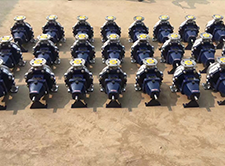
Introduction
Vertical slurry pumps are centrifugal pumps specifically designed for the handling of abrasive and erosive slurries. Positioned within the industrial fluid transfer chain, they bridge the gap between process operations generating slurry waste (mining, dredging, wastewater treatment) and subsequent processing or disposal stages. Unlike horizontal slurry pumps, the vertical configuration offers several advantages, including reduced footprint, submersible operation capability, and elimination of the need for priming. Core performance characteristics are defined by flow rate (m³/hr), head (meters), solids handling capability (particle size and concentration), and impeller material selection, all critically impacting operational efficiency and longevity within aggressive slurry environments. The primary industry pain point addressed by these pumps is mitigating wear and maintaining consistent performance despite the corrosive and abrasive nature of the conveyed materials, leading to high maintenance costs and potential process downtime with substandard equipment.
Material Science & Manufacturing
The selection of materials for vertical slurry pumps is paramount, directly influencing resistance to erosion, corrosion, and mechanical wear. Pump casings are commonly constructed from high-chrome cast iron (typically 27% Cr), offering superior abrasion resistance compared to standard cast iron. Impellers can be similarly constructed from high-chrome iron, but for highly abrasive applications, materials like white iron alloys (with hard carbides) or specialized ceramic composites are employed. Shafts are typically forged from alloy steels, heat-treated to achieve high tensile strength and yield strength, resisting bending and torsional stresses. Seals are a critical component, commonly utilizing mechanical seals with hardened faces (silicon carbide, tungsten carbide) and elastomer components (EPDM, Viton) chosen for chemical compatibility with the slurry. Manufacturing processes begin with sand casting or investment casting for the casing and impeller, followed by precision machining to ensure dimensional accuracy and smooth surface finish. Welding is utilized for joining components, often employing shielded metal arc welding (SMAW) or gas tungsten arc welding (GTAW) with specific filler metals chosen for corrosion resistance. Critical parameters include casting soundness (minimizing porosity), heat treatment optimization (achieving desired hardness and ductility), and dimensional tolerances (ensuring proper fit and alignment). Impeller balancing is also crucial to minimize vibration and bearing wear.
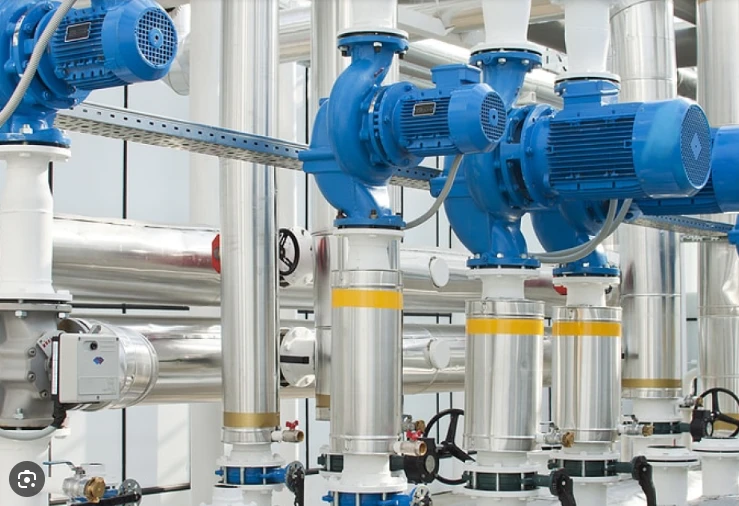
Performance & Engineering
Vertical slurry pump performance is governed by principles of fluid dynamics and pump affinity laws. The head-capacity curve, a fundamental performance characteristic, illustrates the relationship between flow rate and discharge pressure. Pump efficiency is affected by impeller geometry, clearance between rotating and stationary components, and slurry properties (solids concentration, particle size distribution, density). Force analysis focuses on hydraulic forces acting on the impeller, radial loads on the shaft due to pressure imbalances, and axial thrust. Environmental resistance is a key consideration; pumps operating in corrosive environments require careful material selection and protective coatings. Compliance requirements vary by region, but generally involve adherence to hydraulic design standards (HI – Hydraulic Institute), electrical safety standards (IEC, UL), and environmental regulations regarding emissions and waste disposal. Functional implementation often involves specifying pump curves to match system requirements, selecting appropriate motor power and speed, and integrating the pump into a piping system with appropriate suction and discharge arrangements. Cavitation is a major concern, especially when handling low-NPSH slurries; adequate suction head must be maintained to prevent vapor bubble formation and subsequent impeller damage. Proper bearing lubrication and cooling are also crucial for extended pump life.
Technical Specifications
| Parameter | Unit | Typical Range | Material |
|---|---|---|---|
| Flow Rate | m³/hr | 10 – 1500 | Variable, dependent on impeller diameter & speed |
| Discharge Head | m | 5 – 80 | Dependent on impeller design and pump speed |
| Solids Handling Size | mm | Up to 100 | Dependent on impeller design and pump casing geometry |
| Slurry Concentration (Weight %) | % | Up to 60 | Dependent on pump design and slurry characteristics |
| Pump Casing Material | - | High Chrome Cast Iron, Stainless Steel | ASTM A532 (High Chrome), ASTM A351 (Stainless) |
| Impeller Material | - | High Chrome Cast Iron, White Iron Alloy, Ceramic | ASTM A532 (High Chrome), White Iron Alloy, Alumina Ceramic |
Failure Mode & Maintenance
Vertical slurry pumps are susceptible to several failure modes. Erosion is the most common, particularly affecting the impeller and casing near the suction and discharge. This manifests as gradual material loss, leading to decreased pump performance and increased energy consumption. Corrosion, particularly in acidic or alkaline slurries, leads to pitting and weakening of metal components. Mechanical seal failure results in leakage and potential contamination of the surrounding environment. Bearing failure, often caused by inadequate lubrication or excessive load, results in increased vibration and potential catastrophic pump failure. Fatigue cracking can occur in the shaft or casing due to cyclic loading. Maintenance strategies include regular visual inspections for wear and corrosion, vibration analysis to detect bearing issues, seal replacement at scheduled intervals, and impeller/casing replacement when wear exceeds acceptable limits. Preventative maintenance programs should also include lubrication schedules, alignment checks, and monitoring of pump performance parameters (flow rate, pressure, power consumption). Root cause analysis of failures is crucial to identify underlying issues and prevent recurrence. Implementation of sacrificial liners in the casing can extend component life by absorbing abrasive wear.
Industry FAQ
Q: What is the impact of slurry particle size on pump selection?
A: Larger particle sizes require larger impeller passages and increased pump power to avoid clogging and maintain flow. Increased particle size also accelerates erosion, necessitating more abrasion-resistant materials. Pump curves will be significantly altered with larger particles, requiring careful re-evaluation of head and flow requirements.
Q: How does the slurry’s specific gravity affect pump performance?
A: Higher specific gravity slurries increase the load on the pump motor and reduce pump efficiency. The pump head must be increased to overcome the increased weight of the fluid. Motor sizing needs to be adjusted to accommodate the higher torque requirements.
Q: What are the key considerations for selecting a mechanical seal for abrasive slurries?
A: Seal face materials (silicon carbide, tungsten carbide) must be highly resistant to abrasion. Seal support fluid flushing is critical to remove abrasive particles from the seal faces and provide lubrication. Seal elastomers must be chemically compatible with the slurry.
Q: How can cavitation be prevented in vertical slurry pump applications?
A: Ensuring adequate Net Positive Suction Head Available (NPSHa) is paramount. This involves minimizing suction line losses, increasing suction tank pressure, and reducing pump speed. Impeller trim can also be used to adjust pump performance to match system requirements.
Q: What is the role of coatings in extending pump life?
A: Protective coatings, such as rubber linings or ceramic coatings, can provide an additional barrier against erosion and corrosion. These coatings are applied to the pump casing, impeller, and volute to extend component life and reduce maintenance frequency.
Conclusion
Vertical slurry pumps are critical components in numerous industrial processes, designed to reliably handle highly abrasive and corrosive materials. Successful application hinges on a thorough understanding of slurry characteristics, appropriate material selection, precise manufacturing control, and proactive maintenance practices. Ignoring these considerations leads to premature failure, increased downtime, and escalated operational costs.
Future advancements in vertical slurry pump technology will likely focus on optimizing impeller designs for enhanced hydraulic efficiency, developing new abrasion-resistant materials, and incorporating smart monitoring systems for predictive maintenance. These innovations will further reduce the total cost of ownership and improve the sustainability of slurry handling operations.
-
Precision at the Pump: How Better Machining Protects Flow and Uptime
News2026-11-20
-
Why Pump Reliability Begins Before the First Drop of Fluid
News2026-11-20
-
Beyond the Pump: Designing Safer Access Around Critical Water Infrastructure
News2026-11-20
-
Why Pumping Stations Depend on the Infrastructure Beneath the Pumps
News2026-11-20
-
Beyond the Pump Room: How Smarter Loading Protects Industrial Equipment
News2026-11-19
-
When Pumps Stop: Designing More Resilient Power for Critical Pumping Systems
News2026-11-19
-
The Hidden Role of Dust and Gas Monitoring in Reliable Pump Operations
News2026-11-19
-
The Hidden Role of Mineral Compounds in Extending Industrial Pump Lifespan
News2026-10-12
-
Why Pump System Reliability Depends on Precision Hose Assembly Methods
News2026-09-15
-
How Advanced Imaging Films Are Transforming Pump Component Quality Control
News2026-08-25
-
How Advanced Filtration Protects Pump Systems from Premature Wear and Costly Downtime
News2026-08-25
-
How Steel Material Selection Drives Pump Reliability in Heavy-Duty Systems
News2026-08-25
-
Ensuring Pump System Efficiency: The Role of High-Quality Pipe Fittings and Tubing
News2026-08-24
-
Optimizing Fluid Dynamics and Material Consistency in Industrial Processing
News2026-08-18
-
Innovations and Challenges in Hydraulic Systems for Heavy Machinery
News2026-08-13




