English
- Afrikaans
- Albanian
- Amharic
- Arabic
- Armenian
- Azerbaijani
- Basque
- Belarusian
- Bengali
- Bosnian
- Bulgarian
- Catalan
- Cebuano
- Corsican
- Croatian
- Czech
- Danish
- Dutch
- English
- Esperanto
- Estonian
- Finnish
- French
- Frisian
- Galician
- Georgian
- German
- Greek
- Gujarati
- Haitian Creole
- hausa
- hawaiian
- Hebrew
- Hindi
- Miao
- Hungarian
- Icelandic
- igbo
- Indonesian
- irish
- Italian
- Japanese
- Javanese
- Kannada
- kazakh
- Khmer
- Rwandese
- Korean
- Kurdish
- Kyrgyz
- Lao
- Latin
- Latvian
- Lithuanian
- Luxembourgish
- Macedonian
- Malgashi
- Malay
- Malayalam
- Maltese
- Maori
- Marathi
- Mongolian
- Myanmar
- Nepali
- Norwegian
- Norwegian
- Occitan
- Pashto
- Persian
- Polish
- Portuguese
- Punjabi
- Romanian
- Russian
- Samoan
- Scottish Gaelic
- Serbian
- Sesotho
- Shona
- Sindhi
- Sinhala
- Slovak
- Slovenian
- Somali
- Spanish
- Sundanese
- Swahili
- Swedish
- Tagalog
- Tajik
- Tamil
- Tatar
- Telugu
- Thai
- Turkish
- Turkmen
- Ukrainian
- Urdu
- Uighur
- Uzbek
- Vietnamese
- Welsh
- Bantu
- Yiddish
- Yoruba
- Zulu

Telephone: +86 13120555503
Email: frank@cypump.com


Apr . 01, 2024 17:55 Back to list
vapor blasting slurry pump Manufacturing Specification and Performance Analysis
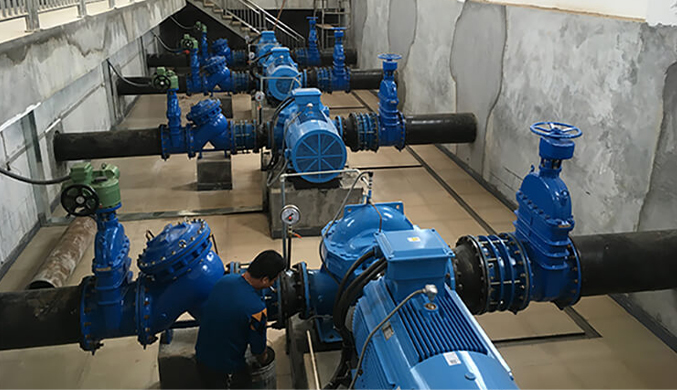
Vapor Blasting Slurry Pump Manufacturing Specification and Performance Analysis
A vapor blasting slurry pump is a specialized high-density fluid transport system designed to circulate a precise mixture of abrasive media (typically glass beads, aluminum oxide, or ceramic particles) and water. Positioned as the critical circulatory heart of the wet blasting process, this pump must manage a non-Newtonian fluid characterized by high viscosity and extreme abrasiveness. Unlike standard centrifugal pumps, the slurry pump in a vapor blasting system must maintain a constant volumetric flow rate despite the fluctuating density of the abrasive slurry, ensuring that the kinetic energy delivered to the nozzle remains stable for uniform surface finishing. Its primary technical objective is to mitigate the erosive wear caused by the high-velocity movement of hard particles while preventing sedimentation within the pump casing and piping, thereby ensuring the structural integrity of the blasting medium and the consistency of the satin finish on the workpiece.
Material Science & Manufacturing
The manufacturing of a vapor blasting slurry pump centers on the conflict between hydraulic efficiency and erosion resistance. The primary challenge is the "impingement erosion" caused by the abrasive media hitting the internal walls of the pump. To combat this, the internal wetted components are typically engineered from High-Chrome White Cast Iron (ASTM A532) or specialized Hardened Stainless Steels. These materials are chosen for their high volume fraction of primary carbides, which provide a hardness matrix capable of resisting the micro-cutting action of the slurry particles.
The manufacturing process begins with precision investment casting of the impeller and volute casing. Following casting, a critical heat treatment process—including quenching and tempering—is applied to optimize the martensitic structure, ensuring the balance between hardness and fracture toughness. In high-performance models, the impeller is subjected to a centrifugal casting process to ensure a dense, pore-free structure at the outer diameter, where the linear velocity is highest and erosion is most aggressive. The pump shaft is typically manufactured from 4140 alloy steel, precision ground and induction-hardened at the bearing seats and seal interfaces to prevent premature wear. Furthermore, the integration of silicon carbide (SiC) or tungsten carbide mechanical seals is mandatory to prevent the leak of the abrasive medium, which would otherwise act as a grinding paste, rapidly destroying the shaft and housing interfaces.

Performance & Engineering
From an engineering perspective, the performance of a vapor blasting slurry pump is governed by the fluid dynamics of multi-phase flow. The pump must overcome the "settling velocity" of the abrasive particles; if the flow velocity drops below a critical threshold (the laminar-turbulent transition point), particles will precipitate, leading to catastrophic blockage and pump cavitation. Consequently, the pump is engineered for high-velocity discharge and a steep head-flow curve to ensure stability across varying pressure demands.
Force analysis reveals that the most significant stress occurs at the impeller vanes' leading edges. Engineering countermeasures include the implementation of "sacrificial wear liners" made of polyurethane or reinforced elastomers in the volute, which absorb the kinetic energy of the slurry. Environmental resistance is also a key factor; because vapor blasting involves water and often chemical additives for surface passivation, the pump housing must be treated with anti-corrosive coatings or manufactured from duplex stainless steel to prevent galvanic corrosion. Compliance with ISO 5199 standards for centrifugal pumps ensures that the vibration levels and shaft deflection are minimized, reducing the mechanical load on the seals and extending the mean time between failures (MTBF) in continuous industrial cycles.
Technical Specifications
| Parameter Dimension | Standard Grade | Industrial Grade | Heavy Duty Grade | Ultra-High Precision |
|---|---|---|---|---|
| Max Flow Rate (m³/h) | 12.5 | 25.0 | 45.0 | 60.0 |
| Operating Pressure (bar) | 4.0 | 6.5 | 10.0 | 15.0 |
| Impeller Material | Cast Iron (Hardened) | High-Chrome Alloy | Tungsten Carbide Coated | Ceramic Composite |
| Max Particle Size (μm) | 150 | 250 | 500 | 800 |
| Seal Type | Mechanical Seal | Double Mechanical Seal | SiC Mechanical Seal | Diamond-Coated Seal |
| MTBF (Operating Hours) | 2,000 | 5,000 | 12,000 | 20,000 |
Failure Mode & Maintenance
The failure modes of vapor blasting slurry pumps are predominantly linked to the abrasive nature of the medium. The most common failure is "Erosive Wear of the Impeller," where the slurry strips the material from the vane edges, leading to a drop in discharge pressure and flow instability. This is often accompanied by "Cavitation Erosion," which occurs if the Net Positive Suction Head (NPSH) is insufficient, causing vapor bubbles to collapse and pit the metal surface.
Another critical failure mode is "Seal Degradation." When abrasive particles penetrate the seal face, they cause rapid scoring, leading to slurry leakage that can contaminate the bearing housing. To mitigate these failures, a professional maintenance protocol must be implemented: 1. Weekly Inspection of Suction Strainers: To prevent oversized debris from entering the pump. 2. Vibrational Analysis: Monthly monitoring of bearing frequencies to detect misalignment or impeller imbalance. 3. Wear Measurement: Using ultrasonic thickness gauges to measure the wall thickness of the volute casing every 500 hours of operation. 4. Lubrication Management: Ensuring the use of high-viscosity synthetic lubricants in the bearing assembly to resist moisture ingress. 5. Component Replacement: Proactive replacement of wear liners based on the calculated erosion rate of the specific abrasive media used.
Industry FAQ
Q: How do we determine the correct pump capacity for a specific vapor blasting cabinet size?
A: The capacity is determined by calculating the required flow rate at the nozzle to maintain the desired kinetic energy, then adding a 20% safety margin to account for frictional losses in the piping and the viscosity of the slurry. The pump must provide sufficient volume to prevent "starving" the nozzle during continuous operation.
Q: Why is the pump experiencing rapid pressure drops despite a new motor?
A: Pressure drops are typically not motor-related but are caused by internal recirculation due to impeller wear. When the clearance between the impeller and the wear ring increases, the fluid leaks back to the suction side, reducing the effective head and discharge pressure.
Q: Which abrasive media causes the highest wear on the slurry pump?
A: Aluminum Oxide (Al2O3) is significantly more aggressive than glass beads due to its higher Mohs hardness. When using Al2O3, we recommend upgrading the pump to High-Chrome alloys or applying a Tungsten Carbide thermal spray coating to the impeller.
Q: Is it possible to run the slurry pump dry for short periods?
A: Absolutely not. Dry running will lead to the immediate failure of the mechanical seals due to the loss of the lubricating fluid film. Furthermore, any residual abrasive particles in the casing will act as an abrasive paste, scoring the shaft and internal surfaces within seconds.
Q: How do we prevent the abrasive media from settling in the pump during shutdown?
A: We recommend a "flush cycle" where the pump is run with clean water for 2-3 minutes after the blasting process is complete. This clears the abrasive slurry from the volute and piping, preventing the formation of hard sediment cakes that can block the pump upon restart.
Conclusion
The vapor blasting slurry pump is a high-precision engineering component that requires a deep integration of material science and fluid dynamics to function effectively. Its ability to maintain consistent pressure and flow while resisting the relentless erosion of abrasive media is what defines the quality of the final surface finish. By prioritizing High-Chrome alloy construction and rigorous seal management, operators can ensure a stable production cycle and minimize unplanned downtime.
Looking forward, the industry is moving toward "Smart Slurry Management," where integrated sensors monitor vibration and flow in real-time to predict wear patterns. Adopting a proactive maintenance strategy and selecting a pump based on the specific hardness of the abrasive media—rather than just flow specifications—is essential for optimizing the lifecycle cost and operational efficiency of vapor blasting systems.
-
sump pump for septic systems Material Science Manufacturing
News2026-05-20
-
sump pump and ejector pump Material Science Manufacturing
News2026-05-20
-
sewage treatment plant pumps Performance Analysis
News2026-05-20
-
sewage tank pump Material Science and Manufacturing
News2026-05-20
-
sewage pump for septic tank Performance Analysis
News2026-05-20
-
Sewage Pump and Tank Performance Analysis
News2026-05-19
-
Sewage Ejector Pump Replacement Performance Analysis
News2026-05-19
-
sewage ejector pump for basement bathroom Material Science Manufacturing
News2026-05-19
-
sewage ejection pump Material Science and Manufacturing
News2026-05-19
-
in line sewage pump Performance Analysis
News2026-05-19
-
effluent sump pump Performance Analysis
News2026-05-18
-
best grinder pump for sewage Performance Engineering
News2026-05-18
-
basement waste water pump Performance Engineering
News2026-05-18
-
sump pump sewer Performance Analysis
News2026-05-18
-
sump pump for sewer Performance Analysis
News2026-05-18




