English
- Afrikaans
- Albanian
- Amharic
- Arabic
- Armenian
- Azerbaijani
- Basque
- Belarusian
- Bengali
- Bosnian
- Bulgarian
- Catalan
- Cebuano
- Corsican
- Croatian
- Czech
- Danish
- Dutch
- English
- Esperanto
- Estonian
- Finnish
- French
- Frisian
- Galician
- Georgian
- German
- Greek
- Gujarati
- Haitian Creole
- hausa
- hawaiian
- Hebrew
- Hindi
- Miao
- Hungarian
- Icelandic
- igbo
- Indonesian
- irish
- Italian
- Japanese
- Javanese
- Kannada
- kazakh
- Khmer
- Rwandese
- Korean
- Kurdish
- Kyrgyz
- Lao
- Latin
- Latvian
- Lithuanian
- Luxembourgish
- Macedonian
- Malgashi
- Malay
- Malayalam
- Maltese
- Maori
- Marathi
- Mongolian
- Myanmar
- Nepali
- Norwegian
- Norwegian
- Occitan
- Pashto
- Persian
- Polish
- Portuguese
- Punjabi
- Romanian
- Russian
- Samoan
- Scottish Gaelic
- Serbian
- Sesotho
- Shona
- Sindhi
- Sinhala
- Slovak
- Slovenian
- Somali
- Spanish
- Sundanese
- Swahili
- Swedish
- Tagalog
- Tajik
- Tamil
- Tatar
- Telugu
- Thai
- Turkish
- Turkmen
- Ukrainian
- Urdu
- Uighur
- Uzbek
- Vietnamese
- Welsh
- Bantu
- Yiddish
- Yoruba
- Zulu

Telephone: +86 13120555503
Email: frank@cypump.com


Apr . 01, 2024 17:55 Back to list
top slurry pumps Manufacturing Specification and Performance Analysis
Slurry Pumps Manufacturing Specification and Performance Analysis
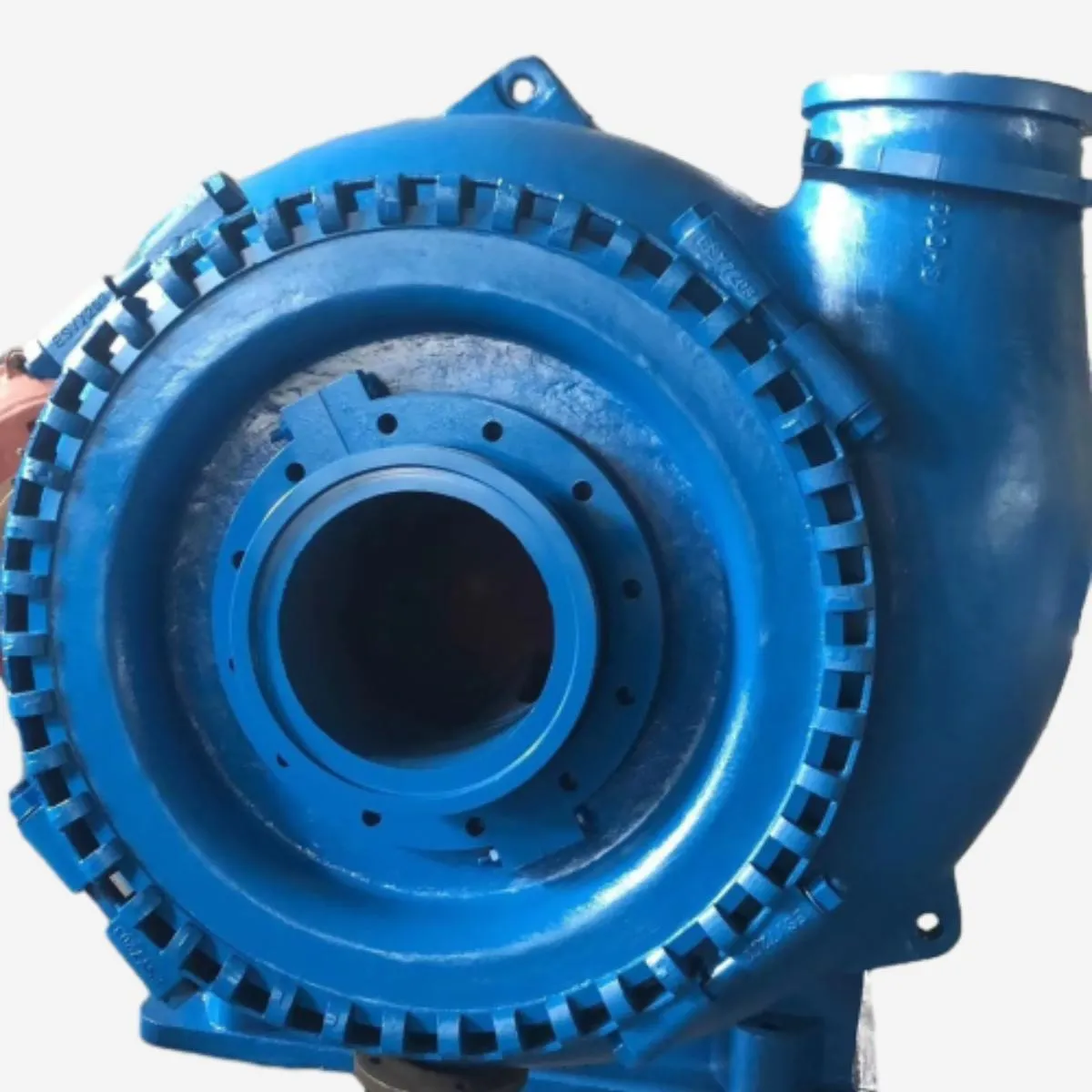
Slurry pumps are specialized centrifugal pumping systems engineered to transport abrasive, corrosive, and high-density fluids—collectively referred to as slurries—within industrial processing chains. Positioned as critical infrastructure in the mining, dredging, mineral processing, and chemical industries, these pumps act as the primary kinetic energy source for moving particulate-laden media. Unlike standard water pumps, slurry pumps must address the dual challenge of erosive wear (mechanical degradation due to particle impact) and corrosive attack (chemical degradation due to fluid acidity or alkalinity). The technical positioning of these systems requires a precise balance between hydraulic efficiency and structural longevity, ensuring that the pump can maintain a critical velocity sufficient to keep solids in suspension while resisting the extreme frictional forces exerted by the slurry on the internal wetted surfaces.
Material Science & Manufacturing
The operational lifespan of a slurry pump is fundamentally dictated by the material science applied to its high-wear components: the impeller, liner, and shaft. The industry employs a tiered approach to material selection based on the slurry's chemical composition and particle hardness.
High-Chrome White Irons (ASTM A532): For highly abrasive environments, chromium-carbide alloys (27% Cr) are utilized. The manufacturing process involves precise heat treatment and quenching to create a hard martensitic matrix embedded with primary M7C3 carbides. These carbides provide the necessary hardness (typically 60-65 HRC) to resist micro-plowing and cutting by mineral particles.
Natural and Synthetic Elastomers: In applications involving fine particles or corrosive chemicals, polyurethane or natural rubber liners are employed. These materials utilize the principle of elastic deformation; when an abrasive particle impacts the surface, the elastomer momentarily deforms and rebounds, absorbing the kinetic energy rather than allowing the particle to gouge the material. This is critical for slurries with high concentrations of small, sharp particles.
Manufacturing Process Control: The production of top slurry pumps involves complex casting and machining sequences. Precision investment casting is used for impellers to ensure balanced hydraulic profiles, reducing turbulence—which is a primary driver of localized erosion. Furthermore, the integration of hard-facing via Tungsten Carbide (WC) cladding using High-Velocity Oxy-Fuel (HVOF) spraying is often applied to shaft sleeves to prevent premature failure at the sealing interface.
Performance & Engineering
The engineering of slurry pumps focuses on the optimization of fluid dynamics to mitigate the "wear-efficiency trade-off." High flow velocities are required to prevent sedimentation (settling) within the pump casing, yet increased velocity exponentially accelerates erosive wear according to the relationship where wear rate is proportional to the cube of the velocity (V³).
Force Analysis and Hydraulic Design: Engineering teams employ Computational Fluid Dynamics (CFD) to analyze the shear stress distribution across the impeller vanes. By optimizing the vane geometry, engineers can reduce the incidence of recirculation zones and eddies, which are common failure points where particles concentrate and cause accelerated "hole-through" erosion. The design must also account for the non-Newtonian behavior of many slurries, which may exhibit Bingham plastic or pseudoplastic flow characteristics.
Sealing and Bearing Engineering: The interface between the rotating shaft and the stationary casing is the most vulnerable point. Engineering solutions include the use of expeller seals (mechanical seals with a centrifugal pump effect to push fluid away from the seal face) and gland water flushing systems. These systems maintain a positive pressure barrier, ensuring that abrasive particles cannot penetrate the bearing housing, thereby preventing catastrophic seizure of the rotating assembly.
Technical Specifications
| Performance Metric | High-Chrome Alloy Series | Rubber-Lined Series | Duplex Stainless Series | Tungsten Carbide Coated |
|---|---|---|---|---|
| Max Particle Size (mm) | 15.0 - 25.0 | 5.0 - 10.0 | 2.0 - 5.0 | 10.0 - 15.0 |
| Hardness Range (HRC/Shore) | 60 - 65 HRC | 70 - 85 Shore A | 25 - 35 HRC | 1200 - 1500 HV |
| Max Slurry Density (g/cm³) | 1.8 - 2.2 | 1.3 - 1.6 | 1.2 - 1.5 | 1.7 - 2.0 |
| Corrosion Resistance (pH) | pH 4 - 9 | pH 2 - 11 | pH 1 - 13 | pH 3 - 10 |
| Max Operating Pressure (MPa) | 2.5 - 4.0 | 1.0 - 2.0 | 3.0 - 5.0 | 2.0 - 3.5 |
| Typical Service Life (Hours) | 8,000 - 12,000 | 5,000 - 8,000 | 10,000 - 15,000 | 15,000 - 20,000 |
Failure Mode & Maintenance
Failure analysis in slurry pumps typically reveals four primary degradation modes: erosive wear, corrosive pitting, cavitation, and mechanical fatigue.
Erosive Wear & Delamination: This is the primary failure mode, characterized by the gradual thinning of the liner walls. In rubber-lined pumps, "delamination" occurs when the bonding agent fails due to thermal expansion or chemical incompatibility, allowing the slurry to seep between the liner and the casing, leading to rapid external shell corrosion.
Cavitation Erosion: Occurs when the Net Positive Suction Head available (NPSHa) falls below the required (NPSHr). The collapse of vapor bubbles creates localized high-pressure micro-jets that pit the impeller surface, often mistaken for chemical corrosion. This is mitigated by increasing suction head or reducing the impeller diameter to lower the required NPSH.
Maintenance Protocol: A professional maintenance regime involves the use of ultrasonic thickness gauging to monitor liner wear without dismantling the pump. When the liner thickness reaches the "critical minimum" (typically 20% of original thickness), immediate replacement is mandated to prevent casing breach. Shaft alignment should be verified using laser alignment tools to prevent vibration-induced fatigue in the bearings.
Industry FAQ
Q: How do we determine whether to specify a high-chrome alloy or a rubber liner for a specific slurry?
A: The decision is based on the particle size and hardness. High-chrome alloys are superior for large, coarse particles (>0.1mm) and high-impact environments. Rubber liners are preferred for fine, sandy particles and applications where the fluid is chemically aggressive but the mechanical impact is lower.
Q: What is the impact of slurry viscosity on the pump's total dynamic head (TDH)?
A: Increased viscosity increases the friction losses within the pump and piping, effectively increasing the TDH. Furthermore, high-viscosity fluids can cause "disk friction" losses at the impeller shrouds, which reduces the overall hydraulic efficiency of the pump.
Q: Why is the pump experiencing premature failure at the impeller eye?
A: This is typically a symptom of cavitation or "vortexing" at the suction inlet. It indicates that the slurry is not entering the pump uniformly, causing localized low-pressure zones. Reviewing the suction piping geometry and ensuring a straight run of pipe (at least 5-10 pipe diameters) before the inlet is the standard engineering fix.
Q: How does the "critical velocity" concept apply to slurry pump operation?
A: The critical velocity is the minimum speed at which particles remain suspended. If the pump is operated below this velocity, solids will settle in the casing or pipes, causing "sanding up," which leads to increased torque, vibration, and eventual blockage.
Q: Can a pump designed for water be retrofitted with slurry components?
A: Generally, no. Slurry pumps require heavier casings to support thicker liners and specialized shafts to handle the higher radial loads caused by uneven slurry distribution. A water pump casing would lack the structural integrity to hold a slurry liner and would likely fail via catastrophic casing rupture.
Conclusion
The technical efficacy of top slurry pumps is not derived from a single component, but from the synergistic integration of advanced material science and fluid dynamic engineering. By aligning the metallurgical properties of the wetted parts—such as the use of ASTM A532 high-chrome irons—with the specific abrasive and corrosive profile of the medium, operators can significantly reduce the total cost of ownership through extended mean time between failures (MTBF).
Looking forward, the industry is shifting toward "smart" slurry pumping systems, incorporating real-time wear sensors and variable frequency drives (VFDs) to maintain optimal critical velocity while minimizing energy consumption. The transition from reactive maintenance to predictive analytics, driven by ultrasonic monitoring and CFD-based wear modeling, will define the next generation of industrial slurry transport standards.
-
sump pump for septic systems Material Science Manufacturing
News2026-05-20
-
sump pump and ejector pump Material Science Manufacturing
News2026-05-20
-
sewage treatment plant pumps Performance Analysis
News2026-05-20
-
sewage tank pump Material Science and Manufacturing
News2026-05-20
-
sewage pump for septic tank Performance Analysis
News2026-05-20
-
Sewage Pump and Tank Performance Analysis
News2026-05-19
-
Sewage Ejector Pump Replacement Performance Analysis
News2026-05-19
-
sewage ejector pump for basement bathroom Material Science Manufacturing
News2026-05-19
-
sewage ejection pump Material Science and Manufacturing
News2026-05-19
-
in line sewage pump Performance Analysis
News2026-05-19
-
effluent sump pump Performance Analysis
News2026-05-18
-
best grinder pump for sewage Performance Engineering
News2026-05-18
-
basement waste water pump Performance Engineering
News2026-05-18
-
sump pump sewer Performance Analysis
News2026-05-18
-
sump pump for sewer Performance Analysis
News2026-05-18




