English
- Afrikaans
- Albanian
- Amharic
- Arabic
- Armenian
- Azerbaijani
- Basque
- Belarusian
- Bengali
- Bosnian
- Bulgarian
- Catalan
- Cebuano
- Corsican
- Croatian
- Czech
- Danish
- Dutch
- English
- Esperanto
- Estonian
- Finnish
- French
- Frisian
- Galician
- Georgian
- German
- Greek
- Gujarati
- Haitian Creole
- hausa
- hawaiian
- Hebrew
- Hindi
- Miao
- Hungarian
- Icelandic
- igbo
- Indonesian
- irish
- Italian
- Japanese
- Javanese
- Kannada
- kazakh
- Khmer
- Rwandese
- Korean
- Kurdish
- Kyrgyz
- Lao
- Latin
- Latvian
- Lithuanian
- Luxembourgish
- Macedonian
- Malgashi
- Malay
- Malayalam
- Maltese
- Maori
- Marathi
- Mongolian
- Myanmar
- Nepali
- Norwegian
- Norwegian
- Occitan
- Pashto
- Persian
- Polish
- Portuguese
- Punjabi
- Romanian
- Russian
- Samoan
- Scottish Gaelic
- Serbian
- Sesotho
- Shona
- Sindhi
- Sinhala
- Slovak
- Slovenian
- Somali
- Spanish
- Sundanese
- Swahili
- Swedish
- Tagalog
- Tajik
- Tamil
- Tatar
- Telugu
- Thai
- Turkish
- Turkmen
- Ukrainian
- Urdu
- Uighur
- Uzbek
- Vietnamese
- Welsh
- Bantu
- Yiddish
- Yoruba
- Zulu

Telephone: +86 13120555503
Email: frank@cypump.com


Apr . 01, 2024 17:55 Back to list
submersible slurry pumps with agitator Technical Dimension and Performance Analysis
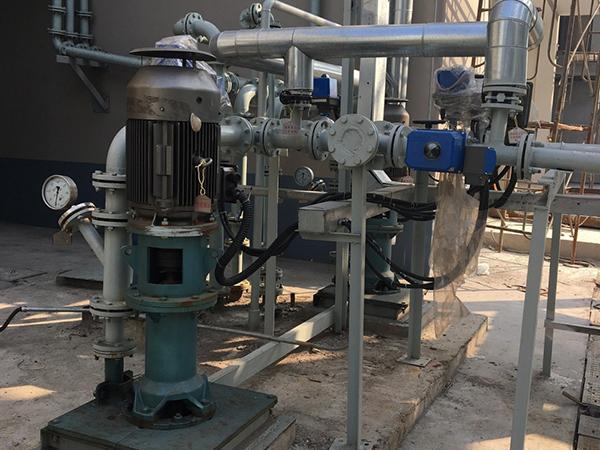
Submersible Slurry Pumps with Agitator: Technical Dimension and Performance Analysis
Submersible slurry pumps equipped with integrated agitators represent a specialized class of hydraulic machinery designed for the conveyance of high-density, non-homogeneous fluids containing abrasive solids. Positioned at the critical junction of waste management, mining, and industrial dredging, these systems solve the fundamental challenge of "settling" or "sanding-in," where heavy solids precipitate at the pump intake, leading to cavitation or complete mechanical seizure. By incorporating a high-torque agitation mechanism at the suction end, these pumps create a localized turbulent zone, suspending settled solids and transforming a stagnant slurry into a pumpable fluid. The technical efficacy of these units is measured by their ability to maintain a consistent volumetric flow rate while resisting the extreme erosive forces inherent in transporting minerals, tailings, and chemical sludge.
Material Science & Manufacturing
The operational environment of a submersible slurry pump is characterized by extreme abrasion and chemical corrosion. Consequently, material selection is governed by the hardness-to-toughness ratio of the wetted parts. The impeller and agitator blades are typically manufactured from High-Chrome White Iron (ASTM A532) or specialized duplex stainless steels. High-chrome alloys, containing 25% to 28% Chromium, form hard M7C3 carbides within a martensitic matrix, providing a surface hardness often exceeding 60 HRC, which is essential for resisting the scouring effect of quartz or metallic particles.
Manufacturing processes employ precision investment casting to ensure the complex geometries of the agitator blades are maintained, followed by rigorous heat treatment (quenching and tempering) to eliminate internal stresses and optimize hardness. The pump housing is often reinforced with rubber linings or ceramic inserts in high-velocity zones to reduce wall thinning. For the sealing system, a dual-mechanical seal arrangement is utilized, typically utilizing silicon carbide (SiC) or tungsten carbide (WC) faces. These materials are selected for their extreme hardness and low coefficient of friction, preventing the ingress of abrasive fines into the motor chamber. The motor housing is vacuum-pressure impregnated (VPI) with high-grade epoxy resin to prevent moisture penetration and ensure dielectric strength under high hydrostatic pressure.
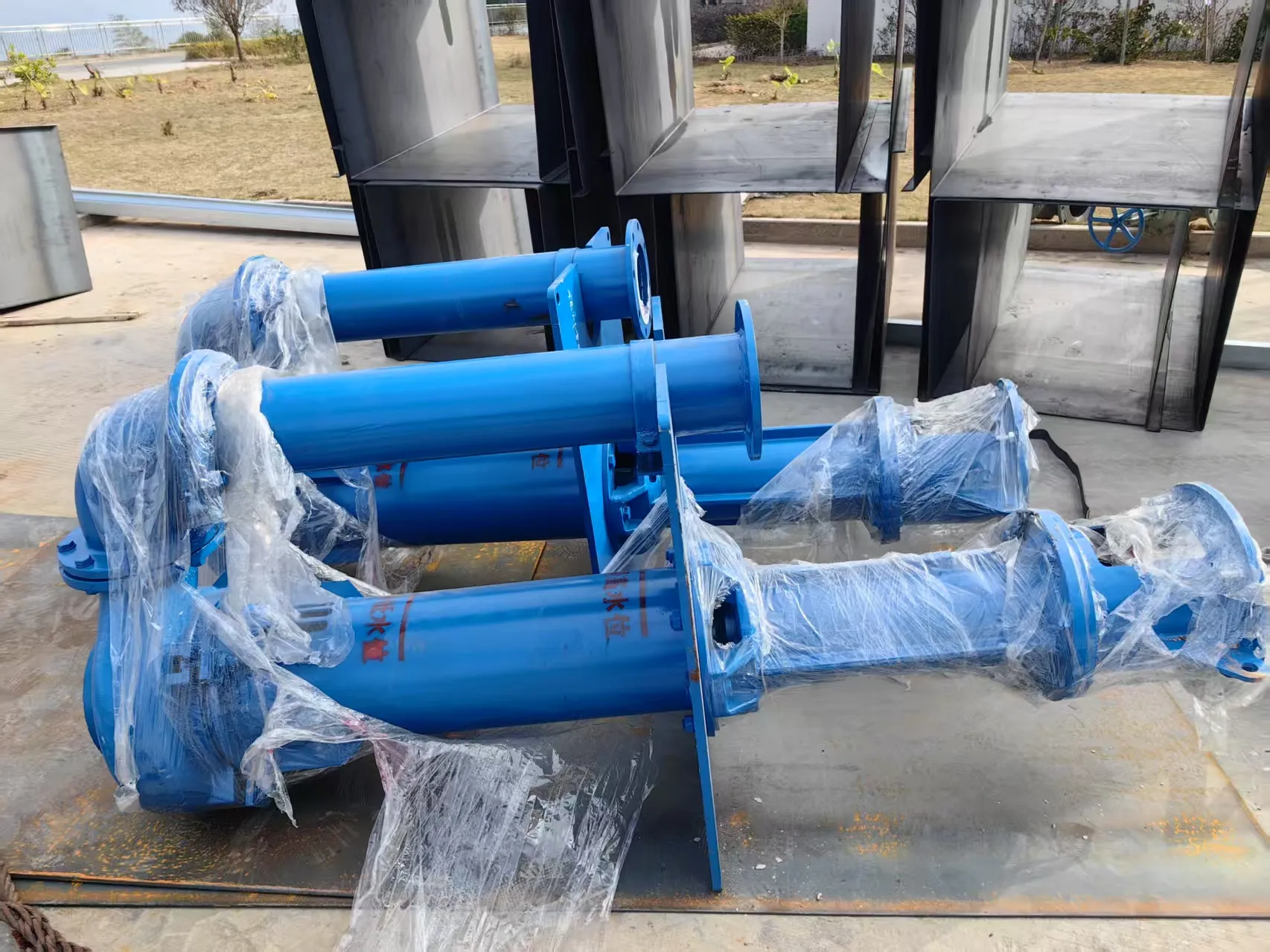
Performance & Engineering
Engineering a submersible slurry pump with an agitator requires a complex analysis of fluid dynamics and torque distribution. The primary objective is the optimization of the "Agitation Zone." The agitator is engineered to create a toroidal flow pattern that prevents the formation of a stagnant layer at the pump's base. This is achieved by calculating the specific energy input required to overcome the yield stress of the slurry, ensuring the solids remain in a state of suspension through mechanical shear.
From a force analysis perspective, the pump must handle significant radial loads caused by the asymmetric flow of heavy particles. This necessitates the use of heavy-duty bearings and a rigid shaft assembly to prevent deflection, which would otherwise lead to premature seal failure. Environmental resistance is further addressed through the implementation of IP68-rated encapsulation and the use of anti-corrosive coatings (such as fusion-bonded epoxy) on the exterior surfaces to withstand acidic or saline submerged conditions. Hydraulic efficiency is managed via the impeller design—typically a semi-open or vortex impeller—which minimizes the probability of clogging while maintaining sufficient head pressure to transport the slurry through long-distance pipelines without sedimentation.
Technical Specifications
| Parameter Dimension | Standard Range (Medium Duty) | Heavy Duty Specification | Extreme Condition Spec |
|---|---|---|---|
| Max Flow Rate (m³/h) | 150 - 600 | 600 - 1,200 | 1,200 - 2,500 |
| Total Dynamic Head (m) | 10 - 30 | 20 - 50 | 40 - 80 |
| Solid Particle Size (mm) | ≤ 35 | ≤ 80 | ≤ 120 |
| Impeller Material | High-Chrome Iron | Duplex SS / High-Chrome | Ceramic-Coated High-Chrome |
| Max Slurry Density (kg/m³) | 1,100 - 1,300 | 1,300 - 1,600 | 1,600 - 2,000 |
| Agitator Power Boost (%) | 10% - 15% | 15% - 25% | 25% - 40% |
Failure Mode & Maintenance
Failure analysis in submersible slurry pumps often reveals a pattern of localized erosion and mechanical fatigue. The most prevalent failure mode is "Impeller Erosion," where the leading edges of the blades are worn down by high-velocity particle impingement, leading to a drop in pump head and efficiency. Another critical failure is "Seal Breach," often caused by the ingress of abrasive grit into the seal faces during the start-up phase when the pump is dry or the slurry is too thick, leading to motor contamination and electrical short-circuits.
Cavitation-induced pitting is also common in systems where the agitator is oversized or the suction conditions are insufficient, creating low-pressure pockets that collapse and erode the metal surface. To mitigate these failures, a professional maintenance regime must include: 1. Regular vibration analysis to detect shaft misalignment or bearing wear; 2. Periodic measurement of impeller clearance to schedule timely replacements; 3. Monitoring of the motor insulation resistance (megger test) to ensure seal integrity; 4. Flushing the system with clean water prior to shutdown to prevent the solidification of slurry within the pump volute.
Industry FAQ
Q: How do we determine the correct agitator speed for a specific slurry density?
A: The agitator speed must be calculated based on the slurry's critical settling velocity. An engineer must analyze the particle size distribution and specific gravity. The goal is to generate a tip speed that exceeds the settling velocity of the largest 10% of particles, ensuring a fully suspended flow without inducing excessive turbulence that could cause cavitation.
Q: Can High-Chrome White Iron handle highly acidic slurry environments?
A: While High-Chrome Iron provides superior abrasion resistance, it is susceptible to chemical corrosion in low-pH environments. For acidic slurries, we recommend utilizing Duplex Stainless Steel or applying a specialized polymer coating to the internal surfaces to provide a chemical barrier while maintaining structural hardness.
Q: What is the impact of "dry running" on the mechanical seals of these pumps?
A: Dry running is catastrophic for silicon carbide seals as the fluid film required for lubrication and cooling is lost. This leads to rapid frictional heat buildup, thermal shock, and cracking of the seal faces. We recommend installing moisture sensors or dry-run protection relays to automatically shut down the pump if the fluid level drops.
Q: Why is the power consumption higher in agitator pumps compared to standard slurry pumps?
A: The additional power is required to overcome the mechanical resistance of the agitator blades moving through a high-viscosity fluid. This "parasitic load" is a necessary trade-off to prevent the pump from sanding-in and to ensure the continuous transport of high-density solids.
Q: How does the pump handle air entrainment in the slurry?
A: Air entrainment can lead to "air locking" and loss of prime. Our pumps utilize a vortex-style impeller and a strategically positioned agitator to force air bubbles out of the suction zone. For extreme cases, an external air release valve should be installed in the discharge pipeline.
Conclusion
The integration of an agitator into submersible slurry pumps is a critical engineering solution for handling challenging, high-density industrial fluids. By synthesizing advanced material science—specifically the use of high-chrome alloys and silicon carbide seals—with precise hydraulic engineering, these pumps effectively eliminate the risk of sedimentation and ensure operational continuity in the most abrasive environments. The technical superiority of such systems is not merely in their power, but in their ability to maintain a stable fluid-solid equilibrium during transport.
Moving forward, the industry is shifting toward the implementation of variable frequency drives (VFDs) and smart monitoring sensors to optimize agitation energy based on real-time slurry density. This evolution will not only extend the mean time between failures (MTBF) but also significantly reduce the operational expenditure associated with power consumption and unplanned downtime in mining and waste treatment infrastructures.
-
sump pump for septic systems Material Science Manufacturing
News2026-05-20
-
sump pump and ejector pump Material Science Manufacturing
News2026-05-20
-
sewage treatment plant pumps Performance Analysis
News2026-05-20
-
sewage tank pump Material Science and Manufacturing
News2026-05-20
-
sewage pump for septic tank Performance Analysis
News2026-05-20
-
Sewage Pump and Tank Performance Analysis
News2026-05-19
-
Sewage Ejector Pump Replacement Performance Analysis
News2026-05-19
-
sewage ejector pump for basement bathroom Material Science Manufacturing
News2026-05-19
-
sewage ejection pump Material Science and Manufacturing
News2026-05-19
-
in line sewage pump Performance Analysis
News2026-05-19
-
effluent sump pump Performance Analysis
News2026-05-18
-
best grinder pump for sewage Performance Engineering
News2026-05-18
-
basement waste water pump Performance Engineering
News2026-05-18
-
sump pump sewer Performance Analysis
News2026-05-18
-
sump pump for sewer Performance Analysis
News2026-05-18




