English
- Afrikaans
- Albanian
- Amharic
- Arabic
- Armenian
- Azerbaijani
- Basque
- Belarusian
- Bengali
- Bosnian
- Bulgarian
- Catalan
- Cebuano
- Corsican
- Croatian
- Czech
- Danish
- Dutch
- English
- Esperanto
- Estonian
- Finnish
- French
- Frisian
- Galician
- Georgian
- German
- Greek
- Gujarati
- Haitian Creole
- hausa
- hawaiian
- Hebrew
- Hindi
- Miao
- Hungarian
- Icelandic
- igbo
- Indonesian
- irish
- Italian
- Japanese
- Javanese
- Kannada
- kazakh
- Khmer
- Rwandese
- Korean
- Kurdish
- Kyrgyz
- Lao
- Latin
- Latvian
- Lithuanian
- Luxembourgish
- Macedonian
- Malgashi
- Malay
- Malayalam
- Maltese
- Maori
- Marathi
- Mongolian
- Myanmar
- Nepali
- Norwegian
- Norwegian
- Occitan
- Pashto
- Persian
- Polish
- Portuguese
- Punjabi
- Romanian
- Russian
- Samoan
- Scottish Gaelic
- Serbian
- Sesotho
- Shona
- Sindhi
- Sinhala
- Slovak
- Slovenian
- Somali
- Spanish
- Sundanese
- Swahili
- Swedish
- Tagalog
- Tajik
- Tamil
- Tatar
- Telugu
- Thai
- Turkish
- Turkmen
- Ukrainian
- Urdu
- Uighur
- Uzbek
- Vietnamese
- Welsh
- Bantu
- Yiddish
- Yoruba
- Zulu

Telephone: +86 13120555503
Email: frank@cypump.com


Apr . 01, 2024 17:55 Back to list
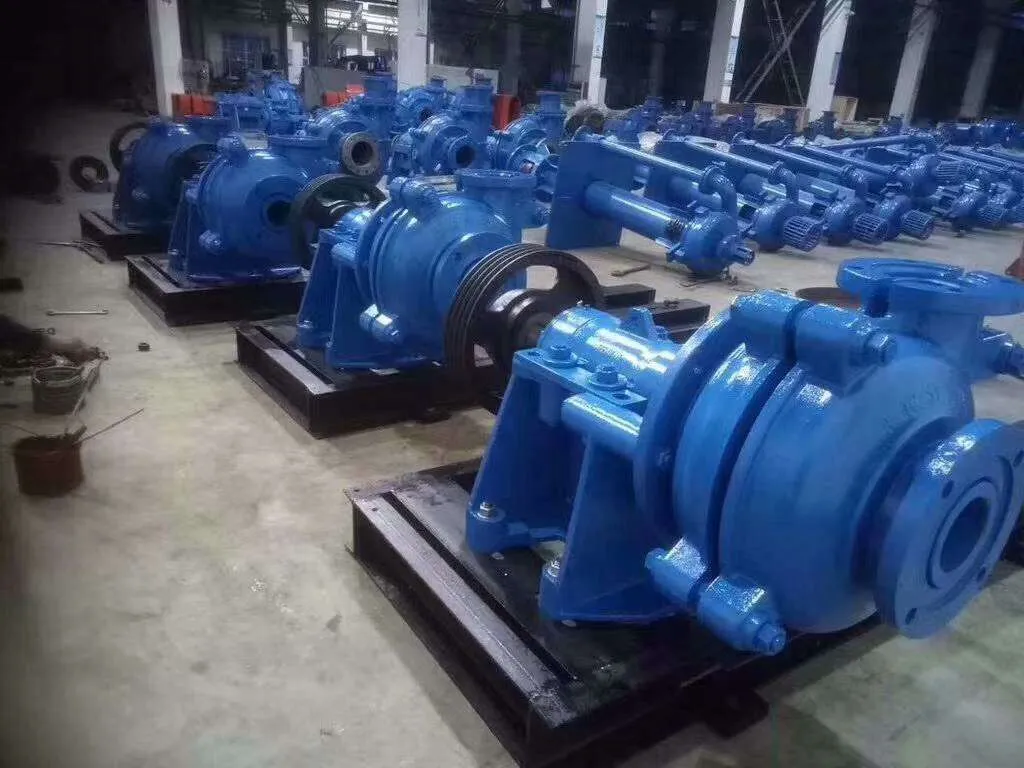
sp slurry pumps Performance and Engineering
Introduction
SP slurry pumps are positive displacement pumps specifically engineered for the conveyance of abrasive, erosive, and highly viscous fluids – commonly referred to as slurries. These pumps find critical application across a diverse spectrum of industries including mining, mineral processing, chemical processing, wastewater treatment, and dredging. Their technical position within the industrial chain lies between upstream fluid extraction/creation and downstream processing or disposal. Unlike centrifugal pumps which excel with low viscosity fluids, SP slurry pumps are characterized by their ability to maintain prime and deliver consistent flow rates even with significant solids content. Core performance metrics center around flow rate, head (pressure), solids handling capacity, abrasion resistance, and operational efficiency. A key industry pain point is the balance between maximizing pump life in highly abrasive environments and maintaining acceptable flow rates and energy consumption. The choice of materials and impeller design are paramount to addressing this challenge. Degradation of pump components due to erosion and corrosion directly impacts operational costs and downtime, representing a significant concern for plant managers and process engineers.
Material Science & Manufacturing
The construction of SP slurry pumps necessitates careful material selection to withstand the aggressive nature of slurries. Common materials include high-chrome cast irons (ASTM A532 Grade 1 Class 30), stainless steels (304, 316, Duplex stainless steels – ASTM A240), and specialized alloys like nickel-hardened irons. High-chrome cast irons offer excellent abrasion resistance due to the formation of hard chromium carbides during the casting process. Stainless steels provide superior corrosion resistance, particularly in applications involving acidic or alkaline slurries. Manufacturing processes vary depending on component complexity. Pump casings are typically manufactured using sand casting or investment casting, followed by heat treatment and machining to achieve precise dimensional tolerances. Impellers, the most critical wear component, are often produced using lost-wax investment casting, allowing for intricate geometries optimized for slurry shear and solids handling. Shafts are forged and machined from high-strength alloy steels (e.g., 4140 – ASTM A303) and subjected to non-destructive testing (NDT) such as magnetic particle inspection (MPI) to detect surface cracks. Sealing components utilize materials like Viton, EPDM, or PTFE depending on the chemical compatibility requirements of the slurry. Key parameter control focuses on hardness levels of wear components (measured via Rockwell hardness testing), alloy composition verification (using spectroscopic analysis), and dimensional accuracy (using coordinate measuring machines - CMMs). Welding processes used in fabrication (SMAW, GMAW) must adhere to AWS D1.1 standards and utilize qualified welders.
Performance & Engineering
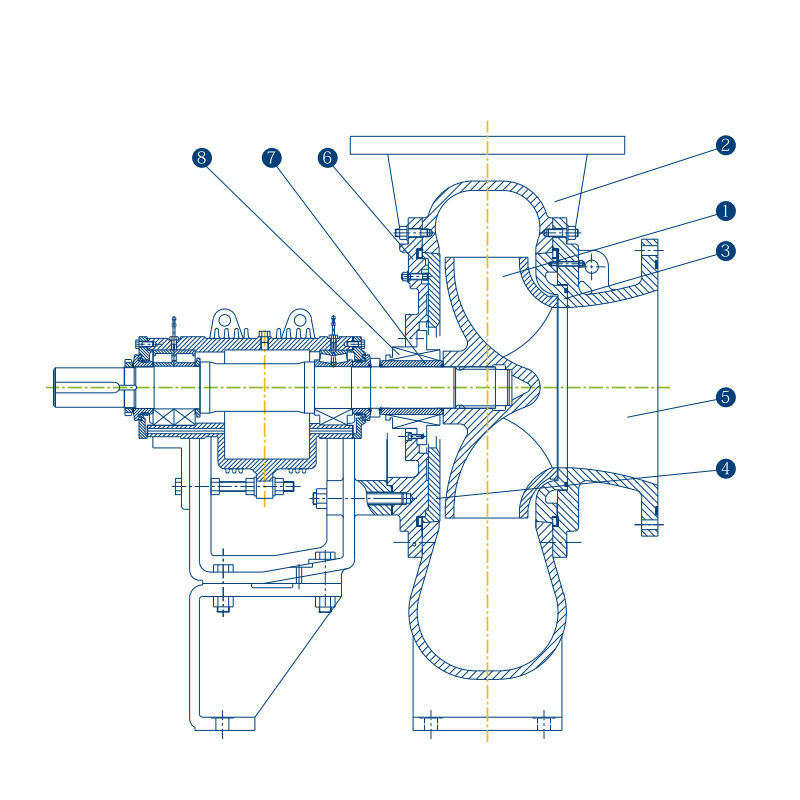
SP slurry pump performance is governed by several engineering principles. Force analysis considers hydrodynamic forces exerted by the slurry on the impeller, centrifugal forces arising from rotation, and external pressures from the piping system. Cavitation, a critical failure mode, occurs when the absolute pressure at the impeller inlet drops below the vapor pressure of the slurry, leading to bubble formation and subsequent implosion, causing erosion. Net Positive Suction Head Required (NPSHr) is a crucial parameter determined by pump design and slurry properties, and must be lower than the Net Positive Suction Head Available (NPSHa) in the system to prevent cavitation. Environmental resistance is addressed through material selection and protective coatings. Pumps operating in corrosive environments require coatings like epoxy or rubber linings. Compliance requirements vary by region but generally include adherence to API 610 standards for centrifugal pumps (applied by analogy due to similarities in design principles) and potentially specific regulations pertaining to wastewater discharge or hazardous material handling. Functional implementation involves selecting the appropriate pump size, impeller type (open, semi-open, closed), and seal type based on the slurry's characteristics (solids concentration, particle size, abrasiveness, chemical composition) and the desired flow rate and head. Pump curves (head vs. flow rate) are generated through hydraulic testing to verify performance against design specifications. The hydraulic efficiency of the pump is a key indicator of energy consumption and overall operational cost.
Technical Specifications
| Parameter | Unit | Typical Range (Small Pump) | Typical Range (Large Pump) |
|---|---|---|---|
| Flow Rate | m³/hr | 5 - 50 | 200 - 1000 |
| Head | m | 10 - 30 | 50 - 150 |
| Solids Handling Capacity | % by Weight | 20 - 40 | 40 - 80 |
| Maximum Particle Size | mm | 10 - 25 | 50 - 150 |
| Pump Speed | RPM | 500 - 1500 | 500 - 2000 |
| Power | kW | 1.5 - 7.5 | 30 - 150 |
Failure Mode & Maintenance
SP slurry pumps are susceptible to several failure modes. Fatigue cracking in the impeller and shaft is common due to cyclical loading and stress concentration. Erosion, particularly at the impeller vanes and casing liner, leads to gradual material loss, reducing pump efficiency and ultimately causing failure. Delamination of rubber or epoxy linings occurs due to poor adhesion or exposure to aggressive chemicals. Degradation of sealing components results in leakage and potential contamination. Oxidation and corrosion of metallic components are exacerbated by exposure to corrosive slurries and atmospheric conditions. Failure analysis should include visual inspection for wear patterns, dimensional measurements to assess material loss, and metallurgical analysis (e.g., scanning electron microscopy - SEM) to identify failure mechanisms. Preventative maintenance includes regular inspection of wear components, replacement of liners and seals at predetermined intervals, lubrication of bearings, and vibration analysis to detect early signs of imbalance or bearing failure. Impeller replacement is the most frequent maintenance task. Proper pump alignment is crucial to minimize bearing load and prevent premature failure. Maintaining a consistent and appropriate slurry velocity helps to reduce erosion rates. Implementation of a robust condition monitoring program, incorporating parameters like vibration, temperature, and pressure, is vital for predictive maintenance and minimizing unplanned downtime.
Industry FAQ
Q: What is the primary difference between an SP slurry pump and a centrifugal pump when handling abrasive slurries?
A: Centrifugal pumps are typically less efficient and experience significantly higher wear rates when handling abrasive slurries. Their high tip speeds create intense shear forces and accelerate erosion. SP slurry pumps, being positive displacement pumps, maintain a more consistent flow rate and generally operate at lower speeds, minimizing abrasive wear and allowing for higher solids concentrations.
Q: How does impeller design affect the performance and lifespan of an SP slurry pump?
A: Impeller design is critical. Open impellers are best suited for slurries with high solids content, minimizing clogging. Semi-open impellers offer a balance between solids handling and efficiency. Closed impellers are more efficient for cleaner slurries but are prone to clogging. Impeller vane geometry (e.g., radial, axial) influences shear forces and erosion rates. Hardened materials and coatings are essential for extending impeller life.
Q: What are the key considerations when selecting a seal type for an SP slurry pump?
A: Seal selection depends heavily on the slurry’s chemical composition, abrasiveness, and temperature. Mechanical seals are common but require clean fluids for lubrication and are susceptible to damage from abrasive particles. Packing seals are more tolerant of abrasives but require regular adjustment and can lead to leakage. Sealless designs, like magnetic drive pumps, eliminate seal failures but are more expensive.
Q: What is NPSHr and why is it important for SP slurry pump operation?
A: NPSHr (Net Positive Suction Head Required) is the minimum pressure required at the pump inlet to prevent cavitation. If the available NPSH (NPSHa) in the system is less than the NPSHr, cavitation will occur, causing damage to the impeller and reducing pump performance. Correct NPSH calculation and system design are essential for reliable operation.
Q: What materials are most resistant to corrosion in highly acidic slurries?
A: Duplex stainless steels (e.g., 2205) and super austenitic stainless steels offer excellent corrosion resistance in highly acidic environments. Nickel-hardened irons can also provide good protection. The specific material choice depends on the precise chemical composition of the slurry and the operating temperature. Coatings like PTFE or rubber linings can further enhance corrosion resistance.
Conclusion
SP slurry pumps are essential components in numerous industrial processes where abrasive and erosive slurries must be reliably transported. Their performance is directly linked to meticulous material selection, optimized impeller design, and diligent maintenance practices. Understanding the interplay between slurry characteristics, pump parameters, and potential failure modes is paramount to maximizing operational efficiency and minimizing downtime.
Looking forward, advancements in materials science, such as the development of novel ceramic composites and wear-resistant alloys, will further enhance the lifespan and performance of SP slurry pumps. The integration of predictive maintenance technologies, leveraging real-time sensor data and machine learning algorithms, will enable proactive interventions, reducing unplanned outages and lowering overall lifecycle costs. Continued refinement of hydraulic designs and impeller geometries will optimize energy efficiency and solids handling capabilities, addressing the evolving needs of demanding industrial applications.
-
Precision at the Pump: How Better Machining Protects Flow and Uptime
News2026-11-20
-
Why Pump Reliability Begins Before the First Drop of Fluid
News2026-11-20
-
Beyond the Pump: Designing Safer Access Around Critical Water Infrastructure
News2026-11-20
-
Why Pumping Stations Depend on the Infrastructure Beneath the Pumps
News2026-11-20
-
Beyond the Pump Room: How Smarter Loading Protects Industrial Equipment
News2026-11-19
-
When Pumps Stop: Designing More Resilient Power for Critical Pumping Systems
News2026-11-19
-
The Hidden Role of Dust and Gas Monitoring in Reliable Pump Operations
News2026-11-19
-
The Hidden Role of Mineral Compounds in Extending Industrial Pump Lifespan
News2026-10-12
-
Why Pump System Reliability Depends on Precision Hose Assembly Methods
News2026-09-15
-
How Advanced Imaging Films Are Transforming Pump Component Quality Control
News2026-08-25
-
How Advanced Filtration Protects Pump Systems from Premature Wear and Costly Downtime
News2026-08-25
-
How Steel Material Selection Drives Pump Reliability in Heavy-Duty Systems
News2026-08-25
-
Ensuring Pump System Efficiency: The Role of High-Quality Pipe Fittings and Tubing
News2026-08-24
-
Optimizing Fluid Dynamics and Material Consistency in Industrial Processing
News2026-08-18
-
Innovations and Challenges in Hydraulic Systems for Heavy Machinery
News2026-08-13




