English
- Afrikaans
- Albanian
- Amharic
- Arabic
- Armenian
- Azerbaijani
- Basque
- Belarusian
- Bengali
- Bosnian
- Bulgarian
- Catalan
- Cebuano
- Corsican
- Croatian
- Czech
- Danish
- Dutch
- English
- Esperanto
- Estonian
- Finnish
- French
- Frisian
- Galician
- Georgian
- German
- Greek
- Gujarati
- Haitian Creole
- hausa
- hawaiian
- Hebrew
- Hindi
- Miao
- Hungarian
- Icelandic
- igbo
- Indonesian
- irish
- Italian
- Japanese
- Javanese
- Kannada
- kazakh
- Khmer
- Rwandese
- Korean
- Kurdish
- Kyrgyz
- Lao
- Latin
- Latvian
- Lithuanian
- Luxembourgish
- Macedonian
- Malgashi
- Malay
- Malayalam
- Maltese
- Maori
- Marathi
- Mongolian
- Myanmar
- Nepali
- Norwegian
- Norwegian
- Occitan
- Pashto
- Persian
- Polish
- Portuguese
- Punjabi
- Romanian
- Russian
- Samoan
- Scottish Gaelic
- Serbian
- Sesotho
- Shona
- Sindhi
- Sinhala
- Slovak
- Slovenian
- Somali
- Spanish
- Sundanese
- Swahili
- Swedish
- Tagalog
- Tajik
- Tamil
- Tatar
- Telugu
- Thai
- Turkish
- Turkmen
- Ukrainian
- Urdu
- Uighur
- Uzbek
- Vietnamese
- Welsh
- Bantu
- Yiddish
- Yoruba
- Zulu

Telephone: +86 13120555503
Email: frank@cypump.com


Apr . 01, 2024 17:55 Back to list
slurry water pump Technical Dimension and Performance Analysis
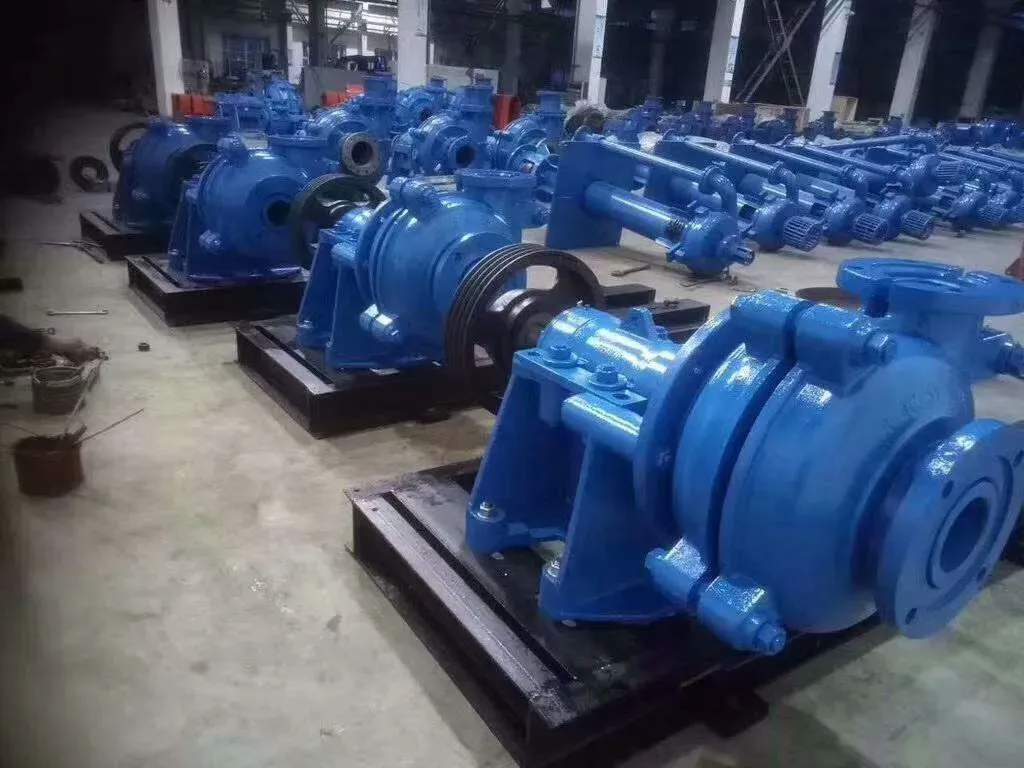
Slurry Water Pump: Technical Dimension and Performance Analysis
A slurry water pump is a specialized centrifugal pumping system engineered to transport fluids containing high concentrations of suspended solid particles, known as slurries. Positioned as a critical utility in the midstream of industrial processing chains—specifically in mining, mineral processing, dredging, and chemical manufacturing—these pumps must manage the inherent contradiction between high fluid kinetic energy and the destructive abrasive nature of the transported medium. Unlike standard water pumps, a slurry pump is designed to maintain volumetric efficiency while resisting severe erosive wear and corrosion. The core technical challenge lies in optimizing the hydraulic profile to minimize turbulence (which accelerates wear) while ensuring sufficient head and flow rate to prevent solid sedimentation within the pump casing. The performance of these systems is judged by their Mean Time Between Failures (MTBF) in aggressive environments, their ability to handle varying slurry densities (specific gravity), and their energy efficiency under high-viscosity conditions.
Material Science & Manufacturing
The longevity of a slurry water pump is fundamentally determined by the material science of its wetted parts. The primary failure mechanism in these pumps is abrasive wear, where hard particles in the slurry carve out the material surface through micro-plowing and micro-cutting. To counteract this, high-chromium cast irons (ASTM A532) are frequently utilized for impellers and liners. These alloys consist of a matrix of hard chromium carbides (M7C3) embedded in a martensitic steel matrix, providing a dual-benefit of hardness (typically 55-65 HRC) and structural toughness.
In applications where chemical corrosion accompanies abrasion (corrosive-abrasive wear), duplex stainless steels or high-nickel alloys are employed. These materials form a passive oxide layer that prevents chemical degradation of the metal matrix, which would otherwise expose the carbides to premature detachment. For extremely aggressive slurries, thermoplastic liners such as polyurethane or natural rubber (NBR) are used. These elastomers absorb the kinetic energy of impacting particles through elastic deformation, effectively "bouncing" the particles off the surface rather than allowing them to gouge the material.
Manufacturing processes focus on precision casting and dynamic balancing. The investment casting process is often used for complex impeller geometries to ensure minimal porosity and uniform grain structure. Following casting, heat treatment—specifically quenching and tempering—is critical to achieve the desired martensitic structure. Furthermore, the pump casing is typically designed with replaceable liners, ensuring that the structural outer shell remains intact while only the sacrificial wear layers are replaced. Precision machining of the shaft and bearing housings is performed to tolerances within microns to minimize vibration, as any radial instability would lead to accelerated seal failure and uneven wear patterns.
Performance & Engineering
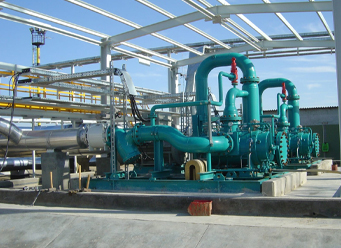
The engineering of a slurry water pump revolves around the management of fluid dynamics and force analysis. The primary objective is to maintain a laminar-like flow as much as possible, as turbulent eddies increase the frequency of particle impact against the casing walls. This is achieved through the design of the impeller vanes, which are engineered with specific wrap angles and discharge profiles to maximize head while minimizing internal recirculation.
Force analysis in slurry pumps must account for the increased density of the medium. A slurry with a specific gravity of 1.3 exerts significantly higher radial and axial thrust on the shaft and bearings compared to clean water. Consequently, heavy-duty bearings and oversized shafts are utilized to prevent deflection. The Net Positive Suction Head (NPSH) requirement is also higher for slurries, as the risk of cavitation is exacerbated by the presence of solids; cavitation bubbles collapsing near the impeller surface can cause localized pitting that accelerates abrasive wear.
Environmental resistance is managed through advanced sealing technologies. The "expeller" or "vortex" seal is commonly employed to divert solids away from the stuffing box or mechanical seal, creating a clear-water zone that prevents abrasive particles from entering the sealing faces. For highly acidic or alkaline slurries, the engineering focus shifts toward chemical compatibility, ensuring that all O-rings and gaskets are made of fluoroelastomers (Viton) or PTFE to prevent degradation and subsequent leakage.
Technical Specifications
| Parameter Category | High-Chrome Series (Hard) | Rubber-Lined Series (Soft) | Duplex Steel Series (Corrosive) | Polyurethane Series (Medium) |
|---|---|---|---|---|
| Max Particle Size | Up to 15mm | Up to 8mm | Up to 10mm | Up to 12mm |
| Material Hardness | 58-64 HRC | 60-80 Shore A | 25-30 HRC | 90-95 Shore A |
| Specific Gravity Limit | 1.6 - 1.8 | 1.2 - 1.4 | 1.3 - 1.5 | 1.4 - 1.6 |
| Corrosion Resistance | Moderate | High | Extreme | High |
| Wear Mechanism | High-Impact Abrasion | Fine-Particle Erosion | Chemical Corrosion | General Abrasion |
| Typical Efficiency | 72% - 85% | 68% - 80% | 75% - 88% | 70% - 82% |
Failure Mode & Maintenance
Failure analysis of slurry pumps typically reveals four primary modes: erosive wear, cavitation, seal degradation, and fatigue cracking. Erosive wear manifests as localized thinning of the impeller vanes and volute liners, often occurring at the "cut-water" area where fluid velocity is highest. This leads to a gradual drop in pump head and an increase in power consumption as the hydraulic efficiency declines. Cavitation, caused by insufficient NPSH, creates microscopic implosions that strip away the protective oxide layers of the metal, accelerating the abrasive process.
Seal failure is frequently caused by the ingress of abrasive particles into the mechanical seal faces, resulting in scoring and immediate leakage. Fatigue cracking in the shaft or impeller usually stems from unbalanced solids loading or operating the pump too far from its Best Efficiency Point (BEP), leading to excessive vibration and cyclic stress loading.
Professional maintenance protocols require a predictive approach. This includes vibration analysis (FFT) to detect bearing wear or imbalance and ultrasonic thickness gauging of the liners to determine the remaining life of the wear parts. Maintenance intervals should be based on the "wear rate per 1,000 hours," calculated by measuring the liner thickness during scheduled outages. When replacing impellers, dynamic balancing to ISO 1940 G2.5 standards is mandatory to prevent premature bearing failure. Additionally, flushing systems for the seals should be checked for flow rate and pressure to ensure the "solid-free zone" is maintained.
Industry FAQ
Q: How do we determine whether to use high-chrome alloy or rubber liners for a specific slurry?
A: The decision is based on particle size and impact energy. High-chrome alloys are superior for coarse, large particles that cause high-impact abrasion (micro-chipping). Rubber liners are far more effective for fine, sandy particles that cause sliding abrasion, as the elastomer absorbs the impact and resists the "scouring" effect.
Q: What is the impact of slurry density on the pump's power requirement?
A: Slurry density increases the fluid's specific gravity, which directly increases the brake horsepower (BHP) required to move the fluid. The power requirement increases linearly with the specific gravity; for example, a slurry with a SG of 1.4 requires approximately 40% more power than clean water for the same flow and head.
Q: Why is the pump experiencing rapid wear despite using high-hardness materials?
A: This is often due to "corrosive-abrasive synergy." If the slurry is acidic or alkaline, the chemical attack removes the passive layer of the metal, allowing abrasive particles to remove the fresh metal more easily. In such cases, switching to a duplex stainless steel or a chemically resistant elastomer is necessary.
Q: How can we prevent the solids from settling during low-flow conditions?
A: To prevent sedimentation, the pump must maintain a "critical carrying velocity." If the flow drops below this threshold, solids will settle in the pump casing and piping. This can be managed by installing a Variable Frequency Drive (VFD) to maintain minimum velocity or by implementing a recycle loop to keep the fluid in motion.
Q: What is the most effective way to extend the life of the mechanical seals in slurry service?
A: The implementation of a pressurized seal flush (API Plan 32 or 54) is the most effective method. By injecting clean water at a pressure higher than the pump's internal pressure, you create a hydraulic barrier that prevents slurry particles from entering the seal chamber, thereby eliminating abrasive wear on the seal faces.
Conclusion
The engineering of slurry water pumps is a complex balance of material hardness, hydraulic optimization, and structural integrity. By integrating advanced metallurgy—such as high-chromium alloys and specialized elastomers—with precision manufacturing, these systems can effectively mitigate the destructive forces of abrasion and corrosion. The technical success of a slurry pump installation depends not only on the initial material selection but also on the rigorous management of fluid dynamics and the adherence to a predictive maintenance regime.
Looking forward, the industry is moving toward "intelligent pumping," where real-time wear sensors and AI-driven performance monitoring can predict failure before it occurs. This transition from reactive to proactive maintenance will significantly reduce operational downtime and optimize the lifecycle cost of slurry transport systems, ensuring higher reliability in the demanding environments of global industrial processing.
-
sump pump for septic systems Material Science Manufacturing
News2026-05-20
-
sump pump and ejector pump Material Science Manufacturing
News2026-05-20
-
sewage treatment plant pumps Performance Analysis
News2026-05-20
-
sewage tank pump Material Science and Manufacturing
News2026-05-20
-
sewage pump for septic tank Performance Analysis
News2026-05-20
-
Sewage Pump and Tank Performance Analysis
News2026-05-19
-
Sewage Ejector Pump Replacement Performance Analysis
News2026-05-19
-
sewage ejector pump for basement bathroom Material Science Manufacturing
News2026-05-19
-
sewage ejection pump Material Science and Manufacturing
News2026-05-19
-
in line sewage pump Performance Analysis
News2026-05-19
-
effluent sump pump Performance Analysis
News2026-05-18
-
best grinder pump for sewage Performance Engineering
News2026-05-18
-
basement waste water pump Performance Engineering
News2026-05-18
-
sump pump sewer Performance Analysis
News2026-05-18
-
sump pump for sewer Performance Analysis
News2026-05-18




