English
- Afrikaans
- Albanian
- Amharic
- Arabic
- Armenian
- Azerbaijani
- Basque
- Belarusian
- Bengali
- Bosnian
- Bulgarian
- Catalan
- Cebuano
- Corsican
- Croatian
- Czech
- Danish
- Dutch
- English
- Esperanto
- Estonian
- Finnish
- French
- Frisian
- Galician
- Georgian
- German
- Greek
- Gujarati
- Haitian Creole
- hausa
- hawaiian
- Hebrew
- Hindi
- Miao
- Hungarian
- Icelandic
- igbo
- Indonesian
- irish
- Italian
- Japanese
- Javanese
- Kannada
- kazakh
- Khmer
- Rwandese
- Korean
- Kurdish
- Kyrgyz
- Lao
- Latin
- Latvian
- Lithuanian
- Luxembourgish
- Macedonian
- Malgashi
- Malay
- Malayalam
- Maltese
- Maori
- Marathi
- Mongolian
- Myanmar
- Nepali
- Norwegian
- Norwegian
- Occitan
- Pashto
- Persian
- Polish
- Portuguese
- Punjabi
- Romanian
- Russian
- Samoan
- Scottish Gaelic
- Serbian
- Sesotho
- Shona
- Sindhi
- Sinhala
- Slovak
- Slovenian
- Somali
- Spanish
- Sundanese
- Swahili
- Swedish
- Tagalog
- Tajik
- Tamil
- Tatar
- Telugu
- Thai
- Turkish
- Turkmen
- Ukrainian
- Urdu
- Uighur
- Uzbek
- Vietnamese
- Welsh
- Bantu
- Yiddish
- Yoruba
- Zulu

Telephone: +86 13120555503
Email: frank@cypump.com


Apr . 01, 2024 17:55 Back to list
slurry vacuum pump Manufacturing Specification and Performance Analysis
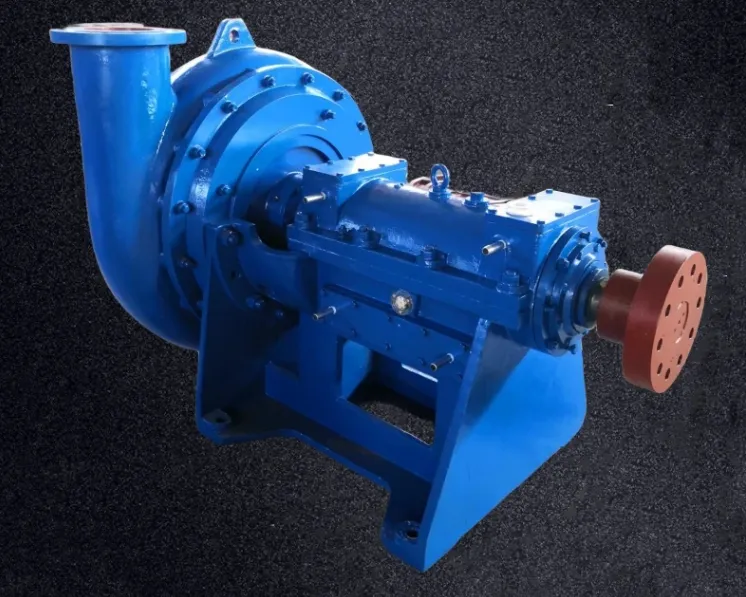
Slurry Vacuum Pump Manufacturing Specification and Performance Analysis
A slurry vacuum pump is a specialized industrial fluid-handling device engineered to evacuate gases and transport high-viscosity, abrasive, or particulate-laden fluids under sub-atmospheric pressure. Unlike standard vacuum pumps, which are designed for clean gases or light oils, slurry vacuum pumps are positioned at the critical intersection of vacuum technology and solids-handling engineering. They are predominantly deployed in mining, chemical processing, wastewater treatment, and pharmaceutical filtration processes where the medium consists of a liquid carrier containing suspended solids. The core technical challenge of these pumps lies in balancing the achievement of a stable vacuum level with the ability to resist the severe erosive wear caused by the kinetic impact of suspended particulates on internal rotating components and casing walls.
Material Science & Manufacturing
The longevity of a slurry vacuum pump is dictated by the synergy between its metallurgical composition and the precision of its manufacturing process. Given the highly abrasive nature of slurries, the selection of materials focuses on hardness, corrosion resistance, and fracture toughness.
Metallurgical Composition: High-chrome white irons (ASTM A532) are frequently utilized for impellers and liners due to their high volume of primary carbides (M7C3), which provide exceptional resistance to abrasive wear. For corrosive slurries, duplex stainless steels or nickel-based alloys (such as Hastelloy) are employed to prevent pitting and stress corrosion cracking. In extreme applications, ceramic inserts (Silicon Carbide or Alumina) are integrated into seal faces and high-velocity zones to minimize material loss.
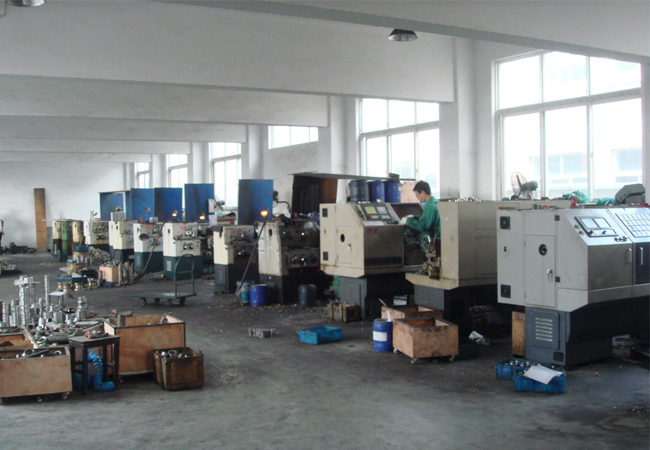
Manufacturing Process: The fabrication process begins with precision investment casting to ensure the complex geometries of the impeller are maintained without porosity. This is followed by CNC machining to achieve critical tolerances, particularly at the shaft-sleeve interface. A critical manufacturing step is the heat treatment process—specifically quenching and tempering—to optimize the martensitic structure of the alloy, ensuring the pump does not suffer from brittle failure under hydraulic shock. Furthermore, the internal surfaces often undergo hard-facing or thermal spray coatings (e.g., Tungsten Carbide) to create a sacrificial wear layer that protects the base metal from the high-velocity impingement of solids.
Performance & Engineering
Engineering a slurry vacuum pump requires a deep analysis of fluid dynamics, specifically focusing on the interaction between the vacuum gradient and the particulate concentration. The primary engineering objective is to maintain a consistent flow velocity that exceeds the critical settling velocity of the solids to prevent clogging and sedimentation within the pump casing.
Hydraulic Force Analysis: The pump must be engineered to handle the "slugging" effect, where sudden increases in slurry density create momentary spikes in torque and axial thrust. This is managed through the use of heavy-duty reinforced bearings and balanced impeller designs that neutralize radial loads. The vacuum performance is governed by the volumetric efficiency, which can be degraded by internal leakage (slip) if the clearances between the rotating elements and the casing widen due to wear.
Environmental and Compliance Engineering: To ensure operational safety, these pumps are engineered with robust mechanical seal systems, often utilizing double-pressurized seals with a clean barrier fluid to prevent the abrasive slurry from infiltrating the bearing housing. Environmental resistance is further enhanced by applying epoxy-based anti-corrosion coatings to the exterior, ensuring stability in humid or chemically aggressive industrial environments. Compliance is maintained through strict adherence to vibration limits and noise emission standards to ensure long-term structural integrity.
Technical Specifications
| Parameter Dimension | Standard Grade | Heavy-Duty Grade | Extreme-Wear Grade | Unit of Measure |
|---|---|---|---|---|
| Max Vacuum Pressure | -0.085 | -0.092 | -0.098 | MPa |
| Maximum Slurry Concentration | 25% | 40% | 60% | wt% |
| Abrasive Particle Size (Max) | 2.0 | 5.0 | 10.0 | mm |
| Impeller Material | Cast Iron | High-Chrome Steel | Ceramic Lined | Material |
| Flow Rate Capacity | 150 | 400 | 800 | m³/h |
| MTBF (Mean Time Between Failures) | 4,000 | 8,000 | 15,000 | Hours |
Failure Mode & Maintenance
Failure analysis in slurry vacuum pumps typically reveals three primary degradation mechanisms: abrasive erosion, cavitation, and mechanical seal failure.
Abrasive Erosion: This occurs when suspended solids strike the impeller vanes and volute casing at high velocities. The failure manifests as a thinning of the wall thickness and a loss of hydraulic efficiency. To mitigate this, "wear plates" or replaceable liners are installed in high-impact zones. Maintenance involves the periodic measurement of liner thickness using ultrasonic testing and replacement before the base metal is compromised.
Cavitation: Because the pump operates under vacuum, the risk of the liquid flashing into vapor (cavitation) is high. Cavitation creates micro-jets that implode against the metal surface, causing "pitting" or "sponge-like" material loss. Engineering solutions include increasing the Net Positive Suction Head available (NPSHa) and optimizing the impeller eye diameter to reduce inlet velocity.
Mechanical Seal Degradation: Particulates that bypass the primary seal face act as grinding agents, leading to rapid leakage. The professional maintenance solution involves implementing a "Seal Flush Plan" (API Plan 32 or 53), which provides a constant flow of clean liquid to wash away solids from the seal faces, combined with a rigorous schedule of vibration analysis to detect shaft misalignment early.
Industry FAQ
Q: How does the solid concentration affect the ultimate vacuum level achieved?
A: Increased solid concentration increases the effective viscosity and density of the medium, which increases the internal frictional losses. This typically results in a slight decrease in the maximum attainable vacuum and requires higher input power to maintain the same volumetric flow rate.
Q: Which material is superior for a slurry containing both sulfuric acid and abrasive quartz?
A: In such a synergistic corrosive-abrasive environment, standard high-chrome steels may fail due to acid attack. A duplex stainless steel or a nickel-alloy casing with a specialized ceramic liner is recommended to provide both chemical inertness and hardness.
Q: What is the primary cause of sudden vacuum loss in these systems?
A: The most common cause is "air ingress" through worn-out gaskets or failed mechanical seals. In slurry applications, the abrasive nature of the fluid often degrades sealing surfaces faster than in clean-water pumps, creating leak paths that break the vacuum.
Q: Can these pumps handle non-Newtonian slurries, such as thixotropic pastes?
A: Yes, but it requires a specific impeller design with wider channels to prevent "plugging" and a higher starting torque motor to overcome the initial static yield stress of the fluid.
Q: How often should the wear liners be inspected in a high-concentration mining application?
A: For high-concentration abrasive slurries, we recommend a comprehensive inspection every 2,000 to 3,000 operating hours, or the use of continuous wear-monitoring sensors embedded in the liner to track material loss in real-time.
Conclusion
The operational efficiency of a slurry vacuum pump is fundamentally dependent on the precise alignment of material hardness and hydraulic design. By employing high-chrome alloys and optimizing the internal flow velocities to prevent both sedimentation and excessive erosion, engineers can significantly extend the service life of the equipment while maintaining the rigorous vacuum levels required for industrial separation and transport processes.
Looking forward, the integration of smart monitoring—such as acoustic emission sensors for cavitation detection and AI-driven predictive maintenance—will transition slurry vacuum pump management from reactive repair to proactive optimization. Ensuring adherence to international metallurgy and pressure vessel standards remains the baseline for safety and reliability in the most demanding industrial environments.
-
sump pump for septic systems Material Science Manufacturing
News2026-05-20
-
sump pump and ejector pump Material Science Manufacturing
News2026-05-20
-
sewage treatment plant pumps Performance Analysis
News2026-05-20
-
sewage tank pump Material Science and Manufacturing
News2026-05-20
-
sewage pump for septic tank Performance Analysis
News2026-05-20
-
Sewage Pump and Tank Performance Analysis
News2026-05-19
-
Sewage Ejector Pump Replacement Performance Analysis
News2026-05-19
-
sewage ejector pump for basement bathroom Material Science Manufacturing
News2026-05-19
-
sewage ejection pump Material Science and Manufacturing
News2026-05-19
-
in line sewage pump Performance Analysis
News2026-05-19
-
effluent sump pump Performance Analysis
News2026-05-18
-
best grinder pump for sewage Performance Engineering
News2026-05-18
-
basement waste water pump Performance Engineering
News2026-05-18
-
sump pump sewer Performance Analysis
News2026-05-18
-
sump pump for sewer Performance Analysis
News2026-05-18




