English
- Afrikaans
- Albanian
- Amharic
- Arabic
- Armenian
- Azerbaijani
- Basque
- Belarusian
- Bengali
- Bosnian
- Bulgarian
- Catalan
- Cebuano
- Corsican
- Croatian
- Czech
- Danish
- Dutch
- English
- Esperanto
- Estonian
- Finnish
- French
- Frisian
- Galician
- Georgian
- German
- Greek
- Gujarati
- Haitian Creole
- hausa
- hawaiian
- Hebrew
- Hindi
- Miao
- Hungarian
- Icelandic
- igbo
- Indonesian
- irish
- Italian
- Japanese
- Javanese
- Kannada
- kazakh
- Khmer
- Rwandese
- Korean
- Kurdish
- Kyrgyz
- Lao
- Latin
- Latvian
- Lithuanian
- Luxembourgish
- Macedonian
- Malgashi
- Malay
- Malayalam
- Maltese
- Maori
- Marathi
- Mongolian
- Myanmar
- Nepali
- Norwegian
- Norwegian
- Occitan
- Pashto
- Persian
- Polish
- Portuguese
- Punjabi
- Romanian
- Russian
- Samoan
- Scottish Gaelic
- Serbian
- Sesotho
- Shona
- Sindhi
- Sinhala
- Slovak
- Slovenian
- Somali
- Spanish
- Sundanese
- Swahili
- Swedish
- Tagalog
- Tajik
- Tamil
- Tatar
- Telugu
- Thai
- Turkish
- Turkmen
- Ukrainian
- Urdu
- Uighur
- Uzbek
- Vietnamese
- Welsh
- Bantu
- Yiddish
- Yoruba
- Zulu

Telephone: +86 13120555503
Email: frank@cypump.com


Apr . 01, 2024 17:55 Back to list
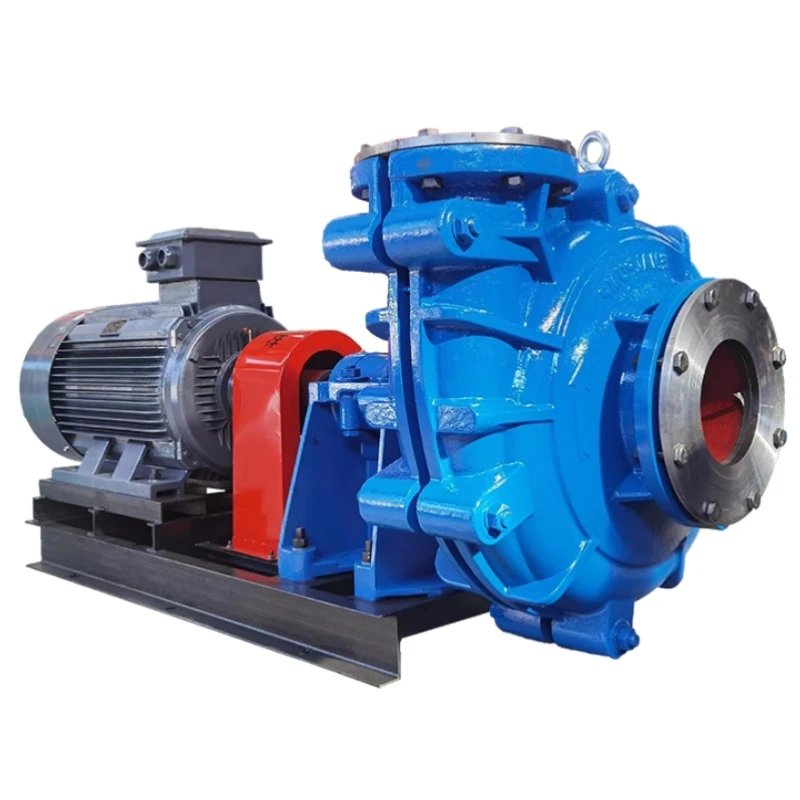
slurry tanker pump for sale Performance Analysis
Introduction
Slurry tanker pumps are critical components in agricultural, industrial, and municipal applications for the effective and efficient transfer of semi-solid mixtures containing liquids and particulate matter – commonly referred to as slurry. Positioned within the fluid handling industry chain, these pumps are distinct from centrifugal pumps designed for clean fluids, demanding robust construction and specialized impeller designs to resist abrasion, clogging, and corrosion. Their core performance characteristics center around flow rate (typically measured in m³/hr or gpm), head pressure (measured in meters or feet), solids handling capability (expressed as particle size and concentration), and overall efficiency. The increasing demand for reliable slurry handling solutions, driven by stricter environmental regulations regarding manure management and industrial waste disposal, necessitates a thorough understanding of pump materials, design, and operational parameters. A primary industry pain point revolves around premature pump failure due to abrasive wear and the high lifecycle costs associated with frequent repairs and replacements.
Material Science & Manufacturing
Slurry tanker pumps frequently utilize materials selected for their resistance to abrasion and corrosion. Cast iron, specifically grey cast iron (ASTM A48 Class 30), is commonly employed for pump housings due to its damping characteristics and machinability, although its relatively low tensile strength limits its applicability with highly abrasive slurries. Impellers are often constructed from high-chrome iron alloys (typically containing 13-28% chromium) which provide significantly improved wear resistance through the formation of a hard carbide layer during operation. Stainless steel, particularly 316 stainless steel (ASTM A743 CF8M), is used in applications where corrosive media are present, offering excellent resistance to chloride and acid attack. Polymer materials, such as polyurethane and rubber linings, are increasingly used for housings and impellers in highly abrasive environments, providing a sacrificial layer that protects the underlying metal.
Manufacturing processes vary depending on component complexity and material selection. Pump housings are typically produced using sand casting, requiring meticulous pattern making and control of pouring temperatures to minimize defects. Impellers are often investment cast to achieve intricate geometries and tight tolerances. Shafts are typically forged from alloy steel (e.g., 4140) and subjected to heat treatment and machining to ensure dimensional accuracy and fatigue resistance. Critical parameters during manufacturing include ensuring proper material composition through spectroscopic analysis, controlling heat treatment cycles to achieve desired hardness and ductility, and performing non-destructive testing (NDT), such as liquid penetrant inspection and ultrasonic testing, to detect internal flaws. Seals are typically mechanically sealed with components manufactured from silicon carbide or tungsten carbide to ensure long-term reliable performance in harsh environments.

Performance & Engineering
The performance of a slurry tanker pump is governed by several key engineering principles. Force analysis focuses on the stresses induced by fluid pressure and the weight of the slurry, particularly on the pump housing and impeller. Impeller design is crucial; radial impellers are common for high-head applications, while axial impellers are favored for high-flow, low-head scenarios. The impeller’s vane geometry and number directly influence the pump’s ability to handle solids without clogging. Cavitation, a major concern in pump operation, occurs when the absolute pressure within the pump falls below the vapor pressure of the slurry, forming vapor bubbles that collapse and cause localized erosion. Proper net positive suction head (NPSH) calculation and pump selection are critical to prevent cavitation. Environmental resistance is paramount; pumps operating outdoors must be protected from weather elements, and corrosion-resistant coatings or materials are essential in aggressive chemical environments. Compliance requirements vary by region but typically involve adherence to safety standards (e.g., CE marking in Europe) and environmental regulations concerning emissions and waste handling. The hydraulic efficiency is determined by the relationship between the power input to the pump and the hydraulic power delivered to the slurry. Minimizing energy loss is a key objective.
Technical Specifications
| Parameter | Unit | Typical Range (Agricultural Slurry) | Typical Range (Industrial Slurry) |
|---|---|---|---|
| Flow Rate | m³/hr | 50 - 200 | 100 - 500 |
| Head Pressure | m | 10 - 40 | 20 - 100 |
| Solids Handling | mm | Up to 75 | Up to 150 |
| Slurry Concentration (Solids %) | % | 5 - 20 | 20 - 60 |
| Pump Speed | RPM | 800 - 1800 | 500 - 1500 |
| Power Requirement | kW | 4 - 15 | 10 - 50 |
Failure Mode & Maintenance
Slurry tanker pumps are susceptible to several failure modes. Abrasive wear is the most common, occurring in the impeller, pump housing, and volute casing due to the constant impact of solid particles. This leads to gradual material loss, decreased pump efficiency, and ultimately, reduced flow rate. Fatigue cracking can occur in the shaft and impeller due to cyclical loading, particularly in pumps operating at high speeds or with fluctuating slurry flow. Corrosion, especially in acidic or saline environments, can weaken pump components and lead to leakage or catastrophic failure. Clogging is a frequent issue, caused by large solids or fibrous materials blocking the impeller or discharge passages. Improper lubrication of bearings can lead to premature bearing failure and increased vibration.
Preventative maintenance is crucial for extending pump life. Regular inspection of the impeller and pump housing for wear is essential. Scheduled replacement of worn components, such as the impeller and seals, minimizes downtime and prevents catastrophic failures. Proper lubrication of bearings, following manufacturer’s recommendations, is critical. Regularly flushing the pump casing to remove accumulated solids prevents clogging. Periodic vibration analysis can detect early signs of bearing wear or imbalance. Proper alignment of the pump and motor minimizes stress on the shaft and bearings. Consider implementing a condition monitoring program using sensors to track parameters like vibration, temperature, and pressure to proactively identify potential issues.
Industry FAQ
Q: What is the optimal impeller material for handling highly abrasive slurries containing large angular particles?
A: For highly abrasive slurries with large angular particles, high-chrome iron alloys are typically the most cost-effective solution. These alloys offer superior wear resistance compared to standard cast iron. While ceramic materials offer even higher abrasion resistance, the cost is significantly higher and they can be brittle. The choice ultimately depends on the severity of abrasion and budget constraints.
Q: How can cavitation be prevented in a slurry tanker pump operating with a suction lift?
A: Preventing cavitation with a suction lift requires careful consideration of NPSH. Ensure adequate submergence of the suction inlet to maximize available NPSH. Minimize suction line losses by using smooth, short piping and avoiding sharp bends. Select a pump with a lower NPSH requirement. Consider using a booster pump to increase suction pressure if the available NPSH is insufficient.
Q: What are the key differences between a positive displacement pump and a centrifugal pump for slurry applications?
A: Centrifugal pumps are generally preferred for high-flow, low-head applications with relatively low solids content. They are less sensitive to solids size but can experience reduced efficiency with increasing solids concentration. Positive displacement pumps (e.g., progressing cavity pumps) are better suited for viscous slurries and applications requiring consistent flow rates regardless of discharge pressure. They can handle higher solids concentrations but are more susceptible to damage from large, hard particles.
Q: What type of seal is recommended for handling abrasive slurries containing corrosive chemicals?
A: For abrasive slurries with corrosive chemicals, a double mechanical seal is highly recommended. This configuration uses two seals with a barrier fluid between them, preventing the slurry from contacting the second seal and providing a redundant seal in case of failure. Materials like silicon carbide or tungsten carbide are preferred for the seal faces due to their corrosion and abrasion resistance.
Q: How often should the pump casing be inspected for wear, and what methods can be used to assess the extent of wear?
A: The pump casing should be inspected for wear at least annually, or more frequently in highly abrasive applications. Visual inspection for material loss, cracks, and erosion is a starting point. Non-destructive testing methods, such as ultrasonic thickness testing, can accurately measure the remaining wall thickness of the casing. Dye penetrant inspection can detect surface cracks. A comparison of measurements over time will indicate the rate of wear and help predict future maintenance needs.
Conclusion
Slurry tanker pumps represent a sophisticated intersection of material science, fluid dynamics, and mechanical engineering. Selecting the appropriate pump for a given application demands a thorough understanding of slurry characteristics, operational requirements, and potential failure modes. The core of reliable performance lies in selecting materials resistant to abrasion and corrosion, implementing robust manufacturing processes, and adhering to a rigorous preventative maintenance schedule. Addressing the industry pain point of premature pump failure requires a proactive approach, emphasizing condition monitoring, timely component replacement, and continuous improvement in pump design and materials.
Looking ahead, advancements in pump technology will likely focus on developing more wear-resistant materials, optimizing impeller designs for improved solids handling, and integrating intelligent sensors for real-time performance monitoring and predictive maintenance. Furthermore, the increasing emphasis on sustainability will drive the development of more energy-efficient pump designs and the adoption of environmentally friendly materials. A holistic lifecycle cost analysis, considering not only the initial purchase price but also maintenance, repair, and energy consumption, will become increasingly important in pump selection.
-
Precision at the Pump: How Better Machining Protects Flow and Uptime
News2026-11-20
-
Why Pump Reliability Begins Before the First Drop of Fluid
News2026-11-20
-
Beyond the Pump: Designing Safer Access Around Critical Water Infrastructure
News2026-11-20
-
Why Pumping Stations Depend on the Infrastructure Beneath the Pumps
News2026-11-20
-
Beyond the Pump Room: How Smarter Loading Protects Industrial Equipment
News2026-11-19
-
When Pumps Stop: Designing More Resilient Power for Critical Pumping Systems
News2026-11-19
-
The Hidden Role of Dust and Gas Monitoring in Reliable Pump Operations
News2026-11-19
-
The Hidden Role of Mineral Compounds in Extending Industrial Pump Lifespan
News2026-10-12
-
Why Pump System Reliability Depends on Precision Hose Assembly Methods
News2026-09-15
-
How Advanced Imaging Films Are Transforming Pump Component Quality Control
News2026-08-25
-
How Advanced Filtration Protects Pump Systems from Premature Wear and Costly Downtime
News2026-08-25
-
How Steel Material Selection Drives Pump Reliability in Heavy-Duty Systems
News2026-08-25
-
Ensuring Pump System Efficiency: The Role of High-Quality Pipe Fittings and Tubing
News2026-08-24
-
Optimizing Fluid Dynamics and Material Consistency in Industrial Processing
News2026-08-18
-
Innovations and Challenges in Hydraulic Systems for Heavy Machinery
News2026-08-13




