English
- Afrikaans
- Albanian
- Amharic
- Arabic
- Armenian
- Azerbaijani
- Basque
- Belarusian
- Bengali
- Bosnian
- Bulgarian
- Catalan
- Cebuano
- Corsican
- Croatian
- Czech
- Danish
- Dutch
- English
- Esperanto
- Estonian
- Finnish
- French
- Frisian
- Galician
- Georgian
- German
- Greek
- Gujarati
- Haitian Creole
- hausa
- hawaiian
- Hebrew
- Hindi
- Miao
- Hungarian
- Icelandic
- igbo
- Indonesian
- irish
- Italian
- Japanese
- Javanese
- Kannada
- kazakh
- Khmer
- Rwandese
- Korean
- Kurdish
- Kyrgyz
- Lao
- Latin
- Latvian
- Lithuanian
- Luxembourgish
- Macedonian
- Malgashi
- Malay
- Malayalam
- Maltese
- Maori
- Marathi
- Mongolian
- Myanmar
- Nepali
- Norwegian
- Norwegian
- Occitan
- Pashto
- Persian
- Polish
- Portuguese
- Punjabi
- Romanian
- Russian
- Samoan
- Scottish Gaelic
- Serbian
- Sesotho
- Shona
- Sindhi
- Sinhala
- Slovak
- Slovenian
- Somali
- Spanish
- Sundanese
- Swahili
- Swedish
- Tagalog
- Tajik
- Tamil
- Tatar
- Telugu
- Thai
- Turkish
- Turkmen
- Ukrainian
- Urdu
- Uighur
- Uzbek
- Vietnamese
- Welsh
- Bantu
- Yiddish
- Yoruba
- Zulu

Telephone: +86 13120555503
Email: frank@cypump.com


Apr . 01, 2024 17:55 Back to list
slurry suction pump Manufacturing Specification and Performance Analysis
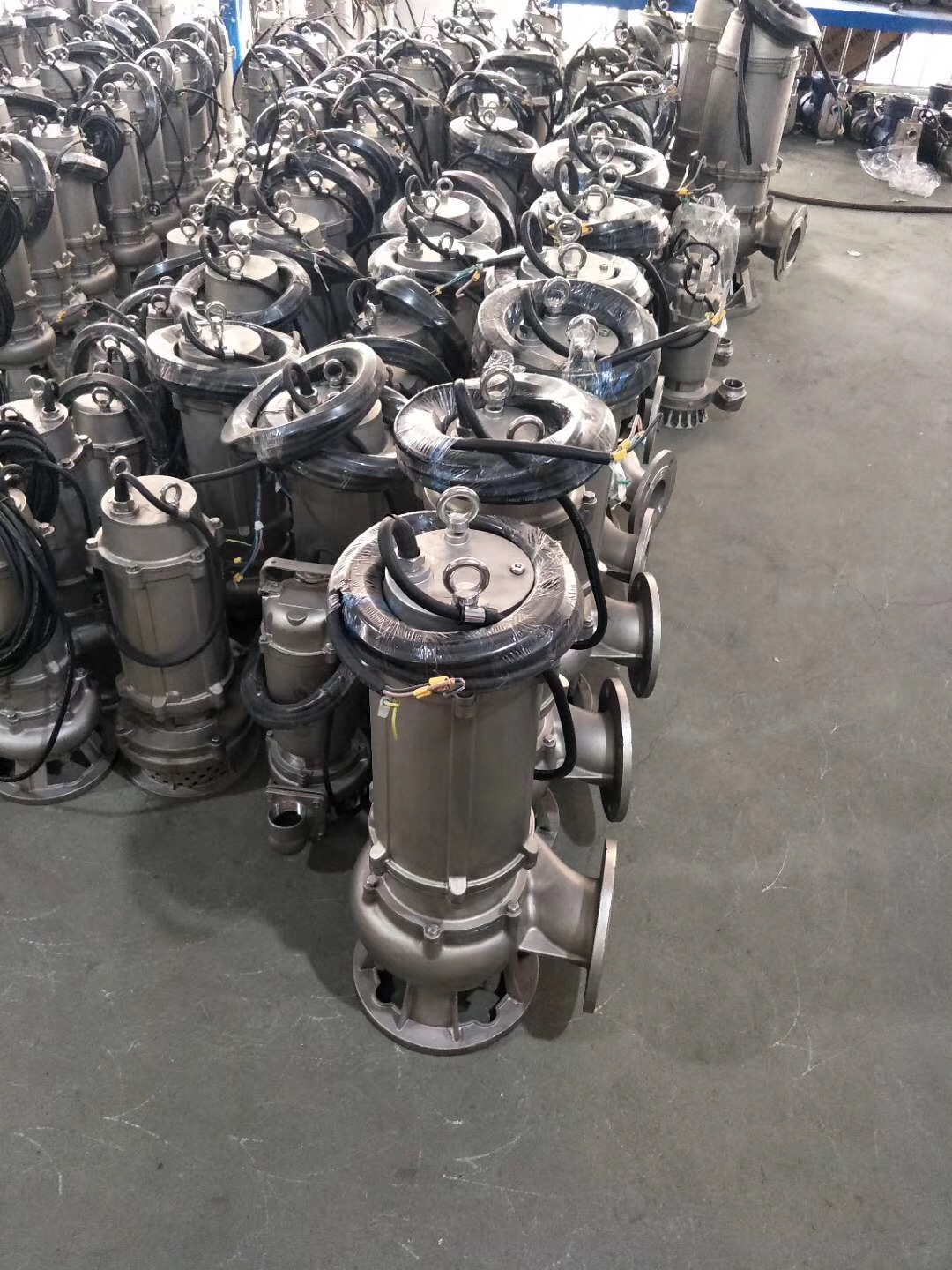
Slurry Suction Pump Manufacturing Specification and Performance Analysis
A slurry suction pump is a specialized centrifugal hydraulic machine engineered to transport non-Newtonian fluids consisting of solid particles suspended in a liquid medium. Positioned as a critical component in the industrial value chain for mining, dredging, and chemical processing, these pumps must overcome the dual challenges of high abrasive wear and corrosive chemical attack. Unlike standard water pumps, slurry suction pumps are designed with specific impeller geometries and reinforced casings to maintain hydraulic efficiency while handling high-density mixtures. The core performance of these systems is measured by their ability to maintain a constant volumetric flow rate despite fluctuations in slurry concentration (solid-to-liquid ratio) and the mitigation of particle settling through critical velocity management.
Material Science & Manufacturing
The operational longevity of a slurry suction pump is fundamentally dependent on the metallurgical properties of its wetted parts. To combat erosive wear, the industry employs advanced material science, transitioning from standard cast iron to high-chromium white irons (ASTM A532) and duplex stainless steels. High-chromium alloys (typically 25% to 28% Cr) are utilized for impellers and liners due to the formation of hard M7C3 carbides, which provide a hardness rating often exceeding 60 HRC, essential for resisting the impact of abrasive minerals like silica and alumina.
Manufacturing processes involve precision investment casting to ensure structural integrity and minimal porosity in the impeller blades. The casting process is followed by rigorous heat treatment—specifically quenching and tempering—to optimize the balance between hardness and fracture toughness, preventing brittle failure under sudden hydraulic shocks. For extreme chemical environments, rubber lining (natural rubber or polyurethane) is applied to the interior of the casing. This is achieved through a vulcanization process where the rubber is bonded to the metal substrate, creating a resilient barrier that absorbs the energy of small particle impacts, thereby reducing the erosion rate significantly compared to rigid metallic surfaces. Key parameter control during manufacturing focuses on the dynamic balancing of the impeller (ISO 1940-1) to minimize vibration and extend the lifespan of the mechanical seals and bearings.
Performance & Engineering
Engineering a slurry suction pump requires a complex force analysis to balance the Net Positive Suction Head Required (NPSHr) against the available NPSH, particularly when dealing with high-viscosity slurries. The primary engineering challenge is the prevention of "sanding" or blockage in the suction line. This is managed by calculating the critical deposition velocity—the minimum velocity required to keep solid particles in suspension. If the flow velocity drops below this threshold, particles settle, leading to increased pipe friction and potential system failure.
From a functional implementation perspective, the pump's hydraulic design employs a semi-open or open impeller to reduce the probability of clogging by large solids. The discharge velocity is carefully calibrated to ensure that the kinetic energy is sufficient to transport the slurry to its destination without causing excessive turbulence at the pipe bends, which would otherwise accelerate wear. Furthermore, environmental resistance is integrated through the use of specialized sealing systems, such as expeller seals or double mechanical seals with external flushing, to prevent the abrasive slurry from penetrating the bearing housing and causing catastrophic shaft failure. Compliance with pressure vessel standards ensures that the pump casing can withstand the internal hydrostatic pressure and the transient surges associated with pump start-up and shut-down cycles.
Technical Specifications
| Performance Parameter | High-Chrome Alloy Series | Rubber-Lined Series | Duplex Steel Series | Engineering Unit |
|---|---|---|---|---|
| Max Flow Rate | 1,200 | 800 | 1,000 | m³/h |
| Maximum Head | 150 | 80 | 120 | m |
| Max Particle Size | 100 | 60 | 80 | mm |
| Wear Resistance (Hardness) | 60-65 | Shore A 60 | 25-30 | HRC / Shore |
| Max Slurry Density | 1.8 | 1.4 | 1.6 | t/m³ |
| Operating Temp Range | -20 to 120 | -10 to 70 | -40 to 150 | °C |
Failure Mode & Maintenance
Failure analysis in slurry suction pumps typically reveals four primary modes of degradation: abrasive erosion, cavitation, corrosion-erosion synergy, and mechanical fatigue. Abrasive erosion occurs most prominently at the impeller vanes and the volute tongue, where high-velocity fluid impingement removes material. Cavitation occurs when the local pressure drops below the vapor pressure of the liquid, creating bubbles that collapse violently; this results in "pitting" on the impeller surface and a significant drop in hydraulic efficiency.
Corrosion-erosion synergy is particularly destructive in acidic or alkaline slurries, where the protective oxide layer of the metal is mechanically stripped by abrasive particles, exposing fresh metal to rapid chemical attack. To mitigate these failures, professional maintenance protocols involve the implementation of a vibration monitoring system to detect early signs of bearing wear or impeller imbalance. Maintenance schedules must include the periodic measurement of liner thickness using ultrasonic testing to predict the "break-through" point before the external casing is damaged. For mechanical seals, a strict flushing regime using clean water is mandatory to prevent slurry ingress. When replacing components, it is critical to ensure that the new impeller is dynamically balanced and that the clearances between the impeller and the wear plate are restored to factory specifications to prevent internal recirculation and efficiency loss.
Industry FAQ
Q: How do we determine the optimal material choice between high-chrome alloy and rubber lining for a specific slurry?
A: The choice depends on the particle size and the nature of the abrasion. High-chrome alloys are superior for large, hard particles that cause high-impact wear. Rubber lining is more effective for smaller, fine particles that cause "scrubbing" wear, as the elastomer absorbs the energy of the particle impact. If the fluid is highly corrosive, duplex stainless steel or specialty polymers are preferred.
Q: What is the primary cause of premature impeller failure in high-density slurry applications?
A: The primary cause is typically the failure to maintain critical velocity, leading to solids settling in the pump casing. This creates localized areas of extreme turbulence and abrasion. Additionally, operating the pump too far to the left of the Best Efficiency Point (BEP) can induce cavitation and radial thrust, accelerating shaft deflection and wear.
Q: How does the concentration of solids affect the NPSH requirements of the pump?
A: As the solids concentration increases, the apparent viscosity of the slurry rises, which increases the frictional pressure drop in the suction piping. This effectively reduces the Net Positive Suction Head Available (NPSHa). To compensate, engineers must either increase the suction pipe diameter or lower the pump installation height relative to the slurry source.
Q: Can a slurry pump be operated in a dry-run condition during startup?
A: Absolutely not. Dry running leads to immediate overheating of the mechanical seals and can cause the rubber lining to delaminate due to thermal expansion. A priming system or a recirculation line must be used to ensure the pump is fully flooded before the motor is engaged.
Q: Which maintenance indicator is most reliable for predicting the end-of-life of the pump liner?
A: The most reliable indicator is a combination of ultrasonic thickness gauging and a monitored increase in the pump's power consumption. As the liner wears, the internal clearances increase, leading to higher internal leakage and a decrease in volumetric efficiency, forcing the motor to work harder to maintain the flow rate.
Conclusion
The engineering of slurry suction pumps is a rigorous exercise in balancing hydraulic efficiency with material durability. By integrating high-chromium alloys and precision-engineered geometries, these systems can withstand the extreme conditions of abrasive transport. The technical success of the installation depends not only on the initial material selection but on the precise calculation of critical velocities and the strict adherence to NPSH requirements to prevent cavitation and sedimentation.
Looking forward, the industry is moving toward "smart" slurry pumps equipped with real-time erosion sensors and variable frequency drives (VFDs) to optimize flow based on real-time slurry density. The transition toward predictive maintenance, powered by vibration analysis and ultrasonic monitoring, will further reduce unplanned downtime and optimize the total cost of ownership in heavy industrial applications.
-
sump pump for septic systems Material Science Manufacturing
News2026-05-20
-
sump pump and ejector pump Material Science Manufacturing
News2026-05-20
-
sewage treatment plant pumps Performance Analysis
News2026-05-20
-
sewage tank pump Material Science and Manufacturing
News2026-05-20
-
sewage pump for septic tank Performance Analysis
News2026-05-20
-
Sewage Pump and Tank Performance Analysis
News2026-05-19
-
Sewage Ejector Pump Replacement Performance Analysis
News2026-05-19
-
sewage ejector pump for basement bathroom Material Science Manufacturing
News2026-05-19
-
sewage ejection pump Material Science and Manufacturing
News2026-05-19
-
in line sewage pump Performance Analysis
News2026-05-19
-
effluent sump pump Performance Analysis
News2026-05-18
-
best grinder pump for sewage Performance Engineering
News2026-05-18
-
basement waste water pump Performance Engineering
News2026-05-18
-
sump pump sewer Performance Analysis
News2026-05-18
-
sump pump for sewer Performance Analysis
News2026-05-18




