English
- Afrikaans
- Albanian
- Amharic
- Arabic
- Armenian
- Azerbaijani
- Basque
- Belarusian
- Bengali
- Bosnian
- Bulgarian
- Catalan
- Cebuano
- Corsican
- Croatian
- Czech
- Danish
- Dutch
- English
- Esperanto
- Estonian
- Finnish
- French
- Frisian
- Galician
- Georgian
- German
- Greek
- Gujarati
- Haitian Creole
- hausa
- hawaiian
- Hebrew
- Hindi
- Miao
- Hungarian
- Icelandic
- igbo
- Indonesian
- irish
- Italian
- Japanese
- Javanese
- Kannada
- kazakh
- Khmer
- Rwandese
- Korean
- Kurdish
- Kyrgyz
- Lao
- Latin
- Latvian
- Lithuanian
- Luxembourgish
- Macedonian
- Malgashi
- Malay
- Malayalam
- Maltese
- Maori
- Marathi
- Mongolian
- Myanmar
- Nepali
- Norwegian
- Norwegian
- Occitan
- Pashto
- Persian
- Polish
- Portuguese
- Punjabi
- Romanian
- Russian
- Samoan
- Scottish Gaelic
- Serbian
- Sesotho
- Shona
- Sindhi
- Sinhala
- Slovak
- Slovenian
- Somali
- Spanish
- Sundanese
- Swahili
- Swedish
- Tagalog
- Tajik
- Tamil
- Tatar
- Telugu
- Thai
- Turkish
- Turkmen
- Ukrainian
- Urdu
- Uighur
- Uzbek
- Vietnamese
- Welsh
- Bantu
- Yiddish
- Yoruba
- Zulu

Telephone: +86 13120555503
Email: frank@cypump.com


Apr . 01, 2024 17:55 Back to list
slurry recirculation pump Manufacturing Specification and Performance Analysis
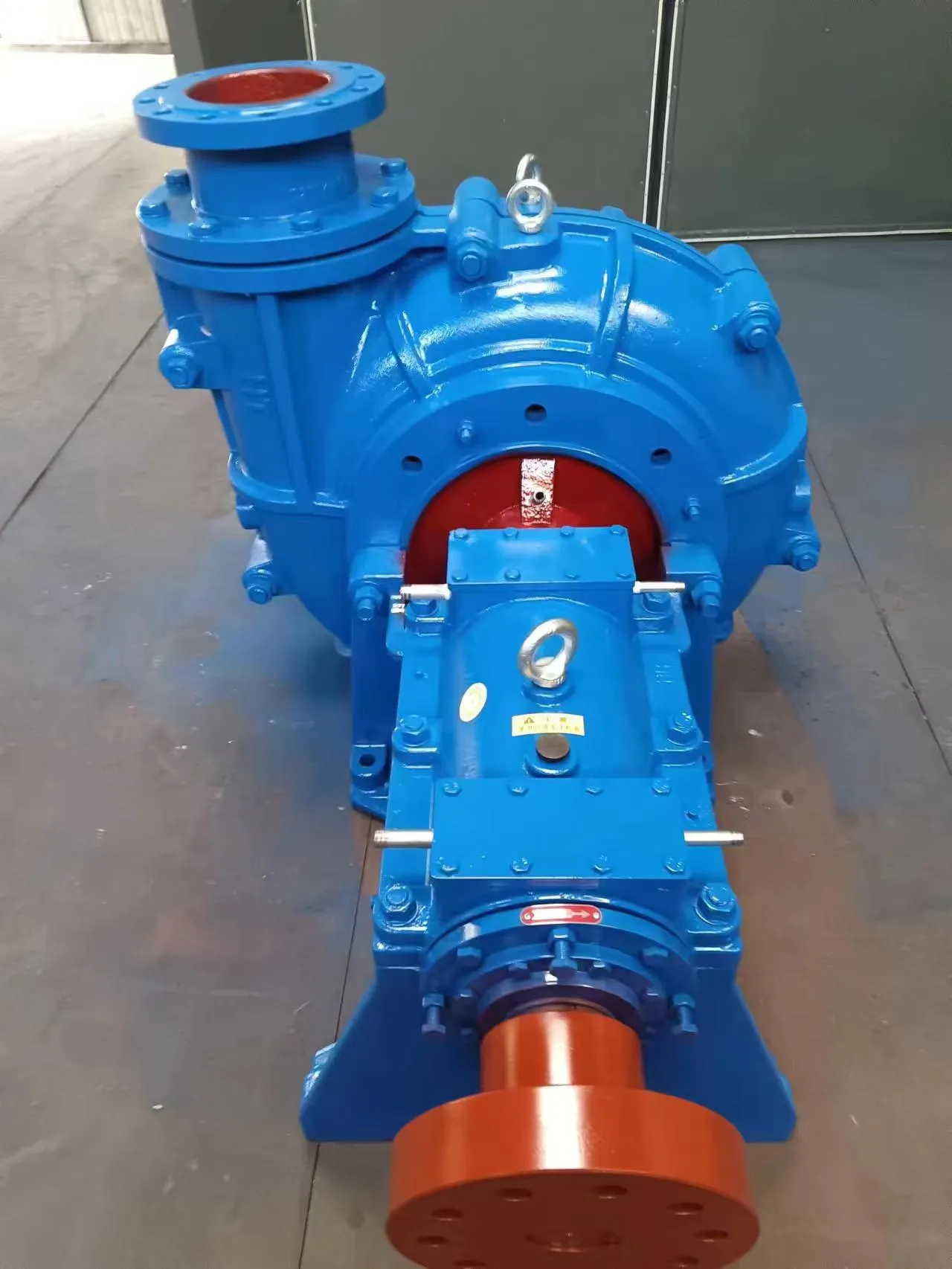
Slurry Recirculation Pump Manufacturing Specification and Performance Analysis
The slurry recirculation pump is a critical industrial component engineered to transport highly abrasive, high-density fluids—typically comprising a liquid carrier and suspended solid particulates—within closed-loop industrial processes. Positioned as a pivotal node in the industrial chain of mineral processing, chemical synthesis, and wastewater treatment, these pumps are designed to maintain constant fluid velocity to prevent the sedimentation of solids, which would otherwise lead to pipeline occlusion and systemic failure. Unlike standard centrifugal pumps, the slurry recirculation pump must manage non-Newtonian fluid dynamics, where viscosity varies with shear rate, necessitating a precise balance between hydraulic efficiency and structural resilience. Its core performance is measured by its ability to withstand extreme erosive wear while maintaining a consistent volumetric flow rate under varying slurry concentrations, ensuring the stability of the upstream and downstream metallurgical or chemical reactions.
Material Science & Manufacturing
The manufacturing of slurry recirculation pumps centers on the mitigation of abrasive wear and corrosive attack. The selection of materials is governed by the Mohs hardness of the transported solids and the chemical pH of the carrier liquid. High-chromium cast irons (e.g., ASTM A532) are predominantly employed for impellers and volute liners due to their formation of hard M7C3 carbides, which provide superior resistance to micro-plowing and scouring. For extreme environments, cobalt-based alloys (Stellite) or tungsten carbide inserts are integrated via laser cladding to enhance surface hardness.
The manufacturing process employs precision investment casting for the impeller to ensure a balanced hydrodynamic profile, followed by CNC grinding to achieve strict dimensional tolerances. A critical phase is the heat treatment process, where quenching and tempering are calibrated to optimize the martensitic structure of the alloy, preventing brittle fracture under hydraulic shock. Furthermore, the pump casing is often designed as a double-walled structure, allowing for replaceable wear liners. The integration of mechanical seals involves the use of silicon carbide (SiC) or tungsten carbide faces, which are vacuum-brazed to ensure a leak-proof interface capable of withstanding the ingress of abrasive grit. The shaft assembly is typically forged from 4140 alloy steel, induction-hardened at the bearing seats and seal areas to prevent grooving and premature wear.
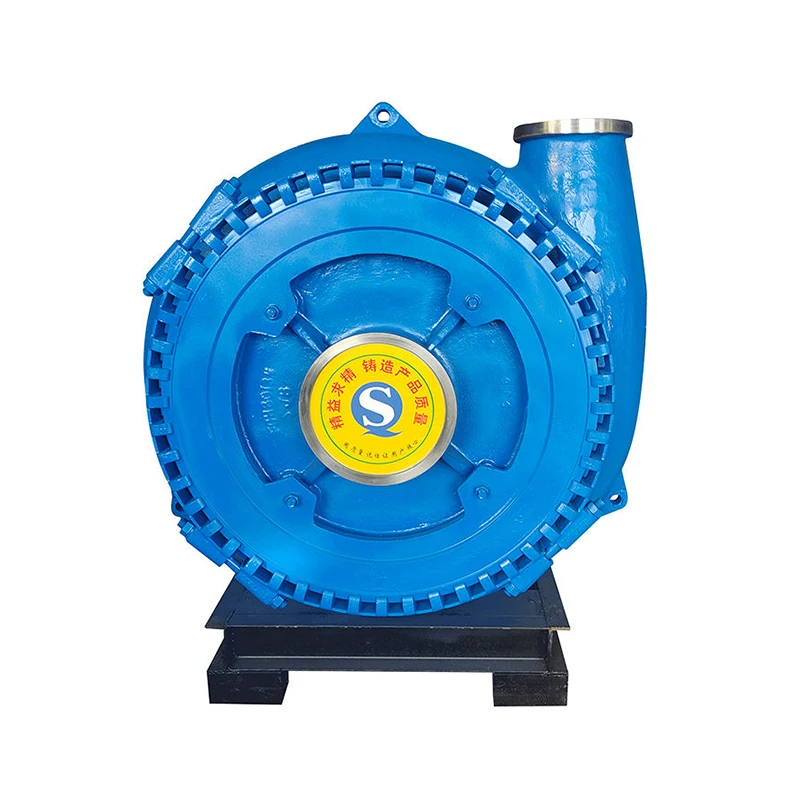
Performance & Engineering
Engineering a slurry recirculation pump requires a comprehensive force analysis, specifically focusing on the impact of solid particles on the impeller vanes. The "critical velocity" must be calculated to ensure that the flow remains in the turbulent regime, preventing the settling of solids (saltation velocity). From a fluid dynamics perspective, the pump is designed to minimize turbulence and stagnation zones, as these areas accelerate localized erosion—a phenomenon known as "impingement attack."
Environmental resistance is achieved through the implementation of advanced sealing systems. Expeller seals or flushed mechanical seals are utilized to create a hydraulic barrier, preventing slurry from entering the bearing housing. The engineering of the pump also incorporates vibration analysis parameters to ensure that the natural frequency of the assembly does not coincide with the rotational frequency of the motor, thereby avoiding resonance-induced fatigue. Compliance requirements are strictly adhered to regarding the Noise, Vibration, and Harshness (NVH) standards, ensuring that the pump operates within permissible decibel limits in industrial settings. The integration of Variable Frequency Drives (VFD) allows for the dynamic adjustment of flow rates based on real-time slurry density measurements, optimizing energy consumption while maintaining the required recirculation throughput.
Technical Specifications
| Parameter Category | Standard Specification | High-Performance Grade | Extreme Duty Grade | Testing Standard |
|---|---|---|---|---|
| Max Slurry Density | 1.2 - 1.4 t/m³ | 1.5 - 1.7 t/m³ | Up to 2.0 t/m³ | ASTM D2306 |
| Impeller Material | High-Cr Iron (27% Cr) | High-Cr Iron (28% Cr) | Ceramic Composite | ISO 10816 |
| Maximum Flow Rate | 500 m³/h | 1200 m³/h | 2500 m³/h | HI 1.6 |
| Shaft Hardness | HRC 45-50 | HRC 52-56 | HRC 60+ (Coated) | ASTM E18 |
| Operating Pressure | 1.0 - 2.5 MPa | 2.5 - 6.0 MPa | Up to 10.0 MPa | ASME B73.1 |
| MTBF (Wear Parts) | 3,000 Hours | 6,000 Hours | 12,000+ Hours | Industry Avg. |
Failure Mode & Maintenance
Failure analysis of slurry recirculation pumps typically reveals four primary modes: abrasive erosion, cavitation-induced pitting, seal degradation, and fatigue cracking. Abrasive erosion occurs predominantly at the impeller eye and the volute tongue, where high-velocity particles collide with the metal surface. This results in a gradual loss of hydraulic efficiency and a drop in total dynamic head (TDH). Cavitation occurs when the Net Positive Suction Head Available (NPSHa) falls below the Net Positive Suction Head Required (NPSHr), leading to the formation and collapse of vapor bubbles that create microscopic shockwaves, pitting the impeller surface.
Seal degradation is often caused by the infiltration of particulates into the seal faces, leading to abrasive scoring and subsequent leakage. Fatigue cracking typically manifests in the pump shaft or bearing housings due to cyclic loading and unbalanced hydraulic forces caused by uneven wear of the impeller. Maintenance protocols must involve a transition from reactive to predictive maintenance. This includes the use of ultrasound thickness gauges to monitor liner wear without dismantling the pump, and vibration spectrum analysis to detect early signs of bearing failure or impeller imbalance. Scheduled replacement of wear liners and the utilization of automated lubrication systems for bearings are essential to extend the mean time between failures (MTBF).
Industry FAQ
Q: How do we determine the correct impeller material for a slurry with a high percentage of quartz particles?
A: Quartz possesses a Mohs hardness of 7, which exceeds the hardness of standard stainless steels. For such applications, we specify high-chromium white irons (ASTM A532) or ceramic-lined components. The hardness of the material must be significantly higher than the abrasive particles to shift the wear mechanism from "cutting" to "polishing."
Q: What is the primary cause of premature seal failure in recirculation loops?
A: The most common cause is the "dry run" or the ingress of solids into the seal chamber. We recommend implementing a pressurized flush system (API Plan 32 or 54) to ensure that clean liquid is constantly injected into the seal faces, creating a barrier that prevents abrasive slurry from entering the sealing interface.
Q: How does slurry density affect the pump's power consumption?
A: Increased slurry density raises the fluid's viscosity and specific gravity, which directly increases the brake horsepower (BHP) required to maintain the same flow rate. We utilize the modified centrifugal pump laws for slurries to calculate the power surge and ensure the motor is oversized by at least 15-20% to prevent overheating during density spikes.
Q: Why is the pump experiencing high vibration levels despite being newly installed?
A: This is often attributed to misalignment between the pump and motor shafts or an improperly calibrated baseplate grout. However, in slurry pumps, it can also indicate an impeller imbalance caused by non-uniform wear or a blockage in the suction line causing hydraulic instability. A full vibration spectrum analysis is required to isolate the frequency.
Q: Can these pumps handle air entrainment within the slurry?
A: Significant air entrainment can lead to "air binding" or localized cavitation, which severely drops the pump's efficiency. We recommend installing a vortex breaker at the suction tank and employing a pump design with an open impeller to allow air bubbles to pass through the system without causing a loss of prime.
Conclusion
The technical integrity of a slurry recirculation pump is predicated on the synergistic integration of advanced material science and precision hydraulic engineering. By utilizing high-chromium alloys and implementing rigorous wear-resistance strategies, these pumps effectively mitigate the destructive forces of abrasion and corrosion, ensuring the operational continuity of high-density fluid transport systems. The transition toward predictive maintenance and the application of fluid dynamic optimization are essential for maximizing the lifespan of the equipment and reducing the total cost of ownership in aggressive industrial environments.
Looking forward, the industry is moving toward the integration of "Smart Pump" technologies, where IoT-enabled sensors provide real-time data on wear rates and hydraulic efficiency. This evolution will allow operators to optimize recirculation parameters dynamically, reducing energy consumption and preventing catastrophic failures. The commitment to international standards such as ISO and ASTM ensures that these systems remain reliable, scalable, and compliant across global industrial applications.
-
sump pump for septic systems Material Science Manufacturing
News2026-05-20
-
sump pump and ejector pump Material Science Manufacturing
News2026-05-20
-
sewage treatment plant pumps Performance Analysis
News2026-05-20
-
sewage tank pump Material Science and Manufacturing
News2026-05-20
-
sewage pump for septic tank Performance Analysis
News2026-05-20
-
Sewage Pump and Tank Performance Analysis
News2026-05-19
-
Sewage Ejector Pump Replacement Performance Analysis
News2026-05-19
-
sewage ejector pump for basement bathroom Material Science Manufacturing
News2026-05-19
-
sewage ejection pump Material Science and Manufacturing
News2026-05-19
-
in line sewage pump Performance Analysis
News2026-05-19
-
effluent sump pump Performance Analysis
News2026-05-18
-
best grinder pump for sewage Performance Engineering
News2026-05-18
-
basement waste water pump Performance Engineering
News2026-05-18
-
sump pump sewer Performance Analysis
News2026-05-18
-
sump pump for sewer Performance Analysis
News2026-05-18




