English
- Afrikaans
- Albanian
- Amharic
- Arabic
- Armenian
- Azerbaijani
- Basque
- Belarusian
- Bengali
- Bosnian
- Bulgarian
- Catalan
- Cebuano
- Corsican
- Croatian
- Czech
- Danish
- Dutch
- English
- Esperanto
- Estonian
- Finnish
- French
- Frisian
- Galician
- Georgian
- German
- Greek
- Gujarati
- Haitian Creole
- hausa
- hawaiian
- Hebrew
- Hindi
- Miao
- Hungarian
- Icelandic
- igbo
- Indonesian
- irish
- Italian
- Japanese
- Javanese
- Kannada
- kazakh
- Khmer
- Rwandese
- Korean
- Kurdish
- Kyrgyz
- Lao
- Latin
- Latvian
- Lithuanian
- Luxembourgish
- Macedonian
- Malgashi
- Malay
- Malayalam
- Maltese
- Maori
- Marathi
- Mongolian
- Myanmar
- Nepali
- Norwegian
- Norwegian
- Occitan
- Pashto
- Persian
- Polish
- Portuguese
- Punjabi
- Romanian
- Russian
- Samoan
- Scottish Gaelic
- Serbian
- Sesotho
- Shona
- Sindhi
- Sinhala
- Slovak
- Slovenian
- Somali
- Spanish
- Sundanese
- Swahili
- Swedish
- Tagalog
- Tajik
- Tamil
- Tatar
- Telugu
- Thai
- Turkish
- Turkmen
- Ukrainian
- Urdu
- Uighur
- Uzbek
- Vietnamese
- Welsh
- Bantu
- Yiddish
- Yoruba
- Zulu

Telephone: +86 13120555503
Email: frank@cypump.com


Apr . 01, 2024 17:55 Back to list
slurry pumps suppliers Performance Analysis
Introduction
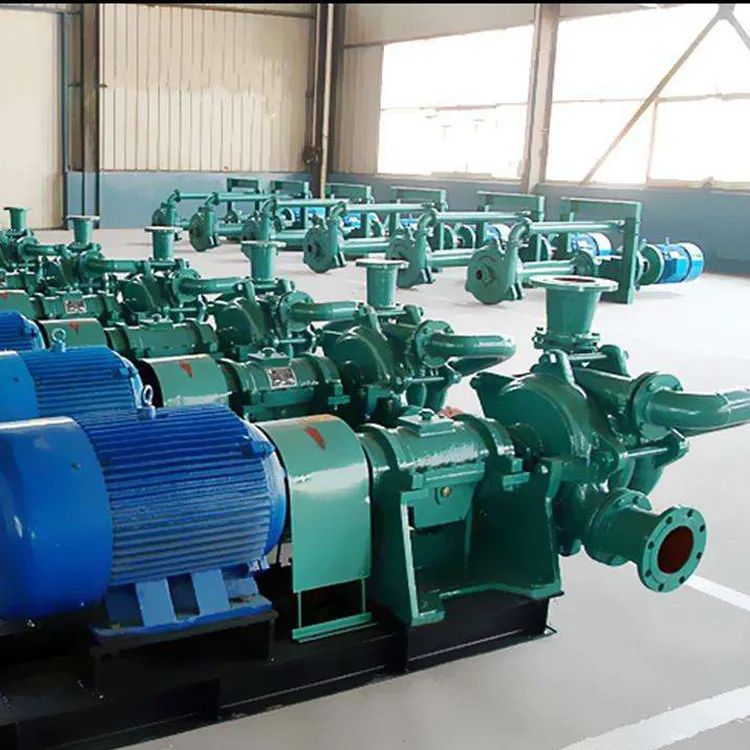
Slurry pumps are critical components in numerous industrial processes, responsible for the transportation of abrasive and erosive fluids – slurries – containing solids. These pumps differ significantly from standard centrifugal pumps due to the demanding nature of the materials they handle. The global slurry pump market is driven by industries like mining, wastewater treatment, dredging, and chemical processing. Their technical position in the industry chain is foundational; reliable slurry transport directly impacts the efficiency and cost-effectiveness of downstream operations. Core performance characteristics include flow rate, head pressure, solids handling capacity, and wear resistance. A primary pain point for end-users is premature pump failure due to abrasion, corrosion, and erosion, leading to costly downtime and maintenance. Selecting the appropriate slurry pump type and materials is paramount to ensuring longevity and operational efficiency. Understanding the nuanced differences in pump construction – impeller design, casing materials, and sealing arrangements – is crucial for optimizing performance in specific applications.
Material Science & Manufacturing
The construction of slurry pumps demands careful consideration of material science principles. Casing materials commonly include high-chrome cast iron (A532 Grade 1, 2, 3), stainless steels (304, 316, duplex stainless steel), and specialized alloys like Hastelloy and ceramic-lined steels. High-chrome iron offers exceptional abrasion resistance due to the formation of hard chromium carbides during casting. Stainless steels provide superior corrosion resistance, while Hastelloy is employed for highly aggressive chemical environments. Impellers are similarly constructed from these materials, often incorporating hardened materials on the leading edges and discharge vanes. Manufacturing processes vary depending on pump size and complexity. Casing fabrication involves sand casting, investment casting, or centrifugal casting. Impellers are typically cast or forged. Key parameter control during manufacturing includes precise alloy composition, heat treatment to optimize hardness and toughness, and dimensional accuracy to ensure proper fit and sealing. Welding procedures, when used for repairs or fabrication, must adhere to stringent standards like AWS D1.1 to maintain material integrity and prevent cracking. Rubber linings, applied via vulcanization, provide cushioning and noise reduction, but require careful bonding to the metal substrate to avoid delamination. The choice of elastomer (natural rubber, EPDM, nitrile) is dictated by the slurry’s chemical composition and temperature.
Performance & Engineering
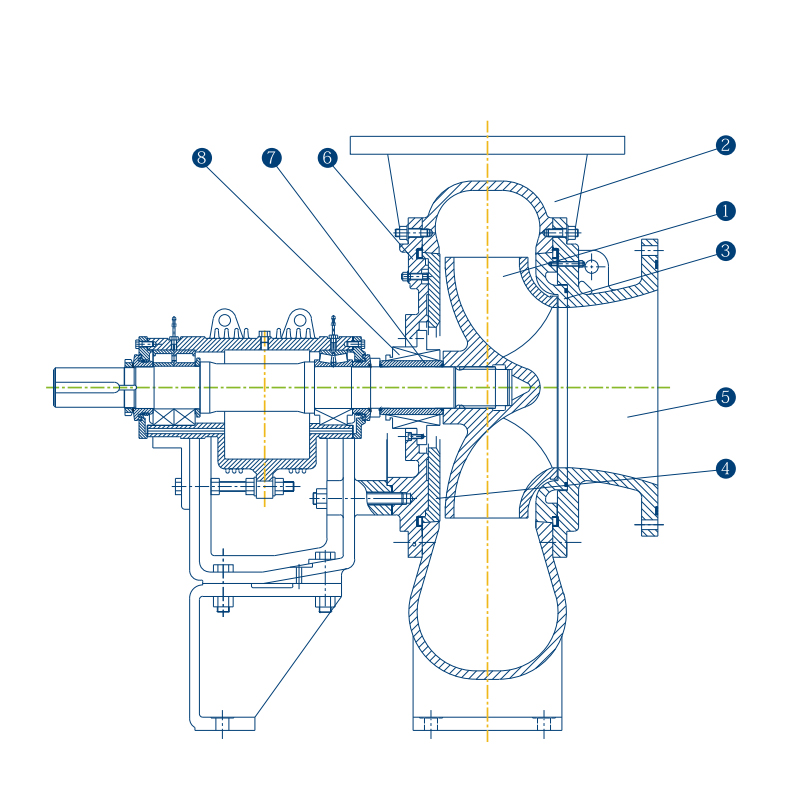
Slurry pump performance is governed by several critical engineering principles. Force analysis focuses on hydraulic forces exerted by the slurry on the impeller and casing, as well as mechanical stresses induced by pressure and rotation. Cavitation, a major concern, occurs when the absolute pressure at the impeller inlet drops below the vapor pressure of the slurry, forming vapor bubbles that collapse violently, causing erosion. Net Positive Suction Head Required (NPSHr) is a crucial parameter that must be carefully calculated and maintained to prevent cavitation. Pump selection also considers slurry characteristics: particle size distribution, solid concentration, slurry density, and viscosity. Environmental resistance is paramount, particularly in corrosive environments. Material selection must account for pH levels, chloride content, and the presence of oxidizing agents. Compliance requirements often dictate specific materials and design features. For example, pumps used in food processing must comply with FDA regulations, while those used in hazardous locations must meet ATEX or IECEx standards. Pump efficiency is optimized through hydraulic design – impeller blade angles, casing volute shape, and diffuser design – minimizing energy losses due to turbulence and friction. Wear protection is often achieved through the use of wear plates, hardfacing, and specialized coatings.
Technical Specifications
| Pump Type | Maximum Flow Rate (m³/hr) | Maximum Head (m) | Maximum Solids Concentration (% by weight) |
|---|---|---|---|
| Centrifugal Slurry Pump | 500 | 60 | 30 |
| Positive Displacement Pump (Diaphragm) | 50 | 100 | 60 |
| Positive Displacement Pump (Piston) | 20 | 250 | 70 |
| Vertical Slurry Pump (Cantilever) | 300 | 40 | 25 |
| Submersible Slurry Pump | 200 | 50 | 20 |
| High-Pressure Slurry Pump | 150 | 150 | 40 |
Failure Mode & Maintenance
Slurry pump failures are frequently attributed to abrasion, erosion, corrosion, and mechanical fatigue. Abrasion occurs due to the impact of hard particles on pump components, leading to wear and dimensional changes. Erosion is caused by the high-velocity flow of slurry, particularly at bends and constrictions. Corrosion results from chemical reactions between the slurry and pump materials. Fatigue cracking can occur in impellers and casings due to cyclic loading and stress concentration. Failure analysis often reveals a combination of these factors. Common failure modes include impeller wear, casing erosion, seal failure, and bearing failure. Preventive maintenance is crucial for extending pump life. This includes regular inspections for wear, lubrication of bearings, replacement of seals and wear plates, and monitoring of vibration levels. Impeller and casing replacement is often necessary after prolonged use. Hydrostatic testing should be performed periodically to check for casing integrity. Proper slurry pump alignment is vital to prevent premature bearing and seal failure. The use of appropriate slurry filters and strainers can reduce the amount of abrasive particles entering the pump, minimizing wear. Implementing a condition monitoring program, utilizing sensors to track parameters like vibration, temperature, and pressure, can enable proactive maintenance and prevent catastrophic failures.
Industry FAQ
Q: What is the optimal material selection for a slurry pump handling highly abrasive silica sand?
A: For highly abrasive silica sand, high-chrome cast iron (A532 Grade 2 or 3) is typically the most cost-effective and durable material for the impeller and casing. The high chromium content creates extremely hard carbides that resist abrasion. However, if corrosion is also a concern, consider duplex stainless steel or a ceramic lining. Regular inspection and replacement of wear parts will be necessary regardless of the material chosen.
Q: How can cavitation be prevented in a slurry pump application?
A: Preventing cavitation requires ensuring adequate Net Positive Suction Head Available (NPSHa) exceeds the Net Positive Suction Head Required (NPSHr). This can be achieved by minimizing suction lift, increasing suction pipe diameter, reducing slurry temperature, and ensuring the pump is operating within its designed flow range. Proper impeller design and maintenance of suction piping are also crucial.
Q: What are the key considerations when selecting a slurry pump for a highly corrosive chemical slurry?
A: Material compatibility is paramount. Thoroughly evaluate the slurry's chemical composition, pH, and temperature. Consider materials like Hastelloy, PTFE-lined pumps, or specialized stainless steels (316, 2205 duplex) depending on the specific chemicals involved. Sealless pump designs can eliminate potential leak paths and reduce corrosion risks.
Q: How do positive displacement pumps compare to centrifugal pumps for slurry applications?
A: Centrifugal pumps are generally preferred for high-flow, low-head applications, while positive displacement pumps (like diaphragm or piston pumps) excel in high-head, low-flow applications, particularly when handling viscous or highly concentrated slurries. Positive displacement pumps offer more consistent flow rates regardless of changes in slurry viscosity or head pressure, but are typically more expensive and require more maintenance.
Q: What is the role of wear plates in extending the life of a slurry pump?
A: Wear plates are sacrificial components installed in areas prone to high wear, such as the casing volute and impeller discharge. They are designed to absorb the impact of abrasive particles, protecting the more expensive pump components. Regular inspection and replacement of wear plates are essential for maintaining pump efficiency and preventing catastrophic failure.
Conclusion
Slurry pump selection and maintenance are complex processes demanding a comprehensive understanding of material science, hydraulic engineering, and operational parameters. The long-term reliability and cost-effectiveness of slurry handling systems hinge on specifying the appropriate pump type and materials for the specific slurry characteristics and application requirements. Failure to account for abrasion, corrosion, and erosion can lead to premature pump failure and significant downtime.
Future trends in slurry pump technology include the development of more wear-resistant materials, improved impeller designs for enhanced efficiency, and the integration of advanced monitoring systems for predictive maintenance. The increasing focus on sustainability is driving demand for energy-efficient pumps and environmentally friendly materials. Continuous monitoring of pump performance and proactive maintenance programs will remain critical for maximizing pump life and minimizing operational costs.
-
Effluent vs Sump Pump Performance Analysis
News2026-05-22
-
effluent septic pump Performance Engineering
News2026-05-22
-
best sewer pumps Performance Engineering
News2026-05-22
-
best sewer pump Performance Analysis
News2026-05-22
-
best sewage pumps Performance Engineering
News2026-05-22
-
basement bathroom sewage pump Material Science Manufacturing
News2026-05-21
-
wastewater treatment plant pumps Material Science Manufacturing
News2026-05-21
-
waste water pump for basement Material Science Manufacturing
News2026-05-21
-
sump pump sewage Performance Analysis
News2026-05-21
-
sump pump for sewage Material Science and Manufacturing
News2026-05-21
-
sump pump for septic systems Material Science Manufacturing
News2026-05-20
-
sump pump and ejector pump Material Science Manufacturing
News2026-05-20
-
sewage treatment plant pumps Performance Analysis
News2026-05-20
-
sewage tank pump Material Science and Manufacturing
News2026-05-20
-
sewage pump for septic tank Performance Analysis
News2026-05-20




