English
- Afrikaans
- Albanian
- Amharic
- Arabic
- Armenian
- Azerbaijani
- Basque
- Belarusian
- Bengali
- Bosnian
- Bulgarian
- Catalan
- Cebuano
- Corsican
- Croatian
- Czech
- Danish
- Dutch
- English
- Esperanto
- Estonian
- Finnish
- French
- Frisian
- Galician
- Georgian
- German
- Greek
- Gujarati
- Haitian Creole
- hausa
- hawaiian
- Hebrew
- Hindi
- Miao
- Hungarian
- Icelandic
- igbo
- Indonesian
- irish
- Italian
- Japanese
- Javanese
- Kannada
- kazakh
- Khmer
- Rwandese
- Korean
- Kurdish
- Kyrgyz
- Lao
- Latin
- Latvian
- Lithuanian
- Luxembourgish
- Macedonian
- Malgashi
- Malay
- Malayalam
- Maltese
- Maori
- Marathi
- Mongolian
- Myanmar
- Nepali
- Norwegian
- Norwegian
- Occitan
- Pashto
- Persian
- Polish
- Portuguese
- Punjabi
- Romanian
- Russian
- Samoan
- Scottish Gaelic
- Serbian
- Sesotho
- Shona
- Sindhi
- Sinhala
- Slovak
- Slovenian
- Somali
- Spanish
- Sundanese
- Swahili
- Swedish
- Tagalog
- Tajik
- Tamil
- Tatar
- Telugu
- Thai
- Turkish
- Turkmen
- Ukrainian
- Urdu
- Uighur
- Uzbek
- Vietnamese
- Welsh
- Bantu
- Yiddish
- Yoruba
- Zulu

Telephone: +86 13120555503
Email: frank@cypump.com


Apr . 01, 2024 17:55 Back to list
slurry pumps south africa Technical Dimension and Performance Analysis
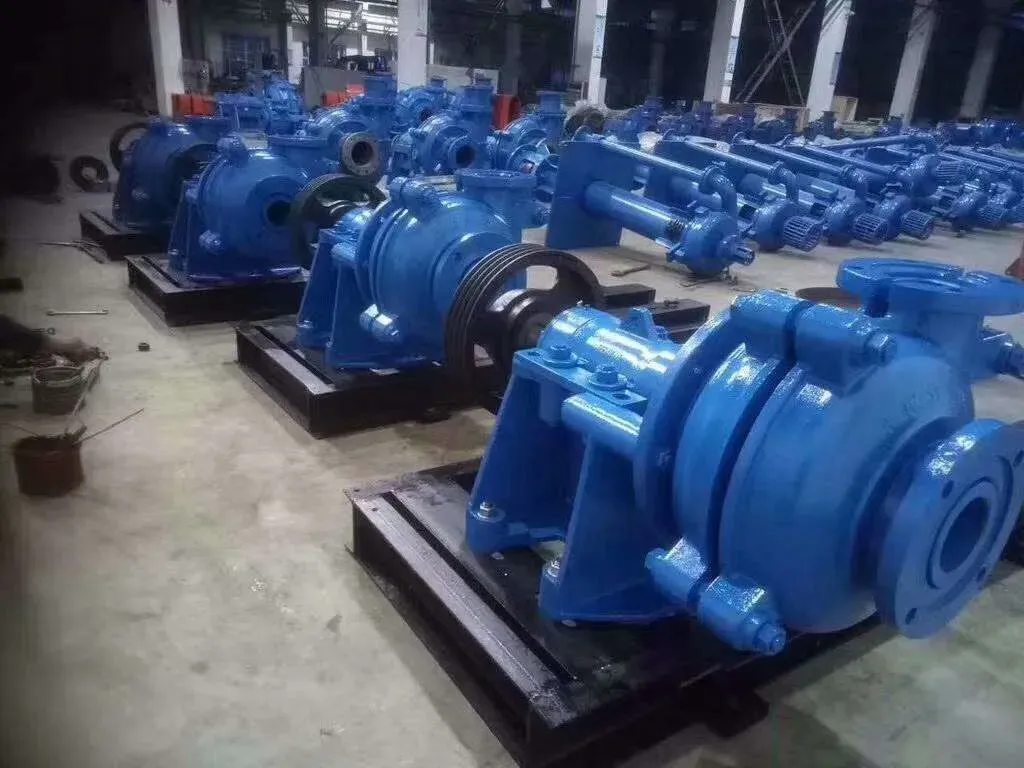
Slurry Pumps South Africa: Technical Dimension and Performance Analysis
In the context of South Africa's expansive mining and mineral processing sectors—ranging from platinum and gold to chromium and iron ore—slurry pumps serve as the critical arterial infrastructure for transporting abrasive, high-density fluids. A slurry pump is a specialized centrifugal pump engineered to handle a mixture of solids (suspended particles) and liquids, characterized by high viscosity and significant abrasive potential. Within the industrial chain, these pumps are positioned between the primary crushing/grinding phase and the thickening/filtration stage. The core technical challenge in the South African landscape is managing the trade-off between high flow rates and the accelerated wear of internal components caused by the specific gravity and angularity of local mineral ores. Engineering these systems requires a precise calibration of impeller geometry and metallurgy to maintain hydraulic efficiency while maximizing the Mean Time Between Failures (MTBF).
Material Science & Manufacturing
The manufacturing of slurry pumps for the South African mining environment centers on combating three primary degradation mechanisms: abrasive wear, corrosive attack, and erosive turbulence. The material selection is governed by the hardness of the slurry particles relative to the pump liner.
High-Chrome Alloys: For extreme abrasion, ASTM A532 Class III Type A high-chromium white irons (typically 25% to 28% Cr) are employed. The metallurgical structure consists of hard M7C3 carbides embedded in a martensitic matrix, providing a hardness typically exceeding 600 HB. This structure prevents the "plowing" effect of hard mineral particles on the pump casing.
Natural and Synthetic Elastomers: In applications involving finer particles or lower concentrations, natural rubber liners (with high resilience) are utilized. The elasticity allows the liner to absorb the kinetic energy of the particle impact, effectively "bouncing" the abrasive medium rather than allowing it to gouge the surface. Polyurethane is often selected for its superior tear strength and chemical resistance to process reagents.
Manufacturing Process Control: Precision casting is paramount. The use of vacuum-assisted investment casting or specialized sand molding ensures that the thick-walled casings are free from porosity and shrinkage cavities, which could otherwise become initiation points for stress corrosion cracking. Dynamic balancing of the impeller is conducted to G2.5 standards to minimize vibration-induced fatigue on the shaft and bearings, which is critical given the heavy mass of the components.
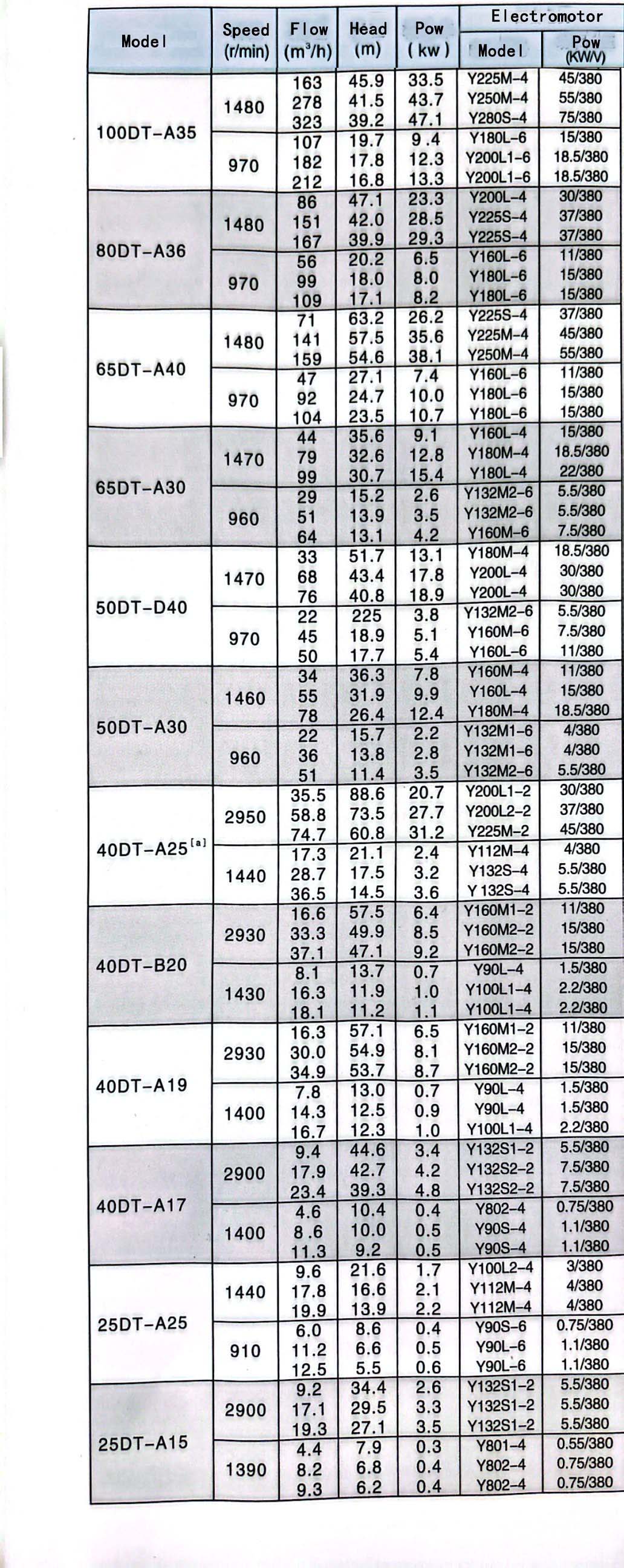
Performance & Engineering
Engineering a slurry pump system requires a deep analysis of fluid dynamics and force distribution to prevent premature cavitation and excessive wear. The primary engineering focus is on the "Critical Settling Velocity"—the minimum velocity required to keep solids in suspension to prevent pipeline blockage.
Hydraulic Design and Force Analysis: To reduce wear, the impeller is designed with wide flow passages to minimize the relative velocity of the slurry. The "velocity gradient" is carefully managed; where fluid velocity exceeds 7-10 m/s, wear rates increase exponentially. Engineering calculations must account for the specific gravity (SG) of the slurry, as the power requirement (BHP) increases linearly with the density of the fluid. The formula $P = (Q imes H imes SG) / (367 imes eta)$ is used to determine the required motor capacity, where $eta$ represents the pump efficiency, which is significantly lower in slurry applications than in clear water.
Environmental and Compliance Engineering: In South Africa, pumps must often operate in extreme temperature fluctuations and high-altitude environments (e.g., the Highveld), affecting motor cooling and NPSH (Net Positive Suction Head) available. To prevent leakage of hazardous tailings, heavy-duty expeller seals or mechanical seals with external flushing systems (API Plan 32 or 54) are implemented to maintain a positive pressure barrier between the slurry and the atmosphere.
Technical Specifications
| Parameter Component | High-Chrome Alloy Grade | Natural Rubber Lined | Duplex Stainless Steel | Polyurethane Lined |
|---|---|---|---|---|
| Hardness (Brinell/Shore) | 600 - 650 HB | 60 - 70 Shore A | 250 - 300 HB | 90 - 95 Shore A |
| Max Particle Size (mm) | Up to 100mm | Up to 20mm | Up to 15mm | Up to 30mm |
| Abrasion Resistance | Extreme (High Impact) | High (Fine Slurry) | Moderate (Corrosive) | High (Erosive) |
| Max Operating Temp (°C) | Up to 450°C | Up to 70°C | Up to 200°C | Up to 85°C |
| Corrosion Resistance | Low (Pitting risk) | Excellent | Superior (Chloride) | Good |
| Typical Application | Tailings/Crushed Ore | Coal Slurry/Fines | Acidic Leachates | Chemical Processing |
Failure Mode & Maintenance
Failure analysis in slurry pumps typically reveals a combination of mechanical fatigue and material degradation. The most frequent failure modes include:
1. Abrasive Wear and Thinning: This occurs predominantly at the impeller vanes and the volute tongue. When the liner thickness reaches a critical threshold, "burn-through" occurs, leading to the rapid destruction of the outer pressure casing. Monitoring is conducted via ultrasonic thickness gauging.
2. Cavitation Erosion: Occurs when the NPSH available falls below the NPSH required, creating vapor bubbles that collapse violently against the metal surface. This results in a "pock-marked" surface appearance and a drastic drop in discharge pressure.
3. Shaft Fatigue and Deflection: Excessive solids buildup or impeller imbalance causes shaft deflection, leading to premature failure of the bearings and mechanical seals. This is often accelerated by the high torque requirements of starting a pump with settled solids.
Maintenance Protocol: A predictive maintenance strategy is recommended. This includes vibration analysis (FFT) to detect bearing wear, oil analysis to identify metallic contaminants, and scheduled liner replacements based on the "Wear Rate Curve" (mm/1000 hours). For the South African climate, ensure that lubrication systems are rated for high ambient temperatures to prevent oil viscosity breakdown.
Industry FAQ
Q: How do we determine whether to use High-Chrome or Rubber liners for a specific South African mineral slurry?
A: The decision is based on particle size and impact energy. High-Chrome alloys are required for large, angular particles (>0.5mm) and high-impact zones. Rubber is superior for fine particles (<0.1mm) and high-velocity, low-impact flows where "abrasion by scrubbing" is the primary wear mechanism.
Q: What is the impact of slurry density on the pump's Net Positive Suction Head (NPSH)?
A: Increased density increases the fluid's viscosity and internal friction, effectively increasing the NPSH required. If the suction head is not adjusted, the pump will cavitate, leading to rapid impeller erosion and loss of prime.
Q: Why is the pump experiencing premature seal failure despite using high-grade materials?
A: This is often due to "slurry ingress" where particles migrate into the seal chamber. We recommend implementing an external seal flush (API Plan 32) to maintain a clean barrier and ensure the slurry cannot enter the seal faces.
Q: How does the specific gravity (SG) of the ore affect the motor sizing in these pumps?
A: The power required is directly proportional to the SG. A slurry with an SG of 1.4 requires 40% more power than water (SG 1.0) to achieve the same flow and head. Failure to oversize the motor leads to frequent over-current trips during startup.
Q: What are the indicators that a pump is operating too far from its Best Efficiency Point (BEP)?
A: Indicators include excessive vibration, increased noise (characteristic of recirculation), and a non-linear increase in wear rates. Operating away from the BEP creates internal turbulence that accelerates erosion in the volute.
Conclusion
The technical efficacy of slurry pumps in South Africa depends on a rigorous integration of metallurgical selection and hydraulic engineering. By matching the material hardness—specifically through the use of high-chrome alloys and specialized elastomers—to the abrasive characteristics of the mineral ore, operators can significantly extend the equipment's lifecycle and reduce operational downtime. The synergy between precise impeller geometry and the management of critical settling velocities ensures that the system operates at maximum hydraulic efficiency while minimizing erosive wear.
Looking forward, the industry is shifting toward "smart pumping" systems, incorporating real-time wear sensors and variable frequency drives (VFDs) to optimize flow based on slurry density. It is recommended that procurement and engineering teams move away from generic specifications and instead adopt a failure-mode-centric approach to pump selection, ensuring that the mechanical design accounts for the specific chemical and physical properties of the transported medium to achieve sustainable industrial productivity.
-
sump pump for septic systems Material Science Manufacturing
News2026-05-20
-
sump pump and ejector pump Material Science Manufacturing
News2026-05-20
-
sewage treatment plant pumps Performance Analysis
News2026-05-20
-
sewage tank pump Material Science and Manufacturing
News2026-05-20
-
sewage pump for septic tank Performance Analysis
News2026-05-20
-
Sewage Pump and Tank Performance Analysis
News2026-05-19
-
Sewage Ejector Pump Replacement Performance Analysis
News2026-05-19
-
sewage ejector pump for basement bathroom Material Science Manufacturing
News2026-05-19
-
sewage ejection pump Material Science and Manufacturing
News2026-05-19
-
in line sewage pump Performance Analysis
News2026-05-19
-
effluent sump pump Performance Analysis
News2026-05-18
-
best grinder pump for sewage Performance Engineering
News2026-05-18
-
basement waste water pump Performance Engineering
News2026-05-18
-
sump pump sewer Performance Analysis
News2026-05-18
-
sump pump for sewer Performance Analysis
News2026-05-18




