English
- Afrikaans
- Albanian
- Amharic
- Arabic
- Armenian
- Azerbaijani
- Basque
- Belarusian
- Bengali
- Bosnian
- Bulgarian
- Catalan
- Cebuano
- Corsican
- Croatian
- Czech
- Danish
- Dutch
- English
- Esperanto
- Estonian
- Finnish
- French
- Frisian
- Galician
- Georgian
- German
- Greek
- Gujarati
- Haitian Creole
- hausa
- hawaiian
- Hebrew
- Hindi
- Miao
- Hungarian
- Icelandic
- igbo
- Indonesian
- irish
- Italian
- Japanese
- Javanese
- Kannada
- kazakh
- Khmer
- Rwandese
- Korean
- Kurdish
- Kyrgyz
- Lao
- Latin
- Latvian
- Lithuanian
- Luxembourgish
- Macedonian
- Malgashi
- Malay
- Malayalam
- Maltese
- Maori
- Marathi
- Mongolian
- Myanmar
- Nepali
- Norwegian
- Norwegian
- Occitan
- Pashto
- Persian
- Polish
- Portuguese
- Punjabi
- Romanian
- Russian
- Samoan
- Scottish Gaelic
- Serbian
- Sesotho
- Shona
- Sindhi
- Sinhala
- Slovak
- Slovenian
- Somali
- Spanish
- Sundanese
- Swahili
- Swedish
- Tagalog
- Tajik
- Tamil
- Tatar
- Telugu
- Thai
- Turkish
- Turkmen
- Ukrainian
- Urdu
- Uighur
- Uzbek
- Vietnamese
- Welsh
- Bantu
- Yiddish
- Yoruba
- Zulu

Telephone: +86 13120555503
Email: frank@cypump.com


Apr . 01, 2024 17:55 Back to list
Slurry Pumps Manufacturers of Slurry Pumps Manufacturing Specifications and Performance Analysis
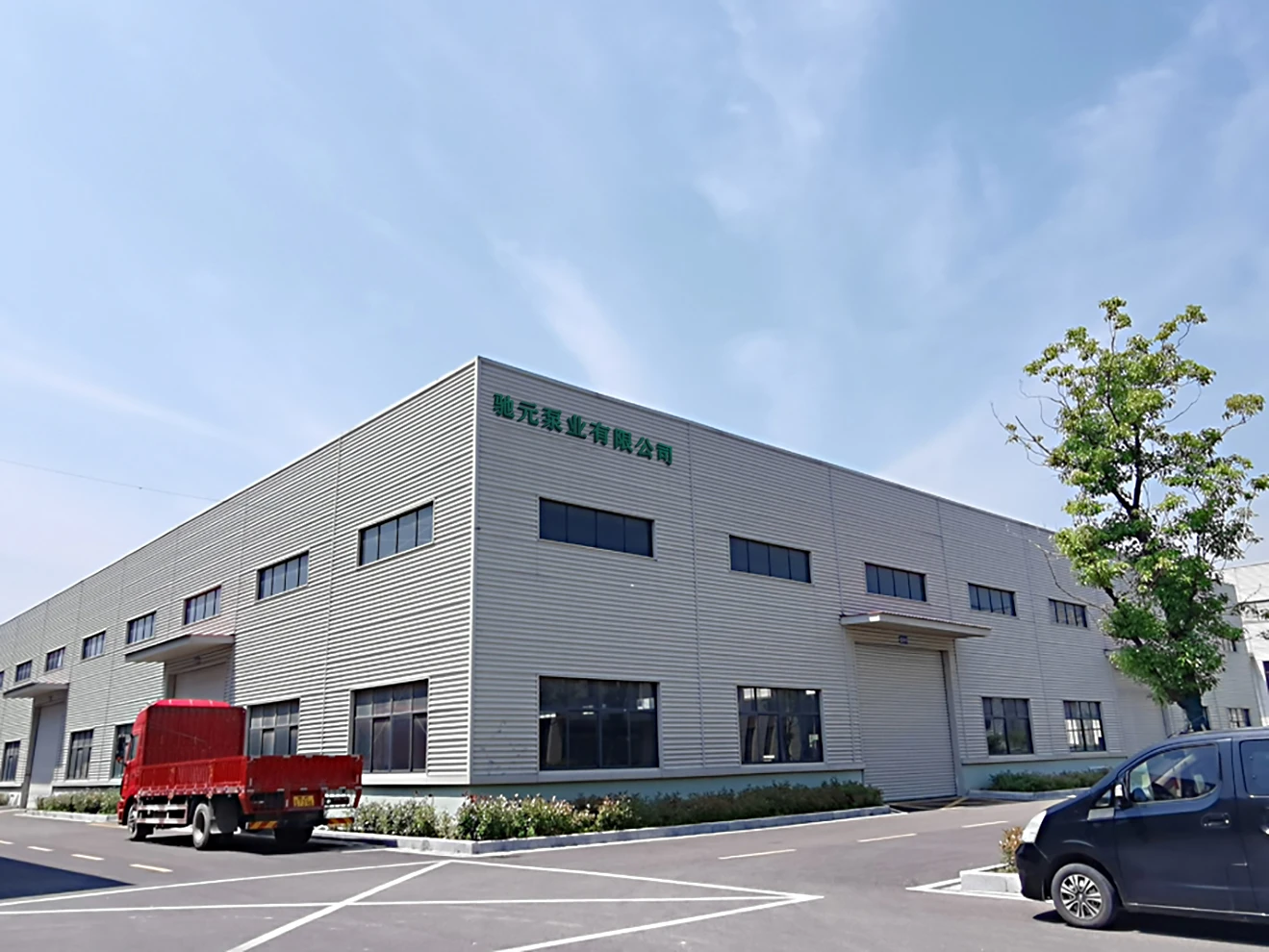
Slurry Pumps Manufacturing Specifications and Performance Analysis
Slurry pumps are specialized centrifugal machinery engineered to transport fluids containing high concentrations of suspended solid particles, ranging from fine silts to coarse mineral ores. Positioned as critical infrastructure in the mining, dredging, and chemical processing industry chains, these pumps must reconcile the contradictory requirements of high volumetric flow and extreme resistance to abrasive and corrosive wear. For manufacturers of slurry pumps, the primary technical challenge lies in the management of the boundary layer where high-velocity particles impact the internal casing and impeller surfaces. The performance of these systems is defined by their ability to maintain hydraulic efficiency while minimizing the rate of material loss, which directly influences the Mean Time Between Failures (MTBF) and the total cost of ownership in aggressive industrial environments.
Material Science & Manufacturing
The integrity of a slurry pump is fundamentally dependent on the metallurgical properties of its wetted parts. Manufacturers of slurry pumps utilize a hierarchy of materials based on the specific abrasive index (Ai) and corrosive nature of the medium. High-chrome white irons (ASTM A532) are predominantly employed for their martensitic matrix and primary M7C3 carbides, providing superior hardness (up to 65 HRC) to resist scouring. For applications involving high acidity or alkalinity combined with abrasion, duplex stainless steels or specialized rubber linings (natural rubber, nitrile, or neoprene) are utilized. The rubber lining acts as an energy-absorbing barrier, where the elastic deformation of the polymer absorbs the kinetic energy of the impacting particles, preventing the underlying metal substrate from eroding.
Manufacturing processes involve precision investment casting for impellers to ensure hydraulic symmetry and reduce turbulence. The casting process is followed by rigorous heat treatment, including quenching and tempering, to eliminate internal stresses and homogenize the carbide distribution. For the pump casing, heavy-wall casting is standard to provide a substantial "wear allowance," ensuring that the pump remains operational even after significant material loss. Precision machining of the stuffing box and bearing housing is critical to ensure the airtight seal of the mechanical seals or gland packing, preventing the leakage of hazardous slurry into the lubrication system. Furthermore, dynamic balancing of the impeller to ISO 1940 standards is mandatory to prevent vibration-induced fatigue in the shaft and bearings.
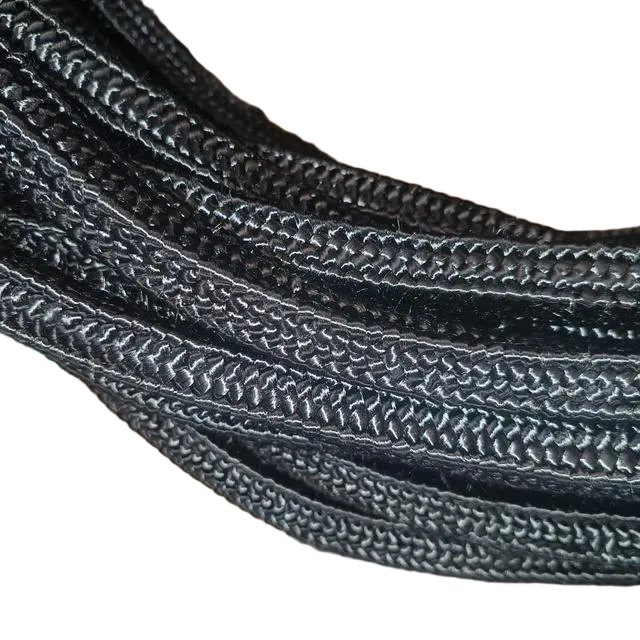
Performance & Engineering
Engineering a slurry pump requires a complex analysis of the fluid-solid interaction. The core objective is to optimize the Net Positive Suction Head required (NPSHr) to prevent cavitation, which is exacerbated in slurry applications as particles can trigger cavitation bubbles at lower pressure drops than pure water. The impeller design focuses on the "vane geometry" and "discharge angle" to maintain a stable velocity profile, reducing the occurrence of stagnant zones where solids may settle and cause blockages.
Force analysis is critical in calculating the radial thrust generated by the asymmetric pressure distribution within the volute, especially when operating away from the Best Efficiency Point (BEP). To counteract these forces, manufacturers employ reinforced shafting and heavy-duty pillow block bearings. Environmental resistance is addressed through specialized coatings and the use of corrosion-resistant alloys for the external housing. Furthermore, the implementation of Variable Frequency Drives (VFDs) allows operators to adjust the flow rate to match the slurry concentration, thereby reducing the wear rate, as erosion is typically proportional to the cube of the velocity (V³).
Technical Specifications
| Material Grade | Hardness (HRC/Shore A) | Corrosion Resistance | Typical Application | Max Particle Size (mm) | Wear Rate (mm/1000h) |
|---|---|---|---|---|---|
| High-Chrome Alloy (27% Cr) | 60 - 65 HRC | Moderate | Hard Rock Mining | 12 - 25 | 2.5 - 4.0 |
| Natural Rubber Lining | 60 - 70 Shore A | High (Acidic) | Coal Slurry / Tailings | 5 - 15 | 1.2 - 2.8 |
| Duplex Stainless Steel | 25 - 35 HRC | Extreme (Chloride) | Chemical Slurry | 2 - 8 | 3.0 - 5.0 |
| Martensitic Stainless Steel | 40 - 45 HRC | High | Dredging / Sand | 10 - 20 | 4.0 - 6.5 |
| Ceramic Alumina (Insert) | > 90 HRC | Very High | Precision Slurries | 1 - 3 | 0.2 - 0.8 |
| Hardened Cast Iron | 35 - 45 HRC | Low | Light Industrial Waste | 8 - 12 | 5.0 - 8.0 |
Failure Mode & Maintenance
Failure analysis in slurry pumps typically identifies three primary modes: abrasive erosion, corrosive degradation, and mechanical fatigue. Abrasive erosion manifests as localized "grooving" or "thinning" of the impeller vanes and volute liner, caused by the high-velocity impact of hard particles. This leads to a drop in discharge pressure and volumetric efficiency. Corrosive degradation often occurs in the form of pitting or stress corrosion cracking (SCC), particularly in the heat-affected zones (HAZ) of welded components, which weakens the structural integrity of the pump casing.
Mechanical fatigue is frequently observed in the pump shaft, often triggered by impeller imbalance or cavitation-induced vibration, leading to fatigue cracking and eventual shaft rupture. To mitigate these failures, a professional maintenance regimen must include: 1) Regular ultrasonic thickness testing of the liners to schedule replacements before the base metal is compromised; 2) Vibration analysis using accelerometers to detect bearing wear or impeller imbalance; 3) Monitoring of the seal flush system to ensure no slurry ingress into the bearing housing; and 4) Periodic adjustment of the impeller clearance to maintain hydraulic performance as the wear plates erode.
Industry FAQ
Q: How do we determine whether to use a rubber-lined or a high-chrome impeller for a specific slurry?
A: The selection depends on the particle size and hardness. High-chrome alloys are superior for large, sharp, and hard particles (e.g., quartz, granite) that would cut through rubber. Rubber linings are preferred for smaller, rounded particles and highly corrosive fluids, as they absorb impact energy and resist chemical attack more effectively.
Q: What is the impact of slurry concentration on the pump's NPSHr?
A: Increasing the solid concentration increases the apparent viscosity and density of the fluid, which generally raises the Net Positive Suction Head required (NPSHr). If the available NPSH falls below this threshold, cavitation occurs, leading to rapid erosion of the impeller eye and loss of prime.
Q: Why is the pump experiencing premature failure of the mechanical seals?
A: This is usually caused by "particle infiltration" into the seal faces. In slurry applications, a pressurized external flush (API Plan 32 or 54) is critical to create a hydraulic barrier that prevents abrasive particles from entering the seal mating surfaces, which would otherwise cause rapid scoring and leakage.
Q: How does the "Critical Settling Velocity" affect pump operation?
A: To prevent solids from settling in the pipeline and causing a blockage, the pump must maintain a flow velocity above the critical settling velocity. Operating below this threshold leads to "sanding" of the pipes, which increases friction loss and can lead to total system failure.
Q: What are the signs of an impeller that has reached its wear limit?
A: The most prominent indicators are a significant decrease in the total dynamic head (TDH) and a corresponding increase in the power consumption per unit of volume pumped. When the gap between the impeller and the wear plate becomes too large, internal recirculation increases, destroying the pump's efficiency.
Conclusion
The engineering of slurry pumps represents a critical intersection of fluid dynamics and material science. For manufacturers of slurry pumps, the ability to mitigate the synergistic effects of abrasion and corrosion through advanced metallurgy—such as the use of high-chrome white irons and specialized elastomers—is the primary driver of product reliability. The technical success of these systems is not merely found in the initial flow capacity, but in the calculated management of wear rates and the optimization of hydraulic profiles to ensure longevity under extreme stress.
Looking forward, the industry is shifting toward "intelligent pumping," integrating real-time wear sensors and AI-driven predictive maintenance to optimize the life cycle of the pump. By adhering to rigorous international standards and focusing on the reduction of the total cost of ownership through improved material durability and energy efficiency, manufacturers can significantly enhance the operational stability of global mining and industrial processing infrastructure.
-
Comprehensive Guide to Waterproof ORings for Optimal Sealing Solutions
News2026-06-09
-
heavy duty submersible pump Performance Analysis
News2026-06-25
-
best submersible pump for septic tank Performance Analysis
News2026-06-25
-
basement sewer ejector pump Performance Analysis
News2026-06-25
-
basement pumps ejector pumps Performance Analysis
News2026-06-25
-
basement lift pump Performance and Engineering
News2026-06-25
-
basement bathroom pump systems Performance Analysis
News2026-06-24
-
basement bathroom ejector pump system Performance Engineering
News2026-06-24
-
2 hp sewage pump Performance Engineering
News2026-06-24
-
1 hp septic pump Performance Engineering
News2026-06-24
-
submersible effluent pump Performance Analysis
News2026-06-24
-
submergable pump Material Science
News2026-06-23
-
sewer injection pump Performance Engineering
News2026-06-23
-
Sewer Ejector Pump System Performance Analysis
News2026-06-23
-
septic tank pump for sale Performance Engineering
News2026-06-23




