English
- Afrikaans
- Albanian
- Amharic
- Arabic
- Armenian
- Azerbaijani
- Basque
- Belarusian
- Bengali
- Bosnian
- Bulgarian
- Catalan
- Cebuano
- Corsican
- Croatian
- Czech
- Danish
- Dutch
- English
- Esperanto
- Estonian
- Finnish
- French
- Frisian
- Galician
- Georgian
- German
- Greek
- Gujarati
- Haitian Creole
- hausa
- hawaiian
- Hebrew
- Hindi
- Miao
- Hungarian
- Icelandic
- igbo
- Indonesian
- irish
- Italian
- Japanese
- Javanese
- Kannada
- kazakh
- Khmer
- Rwandese
- Korean
- Kurdish
- Kyrgyz
- Lao
- Latin
- Latvian
- Lithuanian
- Luxembourgish
- Macedonian
- Malgashi
- Malay
- Malayalam
- Maltese
- Maori
- Marathi
- Mongolian
- Myanmar
- Nepali
- Norwegian
- Norwegian
- Occitan
- Pashto
- Persian
- Polish
- Portuguese
- Punjabi
- Romanian
- Russian
- Samoan
- Scottish Gaelic
- Serbian
- Sesotho
- Shona
- Sindhi
- Sinhala
- Slovak
- Slovenian
- Somali
- Spanish
- Sundanese
- Swahili
- Swedish
- Tagalog
- Tajik
- Tamil
- Tatar
- Telugu
- Thai
- Turkish
- Turkmen
- Ukrainian
- Urdu
- Uighur
- Uzbek
- Vietnamese
- Welsh
- Bantu
- Yiddish
- Yoruba
- Zulu

Telephone: +86 13120555503
Email: frank@cypump.com


Apr . 01, 2024 17:55 Back to list
slurry pumps manufacturers Manufacturing Specification and Performance Analysis
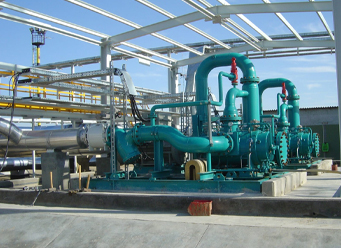
Slurry Pumps Manufacturing Specification and Performance Analysis
Slurry pumps are specialized centrifugal machinery engineered to transport fluids containing suspended solid particles, ranging from fine silts to coarse, abrasive minerals. In the industrial value chain, these pumps serve as the critical kinetic link between extraction and processing in mining, dredging, and chemical manufacturing. The primary technical challenge for slurry pumps manufacturers lies in managing the dual threats of erosive wear and corrosive attack. Unlike standard water pumps, slurry pumps must maintain hydraulic efficiency while enduring the constant impingement of abrasive solids. Performance is measured not only by flow rate (m³/h) and total dynamic head (TDH), but more critically by the Mean Time Between Maintenance (MTBM) and the pump's ability to handle varying slurry concentrations without inducing premature cavitation or impeller blockage. The integration of advanced metallurgy and computational fluid dynamics (CFD) is essential to optimizing the velocity profiles within the volute, thereby minimizing turbulence-induced wear.
Material Science & Manufacturing
The selection of materials is the foundational engineering decision in slurry pump manufacturing. The primary objective is to balance hardness (to resist abrasion) with toughness (to prevent brittle fracture). High-chromium white irons (ASTM A532) are frequently employed for impellers and liners due to their high volume fraction of M7C3 carbides, which provide a hardness typically exceeding 60 HRC. For environments where chemical corrosion accompanies abrasion, duplex stainless steels or specialized rubber liners (such as Natural Rubber or Nitrile) are utilized. Rubber liners are particularly effective for fine-particle slurries, as they absorb the energy of particle impact through elastic deformation rather than material removal.
The manufacturing process begins with precision casting. Investment casting or sand casting is used to create the complex geometries of the impeller and casing. A critical parameter is the cooling rate during solidification; uncontrolled cooling can lead to secondary austenite formation or excessive carbide clustering, which creates localized weak points susceptible to pitting. Following casting, components undergo heat treatment—specifically quenching and tempering—to optimize the martensitic matrix. Precision machining is then applied to the bearing housings and shaft seats, utilizing CNC grinding to achieve tolerances within microns. The assembly process focuses on the "fit and finish" of the wear plates and liners, ensuring that gaps are minimized to prevent "wash-out," where high-velocity slurry bypasses the impeller and erodes the pump casing from the inside.
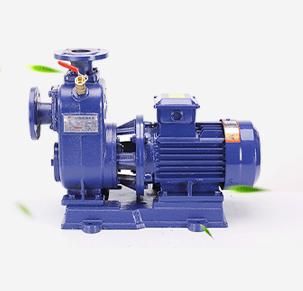
Performance & Engineering
Engineering a slurry pump requires a rigorous analysis of the fluid dynamics of non-Newtonian mixtures. The critical performance metric is the "Critical Settling Velocity," the minimum speed at which solids remain suspended in the flow. If the pump operates below this threshold, solids settle in the volute, leading to blockages and catastrophic vibration. Engineers utilize CFD simulations to eliminate "dead zones" and optimize the vane angle of the impeller, reducing the impact angle of particles to minimize erosive wear (which typically peaks at an impingement angle of 20° to 45°).
Force analysis is equally critical, particularly regarding the radial thrust exerted on the shaft. Because slurry is significantly denser than water, the hydraulic imbalances generate substantial loads that can lead to shaft deflection and premature bearing failure. To counteract this, manufacturers employ heavy-duty spherical roller bearings and reinforced shafting made of alloy steels like 4140 or 17-4 PH stainless steel. Furthermore, the sealing system is a focal point of engineering; expeller seals or mechanical seals with external flushing (API Plan 32 or 54) are implemented to prevent abrasive particles from entering the bearing housing, which would otherwise lead to immediate seizure.
Technical Specifications
| Parameter Dimension | High-Chrome Alloy (ASTM A532) | Natural Rubber Lined | Duplex Stainless Steel | High-Alumina Ceramic |
|---|---|---|---|---|
| Hardness (HRC/Shore A) | 60 - 65 HRC | 65 - 75 Shore A | 25 - 35 HRC | > 90 HRC |
| Abrasion Resistance | Excellent (Coarse) | Excellent (Fine) | Moderate | Extreme |
| Corrosion Resistance | Moderate | High (Acidic) | Excellent (Chloride) | Excellent |
| Max Particle Size (mm) | Up to 100mm | Up to 10mm | Up to 20mm | Up to 2mm |
| Operating Temp (°C) | -20 to 450°C | -20 to 80°C | -40 to 250°C | -100 to 1000°C |
| Typical Application | Mining Tailings | Coal Slurry | Chemical Processing | Fine Polishing/Acid |
Failure Mode & Maintenance
Failure analysis in slurry pumps typically reveals three primary modes: abrasive erosion, cavitation, and seal degradation. Abrasive erosion manifests as "grooving" or thinning of the impeller vanes and volute liners. This occurs when the fluid velocity exceeds the material's threshold for surface stability, stripping away the passive layer or the softer matrix between carbides. Maintenance requires the implementation of a scheduled liner replacement program based on wall-thickness ultrasonic testing (UT) to prevent casing breach.
Cavitation occurs when the Net Positive Suction Head Available (NPSHa) falls below the Net Positive Suction Head Required (NPSHr), often due to high slurry viscosity or clogged suction strainers. This creates vapor bubbles that implode with immense force, causing "pitting" on the impeller eye. To mitigate this, operators must ensure correct pump priming and optimize the suction piping geometry. Seal failure is often caused by "dry running" or the ingress of solids into the seal faces, leading to rapid scoring and leakage. Professional maintenance involves the use of high-pressure flush water systems and the routine inspection of the expeller's clearance to ensure the centrifugal barrier remains intact.
Industry FAQ
Q: How do you determine whether to use a chrome alloy or a rubber liner for a specific slurry?
A: The decision is primarily based on particle size and angularity. High-chrome alloys are superior for coarse, large-diameter particles that would tear or puncture rubber. Conversely, rubber liners excel in handling fine, sandy particles where the rubber can deform and "bounce" the particles back, resulting in significantly lower wear rates than hard metals.
Q: What is the impact of slurry density on the pump's power requirements?
A: Slurry density increases the fluid's mass flow rate and viscosity, which directly raises the Brake Horsepower (BHP) required. Manufacturers utilize a correction factor (usually based on the slurry's specific gravity) to size the motor. Failure to account for the increased density can lead to motor overload and frequent tripping of the circuit breakers.
Q: Why does the pump experience vibration despite being properly aligned?
A: In slurry applications, vibration is often a symptom of uneven wear. As the impeller vanes erode asymmetrically, the pump becomes hydraulically unbalanced. Additionally, the accumulation of solids in the volute (plugging) can create turbulent flow regimes that induce severe mechanical vibration.
Q: How can we reduce the frequency of impeller replacements?
A: The most effective method is to operate the pump as close to the Best Efficiency Point (BEP) as possible. Operating too far to the left or right of the BEP increases internal recirculation and turbulence, which accelerates erosion. Installing variable frequency drives (VFDs) allows the operator to tune the speed to the current slurry concentration, reducing unnecessary wear.
Q: What is the significance of the "Critical Settling Velocity" in system design?
A: If the flow velocity drops below the critical settling velocity, the solid particles will precipitate out of the suspension and settle at the bottom of the pipe or pump casing. This not only reduces the effective flow area—increasing friction losses—but can lead to total system blockage and the need for manual dredging of the lines.
Conclusion
The engineering of slurry pumps is a complex equilibrium between hydraulic performance and material durability. The transition from standard centrifugal design to slurry-specific architecture requires a deep integration of metallurgy, specifically the use of high-chromium alloys and elastomers, and a rigorous application of fluid dynamics to manage the abrasive nature of the medium. The ability of a manufacturer to minimize internal turbulence and maximize material hardness directly dictates the operational lifespan and total cost of ownership for the end user.
Looking forward, the industry is shifting toward "smart" slurry pumping, incorporating real-time wear monitoring through embedded sensors and the use of additive manufacturing to create optimized, non-linear impeller geometries. For procurement managers and engineers, the focus must remain on the synergy between the pump's material specifications and the specific chemical and physical properties of the slurry to ensure systemic reliability and environmental compliance.
-
sump pump for septic systems Material Science Manufacturing
News2026-05-20
-
sump pump and ejector pump Material Science Manufacturing
News2026-05-20
-
sewage treatment plant pumps Performance Analysis
News2026-05-20
-
sewage tank pump Material Science and Manufacturing
News2026-05-20
-
sewage pump for septic tank Performance Analysis
News2026-05-20
-
Sewage Pump and Tank Performance Analysis
News2026-05-19
-
Sewage Ejector Pump Replacement Performance Analysis
News2026-05-19
-
sewage ejector pump for basement bathroom Material Science Manufacturing
News2026-05-19
-
sewage ejection pump Material Science and Manufacturing
News2026-05-19
-
in line sewage pump Performance Analysis
News2026-05-19
-
effluent sump pump Performance Analysis
News2026-05-18
-
best grinder pump for sewage Performance Engineering
News2026-05-18
-
basement waste water pump Performance Engineering
News2026-05-18
-
sump pump sewer Performance Analysis
News2026-05-18
-
sump pump for sewer Performance Analysis
News2026-05-18




