English
- Afrikaans
- Albanian
- Amharic
- Arabic
- Armenian
- Azerbaijani
- Basque
- Belarusian
- Bengali
- Bosnian
- Bulgarian
- Catalan
- Cebuano
- Corsican
- Croatian
- Czech
- Danish
- Dutch
- English
- Esperanto
- Estonian
- Finnish
- French
- Frisian
- Galician
- Georgian
- German
- Greek
- Gujarati
- Haitian Creole
- hausa
- hawaiian
- Hebrew
- Hindi
- Miao
- Hungarian
- Icelandic
- igbo
- Indonesian
- irish
- Italian
- Japanese
- Javanese
- Kannada
- kazakh
- Khmer
- Rwandese
- Korean
- Kurdish
- Kyrgyz
- Lao
- Latin
- Latvian
- Lithuanian
- Luxembourgish
- Macedonian
- Malgashi
- Malay
- Malayalam
- Maltese
- Maori
- Marathi
- Mongolian
- Myanmar
- Nepali
- Norwegian
- Norwegian
- Occitan
- Pashto
- Persian
- Polish
- Portuguese
- Punjabi
- Romanian
- Russian
- Samoan
- Scottish Gaelic
- Serbian
- Sesotho
- Shona
- Sindhi
- Sinhala
- Slovak
- Slovenian
- Somali
- Spanish
- Sundanese
- Swahili
- Swedish
- Tagalog
- Tajik
- Tamil
- Tatar
- Telugu
- Thai
- Turkish
- Turkmen
- Ukrainian
- Urdu
- Uighur
- Uzbek
- Vietnamese
- Welsh
- Bantu
- Yiddish
- Yoruba
- Zulu

Telephone: +86 13120555503
Email: frank@cypump.com


Apr . 01, 2024 17:55 Back to list
slurry pumps for africa Technical Performance Analysis and Manufacturing Specifications
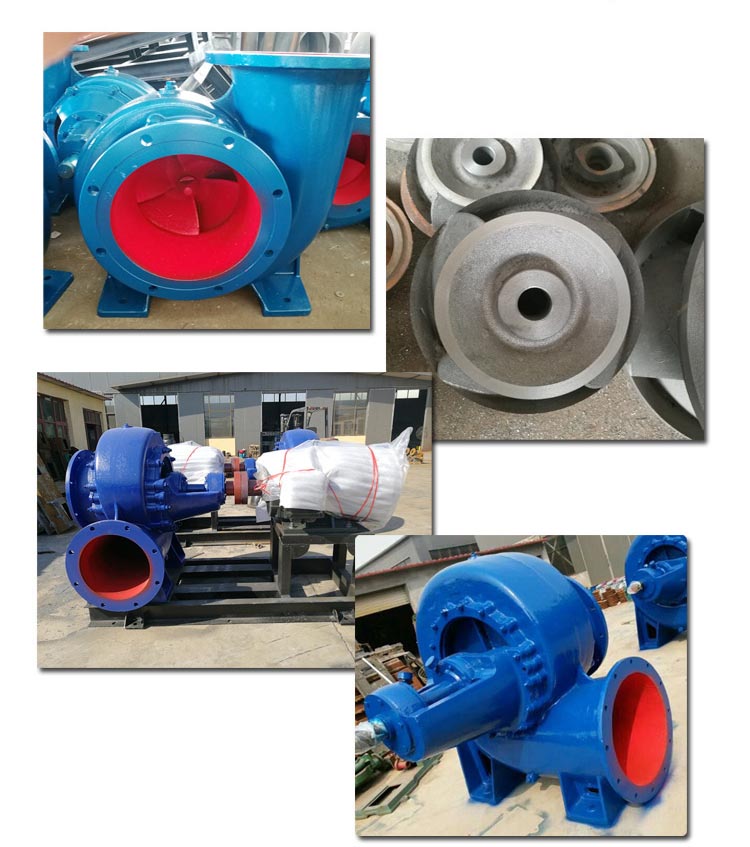
Slurry Pumps: Technical Performance Analysis and Manufacturing Specifications
Slurry pumps are specialized centrifugal machines designed to transport fluids containing high concentrations of suspended solid particles, ranging from fine silts to coarse mineral ores. In the context of the African industrial landscape—characterized by extensive mining operations in the Copperbelt, gold extraction in West Africa, and diamond mining in the south—these pumps occupy a critical position in the mid-stream processing chain. They are utilized primarily in tailings management, hydromining, and mineral processing circuits where the transported medium is inherently abrasive and often corrosive. The core technical challenge in these environments is balancing hydraulic efficiency with extreme wear resistance. A slurry pump must maintain a consistent volumetric flow rate while resisting the erosive energy of particulate impact, which can rapidly degrade standard metallurgy. Consequently, the engineering of these pumps focuses on fluid dynamics to minimize turbulence and the application of advanced material science to extend the Mean Time Between Failures (MTBF) in remote, harsh geographic locations.
Material Science & Manufacturing
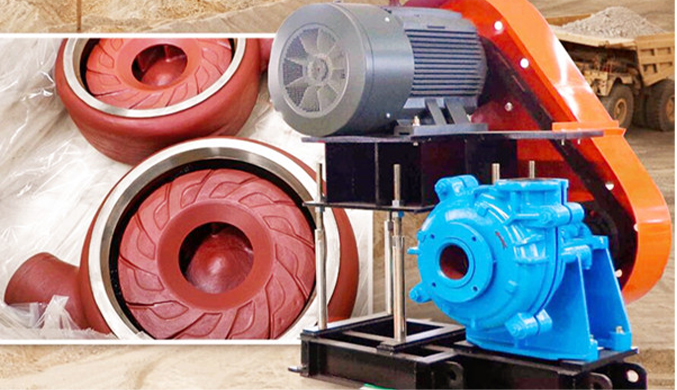
The longevity of a slurry pump is fundamentally determined by its metallurgical composition and the precision of its manufacturing process. Given the high abrasive nature of African mineral ores, the selection of liner and impeller materials is paramount. The industry standard revolves around High-Chrome White Irons (ASTM A532) and Natural Rubber compounds. High-chrome alloys (typically 27% Cr) are employed for high-pressure, high-velocity applications where impingement erosion is the dominant failure mode. These alloys create a hard martensitic matrix embedded with M7C3 carbides, providing a hardness typically exceeding 600 HB (Brinell). Conversely, for finer particles and lower pressures, natural rubber liners are utilized due to their elasticity, which allows the material to absorb the energy of particle impact rather than eroding.
Manufacturing involves complex casting and machining protocols. The casting process requires strict temperature control and slow cooling rates to prevent internal stresses and porosity, which could lead to catastrophic failure under hydraulic load. Impellers are often dynamically balanced to G2.5 or G6.3 standards to minimize vibration, which is a primary driver of bearing and seal degradation. Furthermore, the manufacturing of the pump casing involves precision machining of the volute to ensure an optimal flow path, reducing the occurrence of stagnant zones where solids could accumulate and cause localized "pocket erosion." Advanced coatings, such as Tungsten Carbide or Ceramic inserts, are increasingly applied to critical wear zones, such as the impeller eye and the discharge throat, to further enhance the lifespan of the equipment in extreme conditions.
Performance & Engineering
Engineering a slurry pump for the African mining sector requires a deep analysis of fluid mechanics and force distribution. The primary engineering objective is to maintain the "critical carrying velocity"—the minimum velocity required to keep solids suspended in the fluid to prevent pipeline blockage (sedimentation). If the velocity drops below this threshold, solids settle, leading to increased friction and eventual plugging. Conversely, exceeding the critical velocity leads to exponential increases in wear rates, as erosion is proportional to the cube of the fluid velocity.
Environmental resistance is another critical engineering pillar. In many African regions, pumps are exposed to extreme ambient temperatures and fluctuating power grid stability. To combat this, engineers implement heavy-duty cooling systems for the bearing housings and utilize Variable Frequency Drives (VFDs) to optimize pump speed based on real-time slurry density. The sealing system is equally critical; mechanical seals with flushed faces or specialized expeller seals are used to prevent the abrasive slurry from penetrating the bearing chamber. Force analysis is conducted on the pump shaft to ensure that the radial and axial loads created by the asymmetric flow of heavy slurry do not lead to shaft deflection, which would cause premature seal failure and vibration-induced fatigue.
Technical Specifications
| Technical Parameter | High-Chrome Series | Rubber-Lined Series | Hybrid Alloy Series | Industrial Standard |
|---|---|---|---|---|
| Max Particle Size | Up to 150 mm | Up to 30 mm | Up to 80 mm | ISO 5199 / ANSI |
| Max Flow Rate | 12,000 m³/h | 4,500 m³/h | 7,000 m³/h | DIN 24255 |
| Max Head (Pressure) | 250 Meters | 80 Meters | 160 Meters | ASTM B117 |
| Material Hardness | 60-65 HRC | 60-70 Shore A | 50-55 HRC | ASTM E18 |
| Slurry Density | Up to 1.8 t/m³ | Up to 1.4 t/m³ | Up to 1.6 t/m³ | API 610 |
| Operating Temp | -20°C to 150°C | -10°C to 70°C | -20°C to 120°C | ISO 8573 |
Failure Mode & Maintenance
Analyzing failure modes in slurry pumps involves identifying the intersection of hydraulic stress and material degradation. The most common failure mode is "Erosive Wear," where the kinetic energy of the slurry particles strips away the surface layer of the impeller and casing. This is often accelerated by cavitation, occurring when the Net Positive Suction Head Available (NPSHa) falls below the Net Positive Suction Head Required (NPSHr), creating vapor bubbles that implode and create micro-jets that pit the metal surface.
Another critical failure mode is "Corrosive Attack," particularly in gold and copper mining where acidic process water is used. This leads to oxidation and pitting, which weakens the structural integrity of the pump components. Delamination is common in rubber-lined pumps, where the bonding agent fails due to thermal expansion or chemical incompatibility, allowing slurry to penetrate the liner and attack the steel shell. To mitigate these failures, a professional maintenance regimen is required: implementing vibration analysis to detect bearing wear early, utilizing ultrasonic thickness gauging to monitor liner wear without dismantling the pump, and ensuring precise alignment of the pump and motor using laser alignment tools to prevent shaft fatigue.
Industry FAQ
Q: How do we determine the correct liner material for a specific African mineral ore?
A: The selection depends on the particle size, hardness (Mohs scale), and slurry pH. Coarse, hard ores require High-Chrome alloys to resist abrasion, while fine, abrasive particles are better handled by natural rubber, which absorbs impact. For corrosive slurries, duplex stainless steels or specialized polymers are recommended.
Q: What is the impact of varying slurry density on pump efficiency?
A: As density increases, the fluid's viscosity increases, which raises the friction losses within the pump and pipeline. This leads to a decrease in the total head and a shift in the pump's performance curve, requiring higher power consumption to maintain the same flow rate.
Q: How can we prevent cavitation in high-altitude mining sites in Africa?
A: At high altitudes, atmospheric pressure is lower, reducing the NPSHa. To prevent cavitation, we recommend increasing the suction pipe diameter to reduce friction losses, lowering the pump installation height relative to the slurry pond, or utilizing a pump with a lower NPSHr specification.
Q: What are the signs that an impeller needs immediate replacement?
A: The primary indicators are a significant drop in discharge pressure, an increase in motor amperage for the same flow rate, and increased vibration levels. Frequent monitoring of the flow-to-pressure ratio on the performance curve is the most accurate method.
Q: Which sealing arrangement is most effective for remote sites with limited technical support?
A: For remote operations, we recommend expeller seals or heavy-duty gland packing with a controlled flush water system. These are more robust and easier to maintain in the field compared to complex mechanical seals that require sterile environments for installation.
Conclusion
The deployment of slurry pumps in the African industrial sector is a complex engineering challenge that requires a synergy between material science and hydraulic optimization. By prioritizing the use of high-chrome alloys and natural rubber liners tailored to the specific mineralogy of the region, operators can significantly mitigate the effects of erosive wear and corrosion. The technical integrity of these systems relies not only on the initial manufacturing quality but also on the rigorous adherence to critical carrying velocities and the implementation of proactive maintenance strategies.
Looking forward, the integration of smart monitoring sensors and VFD technology will allow for real-time adjustments to pump performance, further extending equipment life and reducing operational expenditure. For the mining and processing industries in Africa, investing in high-specification, technically validated slurry pumping solutions is essential for ensuring sustainable production and minimizing unplanned downtime in high-stakes environments.
-
sump pump for septic systems Material Science Manufacturing
News2026-05-20
-
sump pump and ejector pump Material Science Manufacturing
News2026-05-20
-
sewage treatment plant pumps Performance Analysis
News2026-05-20
-
sewage tank pump Material Science and Manufacturing
News2026-05-20
-
sewage pump for septic tank Performance Analysis
News2026-05-20
-
Sewage Pump and Tank Performance Analysis
News2026-05-19
-
Sewage Ejector Pump Replacement Performance Analysis
News2026-05-19
-
sewage ejector pump for basement bathroom Material Science Manufacturing
News2026-05-19
-
sewage ejection pump Material Science and Manufacturing
News2026-05-19
-
in line sewage pump Performance Analysis
News2026-05-19
-
effluent sump pump Performance Analysis
News2026-05-18
-
best grinder pump for sewage Performance Engineering
News2026-05-18
-
basement waste water pump Performance Engineering
News2026-05-18
-
sump pump sewer Performance Analysis
News2026-05-18
-
sump pump for sewer Performance Analysis
News2026-05-18




