English
- Afrikaans
- Albanian
- Amharic
- Arabic
- Armenian
- Azerbaijani
- Basque
- Belarusian
- Bengali
- Bosnian
- Bulgarian
- Catalan
- Cebuano
- Corsican
- Croatian
- Czech
- Danish
- Dutch
- English
- Esperanto
- Estonian
- Finnish
- French
- Frisian
- Galician
- Georgian
- German
- Greek
- Gujarati
- Haitian Creole
- hausa
- hawaiian
- Hebrew
- Hindi
- Miao
- Hungarian
- Icelandic
- igbo
- Indonesian
- irish
- Italian
- Japanese
- Javanese
- Kannada
- kazakh
- Khmer
- Rwandese
- Korean
- Kurdish
- Kyrgyz
- Lao
- Latin
- Latvian
- Lithuanian
- Luxembourgish
- Macedonian
- Malgashi
- Malay
- Malayalam
- Maltese
- Maori
- Marathi
- Mongolian
- Myanmar
- Nepali
- Norwegian
- Norwegian
- Occitan
- Pashto
- Persian
- Polish
- Portuguese
- Punjabi
- Romanian
- Russian
- Samoan
- Scottish Gaelic
- Serbian
- Sesotho
- Shona
- Sindhi
- Sinhala
- Slovak
- Slovenian
- Somali
- Spanish
- Sundanese
- Swahili
- Swedish
- Tagalog
- Tajik
- Tamil
- Tatar
- Telugu
- Thai
- Turkish
- Turkmen
- Ukrainian
- Urdu
- Uighur
- Uzbek
- Vietnamese
- Welsh
- Bantu
- Yiddish
- Yoruba
- Zulu

Telephone: +86 13120555503
Email: frank@cypump.com


Apr . 01, 2024 17:55 Back to list
slurry pumps engineers Engineering Specifications and Performance Analysis
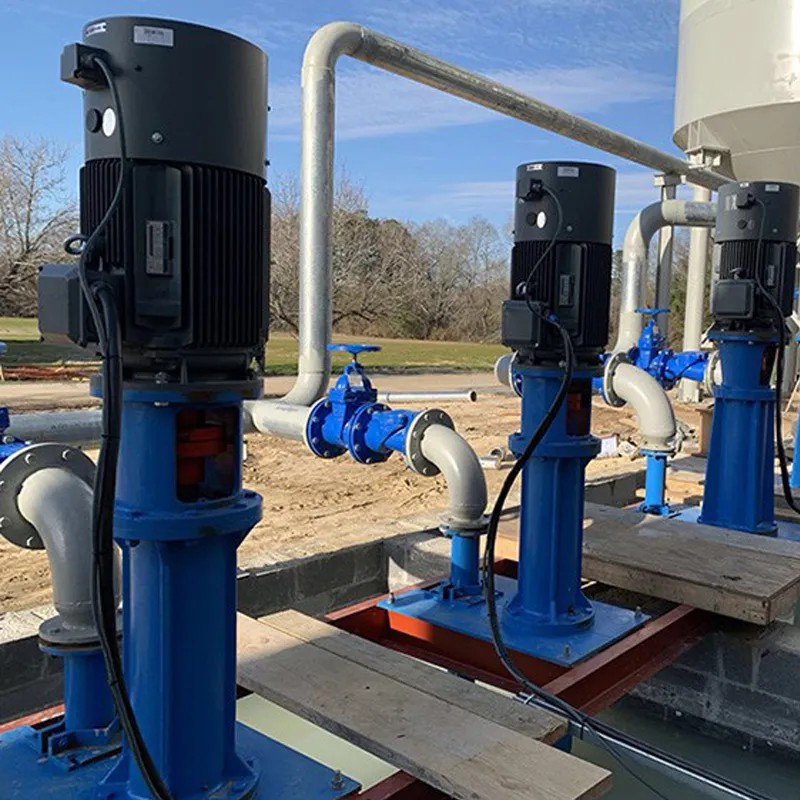
Slurry Pumps: Engineering Specifications and Performance Analysis
Slurry pumps are specialized centrifugal machinery engineered to transport non-Newtonian fluids containing suspended solid particles, ranging from fine silts to coarse abrasive minerals. In the industrial chain, these pumps occupy a critical position between raw material extraction (mining, dredging) and processing (milling, flotation, tailings management). Unlike standard water pumps, slurry pumps must address the complex rheological behavior of the medium, where the interaction between the liquid phase and the solid phase induces extreme abrasive wear and corrosive degradation. The core performance of a slurry pump is defined by its ability to maintain volumetric efficiency and hydraulic head while minimizing the rate of material loss in the impeller and volute, necessitating a rigorous integration of fluid dynamics and advanced materials science.
Material Science & Manufacturing
The engineering of slurry pumps centers on the mitigation of erosive wear, which is a function of particle velocity, impact angle, and material hardness. The selection of raw materials is governed by the specific gravity and Mohs hardness of the transported solids. High-chrome white irons (ASTM A532) are frequently employed for impellers and liners due to their martensitic matrix and primary M7C3 carbides, which provide a hardness typically exceeding 60 HRC. In environments where chemical corrosion exacerbates abrasive wear (synergistic erosion-corrosion), engineers specify duplex stainless steels or specialized rubber liners. Natural rubber liners, particularly those with high acrylonitrile content, are utilized for fine-particle slurries where the energy of impact is absorbed by the elastomer, preventing the brittle fracture seen in metallic liners.
Manufacturing processes involve precision casting and rigorous post-processing. Investment casting is utilized for complex impeller geometries to ensure hydraulic balance and reduce turbulence-induced cavitation. Key parameter control during the casting of high-chrome alloys includes the precise regulation of cooling rates to prevent the formation of oversized carbides, which can act as initiation sites for stress cracking. Furthermore, the machining of wear parts involves hard-turning and grinding to achieve strict tolerances, ensuring that the clearance between the impeller and the wear plate is minimized to prevent "recirculation" of the slurry, which would otherwise accelerate localized erosion through high-velocity eddies.
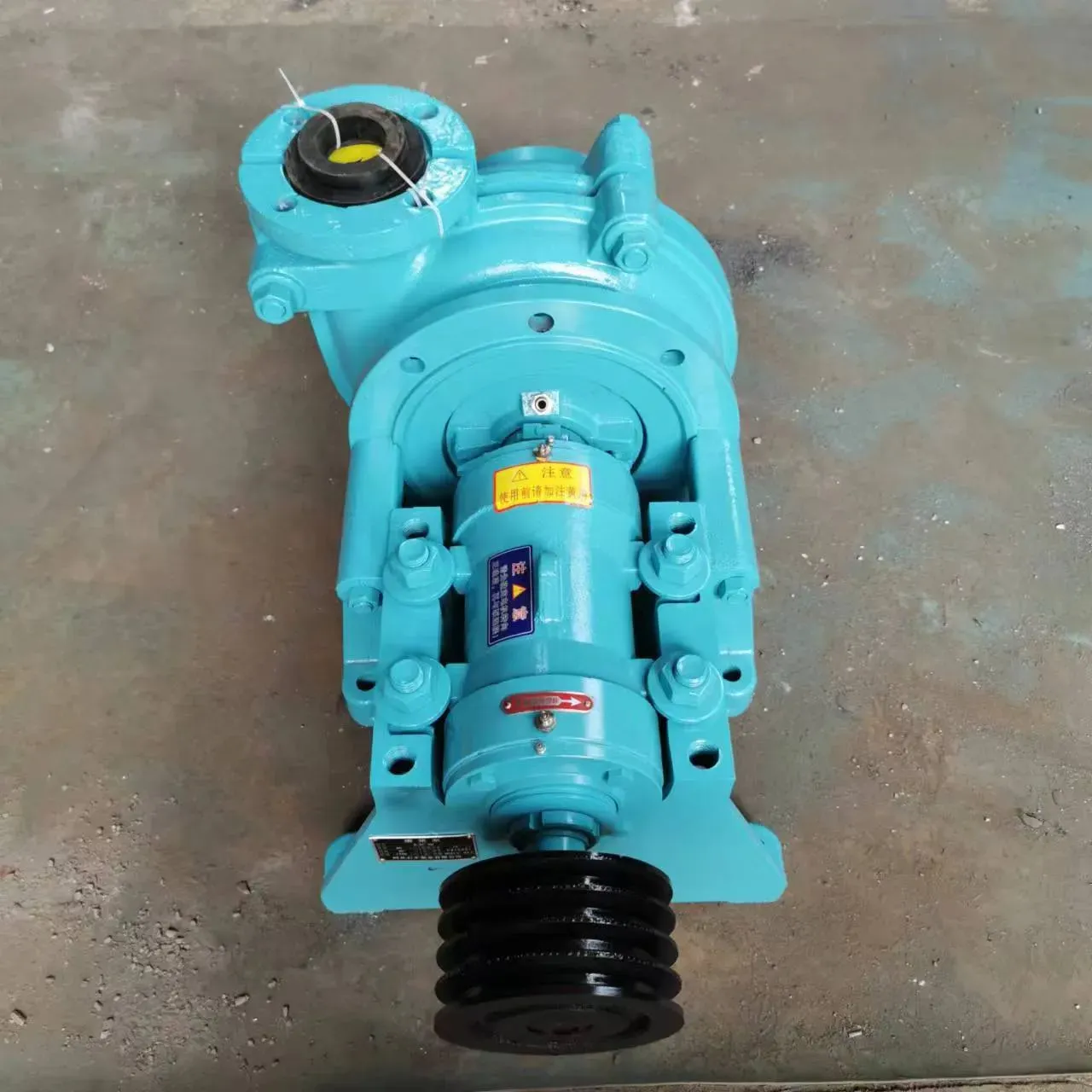
Performance & Engineering
From an engineering perspective, the performance of a slurry pump is analyzed through the lens of the "Slurry Derating" principle. The presence of solids increases the apparent viscosity and density of the fluid, leading to a reduction in the pump's head (H) and efficiency (η) compared to pure water performance. Engineers employ the modified Bernoulli equation to calculate the total dynamic head (TDH), accounting for the increased friction losses associated with the particle-to-wall interactions. The critical velocity—the minimum velocity required to keep solids in suspension—must be maintained to prevent sedimentation and subsequent pipeline blockage, while simultaneously staying below the threshold where abrasive wear becomes exponential.
Force analysis within the pump focuses on the radial thrust and axial load exerted on the shaft. Due to the uneven distribution of slurry density around the impeller eye, asynchronous radial forces can lead to shaft deflection and premature bearing failure. To counteract this, engineers implement heavy-duty shafting with oversized diameters and high-stiffness bearings. Additionally, the sealing system is a primary engineering focus; expeller seals or mechanical seals with external flushing (API Plan 32 or 54) are used to prevent abrasive particles from infiltrating the bearing housing, ensuring the integrity of the pump's rotating assembly under high-pressure conditions.
Technical Specifications
| Material Grade | Hardness (HRC/Shore A) | Max Particle Size (mm) | Critical Velocity (m/s) |
|---|---|---|---|
| High Chrome Alloy (A532) | 60 - 65 HRC | Up to 150 mm | 2.5 - 4.5 m/s |
| Duplex Stainless Steel | 25 - 35 HRC | Up to 50 mm | 2.0 - 3.5 m/s |
| Natural Rubber Liner | 65 - 75 Shore A | Up to 20 mm | 1.8 - 3.0 m/s |
| Ceramic Alumina | > 90 HRC | Fine (< 5 mm) | 1.5 - 2.5 m/s |
| Hardened Cast Iron | 45 - 55 HRC | Up to 80 mm | 2.2 - 4.0 m/s |
| Polyurethane Coating | 80 - 95 Shore A | Up to 30 mm | 1.6 - 2.8 m/s |
Failure Mode & Maintenance
The failure modes of slurry pumps are primarily categorized into abrasive wear, corrosive attack, and mechanical fatigue. Abrasive wear manifests as "scouring" or "gouging," particularly at the impeller vanes and the volute tongue. This occurs when high-velocity particles strike the surface at an angle, removing material through micro-plowing. When the pump operates far from its Best Efficiency Point (BEP), internal recirculation causes localized high-velocity zones, leading to rapid "hole-through" failures in the liner. Corrosive failure, often appearing as pitting or intergranular corrosion, occurs when the protective oxide layer of the metal is stripped away by abrasive particles, exposing fresh metal to acidic or alkaline slurry components.
Maintenance protocols must transition from reactive to predictive strategies. Vibration analysis is critical for detecting bearing degradation and shaft misalignment caused by the asymmetric loading of slurry. Maintenance engineers utilize ultrasonic thickness gauging to monitor the wear rate of the volute liners without dismantling the pump. Professional maintenance includes the periodic rotation of the impeller to distribute wear evenly and the rigorous inspection of the gland packing or mechanical seal faces. When replacing wear parts, it is imperative to verify the balance of the new impeller to prevent the introduction of harmonic vibrations that could lead to fatigue cracking of the pump casing.
Industry FAQ
Q: How do you determine the correct impeller material for a highly acidic slurry?
A: The selection requires an analysis of the pH value and the abrasive nature of the solids. For acidic slurries with high abrasion, we prioritize duplex stainless steels or high-chrome alloys with molybdenum additions to enhance pitting resistance. If the abrasion is low but acidity is extreme, specialized polymer liners or acid-resistant alloys are specified to prevent rapid wall thinning.
Q: What is the impact of varying the slurry concentration (Cw) on pump efficiency?
A: Increasing the concentration by weight (Cw) increases the fluid's viscosity and density, which leads to a non-linear drop in efficiency. As Cw increases, the frictional losses within the pump increase, requiring higher power input to maintain the same flow rate. Engineers must apply a derating factor to the water curve to avoid overloading the motor.
Q: How can we mitigate cavitation when pumping high-density slurries?
A: Cavitation in slurry pumps is often exacerbated by the higher vapor pressure of certain slurry components or restricted suction lines. We mitigate this by increasing the Net Positive Suction Head Available (NPSHa) through the installation of the pump at a lower elevation relative to the source or by utilizing a larger suction pipe diameter to reduce inlet velocity and friction loss.
Q: Why do rubber liners fail prematurely in high-temperature slurry applications?
A: Rubber undergoes thermal degradation and loses its elastic properties above its specified temperature limit (typically 70-90°C depending on the polymer). This leads to hardening, cracking, and subsequent delamination. In such cases, engineers replace rubber with high-chrome alloys or specialized heat-resistant ceramics.
Q: What is the significance of the 'Critical Velocity' in pipeline design for slurry pumps?
A: The critical velocity is the minimum flow speed required to ensure that solid particles remain entrained in the fluid. If the velocity drops below this threshold, particles settle at the bottom of the pipe, creating a stagnant bed. This not only increases the risk of total blockage but also causes severe localized abrasion on the bottom of the pipe wall.
Conclusion
The engineering of slurry pumps is a sophisticated balance between hydraulic efficiency and material durability. By integrating advanced metallurgy—specifically high-chrome alloys and specialized elastomers—with a deep understanding of non-Newtonian fluid dynamics, engineers can significantly extend the Mean Time Between Failures (MTBF) in the most aggressive industrial environments. The shift toward precision casting and rigorous derating calculations ensures that these systems operate reliably under extreme abrasive and corrosive loads.
Looking forward, the integration of real-time wear monitoring sensors and Computational Fluid Dynamics (CFD) optimization will allow for the development of "smart" slurry pumps. These advancements will enable operators to optimize flow rates dynamically, minimizing energy consumption while maximizing component lifespan, thereby reducing the overall operational expenditure in mining and industrial processing sectors.
-
sump pump for septic systems Material Science Manufacturing
News2026-05-20
-
sump pump and ejector pump Material Science Manufacturing
News2026-05-20
-
sewage treatment plant pumps Performance Analysis
News2026-05-20
-
sewage tank pump Material Science and Manufacturing
News2026-05-20
-
sewage pump for septic tank Performance Analysis
News2026-05-20
-
Sewage Pump and Tank Performance Analysis
News2026-05-19
-
Sewage Ejector Pump Replacement Performance Analysis
News2026-05-19
-
sewage ejector pump for basement bathroom Material Science Manufacturing
News2026-05-19
-
sewage ejection pump Material Science and Manufacturing
News2026-05-19
-
in line sewage pump Performance Analysis
News2026-05-19
-
effluent sump pump Performance Analysis
News2026-05-18
-
best grinder pump for sewage Performance Engineering
News2026-05-18
-
basement waste water pump Performance Engineering
News2026-05-18
-
sump pump sewer Performance Analysis
News2026-05-18
-
sump pump for sewer Performance Analysis
News2026-05-18




