English
- Afrikaans
- Albanian
- Amharic
- Arabic
- Armenian
- Azerbaijani
- Basque
- Belarusian
- Bengali
- Bosnian
- Bulgarian
- Catalan
- Cebuano
- Corsican
- Croatian
- Czech
- Danish
- Dutch
- English
- Esperanto
- Estonian
- Finnish
- French
- Frisian
- Galician
- Georgian
- German
- Greek
- Gujarati
- Haitian Creole
- hausa
- hawaiian
- Hebrew
- Hindi
- Miao
- Hungarian
- Icelandic
- igbo
- Indonesian
- irish
- Italian
- Japanese
- Javanese
- Kannada
- kazakh
- Khmer
- Rwandese
- Korean
- Kurdish
- Kyrgyz
- Lao
- Latin
- Latvian
- Lithuanian
- Luxembourgish
- Macedonian
- Malgashi
- Malay
- Malayalam
- Maltese
- Maori
- Marathi
- Mongolian
- Myanmar
- Nepali
- Norwegian
- Norwegian
- Occitan
- Pashto
- Persian
- Polish
- Portuguese
- Punjabi
- Romanian
- Russian
- Samoan
- Scottish Gaelic
- Serbian
- Sesotho
- Shona
- Sindhi
- Sinhala
- Slovak
- Slovenian
- Somali
- Spanish
- Sundanese
- Swahili
- Swedish
- Tagalog
- Tajik
- Tamil
- Tatar
- Telugu
- Thai
- Turkish
- Turkmen
- Ukrainian
- Urdu
- Uighur
- Uzbek
- Vietnamese
- Welsh
- Bantu
- Yiddish
- Yoruba
- Zulu

Telephone: +86 13120555503
Email: frank@cypump.com


Apr . 01, 2024 17:55 Back to list
Slurry Pumps and Engineers Performance Analysis
Introduction
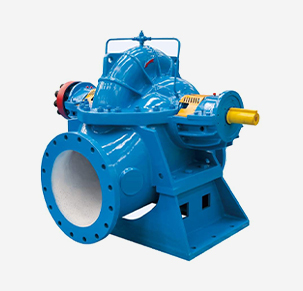
Slurry pumps are heavy-duty pumps specifically engineered to transport abrasive and erosive fluids, commonly referred to as slurries. These fluids contain a high concentration of solid particles suspended in a liquid medium, prevalent in industries such as mining, wastewater treatment, dredging, chemical processing, and power generation. Unlike centrifugal pumps designed for clean liquids, slurry pumps are designed to handle the increased wear and tear associated with solids-laden fluids. Their technical positioning within the industrial chain is critical; they represent a foundational element in materials handling, process efficiency, and overall operational cost. Core performance characteristics revolve around flow rate (typically measured in gallons per minute or cubic meters per hour), head (pressure developed, measured in feet or meters), solids handling capability (particle size and concentration), and abrasion resistance. Effective slurry pump selection and maintenance are paramount to minimizing downtime and maximizing process throughput, directly impacting a facility’s bottom line. Engineers involved in slurry pump applications require a deep understanding of fluid dynamics, materials science, and pump design principles to overcome common challenges like impeller erosion, casing wear, and seal failures.
Material Science & Manufacturing
The materials used in slurry pump construction are central to their longevity and performance. Pump casings are frequently constructed from high-chrome iron alloys (typically 27-30% chromium) due to their exceptional abrasion resistance. However, for highly corrosive environments, duplex stainless steels (e.g., 2205, 2507) or specialized alloys like Hastelloy are employed. Impellers, the rotating component responsible for imparting energy to the slurry, are often manufactured from the same materials as the casing, with rubber linings or ceramic inserts added to further enhance wear resistance, especially when handling highly abrasive particles. Shaft materials typically utilize alloy steels (e.g., 4140, 4340) heat-treated to achieve high tensile strength and toughness. Seals are crucial for preventing leakage and are commonly comprised of mechanical seals utilizing materials like silicon carbide, tungsten carbide, or ceramic faces, paired with elastomers like Viton or EPDM for compatibility with the slurry’s chemical composition.
Manufacturing processes vary depending on component complexity. Casings are often produced using sand casting, investment casting, or centrifugal casting. Sand casting is cost-effective for large, complex shapes, while investment casting yields higher precision and surface finish. Centrifugal casting is preferred for producing cylindrical components like pump liners, creating a dense, homogenous structure with superior wear resistance. Impellers are often manufactured using lost-foam casting or machining from solid billets of alloy steel. Welding processes, such as shielded metal arc welding (SMAW) or gas tungsten arc welding (GTAW), are employed to join components, requiring strict adherence to welding procedures and quality control measures to ensure structural integrity. Parameter control during manufacturing is critical. For example, the chromium content in high-chrome iron alloys must be precisely controlled to optimize abrasion resistance, and heat treatment parameters (temperature, time, cooling rate) must be carefully managed to achieve the desired hardness and toughness.
Performance & Engineering
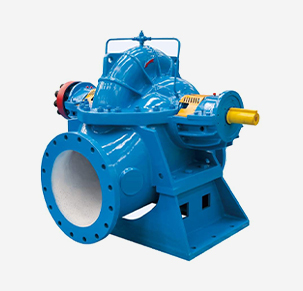
Slurry pump performance is dictated by several key engineering principles. Force analysis is crucial in designing components capable of withstanding the impact and abrasive wear caused by solid particles. The kinetic energy of the slurry particles, particularly at high velocities, results in significant erosive forces. Hydraulic Institute standards dictate acceptable velocity limits to minimize erosion. Environmental resistance is paramount; pumps operating in corrosive environments require careful material selection and protective coatings. Compliance requirements vary based on industry and location. For example, pumps used in the oil and gas industry must adhere to API 610 standards, while those used in wastewater treatment must comply with EPA regulations. Pump selection hinges on understanding the slurry’s characteristics – particle size distribution, solids concentration, specific gravity, viscosity, and chemical composition.
Engineers must consider the pump's Net Positive Suction Head Required (NPSHr) to prevent cavitation, a phenomenon where vapor bubbles form within the pump, causing noise, vibration, and damage. The system's Net Positive Suction Head Available (NPSHa) must exceed the NPSHr. Proper pump alignment is essential to minimize bearing wear and vibration. Vibration analysis is routinely used to detect and diagnose mechanical issues. Furthermore, understanding the pump curve (head vs. flow rate) allows engineers to optimize pump selection for specific application requirements, minimizing energy consumption and maximizing efficiency. Variable Frequency Drives (VFDs) are often implemented to control pump speed and flow rate, adapting to changing process demands and optimizing energy usage. Considerations include pump efficiency curves, hydraulic losses, and the impact of solids concentration on pump performance.
Technical Specifications
| Parameter | Typical Range (Centrifugal Slurry Pump) | Parameter | Typical Range (Positive Displacement Slurry Pump) |
|---|---|---|---|
| Flow Rate | 50 - 5000 GPM (190 - 18900 LPM) | Flow Rate | 10 - 500 GPM (38 - 1890 LPM) |
| Head | 20 - 300 ft (6 - 91 m) | Head | 50 - 500 ft (15 - 152 m) |
| Solids Handling Size | Up to 3 inches (76 mm) | Solids Handling Size | Up to 2 inches (51 mm) |
| Solids Concentration | Up to 70% by weight | Solids Concentration | Up to 80% by weight |
| Material of Construction (Casing) | High-Chrome Iron, Stainless Steel | Material of Construction (Casing) | Stainless Steel, Alloy Steel |
| Material of Construction (Impeller) | High-Chrome Iron, Rubber Lined | Material of Construction (Impeller) | Stainless Steel, Hardened Alloys |
Failure Mode & Maintenance
Slurry pump failures commonly stem from several sources. Impeller erosion is a frequent issue, especially when handling highly abrasive slurries at high velocities. This manifests as a gradual loss of impeller material, reducing pump efficiency and head. Casing wear occurs due to the impact of solid particles, leading to thinning of the casing wall and potential leakage. Mechanical seal failures are common, caused by abrasion, corrosion, or improper installation. Bearing failures can result from misalignment, insufficient lubrication, or excessive loads. Fatigue cracking can occur in pump components subjected to cyclic loading. Delamination of rubber linings can occur due to improper bonding or exposure to incompatible chemicals. Degradation of elastomers in seals can occur due to chemical attack or high temperatures. Oxidation of metallic components can contribute to corrosion and weakening of materials.
Preventative maintenance is crucial. Regular inspections should include visual checks for wear, vibration analysis, and seal leak detection. Impellers should be inspected for erosion and replaced when necessary. Casings should be assessed for wall thinning and repaired or replaced. Seals should be inspected and replaced according to manufacturer’s recommendations. Bearing lubrication should be monitored and replenished regularly. Proper alignment should be verified and corrected as needed. Periodic flushing of pump casings can remove accumulated solids and prevent clogging. Implementing a robust preventative maintenance schedule based on operating hours and slurry characteristics can significantly extend pump life and reduce downtime. Failure analysis, involving metallurgical examination of failed components, can identify root causes and inform design improvements.
Industry FAQ
Q: What is the primary difference between a centrifugal slurry pump and a positive displacement slurry pump in terms of application?
A: Centrifugal slurry pumps are generally preferred for high-flow, low-to-medium head applications where solids concentration is moderate. They excel in handling large volumes of slurry over shorter distances. Positive displacement pumps, such as progressing cavity pumps or diaphragm pumps, are better suited for low-flow, high-head applications, and are more effective at handling highly viscous slurries or those with very high solids concentrations. They provide a more consistent flow rate, irrespective of discharge pressure.
Q: How does the specific gravity of the slurry affect pump selection and performance?
A: Higher specific gravity slurries increase the load on the pump motor and require a pump with a greater power capacity. The pump's head curve will be affected, resulting in a reduced flow rate at a given power input. Engineers must account for the increased density when calculating NPSHr and ensuring sufficient pump power.
Q: What is the impact of particle size distribution on impeller wear rates?
A: A broader particle size distribution, particularly with a significant proportion of larger particles, will lead to accelerated impeller wear. Larger particles impart greater impact energy, causing more rapid erosion. Pump selection should consider the largest particle size to ensure it falls within the pump’s handling capability, and impeller materials should be chosen to maximize abrasion resistance.
Q: What are the key considerations when selecting a mechanical seal for a slurry pump?
A: Compatibility with the slurry’s chemical composition is paramount. The seal materials must resist corrosion and degradation. Abrasive particles can cause wear on the seal faces, so materials like silicon carbide or tungsten carbide are often preferred. Proper seal flushing is crucial to remove abrasive particles and prevent seal failure. Selecting the correct seal type (single, double, cartridge) depends on the application's specific requirements.
Q: How can I mitigate the risk of cavitation in a slurry pump?
A: Ensure the NPSHa exceeds the NPSHr by a sufficient margin. Minimize suction lift and pipe friction losses. Consider using a larger diameter suction pipe. Avoid sharp bends and obstructions in the suction piping. Monitor pump inlet pressure and flow rate to detect potential cavitation conditions. Inspect the impeller for damage caused by cavitation.
Conclusion
Slurry pump technology represents a crucial element in numerous industrial processes, enabling the reliable and efficient transport of abrasive and erosive fluids. Successful implementation requires a comprehensive understanding of materials science, hydraulic principles, and pump design. Engineers must carefully consider the slurry's characteristics – particle size, concentration, chemical composition, and specific gravity – to select the appropriate pump type, materials of construction, and operating parameters.
Looking forward, advancements in materials science, such as the development of new abrasion-resistant alloys and coatings, will continue to improve pump longevity and performance. The integration of smart sensors and predictive maintenance technologies will enable proactive monitoring of pump condition and optimization of maintenance schedules, minimizing downtime and maximizing operational efficiency. Proper maintenance practices, coupled with informed engineering design, remain fundamental to ensuring the reliable and cost-effective operation of slurry pump systems.
-
Precision at the Pump: How Better Machining Protects Flow and Uptime
News2026-11-20
-
Why Pump Reliability Begins Before the First Drop of Fluid
News2026-11-20
-
Beyond the Pump: Designing Safer Access Around Critical Water Infrastructure
News2026-11-20
-
Why Pumping Stations Depend on the Infrastructure Beneath the Pumps
News2026-11-20
-
Beyond the Pump Room: How Smarter Loading Protects Industrial Equipment
News2026-11-19
-
When Pumps Stop: Designing More Resilient Power for Critical Pumping Systems
News2026-11-19
-
The Hidden Role of Dust and Gas Monitoring in Reliable Pump Operations
News2026-11-19
-
The Hidden Role of Mineral Compounds in Extending Industrial Pump Lifespan
News2026-10-12
-
Why Pump System Reliability Depends on Precision Hose Assembly Methods
News2026-09-15
-
How Advanced Imaging Films Are Transforming Pump Component Quality Control
News2026-08-25
-
How Advanced Filtration Protects Pump Systems from Premature Wear and Costly Downtime
News2026-08-25
-
How Steel Material Selection Drives Pump Reliability in Heavy-Duty Systems
News2026-08-25
-
Ensuring Pump System Efficiency: The Role of High-Quality Pipe Fittings and Tubing
News2026-08-24
-
Optimizing Fluid Dynamics and Material Consistency in Industrial Processing
News2026-08-18
-
Innovations and Challenges in Hydraulic Systems for Heavy Machinery
News2026-08-13




