English
- Afrikaans
- Albanian
- Amharic
- Arabic
- Armenian
- Azerbaijani
- Basque
- Belarusian
- Bengali
- Bosnian
- Bulgarian
- Catalan
- Cebuano
- Corsican
- Croatian
- Czech
- Danish
- Dutch
- English
- Esperanto
- Estonian
- Finnish
- French
- Frisian
- Galician
- Georgian
- German
- Greek
- Gujarati
- Haitian Creole
- hausa
- hawaiian
- Hebrew
- Hindi
- Miao
- Hungarian
- Icelandic
- igbo
- Indonesian
- irish
- Italian
- Japanese
- Javanese
- Kannada
- kazakh
- Khmer
- Rwandese
- Korean
- Kurdish
- Kyrgyz
- Lao
- Latin
- Latvian
- Lithuanian
- Luxembourgish
- Macedonian
- Malgashi
- Malay
- Malayalam
- Maltese
- Maori
- Marathi
- Mongolian
- Myanmar
- Nepali
- Norwegian
- Norwegian
- Occitan
- Pashto
- Persian
- Polish
- Portuguese
- Punjabi
- Romanian
- Russian
- Samoan
- Scottish Gaelic
- Serbian
- Sesotho
- Shona
- Sindhi
- Sinhala
- Slovak
- Slovenian
- Somali
- Spanish
- Sundanese
- Swahili
- Swedish
- Tagalog
- Tajik
- Tamil
- Tatar
- Telugu
- Thai
- Turkish
- Turkmen
- Ukrainian
- Urdu
- Uighur
- Uzbek
- Vietnamese
- Welsh
- Bantu
- Yiddish
- Yoruba
- Zulu

Telephone: +86 13120555503
Email: frank@cypump.com


Apr . 01, 2024 17:55 Back to list
slurry pumps africa Technical Dimension and Performance Analysis
Slurry Pumps Africa: Technical Dimension and Performance Analysis
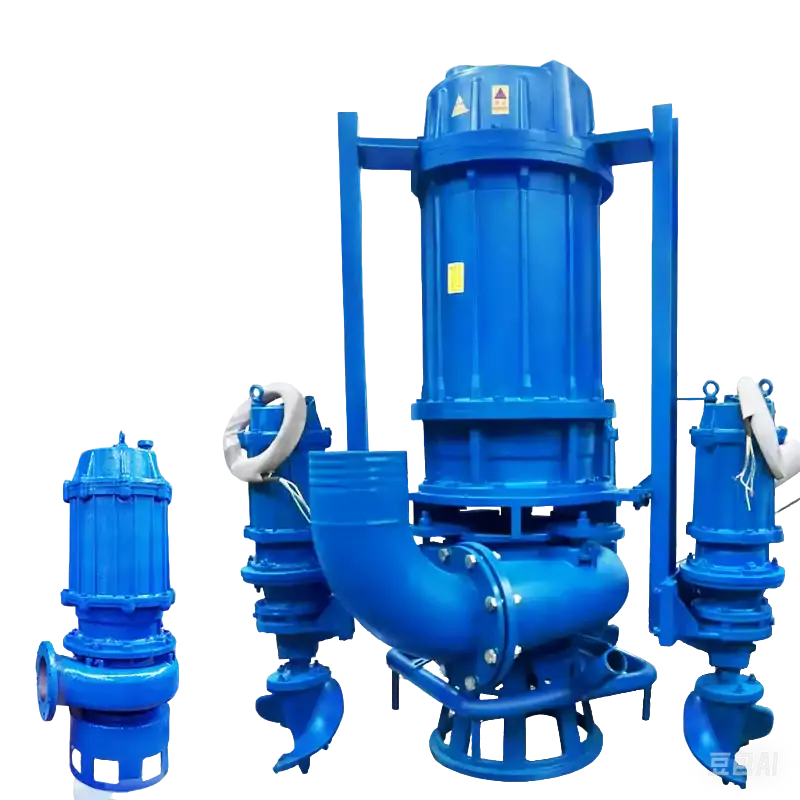
Slurry pumps engineered for the African industrial landscape represent a specialized category of centrifugal pumps designed to transport abrasive, high-density fluids containing suspended solid particles. In the context of Africa's expansive mining sector—ranging from copper and cobalt belts in the DRC and Zambia to gold and diamond operations in South Africa and Ghana—these pumps serve as the critical circulatory system for mineral processing. The technical position of the slurry pump in the industry chain is situated between the primary crushing/grinding stage and the chemical leaching or flotation stages. Its core performance is defined by the ability to maintain high volumetric efficiency while resisting extreme erosive wear and corrosive chemical attacks. Engineering these systems requires a precise balance between hydraulic capacity and material durability to ensure the continuous movement of tailings, ore slurries, and waste materials under severe geological and climatic conditions.
Material Science & Manufacturing
The manufacturing of slurry pumps for the African market focuses on the mitigation of abrasive wear, which is the primary cause of component failure. The material science employed focuses on two distinct strategies: hardness for abrasion resistance and toughness for impact resistance.
1. High-Chrome Alloys (ASTM A532): For high-velocity abrasive slurries, components such as impellers and volute liners are cast from high-chrome white irons (typically 25% to 28% Chromium). These materials form hard M7C3 carbides within a martensitic matrix, providing a hardness typically exceeding 60 HRC. This is essential for handling the quartz-rich ores common in African gold mines.
2. Natural and Synthetic Elastomers: In applications where particle size is smaller but impact frequency is high, polyurethane or natural rubber linings are utilized. These materials dissipate the kinetic energy of the impacting particles through elastic deformation, preventing the brittle fracture seen in metallic liners.
3. Manufacturing Process Control: The production involves precision investment casting followed by rigorous heat treatment (quenching and tempering) to optimize the carbide distribution. For the pump casing, heavy-wall casting is employed to provide a "wear allowance," ensuring that the pump remains operational even after significant internal material loss. Precision machining of the wear plates and the implementation of shrink-fit tolerances for the impeller ensure minimal leakage and maximum hydraulic efficiency.
Performance & Engineering
Engineering a slurry pumping system for African terrains requires a deep analysis of fluid dynamics and the rheological properties of the slurry. The primary engineering challenge is overcoming the "critical settling velocity"—the minimum velocity required to keep solid particles suspended in the liquid phase to prevent pipeline blockage.
Hydraulic Force Analysis: The pump must be engineered to handle high specific gravity (SG) fluids. As the density increases, the required brake horsepower (BHP) rises linearly. Engineers apply the modified centrifugal pump equations to account for the viscosity increase caused by high solids concentration, ensuring that the motor is sized with a sufficient service factor (typically 1.2x to 1.5x) to prevent overheating during surges in slurry density.
Environmental Resistance: Given the extreme ambient temperatures in many African regions, cooling systems for the pump bearings and motors are critical. Forced-air cooling or water-jacketed systems are integrated to prevent lubricant degradation. Additionally, the seals are engineered as "expeller seals" or "mechanical seals with external flushing" to prevent abrasive particles from entering the bearing housing, which would otherwise lead to rapid catastrophic seizure.
Compliance and Operational Integration: Systems are designed to comply with ISO 5199 and HI (Hydraulic Institute) standards, ensuring that the Net Positive Suction Head available (NPSHa) always exceeds the NPSH required (NPSHr) to avoid cavitation, which would accelerate the erosion of the impeller vanes.
Technical Specifications
| Performance Parameter | High-Chrome Specification | Rubber-Lined Specification | Dual-Material Hybrid |
|---|---|---|---|
| Max Particle Size | Up to 150 mm | Up to 40 mm | Up to 80 mm |
| Hardness (Rockwell C) | 60 - 65 HRC | Shore A 60-70 | Variable (Matrix dependent) |
| Operating Temp Range | -20°C to 150°C | -10°C to 70°C | -10°C to 120°C |
| Max Slurry Density | 1.8 t/m³ | 1.4 t/m³ | 1.6 t/m³ |
| Abrasion Resistance | Extreme (High-impact) | High (Fine-particle) | Moderate to High |
| MTBF (Hours) | 8,000 - 12,000 | 6,000 - 10,000 | 7,000 - 11,000 |
Failure Mode & Maintenance
The operational failure of slurry pumps in the field is generally categorized into three primary modes: erosive wear, corrosive attack, and mechanical fatigue.
1. Erosive Wear & Cavitation: The most common failure occurs at the impeller eye and the volute tongue. Cavitation occurs when the pressure drops below the vapor pressure, creating bubbles that implode and remove microscopic chunks of metal. This is exacerbated by incorrect suction piping layouts. Maintenance requires the transition to "hardened" inserts or adjusting the pump speed via Variable Frequency Drives (VFD) to optimize the flow rate.
2. Delamination and Lining Failure: In rubber-lined pumps, chemical incompatibility or overheating can cause the elastomer to bond-fail or blister, leading to "delamination." Once the lining is breached, the slurry attacks the outer steel shell rapidly. Regular ultrasonic thickness testing of the shell is recommended to detect leaks before catastrophic failure.
3. Shaft Fatigue and Bearing Seizure: Vibrations caused by impeller imbalance (due to uneven wear) lead to fatigue cracking of the shaft. Furthermore, the ingress of slurry into the bearing housing causes rapid oxidation and seizure. The professional maintenance solution involves the implementation of a " gland water" system, maintaining a positive pressure of clean water at the seal to keep solids out.
Industry FAQ
Q: How do we determine whether to use a high-chrome or rubber-lined pump for a specific African mining site?
A: The choice depends on the particle size and the nature of the abrasive. If the slurry contains large, sharp particles (e.g., coarse gold ore), high-chrome alloys are mandatory due to their high hardness. If the particles are fine and the slurry is more "sandy" or chemically aggressive, rubber lining is preferred as it absorbs the energy of fine particles and offers superior chemical resistance.
Q: What is the impact of high ambient temperatures in the Sahel or Kalahari regions on pump longevity?
A: Extreme heat affects the viscosity of the lubricant and the stability of elastomeric linings. We recommend utilizing synthetic high-temperature lubricants and specifying EPDM or specialized heat-resistant polymers for linings. Additionally, oversized cooling fans for the motor are necessary to prevent thermal tripping.
Q: Why is the pump experiencing rapid wear at the volute tongue despite using high-chrome materials?
A: This is likely due to operating the pump too far from its Best Efficiency Point (BEP). When the flow rate is too high or too low, turbulence increases at the volute tongue, leading to localized high-velocity impingement. Adjusting the impeller diameter or utilizing a VFD to align the duty point with the BEP will mitigate this.
Q: How often should the wear liners be inspected in high-tonnage slurry applications?
A: For high-tonnage operations, we recommend a bi-weekly visual inspection and a monthly ultrasonic thickness measurement. Establishing a "wear baseline" allows procurement managers to predict the end-of-life for liners and schedule replacements during planned shutdowns, avoiding unplanned downtime.
Q: Can these pumps handle acidic slurries typically found in copper leaching processes?
A: Standard high-chrome alloys may suffer from corrosion-erosion synergy in acidic environments. For such applications, we employ duplex stainless steels or specialized acid-resistant rubber linings. The selection must be based on the pH level and the concentration of the leaching agent.
Conclusion
The technical integrity of slurry pumps operating within the African industrial sector is predicated on the synergy between material science and hydraulic engineering. By utilizing high-chrome alloys and advanced elastomers tailored to the specific mineralogy of the site, operators can significantly reduce the total cost of ownership and maximize volumetric throughput. The transition from reactive maintenance to a predictive model—based on ultrasonic monitoring and BEP optimization—is essential for sustaining productivity in high-abrasion environments.
Looking forward, the integration of smart sensing and IoT-enabled vibration analysis will further refine the operational efficiency of these systems. As African mining operations scale and move toward deeper, more complex ore bodies, the demand for pumps with higher pressure ratings and enhanced corrosion resistance will grow, necessitating continuous innovation in metallurgical coatings and fluid dynamic simulation.
-
sump pump for septic systems Material Science Manufacturing
News2026-05-20
-
sump pump and ejector pump Material Science Manufacturing
News2026-05-20
-
sewage treatment plant pumps Performance Analysis
News2026-05-20
-
sewage tank pump Material Science and Manufacturing
News2026-05-20
-
sewage pump for septic tank Performance Analysis
News2026-05-20
-
Sewage Pump and Tank Performance Analysis
News2026-05-19
-
Sewage Ejector Pump Replacement Performance Analysis
News2026-05-19
-
sewage ejector pump for basement bathroom Material Science Manufacturing
News2026-05-19
-
sewage ejection pump Material Science and Manufacturing
News2026-05-19
-
in line sewage pump Performance Analysis
News2026-05-19
-
effluent sump pump Performance Analysis
News2026-05-18
-
best grinder pump for sewage Performance Engineering
News2026-05-18
-
basement waste water pump Performance Engineering
News2026-05-18
-
sump pump sewer Performance Analysis
News2026-05-18
-
sump pump for sewer Performance Analysis
News2026-05-18




