English
- Afrikaans
- Albanian
- Amharic
- Arabic
- Armenian
- Azerbaijani
- Basque
- Belarusian
- Bengali
- Bosnian
- Bulgarian
- Catalan
- Cebuano
- Corsican
- Croatian
- Czech
- Danish
- Dutch
- English
- Esperanto
- Estonian
- Finnish
- French
- Frisian
- Galician
- Georgian
- German
- Greek
- Gujarati
- Haitian Creole
- hausa
- hawaiian
- Hebrew
- Hindi
- Miao
- Hungarian
- Icelandic
- igbo
- Indonesian
- irish
- Italian
- Japanese
- Javanese
- Kannada
- kazakh
- Khmer
- Rwandese
- Korean
- Kurdish
- Kyrgyz
- Lao
- Latin
- Latvian
- Lithuanian
- Luxembourgish
- Macedonian
- Malgashi
- Malay
- Malayalam
- Maltese
- Maori
- Marathi
- Mongolian
- Myanmar
- Nepali
- Norwegian
- Norwegian
- Occitan
- Pashto
- Persian
- Polish
- Portuguese
- Punjabi
- Romanian
- Russian
- Samoan
- Scottish Gaelic
- Serbian
- Sesotho
- Shona
- Sindhi
- Sinhala
- Slovak
- Slovenian
- Somali
- Spanish
- Sundanese
- Swahili
- Swedish
- Tagalog
- Tajik
- Tamil
- Tatar
- Telugu
- Thai
- Turkish
- Turkmen
- Ukrainian
- Urdu
- Uighur
- Uzbek
- Vietnamese
- Welsh
- Bantu
- Yiddish
- Yoruba
- Zulu

Telephone: +86 13120555503
Email: frank@cypump.com


Apr . 01, 2024 17:55 Back to list
slurry pumping systems Performance Analysis
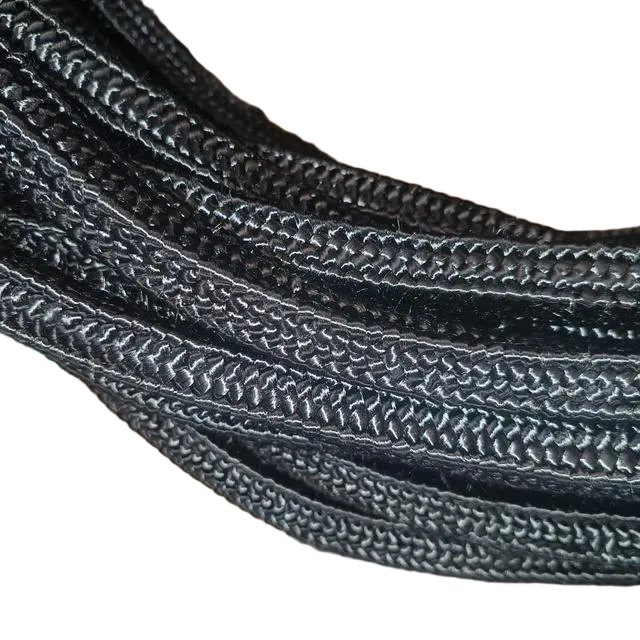
Slurry Pumping Systems Performance Analysis
Slurry pumping systems are specialized industrial fluid transport mechanisms designed to move non-Newtonian fluids containing suspended solid particles. Positioned as a critical nexus in the mineral processing, dredging, and chemical manufacturing value chains, these systems must manage the complex rheological behavior of mixtures ranging from dilute suspensions to high-density pastes. The core technical challenge lies in balancing hydraulic efficiency with extreme wear resistance. A high-performance slurry system is defined by its ability to maintain a critical carrying velocity—preventing the settlement of solids—while minimizing the erosive impact of those same solids on the pump's internal wetted parts. Engineering these systems requires an integrated approach encompassing fluid dynamics, material science, and mechanical precision to ensure operational continuity in the most abrasive environments on earth.
Material Science & Manufacturing
The selection of materials for slurry pumping systems is governed by the synergy between abrasion, corrosion, and impact. Because the fluid is often a chemically aggressive slurry, a mono-material approach is rarely sufficient. The industry focuses on high-chrome white irons (ASTM A532), natural rubber liners, and specialized duplex stainless steels.
Metallurgical Structure and Alloy Design: For high-velocity abrasive applications, high-chromium cast irons (25% to 30% Cr) are utilized. These alloys form a microstructure of hard M7C3 carbides embedded in a martensitic matrix. The carbides provide the primary defense against micro-cutting and plowing abrasion, while the martensite provides the necessary structural toughness. In environments where corrosion accelerates wear (corrosive-abrasive synergy), duplex stainless steels are employed for their balanced ferrite-austenite structure, providing superior pitting resistance and higher yield strength compared to 300-series steels.
Elastomeric Lining Technology: For slurries with smaller, finer particles, natural rubber (NR) or polyurethane (PU) liners are preferred. These materials utilize a mechanism of "elastic deformation," where the particle is momentarily absorbed into the surface and then expelled, rather than cutting into the material. The manufacturing process involves high-pressure vulcanization and precision bonding to the metallic carcass to prevent delamination under high-pressure gradients.
Manufacturing Precision and Casting: The production of pump impellers and volutes involves investment casting or sand casting with rigorous cooling rate control to prevent the formation of oversized primary carbides, which can lead to brittle failure. Post-casting heat treatment, including quenching and tempering, is critical to optimize the hardness-to-toughness ratio, ensuring the component can withstand the sudden impact of oversized solids without catastrophic fracturing.
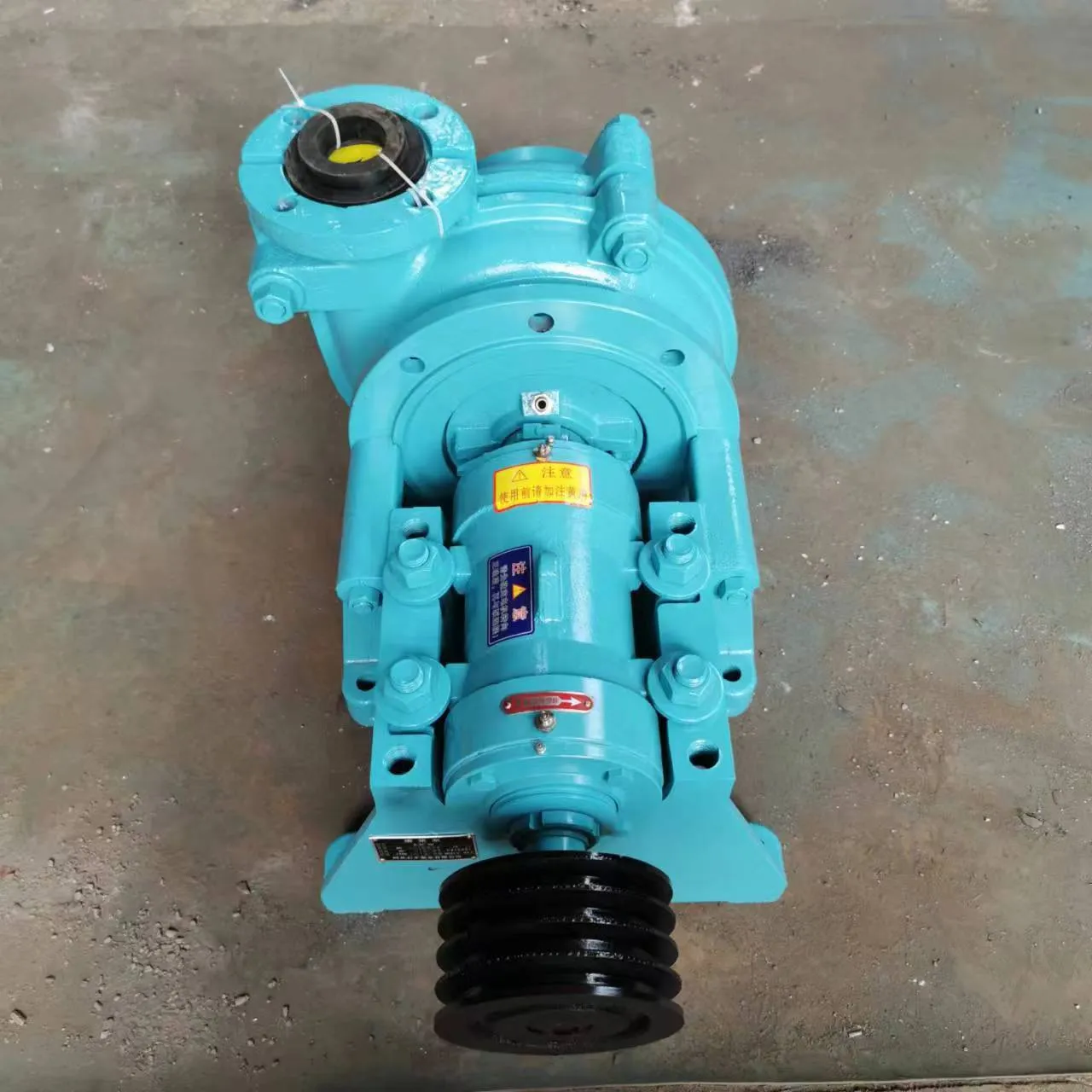
Performance & Engineering
The engineering of a slurry pumping system is predicated on the calculation of the Critical Settling Velocity (CSV) and the management of the slurry's rheology. Unlike clear water, slurries exhibit variable viscosity based on the solids concentration (Cg) and particle size distribution.
Hydraulic Force Analysis: The primary engineering objective is to ensure that the flow velocity remains above the deposition velocity to prevent pipe blockage. However, excessive velocity leads to an exponential increase in wear rates, as the erosion rate is typically proportional to the velocity cubed (V³). Engineers employ the Durand equation or the Modified Durand method to determine the optimal velocity that maintains suspension while maximizing the Mean Time Between Failures (MTBF) of the liners.
Net Positive Suction Head (NPSH) and Cavitation: Slurry pumps are particularly susceptible to cavitation due to the displacement of the liquid phase by solids. If the NPSH available (NPSHa) falls below the NPSH required (NPSHr), vapor bubbles form and collapse violently. In slurry systems, this process is exacerbated by "particle-induced cavitation," where particles act as nucleation sites, leading to accelerated pitting and rapid degradation of the impeller vanes.
Seal Engineering and Leakage Control: The interface between the rotating shaft and the stationary housing is the most vulnerable point. Engineering solutions include the use of expeller seals (which use centrifugal force to push slurry away from the seal area) and gland water injection systems. These systems maintain a positive pressure barrier of clean water, preventing abrasive particles from entering the mechanical seal faces or packing, thereby eliminating the primary cause of shaft scoring.
Technical Specifications
| Component/Metric | High-Chrome Alloy (ASTM A532) | Natural Rubber Liner | Duplex Stainless Steel | Polyurethane (PU) |
|---|---|---|---|---|
| Hardness (Rockwell/Shore) | 60-65 HRC | 60-70 Shore A | 25-30 HRC | 85-95 Shore A |
| Abrasion Resistance | Excellent (Coarse) | Excellent (Fine) | Moderate | High (Impact) |
| Corrosion Resistance | Moderate | High (Acidic) | Excellent (Chlorides) | Moderate |
| Max Operating Temp | 450°C | 80°C | 300°C | 90°C |
| Impact Toughness | Low (Brittle) | Very High | High | Moderate |
| Typical Application | Mine Tailings | Coal Slurry | Chemical Sludge | Sand Pumping |
Failure Mode & Maintenance
Failure analysis in slurry pumping systems typically reveals a combination of mechanical fatigue and surface degradation. The most prevalent failure modes include:
1. Erosive Wear and Thinning: This is the gradual removal of material from the impeller vanes and volute liners. Failure occurs when the wall thickness reaches a critical point, leading to a loss of hydraulic efficiency (drop in head/flow) or eventual perforation. Maintenance requires ultrasonic thickness testing (UT) during scheduled shutdowns to predict the remaining life of the liner.
2. Cavitation Pitting: Identified by "sponge-like" craters on the impeller eye. This failure is caused by improper suction piping design or operating the pump too far to the right of the Best Efficiency Point (BEP). Rectification involves adjusting the pump speed via Variable Frequency Drives (VFD) or increasing the suction head.
3. Delamination of Liners: In rubber-lined pumps, the separation of the elastomer from the metal shell occurs due to thermal cycling or chemical degradation of the bonding agent. This leads to "blistering," which restricts flow and creates turbulence, further accelerating wear. Professional maintenance involves complete stripping, surface grit-blasting, and re-bonding under vacuum conditions.
4. Shaft Deflection and Bearing Failure: High solids concentrations increase the radial load on the shaft. If the system operates under unstable flow conditions, vibration increases, leading to fatigue cracking of the shaft or premature failure of the bearings. Maintenance includes dynamic balancing of the impeller and the installation of vibration monitoring sensors.
Industry FAQ
Q: How do we determine whether to use a metallic liner or a rubber liner for a specific slurry?
A: The decision is primarily based on particle size and chemistry. As a general rule, if the particles are larger than 0.1-0.2 mm, the "cutting" action dominates, making high-chrome alloys the superior choice. For finer particles, rubber provides better longevity through elastic absorption. Additionally, if the pH is extremely low or high, the chemical compatibility of the elastomer must be verified against the specific acid or alkali present.
Q: What is the impact of slurry density on the pump's power requirement?
A: Slurry density increases the fluid's specific gravity (SG), which directly increases the brake horsepower (BHP) required to maintain the same flow and head. Furthermore, as density increases, the apparent viscosity rises, increasing friction losses in the piping. Engineers must oversize the motor to handle the "start-up" torque required to move a settled bed of solids.
Q: Why is the pump experiencing rapid wear at the impeller eye despite using high-chrome materials?
A: This is often a symptom of high inlet turbulence or "recirculation." If the pump is operating too far below its BEP, the fluid creates vortices at the eye, causing the solids to impact the surface at skewed angles, which accelerates the erosion rate. Installing a suction diffuser or optimizing the intake piping geometry is the recommended solution.
Q: Can a VFD be used to reduce wear in slurry systems?
A: Yes, but with caution. Reducing the speed reduces the wear rate (since wear $propto V^3$). However, if the speed is reduced below the critical carrying velocity, solids will settle in the pump casing or the discharge piping, leading to a total blockage. The VFD must be programmed with a lower limit that corresponds to the CSV of the slurry.
Q: What are the signs of impending mechanical seal failure in a slurry pump?
A: The most prominent sign is an increase in the leak rate at the gland or a visible change in the color/consistency of the seal flush water. If the seal flush is contaminated with slurry, it indicates the pressure barrier has failed, and abrasive particles are now scoring the seal faces, which will lead to rapid and catastrophic failure.
Conclusion
The operational integrity of slurry pumping systems depends on a precise alignment between material selection and hydraulic engineering. By integrating high-chromium alloys or specialized elastomers based on particle morphology and chemical profiles, and by strictly adhering to critical carrying velocity and NPSH requirements, industries can significantly reduce the Total Cost of Ownership (TCO). The transition from reactive maintenance to predictive strategies, such as ultrasonic thickness monitoring and vibration analysis, is essential for maximizing the lifespan of these critical assets.
Looking forward, the industry is moving toward "intelligent pumping," where real-time rheological sensors and AI-driven VFDs automatically adjust flow rates to maintain the optimal balance between wear prevention and transport efficiency. As mineral ores become lower in grade and more abrasive, the evolution of nano-composite liners and advanced duplex alloys will remain the cornerstone of industrial slurry transport engineering.
-
sewage submersible pumps Material Science Manufacturing
News2026-05-16
-
sewage pump for basement toilet Performance Engineering
News2026-05-16
-
Sewage Ejector Pump Systems Performance Analysis
News2026-05-16
-
sewage effluent pump Material Science and Manufacturing
News2026-05-16
-
effluent pumps for septic tanks Material Science Manufacturing
News2026-05-16
-
Sewer Line Pump Material Science and Manufacturing
News2026-05-15
-
best sewage pump Performance Analysis
News2026-05-15
-
sewage pump for basement bathroom Performance and Engineering
News2026-05-15
-
submersible sewer pump Material Science and Manufacturing
News2026-05-15
-
septic tank sump pump Performance Analysis
News2026-05-15
-
effluent pump Performance and Engineering
News2026-05-14
-
basement waste pump Performance Analysis
News2026-05-14
-
sewage water pump Material Science and Manufacturing
News2026-05-14
-
Sewage Transfer Pump Performance Analysis
News2026-05-14
-
sewage submersible pump Performance Analysis
News2026-05-14




