English
- Afrikaans
- Albanian
- Amharic
- Arabic
- Armenian
- Azerbaijani
- Basque
- Belarusian
- Bengali
- Bosnian
- Bulgarian
- Catalan
- Cebuano
- Corsican
- Croatian
- Czech
- Danish
- Dutch
- English
- Esperanto
- Estonian
- Finnish
- French
- Frisian
- Galician
- Georgian
- German
- Greek
- Gujarati
- Haitian Creole
- hausa
- hawaiian
- Hebrew
- Hindi
- Miao
- Hungarian
- Icelandic
- igbo
- Indonesian
- irish
- Italian
- Japanese
- Javanese
- Kannada
- kazakh
- Khmer
- Rwandese
- Korean
- Kurdish
- Kyrgyz
- Lao
- Latin
- Latvian
- Lithuanian
- Luxembourgish
- Macedonian
- Malgashi
- Malay
- Malayalam
- Maltese
- Maori
- Marathi
- Mongolian
- Myanmar
- Nepali
- Norwegian
- Norwegian
- Occitan
- Pashto
- Persian
- Polish
- Portuguese
- Punjabi
- Romanian
- Russian
- Samoan
- Scottish Gaelic
- Serbian
- Sesotho
- Shona
- Sindhi
- Sinhala
- Slovak
- Slovenian
- Somali
- Spanish
- Sundanese
- Swahili
- Swedish
- Tagalog
- Tajik
- Tamil
- Tatar
- Telugu
- Thai
- Turkish
- Turkmen
- Ukrainian
- Urdu
- Uighur
- Uzbek
- Vietnamese
- Welsh
- Bantu
- Yiddish
- Yoruba
- Zulu

Telephone: +86 13120555503
Email: frank@cypump.com


Apr . 01, 2024 17:55 Back to list
slurry pumping services Fluid Dynamics and Material Transport Specifications
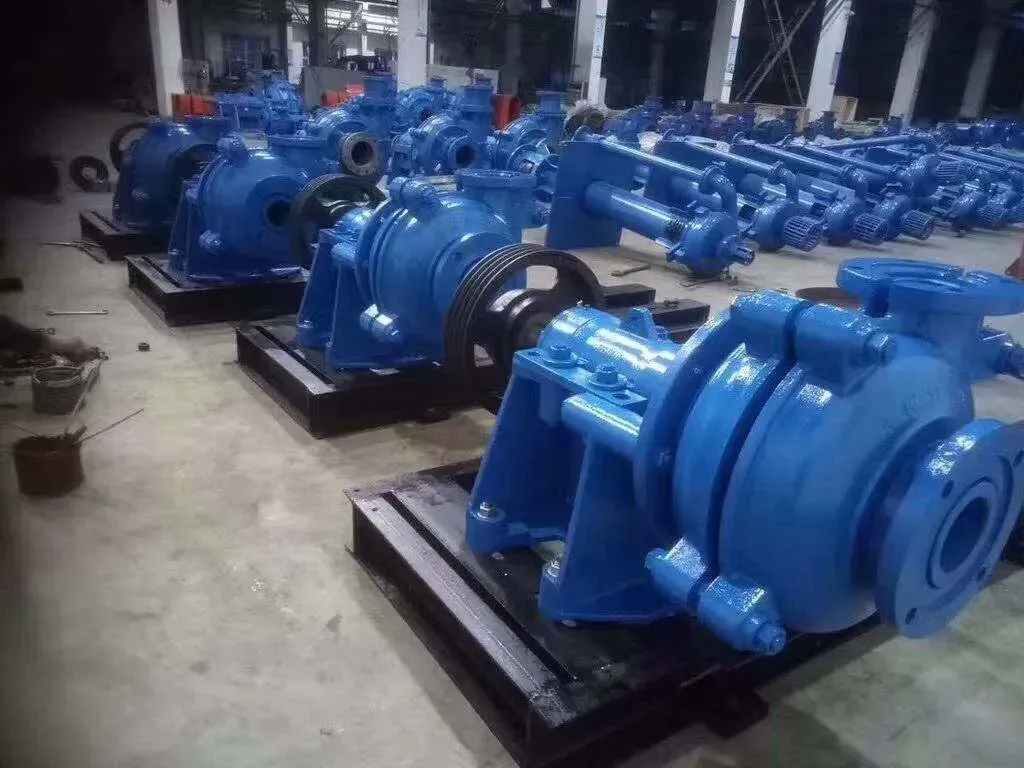
Slurry Pumping Services: Fluid Dynamics and Material Transport Specifications
Slurry pumping services encompass the engineering, design, and operational management of transporting non-Newtonian fluids consisting of solid particles suspended in a liquid carrier. In the industrial value chain, these services are critical for sectors such as mineral processing, wastewater treatment, oil and gas drilling, and chemical manufacturing. The primary technical objective is to maintain a stable suspension—preventing the settling of solids—while minimizing the abrasive wear on the pumping infrastructure. This requires a precise equilibrium between the critical carrying velocity (the minimum velocity required to prevent deposition) and the limiting velocity (the threshold beyond which abrasive wear increases exponentially). Effective slurry pumping is not merely about fluid displacement but involves the complex management of rheological properties, including apparent viscosity and yield stress, to optimize energy efficiency and equipment longevity.
Material Science & Manufacturing
The manufacturing of slurry pumping equipment is governed by the need to combat two primary degradation mechanisms: erosive wear and corrosive attack. Material selection is predicated on the hardness of the suspended solids and the chemical pH of the carrier fluid. High-chrome white irons (ASTM A532) are frequently employed for impeller and liner construction due to their high volume fraction of primary M7C3 carbides, which provide exceptional hardness (HRC 55-65). In environments where chemical corrosion accompanies abrasion, duplex stainless steels or specialized elastomer linings (such as Natural Rubber or Polyurethane) are utilized. Elastomers are particularly effective for fine-particle slurries, as they absorb the kinetic energy of impacting particles rather than resisting it through hardness.
Manufacturing processes for these components involve rigorous precision engineering. Investment casting is used for complex impeller geometries to ensure hydraulic efficiency and minimize turbulence, which can exacerbate localized wear. Heat treatment cycles are strictly controlled to optimize the martensitic matrix and carbide distribution. Furthermore, the integration of tungsten carbide inserts or ceramic coatings via Thermal Spray or Chemical Vapor Deposition (CVD) is applied to high-velocity zones. The structural integrity of the pump casing is often reinforced through heavy-wall casting and precision machining of the mating surfaces to ensure zero-leakage seals, which is paramount when handling hazardous or toxic slurries.
Performance & Engineering
Engineering a slurry pumping system requires a comprehensive analysis of the fluid's rheology. Slurries are typically categorized as Newtonian, pseudoplastic (shear-thinning), or dilatant (shear-thickening). For pseudoplastic slurries, the viscosity decreases as the shear rate increases, which is advantageous during high-velocity transport but complicates the startup phase where high yield stress may cause "plugging." Engineers apply the Durand equation to determine the critical deposition velocity, ensuring that the flow remains in the turbulent regime to keep particles entrained.
Force analysis focuses on the impact angle of the solids against the pump walls. Wear is typically maximized at impact angles between 20° and 40° for ductile materials and higher angles for brittle materials. To mitigate this, hydraulic design optimizes the flow path to maintain a smooth streamline, reducing the frequency of particle impingement. Furthermore, Net Positive Suction Head (NPSH) calculations are modified for slurries to account for the increased density and the potential for air entrainment, which can lead to cavitation. Cavitation in slurry services is particularly destructive, as it creates localized pressure drops that cause the collapse of vapor bubbles, leading to pitting and rapid failure of the metal substrate.
Technical Specifications
| Parameter Category | High-Chrome Alloy (ASTM A532) | Natural Rubber Lining | Duplex Stainless Steel | Tungsten Carbide Coated |
|---|---|---|---|---|
| Hardness (Vickers/HRC) | 600-800 HV / 58-62 HRC | 60-80 Shore A | 250-300 HV | 1500-2000 HV |
| Abrasion Resistance | Excellent (Coarse Solids) | Superior (Fine Solids) | Moderate | Extreme |
| Corrosion Resistance | Moderate | Excellent (Chemical) | High (Chloride/Acid) | Variable |
| Max Operating Temp | Up to 450°C | Up to 80°C | Up to 300°C | Up to 600°C |
| Impact Toughness | Low (Brittle) | Very High | High | Very Low |
| Typical Application | Mining Tailings | Fine Sand/Sludge | Chemical Slurry | Extreme Abrasives |
Failure Mode & Maintenance
The primary failure mode in slurry pumping is erosive wear, characterized by the gradual removal of material from the pump impeller and volute. This often manifests as "thinning" of the vanes, leading to a drop in hydraulic efficiency and an increase in recirculation. Another critical failure is seal degradation; abrasive particles infiltrating the mechanical seal faces cause rapid scoring and leakage. Fatigue cracking may also occur in the pump housing due to the cyclic loading induced by the passage of large, non-uniform solids (slugs), which create transient pressure spikes.
Professional maintenance involves a predictive strategy based on vibration analysis and wall-thickness monitoring using ultrasonic testing (UT). When the wall thickness reaches a predetermined minimum (the "wear limit"), liners must be replaced. Maintenance protocols emphasize the "run-to-maintenance" approach for liners but "preventative" for bearings and seals. Proper alignment of the pump and motor is essential to prevent premature bearing failure caused by the unbalanced loads typical of high-density slurry transport. Additionally, flushing systems must be implemented to ensure that the seal chamber remains clear of solids.
Industry FAQ
Q: How do you determine the correct pump speed to balance wear and efficiency?
A: We utilize the relationship between velocity and wear rate, where wear generally increases proportional to the cube of the velocity (V³). We calculate the critical carrying velocity (Vc) to prevent sedimentation and then set the operating velocity at approximately 1.2 to 1.5 times Vc to maximize efficiency while minimizing abrasive loss.
Q: When should we prioritize rubber lining over high-chrome alloys?
A: Rubber lining is superior when dealing with fine particles (typically < 0.5mm) and highly corrosive fluids. Because rubber is elastomeric, it absorbs the energy of fine particle impacts. High-chrome alloys are required for coarse, jagged particles that would simply cut through a rubber liner.
Q: What is the impact of slurry concentration (Cw) on pump NPSH?
A: As the concentration by weight (Cw) increases, the fluid density and viscosity rise, which increases the friction losses in the suction piping. This effectively reduces the available NPSH (NPSHa), increasing the risk of cavitation. We often mitigate this by increasing the suction pipe diameter or lowering the pump elevation.
Q: How is "settling velocity" managed in long-distance slurry pipelines?
A: We apply Stokes' Law for laminar flow or the Newton's Law for turbulent flow to determine the settling velocity of the largest particle size. The pipeline flow is then maintained above the critical deposition velocity to ensure particles remain suspended throughout the transport distance.
Q: What are the signs of "internal recirculation" due to wear?
A: The primary signs are a noticeable decrease in discharge pressure and a drop in the flow rate despite the pump running at full RPM. An increase in pump vibration and a shift in the power consumption curve (lower kW for the same flow) typically indicate that internal clearances have increased due to erosive wear.
Conclusion
Slurry pumping services represent a sophisticated intersection of fluid mechanics, metallurgy, and mechanical engineering. The ability to transport abrasive and corrosive materials efficiently depends on the rigorous selection of materials—balancing the hardness of chrome alloys with the resilience of elastomers—and the precise calculation of hydraulic parameters to avoid the pitfalls of sedimentation and excessive wear. A technically sound system is characterized by its adherence to critical velocity thresholds and the implementation of robust wear-monitoring protocols.
Looking forward, the industry is shifting toward "smart pumping" systems, integrating real-time sensors and AI-driven predictive maintenance to optimize power consumption and predict liner failure before catastrophic breach occurs. By prioritizing rheological precision and material science, operators can significantly extend the mean time between failures (MTBF) and reduce the total cost of ownership in heavy industrial applications.
-
sewage submersible pumps Material Science Manufacturing
News2026-05-16
-
sewage pump for basement toilet Performance Engineering
News2026-05-16
-
Sewage Ejector Pump Systems Performance Analysis
News2026-05-16
-
sewage effluent pump Material Science and Manufacturing
News2026-05-16
-
effluent pumps for septic tanks Material Science Manufacturing
News2026-05-16
-
Sewer Line Pump Material Science and Manufacturing
News2026-05-15
-
best sewage pump Performance Analysis
News2026-05-15
-
sewage pump for basement bathroom Performance and Engineering
News2026-05-15
-
submersible sewer pump Material Science and Manufacturing
News2026-05-15
-
septic tank sump pump Performance Analysis
News2026-05-15
-
effluent pump Performance and Engineering
News2026-05-14
-
basement waste pump Performance Analysis
News2026-05-14
-
sewage water pump Material Science and Manufacturing
News2026-05-14
-
Sewage Transfer Pump Performance Analysis
News2026-05-14
-
sewage submersible pump Performance Analysis
News2026-05-14




