English
- Afrikaans
- Albanian
- Amharic
- Arabic
- Armenian
- Azerbaijani
- Basque
- Belarusian
- Bengali
- Bosnian
- Bulgarian
- Catalan
- Cebuano
- Corsican
- Croatian
- Czech
- Danish
- Dutch
- English
- Esperanto
- Estonian
- Finnish
- French
- Frisian
- Galician
- Georgian
- German
- Greek
- Gujarati
- Haitian Creole
- hausa
- hawaiian
- Hebrew
- Hindi
- Miao
- Hungarian
- Icelandic
- igbo
- Indonesian
- irish
- Italian
- Japanese
- Javanese
- Kannada
- kazakh
- Khmer
- Rwandese
- Korean
- Kurdish
- Kyrgyz
- Lao
- Latin
- Latvian
- Lithuanian
- Luxembourgish
- Macedonian
- Malgashi
- Malay
- Malayalam
- Maltese
- Maori
- Marathi
- Mongolian
- Myanmar
- Nepali
- Norwegian
- Norwegian
- Occitan
- Pashto
- Persian
- Polish
- Portuguese
- Punjabi
- Romanian
- Russian
- Samoan
- Scottish Gaelic
- Serbian
- Sesotho
- Shona
- Sindhi
- Sinhala
- Slovak
- Slovenian
- Somali
- Spanish
- Sundanese
- Swahili
- Swedish
- Tagalog
- Tajik
- Tamil
- Tatar
- Telugu
- Thai
- Turkish
- Turkmen
- Ukrainian
- Urdu
- Uighur
- Uzbek
- Vietnamese
- Welsh
- Bantu
- Yiddish
- Yoruba
- Zulu

Telephone: +86 13120555503
Email: frank@cypump.com


Apr . 01, 2024 17:55 Back to list
slurry pumping handbook Fluid Dynamics and Material Specifications
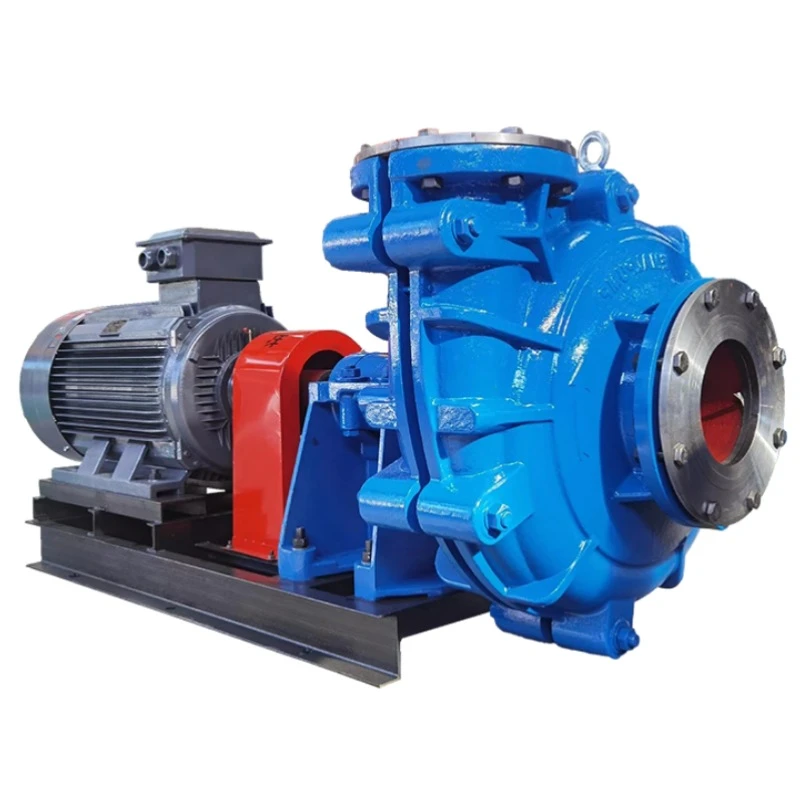
Slurry Pumping Handbook: Fluid Dynamics and Material Specifications
Slurry pumping refers to the specialized transport of non-Newtonian fluids consisting of a liquid carrier (usually water) and suspended solid particles. In the industrial chain, slurry pumps occupy a critical position between raw material extraction (mining, dredging) and downstream processing (leaching, smelting, wastewater treatment). The core technical challenge lies in managing the synergistic effects of abrasive wear, corrosive chemical environments, and the complex rheology of the slurry. Effective slurry transport requires a precise balance between the critical settling velocity—the minimum velocity required to keep solids in suspension—and the maximum permissible velocity to minimize erosive wear on pump internals. This guide analyzes the mechanical engineering and material science required to optimize the Total Cost of Ownership (TCO) in high-attrition pumping environments.
Material Science & Manufacturing
The selection of materials for slurry pumps is governed by the interplay between hardness, toughness, and chemical stability. Because slurry particles act as micro-abrasives, the pump's internal wetted parts must resist both sliding abrasion and impact wear. High-chrome white irons (ASTM A532) are widely employed for impellers and liners due to their high volume fraction of primary M7C3 carbides, which provide extreme hardness (typically 600-700 HB). However, for high-impact applications, such as pumping large boulders or coarse tailings, ductile iron or specialized rubber liners are preferred to prevent brittle fracture.
Manufacturing processes focus on maintaining metallurgical homogeneity. For centrifugal slurry pumps, investment casting is used to achieve tight tolerances in the impeller vanes, followed by precision machining of the wearing rings. Rubber lining involves a vulcanization process where high-grade natural rubber or synthetic elastomers are chemically bonded to the steel shell. This creates a sacrificial layer that absorbs the kinetic energy of impacting particles, effectively shifting the wear mechanism from erosion to slow ablation. Key parameter control during manufacturing includes the cooling rate of chrome alloys to prevent the formation of coarse carbides, which can lead to localized stress concentrations and premature cracking.
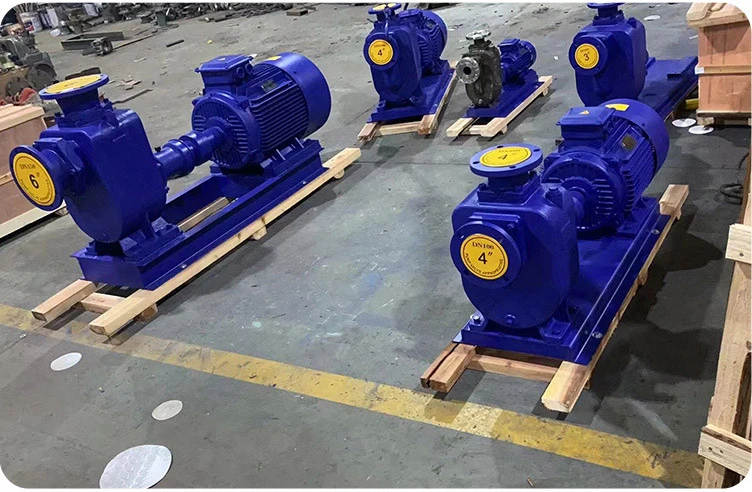
Performance & Engineering
Engineering a slurry system requires a deep understanding of fluid rheology. Slurries are often classified as Bingham plastics or pseudoplastic fluids, meaning their viscosity changes based on the shear rate. The critical engineering calculation is the determination of the Critical Deposit Velocity (Cdv). If the flow velocity drops below this threshold, solids settle at the bottom of the pipe, leading to "sanding" or complete blockage of the line. Conversely, excessive velocity leads to an exponential increase in wear rates, as erosion is typically proportional to the cube of the velocity (v³).
Force analysis within the pump involves managing the Net Positive Suction Head (NPSH). Slurries have a higher density than water, which increases the pressure drop across the suction line. To prevent cavitation—which is accelerated in slurry pumps because collapsing bubbles can strip away protective oxide layers on the metal—engineers must ensure a significant margin between NPSHa (available) and NPSHr (required). Furthermore, the impeller design must optimize the "discharge angle" to reduce turbulence and recirculation zones, as stagnant areas can lead to localized sedimentation and uneven wear patterns on the impeller shroud.
Technical Specifications
| Material Type | Hardness (Brinell/Shore) | Typical Application | Wear Resistance Rating |
|---|---|---|---|
| High-Chrome Alloy (27% Cr) | 600 - 700 HB | Fine Abrasive Slurries | Extreme (Sliding) |
| Natural Rubber (NR) | 60 - 80 Shore A | Coarse/High-Impact Slurries | High (Impact) |
| Duplex Stainless Steel | 250 - 350 HB | Corrosive Slurries (Acidic) | Moderate (Corrosion) |
| High-Alumina Ceramic | >1500 HV | Chemical Sludges/High Temp | Ultra-High (Abrasive) |
| Hardened Cast Iron | 200 - 300 HB | Low Concentration Slurries | Low to Moderate |
| Polyurethane Liner | 90 - 95 Shore A | Medium Abrasive/Oil Slurries | Moderate to High |
Failure Mode & Maintenance
Failure in slurry pumping systems generally falls into three categories: Erosive Wear, Corrosive Attack, and Mechanical Fatigue. Erosive wear is most prevalent at the impeller eye and the volute tongue, where fluid velocity and particle impact angles are highest. This results in a loss of hydraulic efficiency and a gradual decrease in the pump's head capacity. Corrosion-erosion synergy occurs when the slurry is chemically aggressive; the corrosive agent strips the passive film from the metal surface, leaving it exposed to rapid mechanical abrasion, which in turn exposes fresh metal to further corrosion.
Maintenance strategies must shift from reactive to predictive. Ultrasonic thickness testing (UT) is the industry standard for monitoring liner wear without dismantling the pump. For mechanical seals, the primary failure mode is "particle ingress," where solids enter the seal face, causing immediate scoring and leakage. The professional solution is the implementation of an external flush system (API Plan 32 or 54) to maintain a positive pressure barrier of clean water at the seal face. Regular vibration analysis is also essential to detect impeller imbalance caused by uneven wear, which can lead to bearing failure and shaft misalignment.
Industry FAQ
Q: How do we determine the correct impeller material for a specific slurry?
A: The decision is based on the particle size distribution and the impact energy. For fine particles (less than 0.5mm) and high velocities, high-chrome alloys are superior. For coarse particles (above 2mm) where impact energy is high, rubber liners or ductile irons are used to prevent the brittle fracturing associated with high-chrome alloys.
Q: Why does my slurry pump experience cavitation even when the NPSHa is theoretically sufficient?
A: In slurry applications, the presence of solids can trigger "pseudo-cavitation." High solids concentrations change the vapor pressure and can create localized low-pressure zones behind larger particles. Additionally, scaling or sedimentation in the suction line may be reducing the actual NPSHa below the design value.
Q: What is the most effective way to reduce the wear rate of the volute liner?
A: The most effective method is to maintain the pump's operating point as close to the Best Efficiency Point (BEP) as possible. Operating far to the left or right of the BEP increases internal turbulence and recirculation, which dramatically accelerates abrasive wear on the volute walls.
Q: When should I choose a positive displacement pump over a centrifugal slurry pump?
A: Positive displacement pumps (such as peristaltic or piston pumps) should be used for high-viscosity slurries, extremely high-concentration pastes, or when a precise, constant flow rate is required regardless of the discharge pressure.
Q: How does the pH value of the carrier liquid affect the choice of liner material?
A: pH levels dictate the chemical compatibility. High-chrome irons perform well in neutral or slightly alkaline environments but fail rapidly in acidic conditions. For low pH slurries, duplex stainless steels or specialized acid-resistant polymers must be used to prevent chemical leaching of the material matrix.
Conclusion
The technical integrity of a slurry pumping system depends on the rigorous integration of fluid dynamics and material science. By aligning the critical settling velocity with the wear characteristics of high-chrome alloys or elastomeric liners, engineers can significantly extend the Mean Time Between Failures (MTBF). The transition from basic centrifugal transport to an engineered slurry solution requires a holistic analysis of particle morphology, chemical synergy, and hydraulic efficiency.
Looking forward, the industry is moving toward "Smart Slurry Management," utilizing real-time sensors for wear monitoring and variable frequency drives (VFDs) to optimize flow rates dynamically. The goal is to minimize energy consumption while maximizing the lifespan of the wetted components, ensuring that slurry transport remains a sustainable and cost-effective link in the industrial processing chain.
-
sewage submersible pumps Material Science Manufacturing
News2026-05-16
-
sewage pump for basement toilet Performance Engineering
News2026-05-16
-
Sewage Ejector Pump Systems Performance Analysis
News2026-05-16
-
sewage effluent pump Material Science and Manufacturing
News2026-05-16
-
effluent pumps for septic tanks Material Science Manufacturing
News2026-05-16
-
Sewer Line Pump Material Science and Manufacturing
News2026-05-15
-
best sewage pump Performance Analysis
News2026-05-15
-
sewage pump for basement bathroom Performance and Engineering
News2026-05-15
-
submersible sewer pump Material Science and Manufacturing
News2026-05-15
-
septic tank sump pump Performance Analysis
News2026-05-15
-
effluent pump Performance and Engineering
News2026-05-14
-
basement waste pump Performance Analysis
News2026-05-14
-
sewage water pump Material Science and Manufacturing
News2026-05-14
-
Sewage Transfer Pump Performance Analysis
News2026-05-14
-
sewage submersible pump Performance Analysis
News2026-05-14




