English
- Afrikaans
- Albanian
- Amharic
- Arabic
- Armenian
- Azerbaijani
- Basque
- Belarusian
- Bengali
- Bosnian
- Bulgarian
- Catalan
- Cebuano
- Corsican
- Croatian
- Czech
- Danish
- Dutch
- English
- Esperanto
- Estonian
- Finnish
- French
- Frisian
- Galician
- Georgian
- German
- Greek
- Gujarati
- Haitian Creole
- hausa
- hawaiian
- Hebrew
- Hindi
- Miao
- Hungarian
- Icelandic
- igbo
- Indonesian
- irish
- Italian
- Japanese
- Javanese
- Kannada
- kazakh
- Khmer
- Rwandese
- Korean
- Kurdish
- Kyrgyz
- Lao
- Latin
- Latvian
- Lithuanian
- Luxembourgish
- Macedonian
- Malgashi
- Malay
- Malayalam
- Maltese
- Maori
- Marathi
- Mongolian
- Myanmar
- Nepali
- Norwegian
- Norwegian
- Occitan
- Pashto
- Persian
- Polish
- Portuguese
- Punjabi
- Romanian
- Russian
- Samoan
- Scottish Gaelic
- Serbian
- Sesotho
- Shona
- Sindhi
- Sinhala
- Slovak
- Slovenian
- Somali
- Spanish
- Sundanese
- Swahili
- Swedish
- Tagalog
- Tajik
- Tamil
- Tatar
- Telugu
- Thai
- Turkish
- Turkmen
- Ukrainian
- Urdu
- Uighur
- Uzbek
- Vietnamese
- Welsh
- Bantu
- Yiddish
- Yoruba
- Zulu

Telephone: +86 13120555503
Email: frank@cypump.com


Apr . 01, 2024 17:55 Back to list
Slurry Pump Working Principle Performance Analysis
Introduction
Slurry pumps are heavy-duty centrifugal pumps specifically designed for the transport of abrasive, corrosive, and erosive fluids – collectively known as slurries. Unlike clear fluid pumps, slurry pumps must contend with significant challenges posed by solid particle concentration, particle size distribution, and the chemical composition of the fluid. Their applications are vast, spanning industries like mining, wastewater treatment, dredging, chemical processing, and power generation. The core performance characteristics differentiating slurry pumps from standard centrifugal pumps revolve around their ability to handle high solids content without significant wear or clogging, maintain efficiency despite abrasive particle impact, and withstand the corrosive effects of the slurry composition. A key metric is the pump's ability to maintain sufficient head (pressure) and flow rate against increasing slurry density and particle size. This guide provides an in-depth examination of slurry pump working principles, material science, performance parameters, failure modes, and industry standards.
Material Science & Manufacturing
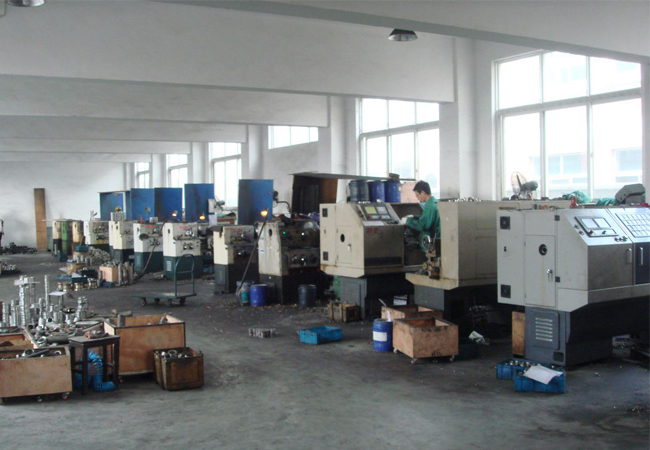
The material selection for slurry pump components is critical due to the highly abrasive and often corrosive nature of the handled media. Pump casings are frequently manufactured from high-chrome cast iron (typically containing 15-30% chromium) which provides excellent abrasion resistance. Impellers, being directly exposed to the slurry flow, require even greater wear resistance. Materials include high-chrome iron, white iron alloys (with a high carbide content), and specialized polymers like polyurethane and ceramic composites. Shafts are typically constructed from alloy steels (e.g., 4140, 4340) for high tensile strength and fatigue resistance, often with a hard facing on the wear areas. Elastomeric liners (rubber, polyurethane) are often used to protect the casing from corrosion and impact. Manufacturing processes heavily rely on casting for complex casing shapes and impeller designs. Precise sand casting followed by heat treatment is essential to achieve the desired material properties. Welding is used for joining components, demanding skilled welders proficient in high-strength alloy welding techniques to prevent cracking and ensure structural integrity. Impeller balancing is a crucial step; even slight imbalances can lead to premature bearing failure and vibration. Parameter control during casting – cooling rate, mold material, and chemical composition – significantly impacts the final microstructure and wear resistance of the components.

Performance & Engineering
Slurry pump performance is dictated by several interacting factors. Head (discharge pressure) is inversely proportional to the slurry density and solids concentration – increasing either reduces the pump’s capacity to lift the slurry. Flow rate, similarly, is affected. Cavitation, a significant concern in all centrifugal pumps, is exacerbated in slurries due to the increased density and potential for vapor lock. Net Positive Suction Head Required (NPSHr) is thus a critical parameter to consider; insufficient NPSH can lead to impeller damage. Force analysis within the pump reveals that impeller vanes experience both impact forces from the slurry particles and erosive wear due to the high-velocity slurry stream. Pump curves (head vs. flow rate) are specific to the slurry’s properties. Environmental resistance is crucial; pump casings must withstand external pressure and temperature fluctuations. Compliance requirements vary by region, but often involve adherence to hydraulic institute standards for pump performance testing and environmental regulations regarding material emissions. The pump’s mechanical seal design is paramount. Double mechanical seals with a barrier fluid are often employed to prevent slurry ingress and maintain sealing integrity. Volute casing design influences hydraulic efficiency and minimizes turbulence, reducing wear.
Technical Specifications
| Parameter | Units | Typical Range (Small Slurry Pump) | Typical Range (Large Slurry Pump) |
|---|---|---|---|
| Flow Rate | m³/h | 5 - 50 | 200 - 1000+ |
| Total Head | m | 10 - 40 | 50 - 200+ |
| Solids Handling Capacity | % by weight | Up to 30% | Up to 70% |
| Maximum Particle Size | mm | Up to 25 | Up to 150 |
| Pump Speed | RPM | 500 - 1500 | 500 - 1200 |
| Power | kW | 1.5 - 15 | 30 - 300+ |
Failure Mode & Maintenance
Slurry pump failures typically fall into several categories. Erosion is the most common, occurring on impeller vanes, casing liners, and diffusers. This is a gradual process but significantly reduces pump efficiency. Corrosion, depending on the slurry’s chemical composition, can lead to localized pitting and material loss. Fatigue cracking can occur in the shaft, impeller, or casing due to cyclic loading and vibration. Bearing failure is frequent, often caused by inadequate lubrication, misalignment, or excessive loading. Mechanical seal failure allows slurry ingress, damaging the seals and potentially the pump’s internal components. Cavitation damage manifests as pitting on the impeller vanes. Maintenance protocols include regular inspections for wear, lubrication of bearings, replacement of worn liners and impellers, and monitoring of vibration levels. Preventative maintenance programs should include periodic seal replacements, pump alignment checks, and slurry analysis to anticipate potential corrosion or erosion issues. Non-destructive testing methods like ultrasonic testing can detect cracks before they propagate. Proper slurry handling practices – minimizing air entrainment and controlling feed rate – are crucial for extending pump life. Regular monitoring of pump performance parameters (flow, head, power consumption) can detect deviations indicative of wear or internal damage.
Industry FAQ
Q: What are the primary differences between a slurry pump and a centrifugal pump designed for clean liquids?
A: Slurry pumps differ significantly in several key aspects. They are built with heavier-duty components, employ materials resistant to abrasion and corrosion, and often incorporate larger clearances to accommodate solids passage. Centrifugal pumps for clean liquids are optimized for high efficiency with low-viscosity fluids and typically lack the wear protection found in slurry pumps. Slurry pumps also commonly feature replaceable wear parts, a design rarely found in clean liquid pumps.
Q: How does the particle size distribution in a slurry impact pump selection?
A: Particle size distribution is a critical factor. Larger particle sizes require pumps with wider internal passages to prevent clogging. The pump's impeller design must also be tailored to handle larger particles without excessive wear. Higher concentrations of large particles necessitate more robust construction and potentially a lower pump speed to minimize impact forces.
Q: What is the role of the barrier fluid in a double mechanical seal used in slurry pumps?
A: The barrier fluid serves multiple purposes. It lubricates the seal faces, dissipates heat generated by friction, and prevents slurry ingress into the seal chamber. It also provides a positive pressure to keep the slurry away from the seals, extending their lifespan and preventing damage.
Q: How do you mitigate the risk of cavitation in a slurry pump?
A: Mitigating cavitation involves ensuring adequate NPSH (Net Positive Suction Head) available. This can be achieved by lowering the pump's location, increasing the suction pipe diameter, reducing the suction line length, or increasing the suction tank pressure. Proper impeller design and minimizing slurry viscosity can also help.
Q: What is the impact of slurry viscosity on pump performance?
A: Higher slurry viscosity increases frictional losses within the pump, reducing flow rate and head. It also increases the power required to operate the pump. Selecting a pump with a larger impeller diameter and potentially a lower speed can help overcome the effects of high viscosity.
Conclusion
Slurry pumps are specialized pieces of equipment vital to numerous industrial processes. Their performance and longevity are inextricably linked to careful material selection, robust manufacturing techniques, and a thorough understanding of slurry characteristics. Successfully operating slurry pumps requires not only proper pump selection based on process parameters but also a proactive maintenance strategy focused on wear monitoring, component replacement, and preventative measures to mitigate corrosion, erosion, and cavitation.
Future advancements in slurry pump technology are likely to focus on developing more wear-resistant materials, optimizing impeller designs for improved hydraulic efficiency, and incorporating smart sensors for real-time performance monitoring and predictive maintenance. Improved modeling and simulation techniques will enable more accurate pump selection and optimization for specific slurry applications. The increasing demand for sustainable industrial practices will also drive the development of more energy-efficient slurry pump systems.
-
Precision at the Pump: How Better Machining Protects Flow and Uptime
News2026-11-20
-
Why Pump Reliability Begins Before the First Drop of Fluid
News2026-11-20
-
Beyond the Pump: Designing Safer Access Around Critical Water Infrastructure
News2026-11-20
-
Why Pumping Stations Depend on the Infrastructure Beneath the Pumps
News2026-11-20
-
Beyond the Pump Room: How Smarter Loading Protects Industrial Equipment
News2026-11-19
-
When Pumps Stop: Designing More Resilient Power for Critical Pumping Systems
News2026-11-19
-
The Hidden Role of Dust and Gas Monitoring in Reliable Pump Operations
News2026-11-19
-
The Hidden Role of Mineral Compounds in Extending Industrial Pump Lifespan
News2026-10-12
-
Why Pump System Reliability Depends on Precision Hose Assembly Methods
News2026-09-15
-
How Advanced Imaging Films Are Transforming Pump Component Quality Control
News2026-08-25
-
How Advanced Filtration Protects Pump Systems from Premature Wear and Costly Downtime
News2026-08-25
-
How Steel Material Selection Drives Pump Reliability in Heavy-Duty Systems
News2026-08-25
-
Ensuring Pump System Efficiency: The Role of High-Quality Pipe Fittings and Tubing
News2026-08-24
-
Optimizing Fluid Dynamics and Material Consistency in Industrial Processing
News2026-08-18
-
Innovations and Challenges in Hydraulic Systems for Heavy Machinery
News2026-08-13




