English
- Afrikaans
- Albanian
- Amharic
- Arabic
- Armenian
- Azerbaijani
- Basque
- Belarusian
- Bengali
- Bosnian
- Bulgarian
- Catalan
- Cebuano
- Corsican
- Croatian
- Czech
- Danish
- Dutch
- English
- Esperanto
- Estonian
- Finnish
- French
- Frisian
- Galician
- Georgian
- German
- Greek
- Gujarati
- Haitian Creole
- hausa
- hawaiian
- Hebrew
- Hindi
- Miao
- Hungarian
- Icelandic
- igbo
- Indonesian
- irish
- Italian
- Japanese
- Javanese
- Kannada
- kazakh
- Khmer
- Rwandese
- Korean
- Kurdish
- Kyrgyz
- Lao
- Latin
- Latvian
- Lithuanian
- Luxembourgish
- Macedonian
- Malgashi
- Malay
- Malayalam
- Maltese
- Maori
- Marathi
- Mongolian
- Myanmar
- Nepali
- Norwegian
- Norwegian
- Occitan
- Pashto
- Persian
- Polish
- Portuguese
- Punjabi
- Romanian
- Russian
- Samoan
- Scottish Gaelic
- Serbian
- Sesotho
- Shona
- Sindhi
- Sinhala
- Slovak
- Slovenian
- Somali
- Spanish
- Sundanese
- Swahili
- Swedish
- Tagalog
- Tajik
- Tamil
- Tatar
- Telugu
- Thai
- Turkish
- Turkmen
- Ukrainian
- Urdu
- Uighur
- Uzbek
- Vietnamese
- Welsh
- Bantu
- Yiddish
- Yoruba
- Zulu

Telephone: +86 13120555503
Email: frank@cypump.com


Apr . 01, 2024 17:55 Back to list
Slurry Pump which pump is used for slurry Technical Performance Analysis
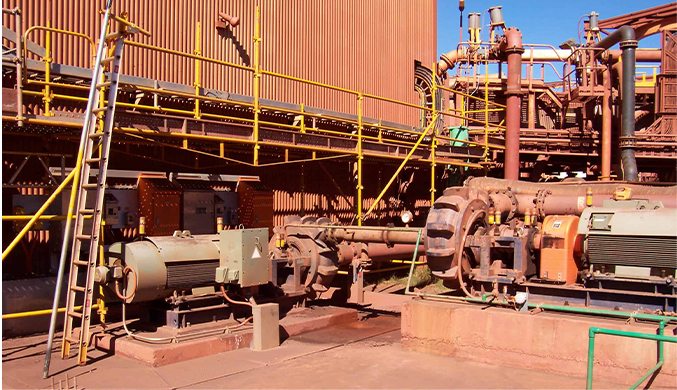
Slurry Pump Selection and Technical Performance Analysis
In industrial fluid dynamics, a slurry is defined as a non-Newtonian mixture comprising a liquid carrier (usually water) and suspended solid particles. Selecting the appropriate pump for slurry transport is a critical engineering decision, as the abrasive and corrosive nature of these fluids can lead to rapid component degradation and catastrophic system failure. The primary objective in slurry pumping is to maintain a velocity above the critical settling velocity to prevent sedimentation while minimizing the erosive wear caused by high-velocity particle impingement. Depending on the particle size distribution, concentration by volume (Cv), and chemical composition, the industry utilizes three primary categories of pumping technology: centrifugal slurry pumps, positive displacement pumps (such as peristaltic or diaphragm pumps), and progressive cavity pumps. This technical guide provides an exhaustive analysis of the material science, hydraulic engineering, and failure modes associated with slurry transport systems to ensure optimal operational longevity and efficiency.
Material Science & Manufacturing
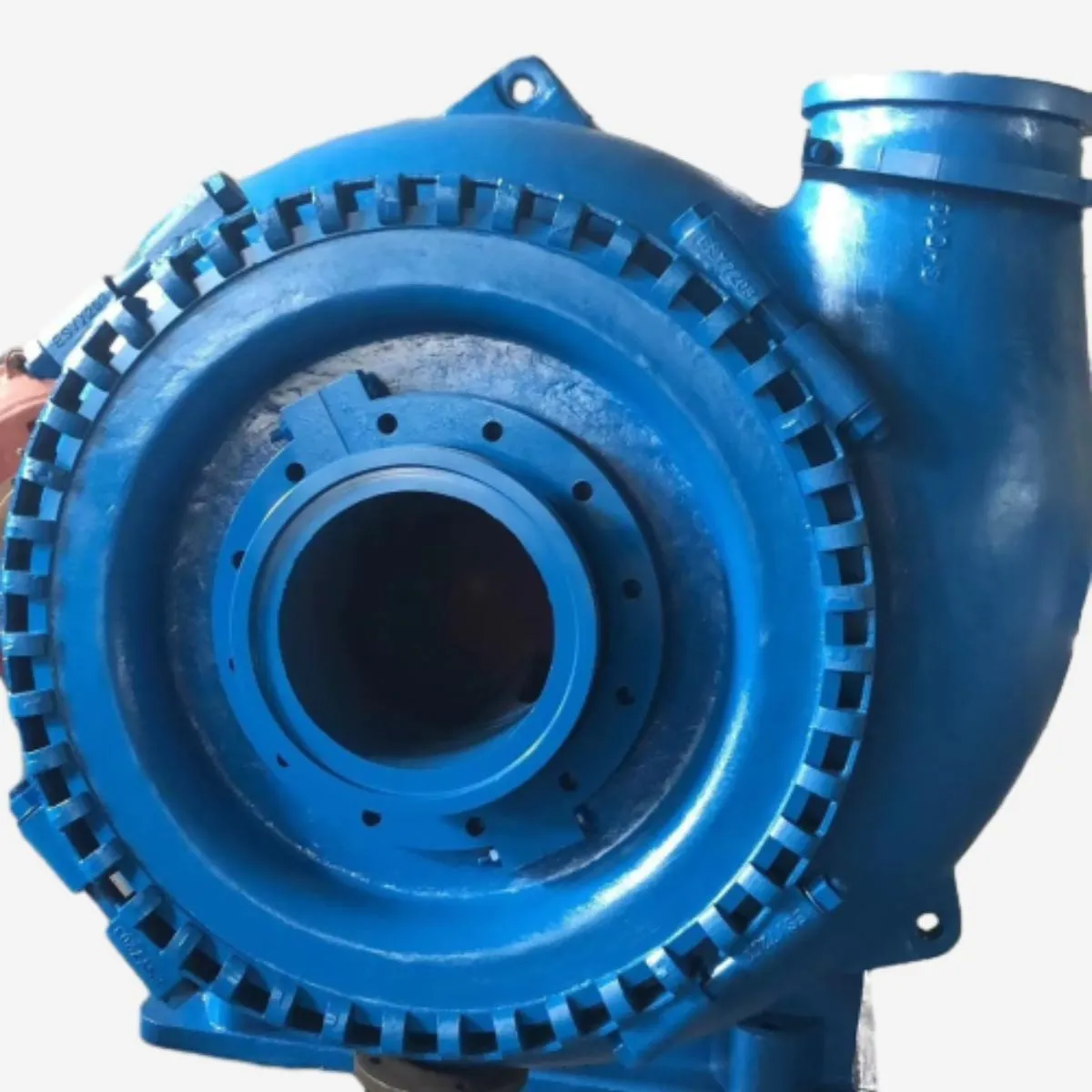
The manufacturing of slurry pumps focuses on the intersection of hardness and toughness. Because slurry particles act as micro-cutters against the pump internals, material selection is governed by the need to resist both abrasive wear and chemical corrosion. The internal wetted parts, specifically the impeller and volute liner, are typically engineered from high-chromium white irons (ASTM A532), which contain high percentages of chromium carbides (M7C3) to provide an extreme surface hardness (typically 55-65 HRC). For highly corrosive acidic slurries, duplex stainless steels or nickel-based alloys are employed to prevent pitting and stress corrosion cracking.
From a manufacturing perspective, the casting process is critical. Precision casting and controlled cooling rates are utilized to manage the microstructure of the alloy, preventing the formation of brittle phases that could lead to premature cracking under impact loading. In the case of centrifugal slurry pumps, the impeller geometry is optimized using Computational Fluid Dynamics (CFD) to minimize turbulence and "dead zones" where solids could accumulate. Furthermore, the application of elastomeric liners—constructed from natural rubber or nitrile (NBR)—is common for slurries containing fine, sharp particles. These liners operate on the principle of energy absorption; the elastomer allows the particle to penetrate the surface and bounce back, rather than cutting into the metal substrate. The bonding process between the metal housing and the rubber liner requires rigorous thermal vulcanization to ensure zero delamination under high-pressure differentials.
Performance & Engineering
The engineering of a slurry pumping system revolves around the balance between the "Settling Velocity" and the "Erosion Velocity." If the flow velocity falls below the critical settling velocity (Vs), particles will precipitate, leading to pipeline blockage and increased friction losses. Conversely, exceeding the erosion velocity leads to an exponential increase in the rate of material loss from the pump casing and impeller, as wear rate is typically proportional to the cube of the velocity (v³). Engineers must calculate the slurry density (ρs) and apparent viscosity (μa) to determine the Reynolds number for non-Newtonian flow, which dictates whether the flow is laminar or turbulent.
Another critical engineering dimension is the Net Positive Suction Head (NPSH). Slurries are prone to cavitation, particularly if the solids concentration is high. Cavitation in slurry pumps is doubly destructive; not only does the collapse of vapor bubbles erode the metal, but the resulting turbulence accelerates the impingement of solid particles on the impeller vanes. To mitigate this, engineers implement larger suction piping and optimize the pump's placement to maximize the static head. For high-viscosity slurries, positive displacement mechanisms are employed to provide a constant flow rate regardless of pressure fluctuations, utilizing a "squeezing" action that prevents the internal shearing of the fluid, thereby maintaining the integrity of the suspended solids.
Technical Specifications
| Pump Category | Primary Material | Max Solids Content (%) | Wear Resistance Mechanism | Typical Application | Maintenance Interval |
|---|---|---|---|---|---|
| Centrifugal (Hard Metal) | High-Cr White Iron | Up to 70% | Surface Hardness/Carbides | Mining Tailings | Medium |
| Centrifugal (Rubber Lined) | Natural Rubber/NBR | Up to 40% | Elastic Deformation | Fine Sand/Silica | High |
| Peristaltic (Hose) | Reinforced Elastomer | Up to 90% | Non-Contact Fluid Path | Chemical Sludge | Low (Hose replace) |
| Progressive Cavity | Stellite/NBR Rotor | Up to 60% | Low Shear/Low Velocity | Thick Paste/Sewage | Medium |
| Diaphragm (Pneumatic) | PTFE/Santoprene | Up to 50% | Flexible Membrane | Abrasive Chemicals | High |
| Vertical Turbine Slurry | Duplex Steel | Up to 30% | Hydraulic Optimization | Sump Drainage | Medium |
Failure Mode & Maintenance
The primary failure modes in slurry pumps are concentrated in three areas: abrasive wear, corrosive attack, and mechanical seal failure. Abrasive wear manifests as "grooving" in the volute or "thinning" of the impeller vanes. This is often caused by operating the pump too far from its Best Efficiency Point (BEP), which creates internal recirculation and high-velocity vortices that accelerate localized erosion. Failure analysis often reveals that the most severe wear occurs at the impeller eye and the discharge throat, where fluid velocity is highest.
Corrosion-erosion synergy is another complex failure mode. In many industrial slurries, the protective oxide layer of the metal is mechanically stripped away by the abrasive particles, exposing fresh metal to the corrosive medium. This cycle results in material loss rates significantly higher than either abrasion or corrosion acting alone. Additionally, mechanical seals often fail due to particle ingress into the seal faces, causing scoring and leakage. Professional maintenance protocols require the implementation of "Seal Flush Systems" (API Plan 32 or 54) to maintain a clean barrier between the slurry and the seal faces.
Preventative maintenance must include ultrasonic thickness testing (UT) of the pump casing to monitor wall thinning. Impellers should be inspected for cavitation pitting and imbalance. For rubber-lined pumps, the internal liners must be checked for "blistering" or delamination, which occurs when moisture or air is trapped between the liner and the metal shell during the vulcanization process or due to thermal expansion cycles.
Industry FAQ
Q: How do I determine the critical settling velocity for my specific slurry?
A: The critical settling velocity is calculated using a modified Stokes' Law or the Durand equation. It requires the particle diameter (d), the density of the solid (ρs), and the density of the liquid (ρl). The formula ensures that the upward force of the fluid flow overcomes the gravitational pull on the heaviest particles in the distribution to prevent pipeline sedimentation.
Q: When should I choose a rubber-lined pump over a high-chrome pump?
A: Rubber liners are superior for slurries containing fine, sharp particles (like silica sand) because they absorb the impact. High-chrome alloys are required for coarse, large particles or high-temperature slurries where rubber would soften or tear. If the particles are larger than 1-2mm, hard metal is generally the preferred choice.
Q: Why is my slurry pump experiencing premature seal failure despite using high-grade materials?
A: This is typically caused by "particle wedging" where solids enter the seal gap. To resolve this, you should install an external flush system (Clean Water Flush) to create a positive pressure barrier, ensuring that slurry cannot migrate into the seal chamber.
Q: Does the solids concentration affect the NPSH requirements?
A: Yes, significantly. An increase in solids concentration increases the apparent viscosity and density of the fluid, which increases the friction losses in the suction line. This reduces the available NPSH, increasing the risk of cavitation. You must increase the suction pipe diameter or lower the pump elevation relative to the source.
Q: Can a progressive cavity pump handle high-concentration abrasive slurries?
A: Yes, but with limitations. While they provide excellent low-shear transport and can handle very high concentrations, the rotor-stator interface is a high-friction zone. For abrasive slurries, you must use a hard-chrome plated or tungsten carbide coated rotor and a high-resilience elastomer stator to prevent rapid wear.
Conclusion
The selection of a slurry pump is not a simple procurement task but a complex engineering exercise that requires a deep understanding of the fluid's rheological properties and the mechanical limits of the materials. By balancing the critical settling velocity against the erosion threshold and selecting materials based on the specific abrasive-corrosive synergy of the medium, operators can maximize the Mean Time Between Failures (MTBF) and reduce total cost of ownership. The integration of CFD-optimized geometries and advanced wear-resistant alloys remains the gold standard for maintaining system stability in harsh industrial environments.
Looking forward, the industry is moving toward "smart slurry pumping," incorporating real-time vibration analysis and ultrasonic wear sensors to transition from scheduled maintenance to predictive maintenance. This evolution, combined with the development of nano-composite liners, promises to further extend the operational life of slurry transport systems, enhancing productivity in the mining, chemical, and waste management sectors.
-
sump pump for septic systems Material Science Manufacturing
News2026-05-20
-
sump pump and ejector pump Material Science Manufacturing
News2026-05-20
-
sewage treatment plant pumps Performance Analysis
News2026-05-20
-
sewage tank pump Material Science and Manufacturing
News2026-05-20
-
sewage pump for septic tank Performance Analysis
News2026-05-20
-
Sewage Pump and Tank Performance Analysis
News2026-05-19
-
Sewage Ejector Pump Replacement Performance Analysis
News2026-05-19
-
sewage ejector pump for basement bathroom Material Science Manufacturing
News2026-05-19
-
sewage ejection pump Material Science and Manufacturing
News2026-05-19
-
in line sewage pump Performance Analysis
News2026-05-19
-
effluent sump pump Performance Analysis
News2026-05-18
-
best grinder pump for sewage Performance Engineering
News2026-05-18
-
basement waste water pump Performance Engineering
News2026-05-18
-
sump pump sewer Performance Analysis
News2026-05-18
-
sump pump for sewer Performance Analysis
News2026-05-18




