English
- Afrikaans
- Albanian
- Amharic
- Arabic
- Armenian
- Azerbaijani
- Basque
- Belarusian
- Bengali
- Bosnian
- Bulgarian
- Catalan
- Cebuano
- Corsican
- Croatian
- Czech
- Danish
- Dutch
- English
- Esperanto
- Estonian
- Finnish
- French
- Frisian
- Galician
- Georgian
- German
- Greek
- Gujarati
- Haitian Creole
- hausa
- hawaiian
- Hebrew
- Hindi
- Miao
- Hungarian
- Icelandic
- igbo
- Indonesian
- irish
- Italian
- Japanese
- Javanese
- Kannada
- kazakh
- Khmer
- Rwandese
- Korean
- Kurdish
- Kyrgyz
- Lao
- Latin
- Latvian
- Lithuanian
- Luxembourgish
- Macedonian
- Malgashi
- Malay
- Malayalam
- Maltese
- Maori
- Marathi
- Mongolian
- Myanmar
- Nepali
- Norwegian
- Norwegian
- Occitan
- Pashto
- Persian
- Polish
- Portuguese
- Punjabi
- Romanian
- Russian
- Samoan
- Scottish Gaelic
- Serbian
- Sesotho
- Shona
- Sindhi
- Sinhala
- Slovak
- Slovenian
- Somali
- Spanish
- Sundanese
- Swahili
- Swedish
- Tagalog
- Tajik
- Tamil
- Tatar
- Telugu
- Thai
- Turkish
- Turkmen
- Ukrainian
- Urdu
- Uighur
- Uzbek
- Vietnamese
- Welsh
- Bantu
- Yiddish
- Yoruba
- Zulu

Telephone: +86 13120555503
Email: frank@cypump.com


Apr . 01, 2024 17:55 Back to list
Slurry Pump Types Technical Dimension and Performance Analysis
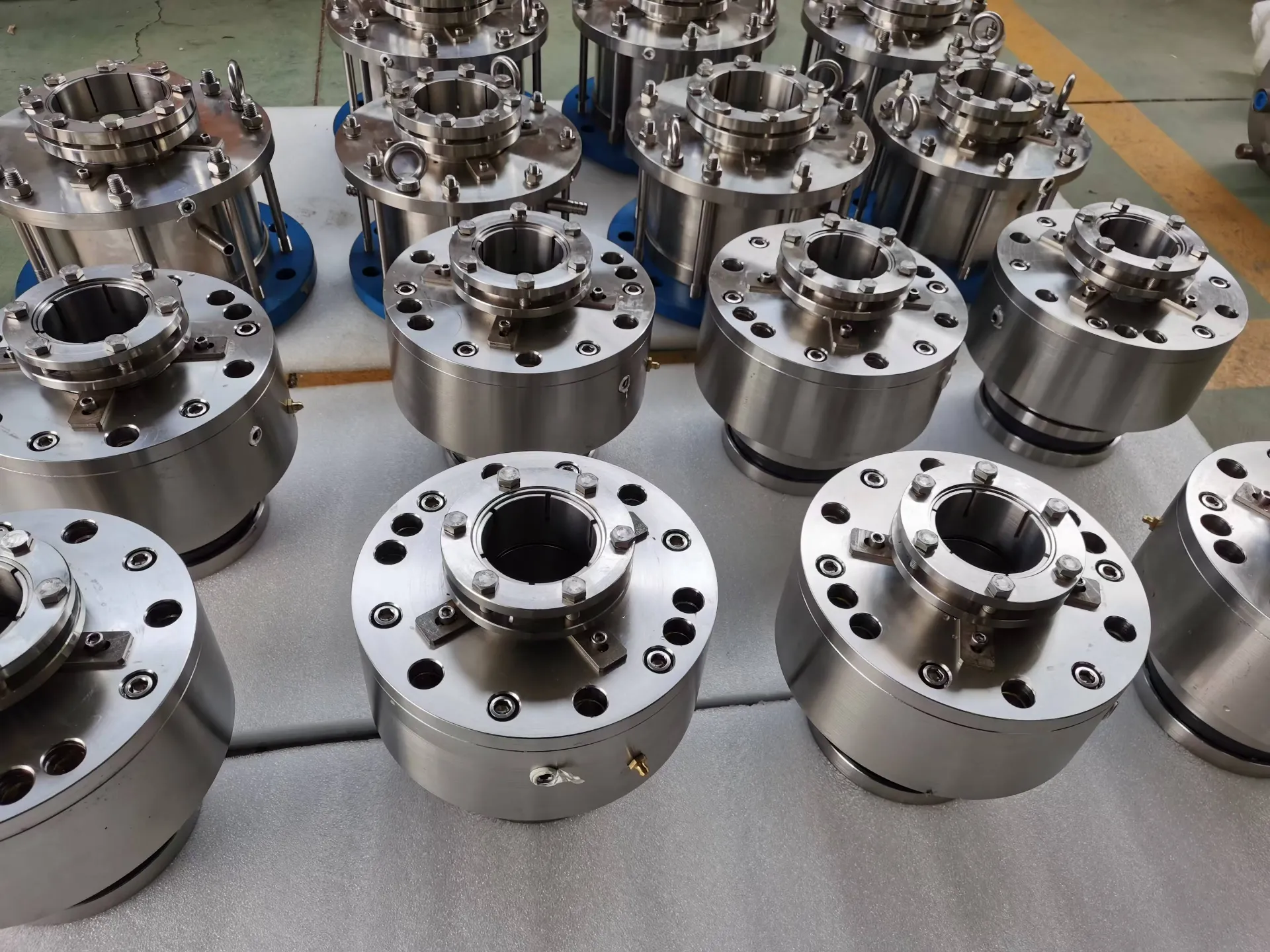
Slurry Pump Types: Technical Dimension and Performance Analysis
Slurry pumps are specialized centrifugal or positive displacement machines engineered to transport fluids containing suspended solid particles, ranging from fine silts to coarse abrasive ores. Within the industrial value chain, these pumps serve as the critical nexus between extraction/processing and refinement, typically found in mining, dredging, chemical processing, and wastewater treatment. Unlike standard water pumps, slurry pump types must address the dual challenges of hydrodynamic efficiency and extreme material erosion. The core technical position of these pumps involves balancing the Net Positive Suction Head required (NPSHr) against the high viscosity and density of the medium to prevent cavitation while maintaining a consistent flow rate. The performance of these systems is primarily dictated by the pump's ability to handle the "critical carrying velocity"—the minimum velocity required to keep solids in suspension—while minimizing the wear rate on internal components.
Material Science & Manufacturing
The manufacturing of slurry pumps is centered on the mitigation of abrasive wear and corrosive attack. The selection of materials is governed by the Hardness-Toughness trade-off; materials must be hard enough to resist the scouring action of particles but tough enough to withstand impact from larger solids.
High-Chromium Alloys: For high-pressure, high-abrasion environments, ASTM A532 Type II or III high-chromium white irons (25% to 28% Cr) are utilized. These materials form a hard network of M7C3 carbides within a martensitic matrix, providing exceptional resistance to sliding abrasion. The manufacturing process involves precise heat treatment and quenching to optimize the carbide distribution.
Natural and Synthetic Elastomers: In applications involving fine particles at high velocities, rubber linings (Natural Rubber or Polyurethane) are employed. These materials operate on the principle of elastic deformation; the rubber absorbs the kinetic energy of the impacting particle and rebounds, effectively "pushing" the particle away from the surface. Polyurethane is specifically selected for its superior resistance to oils and chemicals compared to natural rubber.
Duplex Stainless Steels: In corrosive slurry environments (e.g., acidic mine drainage), Duplex steels (e.g., CD4MCu) provide a balanced microstructure of austenite and ferrite, offering higher yield strength and superior pitting resistance (PREN) compared to standard 316L stainless steel.
Manufacturing Precision: The casting process for impellers involves investment casting or sand casting with stringent control over shrinkage and porosity. Dynamic balancing is performed to ISO 1940 standards to minimize vibration, which would otherwise accelerate seal failure and bearing wear in heavy-duty operations.
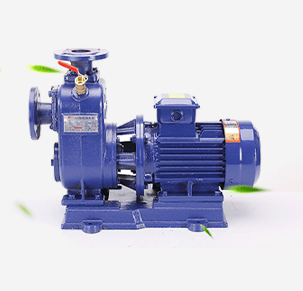
Performance & Engineering
Engineering a slurry pumping system requires a comprehensive analysis of the fluid's rheology. Slurry is typically classified as either Newtonian or Non-Newtonian (Bingham Plastic or Pseudoplastic). For Non-Newtonian slurries, the apparent viscosity changes with the shear rate, necessitating a shift in pump selection and motor sizing.
Hydraulic Design: The impeller geometry is a critical performance driver. Open impellers are used for coarse solids to prevent clogging, while semi-open impellers provide a compromise between efficiency and solids-handling capability. The "shroudless" design reduces the risk of particle accumulation in the impeller periphery.
Force Analysis and Cavitation: Cavitation in slurry pumps is more destructive than in clean water pumps because the collapsing vapor bubbles occur in the presence of abrasive solids, leading to "micro-jetting" that rapidly erodes the metal surface. Engineering calculations must ensure that NPSHa (Available) is significantly higher than NPSHr (Required), accounting for the increased friction losses caused by solid-liquid interaction.
Sealing Engineering: To prevent the abrasive slurry from contaminating the bearing housing, advanced sealing solutions are implemented. This include expelled seals (which push the slurry away from the shaft) and double mechanical seals with an external pressurized flush (API Plan 53 or 54) to maintain a barrier between the process fluid and the atmosphere.
Technical Specifications
| Pump Category | Typical Material | Max Solid Size (mm) | Wear Resistance Rating |
|---|---|---|---|
| Heavy-Duty Slurry | High-Cr White Iron | 100 - 150 | Extreme (Abrasive) |
| Rubber-Lined Centrifugal | Natural Rubber/NR | 20 - 50 | High (Fine Particle) |
| Corrosive Slurry | Duplex Stainless Steel | 10 - 30 | Moderate (Chemical) |
| Positive Displacement | Tungsten Carbide Coated | 5 - 20 | High (High Viscosity) |
| Dredging Pump | Hardened Alloy Steel | 200 - 300 | High (Impact) |
| Chemical Slurry | PVDF / PTFE Lined | 2 - 10 | High (Acidic/Basic) |
Failure Mode & Maintenance
Failure analysis of slurry pumps typically reveals four primary modes of degradation:
1. Abrasive Wear (Erosion): Occurs when particles slide across the surface, removing material through micro-cutting. This is most prevalent at the impeller vane tips and the volute tongue. Maintenance requires the implementation of scheduled liner replacements and the use of wear plates to protect the pump casing.
2. Cavitation Erosion: Identified by "pitting" on the suction side of the impeller. This is caused by insufficient suction pressure. The solution involves lowering the pump installation height or increasing the suction pipe diameter to reduce friction losses.
3. Fatigue Cracking: Resulting from cyclic loading and vibration, often exacerbated by operating the pump too far from the Best Efficiency Point (BEP). Precision laser alignment of the pump and motor shafts is the primary preventative measure.
4. Seal Leakage and Oxidation: Failure of the mechanical seal leads to slurry ingress into the bearing housing, causing rapid oxidation and bearing seizure. Maintenance protocols must include daily monitoring of seal flush pressure and vibration analysis using accelerometers.
Industry FAQ
Q: How do we determine the correct impeller material for a slurry with 40% solids by weight?
A: We evaluate the Mohs hardness of the solids and the particle size distribution. For coarse, hard particles (>100 microns), High-Chrome alloys are mandatory. For fine particles (<100 microns) at high velocities, rubber lining is superior due to its resilience. If the slurry is also acidic, a Duplex stainless steel or a specialized polymer lining is required.
Q: What is the impact of slurry density on the motor power requirements?
A: Increasing the density increases the specific gravity of the fluid, which directly increases the brake horsepower (BHP) required to maintain the same flow rate. The power calculation must incorporate the slurry's specific gravity (Sg) and the correction factor for the increased viscosity of the suspension.
Q: Why is the pump vibrating excessively despite being newly installed?
A: This is often caused by "unbalanced slurry loading" or operating too far to the left of the pump curve. When a slurry pump operates at low flow, the solids can accumulate in the volute, creating hydraulic imbalance. We recommend adjusting the VFD or checking the suction line for air entrainment.
Q: How do you calculate the critical carrying velocity for a given slurry type?
A: We utilize the Durand equation or the modified Equal Velocity method. This involves calculating the settling velocity of the largest particles in the mix. The operating velocity must be maintained at approximately 1.2 to 1.5 times the settling velocity to prevent solids from depositing in the pipeline.
Q: When should we prefer a positive displacement pump over a centrifugal slurry pump?
A: Positive displacement pumps (e.g., peristaltic or piston pumps) are preferred when dealing with extremely high viscosities, very high discharge pressures, or when a constant flow rate is required regardless of pressure fluctuations. Centrifugal pumps are superior for high-volume, lower-viscosity applications.
Conclusion
The selection and operation of slurry pump types are fundamentally governed by the interplay between material science and fluid dynamics. The transition from standard hydraulic transport to slurry transport necessitates a shift in focus toward erosion-corrosion synergy and the management of non-Newtonian fluid behavior. By optimizing the selection of high-chromium alloys and elastomers based on particle morphology, and ensuring strict adherence to NPSH requirements, operators can significantly extend the Mean Time Between Failures (MTBF) and reduce the total cost of ownership.
Looking forward, the integration of IoT-based vibration monitoring and real-time wear sensors will allow for predictive maintenance, moving the industry away from scheduled replacements toward condition-based interventions. As global mining and processing move toward more complex and lower-grade ores, the demand for pumps capable of handling higher solids concentrations and more aggressive chemical profiles will drive further innovation in composite materials and computational fluid dynamics (CFD) optimization.
-
sewage submersible pumps Material Science Manufacturing
News2026-05-16
-
sewage pump for basement toilet Performance Engineering
News2026-05-16
-
Sewage Ejector Pump Systems Performance Analysis
News2026-05-16
-
sewage effluent pump Material Science and Manufacturing
News2026-05-16
-
effluent pumps for septic tanks Material Science Manufacturing
News2026-05-16
-
Sewer Line Pump Material Science and Manufacturing
News2026-05-15
-
best sewage pump Performance Analysis
News2026-05-15
-
sewage pump for basement bathroom Performance and Engineering
News2026-05-15
-
submersible sewer pump Material Science and Manufacturing
News2026-05-15
-
septic tank sump pump Performance Analysis
News2026-05-15
-
effluent pump Performance and Engineering
News2026-05-14
-
basement waste pump Performance Analysis
News2026-05-14
-
sewage water pump Material Science and Manufacturing
News2026-05-14
-
Sewage Transfer Pump Performance Analysis
News2026-05-14
-
sewage submersible pump Performance Analysis
News2026-05-14




