English
- Afrikaans
- Albanian
- Amharic
- Arabic
- Armenian
- Azerbaijani
- Basque
- Belarusian
- Bengali
- Bosnian
- Bulgarian
- Catalan
- Cebuano
- Corsican
- Croatian
- Czech
- Danish
- Dutch
- English
- Esperanto
- Estonian
- Finnish
- French
- Frisian
- Galician
- Georgian
- German
- Greek
- Gujarati
- Haitian Creole
- hausa
- hawaiian
- Hebrew
- Hindi
- Miao
- Hungarian
- Icelandic
- igbo
- Indonesian
- irish
- Italian
- Japanese
- Javanese
- Kannada
- kazakh
- Khmer
- Rwandese
- Korean
- Kurdish
- Kyrgyz
- Lao
- Latin
- Latvian
- Lithuanian
- Luxembourgish
- Macedonian
- Malgashi
- Malay
- Malayalam
- Maltese
- Maori
- Marathi
- Mongolian
- Myanmar
- Nepali
- Norwegian
- Norwegian
- Occitan
- Pashto
- Persian
- Polish
- Portuguese
- Punjabi
- Romanian
- Russian
- Samoan
- Scottish Gaelic
- Serbian
- Sesotho
- Shona
- Sindhi
- Sinhala
- Slovak
- Slovenian
- Somali
- Spanish
- Sundanese
- Swahili
- Swedish
- Tagalog
- Tajik
- Tamil
- Tatar
- Telugu
- Thai
- Turkish
- Turkmen
- Ukrainian
- Urdu
- Uighur
- Uzbek
- Vietnamese
- Welsh
- Bantu
- Yiddish
- Yoruba
- Zulu

Telephone: +86 13120555503
Email: frank@cypump.com


Apr . 01, 2024 17:55 Back to list
Slurry Pump Suppliers Manufacturing Specifications and Performance Analysis
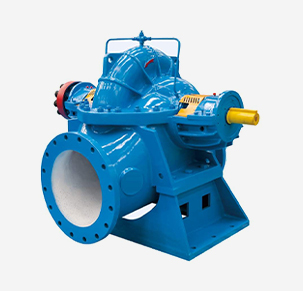
Slurry Pump Manufacturing Specifications and Performance Analysis
Slurry pumps are specialized centrifugal machinery engineered to transport fluids containing high concentrations of suspended solid particles, ranging from abrasive mineral tailings to corrosive chemical slurries. In the industrial supply chain, these pumps occupy a critical position between the primary extraction/processing phase and the waste management or downstream refining phases. The core technical challenge for slurry pump suppliers is the mitigation of extreme erosive wear and corrosive degradation. Performance is primarily measured by the pump's ability to maintain hydraulic efficiency while resisting the kinetic energy of abrasive particles. This requires a sophisticated synergy between impeller geometry, casing metallurgy, and seal integrity to ensure operational longevity in environments where standard centrifugal pumps would fail within hours.
Material Science & Manufacturing
The manufacturing of industrial slurry pumps centers on the mastery of tribology and material science. To combat abrasive wear, suppliers utilize a spectrum of high-performance alloys and elastomers. High-chromium cast irons (typically 25% to 28% Cr) are the industry standard for high-pressure applications due to the formation of primary M7C3 carbides, which provide extreme hardness. For applications involving high acidity or alkalinity combined with abrasion, duplex stainless steels or nickel-based alloys are employed to provide a synergistic resistance to both electrochemical corrosion and physical erosion.
The manufacturing process begins with precision investment casting or sand casting of the volute and impeller. Key parameter control involves the cooling rate of the cast metal to ensure a fine, uniform carbide distribution, preventing "soft spots" that would lead to premature localized wear. Following casting, components undergo rigorous heat treatment—including quenching and tempering—to achieve the desired Rockwell C hardness (typically HRC 58-65 for high-chrome parts). Precision machining is then applied to the wearing plates and impeller vanes, utilizing CNC grinding to ensure tight tolerances that minimize internal recirculation and turbulence, which are primary catalysts for accelerated erosion.
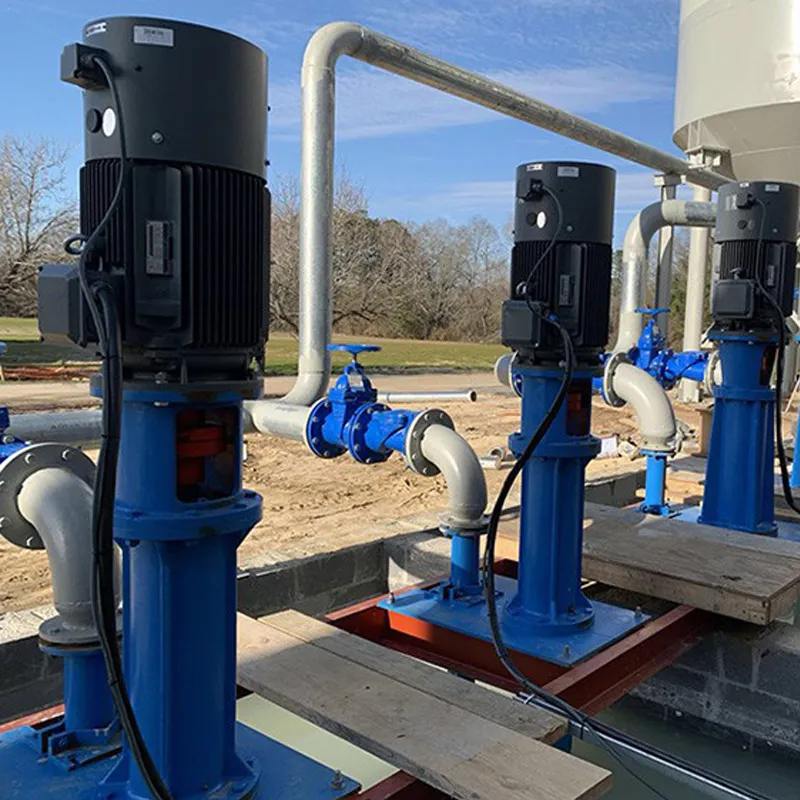
Performance & Engineering
Engineering a slurry pump requires an exhaustive force analysis of the fluid-solid interaction. The primary engineering concern is the "Critical Settling Velocity," the minimum velocity required to keep solid particles suspended to prevent pipe blockage and localized turbulence. Engineers must optimize the Net Positive Suction Head required (NPSHr) to prevent cavitation, which in slurry applications is catastrophic as the collapsing vapor bubbles can strip away the protective oxide layers of the metal, exposing fresh material to rapid erosion.
Functional implementation involves the strategic design of the impeller—specifically the transition from open to semi-open or closed vanes depending on the particle size distribution. The discharge velocity is meticulously calculated to balance the trade-off between energy consumption and wear rates; higher velocities increase throughput but exponentially increase the erosion rate (often proportional to the cube of the velocity). Furthermore, the integration of advanced sealing systems, such as expeller seals or mechanical seals with external flushing, is critical to prevent the ingress of abrasive particles into the bearing housing, which would otherwise lead to immediate mechanical seizure.
Technical Specifications
| Material Grade | Hardness (HRC) | Corrosion Resistance | Application Profile |
|---|---|---|---|
| High Chrome Alloy (A05) | 60 - 65 | Moderate | High-abrasion mineral tailings |
| Duplex Stainless Steel | 25 - 35 | Excellent | Corrosive chemical slurries |
| Natural Rubber (NR) | N/A (Shore A) | Good | Fine particle, high-impact wear |
| Hardened Steel (ASTM A216) | 30 - 45 | Low | General industrial sludge |
| Ceramic Linings (Al2O3) | > 80 | High | Extreme abrasive/Chemical attack |
| Nickel-Alloy (Hastelloy) | 20 - 30 | Superior | Highly acidic mining effluents |
Failure Mode & Maintenance
Failure analysis in slurry pumps generally identifies four primary modes: erosive wear, corrosive pitting, cavitation damage, and seal failure. Erosive wear occurs when the kinetic energy of particles exceeds the yield strength of the material surface, leading to material removal through micro-cutting. Corrosive pitting is often a result of localized breakdown of the passive layer, common in chloride-rich environments. Cavitation is evidenced by "pock-marked" surfaces on the impeller vanes, usually caused by inadequate suction head or excessive fluid temperature.
Professional maintenance protocols necessitate a transition from reactive to predictive maintenance. This includes the implementation of vibration analysis to detect bearing wear and ultrasonic thickness testing of the volute liner to determine the remaining wall thickness. Maintenance solutions include the installation of replaceable wear liners (sacrificial components) that protect the main pump casing. When liners reach their wear limit, they must be replaced to prevent "burn-through" of the structural shell. Additionally, regular alignment checks using laser tools are mandatory to prevent shaft deflection, which accelerates seal degradation and increases mechanical fatigue.
Industry FAQ
Q: How do you determine the optimal material selection for a specific slurry density?
A: Selection is based on a matrix of particle hardness (Mohs scale), pH levels, and particle size. For high-density, large-particle slurries, high-chrome alloys are preferred. For fine-particle, high-velocity slurries, elastomers like natural rubber provide better resilience by absorbing the impact energy rather than resisting it through hardness.
Q: What is the impact of slurry viscosity on the pump's hydraulic efficiency?
A: Increased viscosity increases the friction losses within the pump casing and piping, resulting in a decrease in the total head and a reduction in efficiency. This requires the selection of a motor with a higher power rating to overcome the increased viscous drag and maintain the required flow rate.
Q: How can we differentiate between cavitation damage and erosive wear during inspection?
A: Cavitation damage typically appears as localized, deep "pits" or "spongy" textures, often concentrated at the impeller eye or the leading edge of the vanes. Erosive wear is more uniform and presents as a gradual thinning of the material or "grooving" aligned with the direction of the fluid flow.
Q: Why is the NPSHr critical in slurry applications compared to clean water?
A: Slurries have different vapor pressures and densities than clean water. The presence of solids can trigger nucleation sites for bubbles, increasing the likelihood of cavitation. If the NPSH available is not significantly higher than the NPSH required, the resulting cavitation will accelerate the erosion of the impeller exponentially.
Q: What are the benefits of using an expeller seal over a traditional gland packing?
A: Expeller seals use a centrifugal action to create a pressure barrier that pushes the slurry away from the shaft, eliminating the need for constant leakage (which is required for cooling gland packing). This reduces water consumption, prevents slurry ingress into bearings, and significantly extends the Mean Time Between Failures (MTBF).
Conclusion
The operational efficacy of slurry pumping systems is fundamentally dependent on the precision of material selection and the rigorous application of fluid dynamic engineering. By aligning metallurgical properties—such as the use of high-chromium alloys and duplex steels—with the specific abrasive and corrosive characteristics of the medium, industrial operators can significantly reduce the Total Cost of Ownership (TCO) and minimize unplanned downtime.
Looking forward, the integration of IoT-based condition monitoring and advanced computational fluid dynamics (CFD) will allow for the real-time optimization of pump speeds and flow regimes. Suppliers must continue to evolve toward "smart" pumping solutions that can autonomously adjust to fluctuations in slurry density, thereby maximizing component lifespan and ensuring sustainable industrial processing.
-
Sewer Line Pump Material Science and Manufacturing
News2026-05-15
-
best sewage pump Performance Analysis
News2026-05-15
-
sewage pump for basement bathroom Performance and Engineering
News2026-05-15
-
submersible sewer pump Material Science and Manufacturing
News2026-05-15
-
septic tank sump pump Performance Analysis
News2026-05-15
-
effluent pump Performance and Engineering
News2026-05-14
-
basement waste pump Performance Analysis
News2026-05-14
-
sewage water pump Material Science and Manufacturing
News2026-05-14
-
Sewage Transfer Pump Performance Analysis
News2026-05-14
-
sewage submersible pump Performance Analysis
News2026-05-14
-
sewage pumps for basements Material Science Manufacturing
News2026-05-13
-
sewage pump systems Performance and Engineering
News2026-05-13
-
sewage grinding pump Material Science and Manufacturing
News2026-05-13
-
ejector pumps for sewage Performance Analysis
News2026-05-13
-
effluent pump vs sump pump Performance Analysis
News2026-05-13




