English
- Afrikaans
- Albanian
- Amharic
- Arabic
- Armenian
- Azerbaijani
- Basque
- Belarusian
- Bengali
- Bosnian
- Bulgarian
- Catalan
- Cebuano
- Corsican
- Croatian
- Czech
- Danish
- Dutch
- English
- Esperanto
- Estonian
- Finnish
- French
- Frisian
- Galician
- Georgian
- German
- Greek
- Gujarati
- Haitian Creole
- hausa
- hawaiian
- Hebrew
- Hindi
- Miao
- Hungarian
- Icelandic
- igbo
- Indonesian
- irish
- Italian
- Japanese
- Javanese
- Kannada
- kazakh
- Khmer
- Rwandese
- Korean
- Kurdish
- Kyrgyz
- Lao
- Latin
- Latvian
- Lithuanian
- Luxembourgish
- Macedonian
- Malgashi
- Malay
- Malayalam
- Maltese
- Maori
- Marathi
- Mongolian
- Myanmar
- Nepali
- Norwegian
- Norwegian
- Occitan
- Pashto
- Persian
- Polish
- Portuguese
- Punjabi
- Romanian
- Russian
- Samoan
- Scottish Gaelic
- Serbian
- Sesotho
- Shona
- Sindhi
- Sinhala
- Slovak
- Slovenian
- Somali
- Spanish
- Sundanese
- Swahili
- Swedish
- Tagalog
- Tajik
- Tamil
- Tatar
- Telugu
- Thai
- Turkish
- Turkmen
- Ukrainian
- Urdu
- Uighur
- Uzbek
- Vietnamese
- Welsh
- Bantu
- Yiddish
- Yoruba
- Zulu

Telephone: +86 13120555503
Email: frank@cypump.com


Apr . 01, 2024 17:55 Back to list
Slurry Pump Specifications Engineering Analysis and Performance Standards
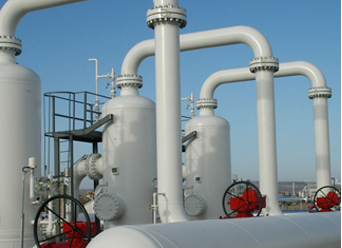
Slurry Pump Specifications: Engineering Analysis and Performance Standards
Slurry pumps are specialized centrifugal machines designed to transport fluids containing high concentrations of suspended solid particles, ranging from fine silts to coarse mineral ores. In the industrial value chain, these pumps serve as the critical interface between extraction and processing, where the fluid dynamics transition from simple liquid transport to the management of non-Newtonian rheological behaviors. The technical specifications of a slurry pump are not merely nominal values but are critical engineering constraints that determine the Mean Time Between Failure (MTBF) and the overall operational efficiency of a mining or chemical plant. Core performance is defined by the pump's ability to maintain a specific volumetric flow rate and total dynamic head (TDH) while resisting the extreme abrasive and corrosive forces exerted by the slurry's solid phase. The intersection of metallurgy, hydraulic design, and mechanical sealing constitutes the foundation of these specifications, ensuring that the equipment can handle specific gravities far exceeding that of pure water.
Material Science & Manufacturing
The manufacturing of slurry pumps necessitates a profound understanding of tribology and material science to combat the synergistic effects of erosion and corrosion. The primary challenge is "abrasive wear," where hard particles impact the pump internals, causing micro-cutting and plastic deformation. To mitigate this, the wetted parts—specifically the impeller and volute liner—are manufactured from high-chrome alloys (typically 27% Cr) or natural rubber compounds.
High-chrome white irons are produced through a controlled casting process to create a matrix of hard M7C3 carbides embedded in a martensitic matrix. This microstructure provides the necessary hardness (typically 600-650 HB) to resist the scouring action of mineral slurries. Conversely, for finer particles with high impact energy, elastomeric liners made of polyurethane or natural rubber are utilized. These materials employ a mechanism of "resilient deformation," where the material absorbs the energy of the particle impact and rebounds, thereby reducing the material loss rate compared to brittle metals.
Manufacturing precision is maintained through CNC machining of the shaft and housing to ensure tight tolerances, which minimizes internal leakage and prevents the premature failure of the mechanical seals. The casting process involves rigorous cooling rate control to prevent the formation of internal stresses or porosity, which could lead to catastrophic structural failure under the high-pressure conditions typical of slurry transport. Furthermore, the integration of heavy-duty bearings and reinforced housings ensures that the pump can withstand the radial loads induced by the asymmetric forces of slurry flow.
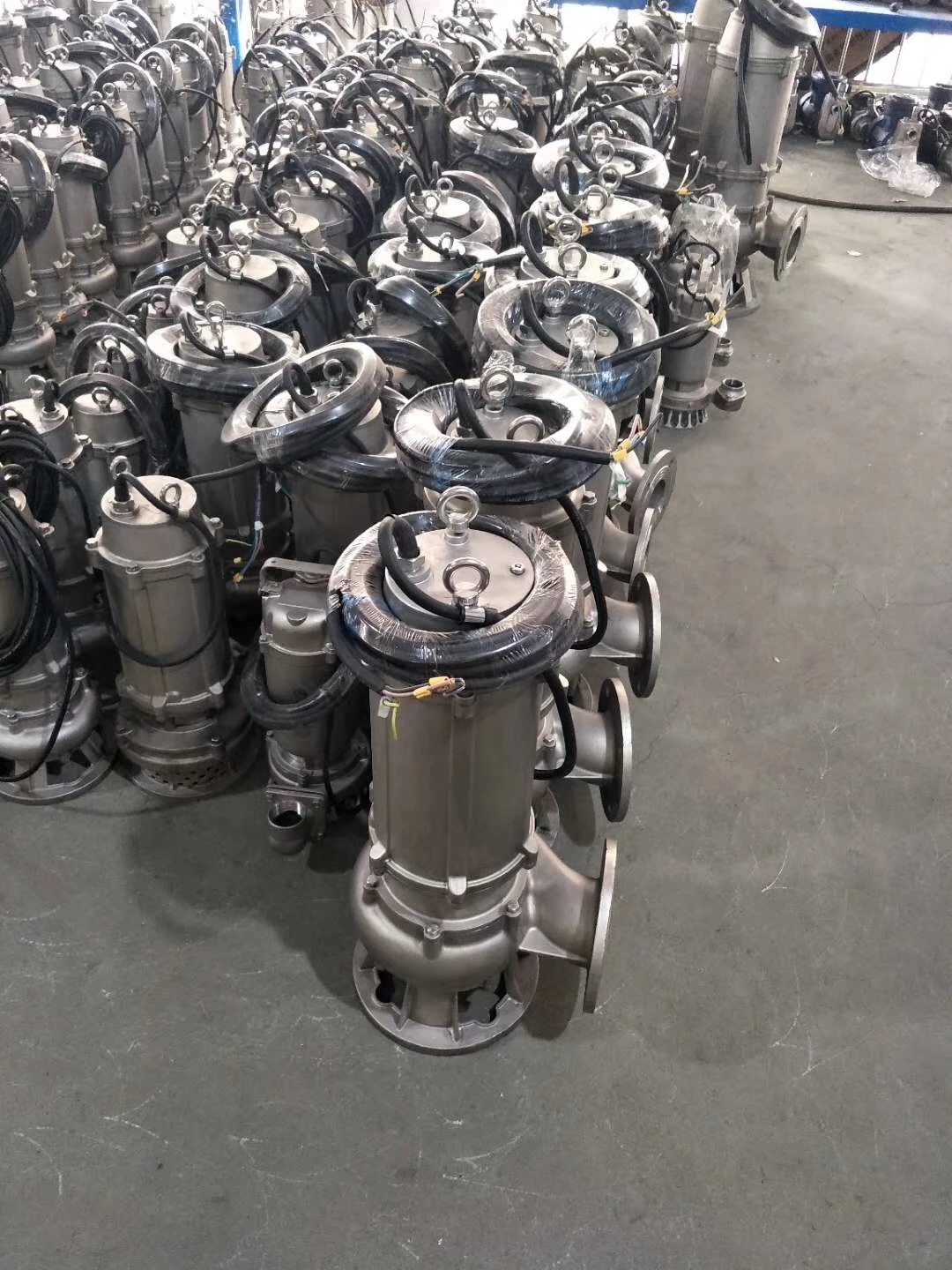
Performance & Engineering
Engineering a slurry pump requires a complex force analysis centered on the interaction between the fluid velocity and the particle kinetic energy. The most critical engineering parameter is the "Critical Settling Velocity," which is the minimum flow speed required to keep solids suspended in the pipeline. If the actual flow velocity drops below this threshold, sedimentation occurs, leading to pipeline blockage and increased frictional head loss.
The hydraulic design focuses on optimizing the impeller geometry to reduce turbulence and "dead zones" where solids can accumulate. The use of semi-open or closed impellers is determined by the particle size distribution (PSD) of the slurry; larger particles require wider vanes to prevent clogging. From a force analysis perspective, the pump must account for the increased density of the fluid, as the power requirement is directly proportional to the specific gravity of the slurry. The formula for brake horsepower (BHP) must be adjusted by a slurry correction factor to avoid motor overload.
Environmental resistance is another pivotal engineering consideration. In chemical mining, the pump must resist chemical attack (such as sulfuric acid leaching) while simultaneously resisting abrasion. This requires the application of duplex stainless steels or specialized coatings. Compliance requirements dictate that the pump must meet stringent vibration standards to prevent fatigue in the coupling and piping systems, especially when operating at the edges of the Best Efficiency Point (BEP).
Technical Specifications
| Pump Model Series | Max Flow Rate (m³/h) | Max Head (m) | Liner Material Options | Impeller Type | Max Particle Size (mm) |
|---|---|---|---|---|---|
| Heavy-Duty Series A | 1200 | 110 | High-Chrome Alloy / Rubber | Closed / Semi-Open | 15 - 30 |
| Medium-Duty Series B | 600 | 80 | High-Chrome Alloy | Closed | 10 - 20 |
| Compact Series C | 250 | 50 | Natural Rubber / Polyurethane | Open | 5 - 12 |
| High-Pressure Series D | 400 | 150 | Duplex Stainless / Ceramic | Closed | 3 - 8 |
| Ultra-Wear Series E | 800 | 90 | Tungsten Carbide Coated | Semi-Open | 20 - 40 |
| Eco-Flow Series F | 1500 | 60 | Hardened Alloy | Open | 12 - 25 |
Failure Mode & Maintenance
Failure analysis of slurry pumps typically reveals three primary degradation modes: abrasive wear, cavitational erosion, and mechanical seal failure. Abrasive wear is characterized by the gradual thinning of the liner and impeller vanes, which leads to a progressive drop in discharge pressure and flow rate. This is often exacerbated by "particle impingement," where solids strike the surface at high angles, causing micro-fractures in the material matrix.
Cavitational erosion occurs when the Net Positive Suction Head Available (NPSHa) falls below the Net Positive Suction Head Required (NPSHr). This creates vapor bubbles that collapse violently against the impeller surface, creating localized high-pressure shocks that can pit even the hardest alloys. This failure mode is often misidentified as abrasion, but it is distinguished by the presence of "honeycomb" pitting patterns on the suction side of the impeller.
Maintenance strategies must transition from reactive to predictive. This involves the implementation of vibration monitoring to detect bearing wear and the use of ultrasonic thickness gauges to monitor liner wear without dismantling the pump. Professional maintenance involves the precise alignment of the pump-motor shaft to within 0.05mm to prevent premature fatigue cracking of the shaft. When replacing liners, it is imperative to ensure a flush fit to prevent "grooving," where slurry leaks behind the liner and erodes the pump casing rapidly.
Industry FAQ
Q: How do I determine whether to use a rubber liner or a high-chrome alloy liner for my specific slurry?
A: The choice depends on the particle size and the nature of the abrasive. Rubber liners are superior for fine, sharp particles (sands) and high-impact applications due to their elasticity. High-chrome alloys are required for coarse, hard minerals (quartz, ores) where the particles would cut through rubber quickly. A general rule is: if the particle size is under 0.1mm, rubber is often more durable; above 0.5mm, high-chrome is preferred.
Q: Why is my slurry pump experiencing a rapid decline in head despite the motor running at full speed?
A: This is a classic symptom of impeller wear or an increase in the internal clearance between the impeller and the wear plate. As the material erodes, the "slip" increases, meaning more fluid recirculates within the pump rather than being discharged. Check the wear plate thickness and the impeller vane profile for signs of severe abrasion.
Q: What is the impact of slurry density on the pump's power requirements?
A: Slurry density significantly increases the power demand. Since the pump must move a mass greater than that of water, the brake horsepower increases linearly with the specific gravity of the fluid. Additionally, the viscosity of the slurry increases frictional losses in the impeller and volute, requiring a higher torque from the motor to maintain the same RPM.
Q: How can I prevent cavitation in high-solid-content applications?
A: To prevent cavitation, increase the NPSHa by raising the slurry tank level or reducing the suction lift. Lowering the fluid temperature (if applicable) and reducing suction pipe friction by increasing pipe diameter or reducing bends are also effective. Ensure the suction strainer is clean to prevent pressure drops at the inlet.
Q: What are the signs of imminent mechanical seal failure in a slurry pump?
A: The primary indicator is leakage at the gland or seal face, often accompanied by an increase in operating temperature at the seal housing. In slurry applications, "face scoring" occurs if particles bypass the flush system and enter the seal faces. If you notice an increase in vibration or a change in the sound profile of the pump, the seal or bearings may be compromised.
Conclusion
The selection and operation of slurry pumps are governed by the precise alignment of technical specifications with the rheological properties of the transported medium. The synergy between high-chrome metallurgy and optimized hydraulic geometry ensures that the system can withstand the extreme abrasive forces inherent in industrial mining and chemical processing. By focusing on the critical parameters of critical settling velocity, specific gravity, and material hardness, engineers can optimize the lifecycle of the equipment and minimize unscheduled downtime.
Looking forward, the industry is moving toward the integration of smart sensors for real-time wear monitoring and the development of nano-composite liners to further extend MTBF. It is recommended that operators implement a rigorous predictive maintenance schedule and conduct periodic failure analysis to refine material selection based on actual site conditions, thereby ensuring sustainable and efficient slurry transport operations.
-
Sewer Line Pump Material Science and Manufacturing
News2026-05-15
-
best sewage pump Performance Analysis
News2026-05-15
-
sewage pump for basement bathroom Performance and Engineering
News2026-05-15
-
submersible sewer pump Material Science and Manufacturing
News2026-05-15
-
septic tank sump pump Performance Analysis
News2026-05-15
-
effluent pump Performance and Engineering
News2026-05-14
-
basement waste pump Performance Analysis
News2026-05-14
-
sewage water pump Material Science and Manufacturing
News2026-05-14
-
Sewage Transfer Pump Performance Analysis
News2026-05-14
-
sewage submersible pump Performance Analysis
News2026-05-14
-
sewage pumps for basements Material Science Manufacturing
News2026-05-13
-
sewage pump systems Performance and Engineering
News2026-05-13
-
sewage grinding pump Material Science and Manufacturing
News2026-05-13
-
ejector pumps for sewage Performance Analysis
News2026-05-13
-
effluent pump vs sump pump Performance Analysis
News2026-05-13




