English
- Afrikaans
- Albanian
- Amharic
- Arabic
- Armenian
- Azerbaijani
- Basque
- Belarusian
- Bengali
- Bosnian
- Bulgarian
- Catalan
- Cebuano
- Corsican
- Croatian
- Czech
- Danish
- Dutch
- English
- Esperanto
- Estonian
- Finnish
- French
- Frisian
- Galician
- Georgian
- German
- Greek
- Gujarati
- Haitian Creole
- hausa
- hawaiian
- Hebrew
- Hindi
- Miao
- Hungarian
- Icelandic
- igbo
- Indonesian
- irish
- Italian
- Japanese
- Javanese
- Kannada
- kazakh
- Khmer
- Rwandese
- Korean
- Kurdish
- Kyrgyz
- Lao
- Latin
- Latvian
- Lithuanian
- Luxembourgish
- Macedonian
- Malgashi
- Malay
- Malayalam
- Maltese
- Maori
- Marathi
- Mongolian
- Myanmar
- Nepali
- Norwegian
- Norwegian
- Occitan
- Pashto
- Persian
- Polish
- Portuguese
- Punjabi
- Romanian
- Russian
- Samoan
- Scottish Gaelic
- Serbian
- Sesotho
- Shona
- Sindhi
- Sinhala
- Slovak
- Slovenian
- Somali
- Spanish
- Sundanese
- Swahili
- Swedish
- Tagalog
- Tajik
- Tamil
- Tatar
- Telugu
- Thai
- Turkish
- Turkmen
- Ukrainian
- Urdu
- Uighur
- Uzbek
- Vietnamese
- Welsh
- Bantu
- Yiddish
- Yoruba
- Zulu

Telephone: +86 13120555503
Email: frank@cypump.com


Apr . 01, 2024 17:55 Back to list
Slurry Pump Specification Performance Analysis
Introduction
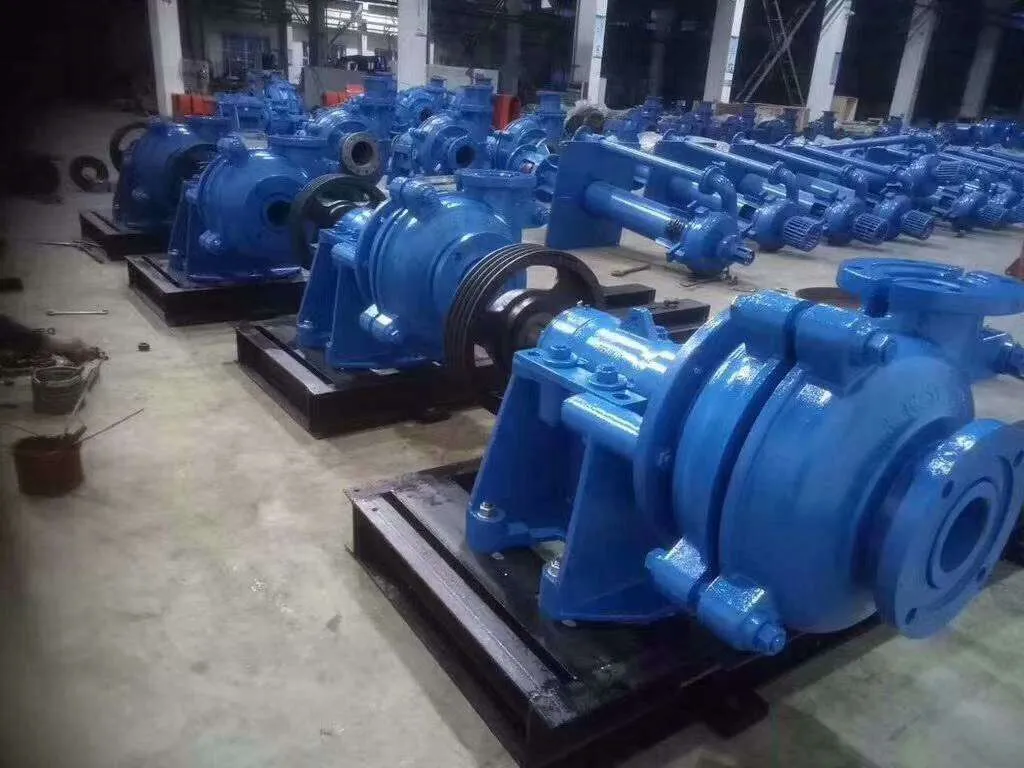
Slurry pump specification refers to the precise engineering parameters and material requirements dictated by the transport of non-Newtonian fluids containing suspended solid particles. In the industrial chain, these pumps serve as the critical kinetic link between extraction and processing in mining, dredging, and chemical manufacturing. Unlike standard centrifugal pumps, a slurry pump must be specifically engineered to handle high abrasive loads, corrosive chemical environments, and varying fluid densities. The core performance of these machines is defined by their ability to maintain volumetric efficiency while resisting the erosive wear caused by the impingement of solids against the impeller and volute. Engineering specifications must account for the critical settling velocity of the solids to prevent pipeline blockage and pump cavitation, ensuring a stable mass flow rate under extreme hydraulic loads.
Material Science & Manufacturing
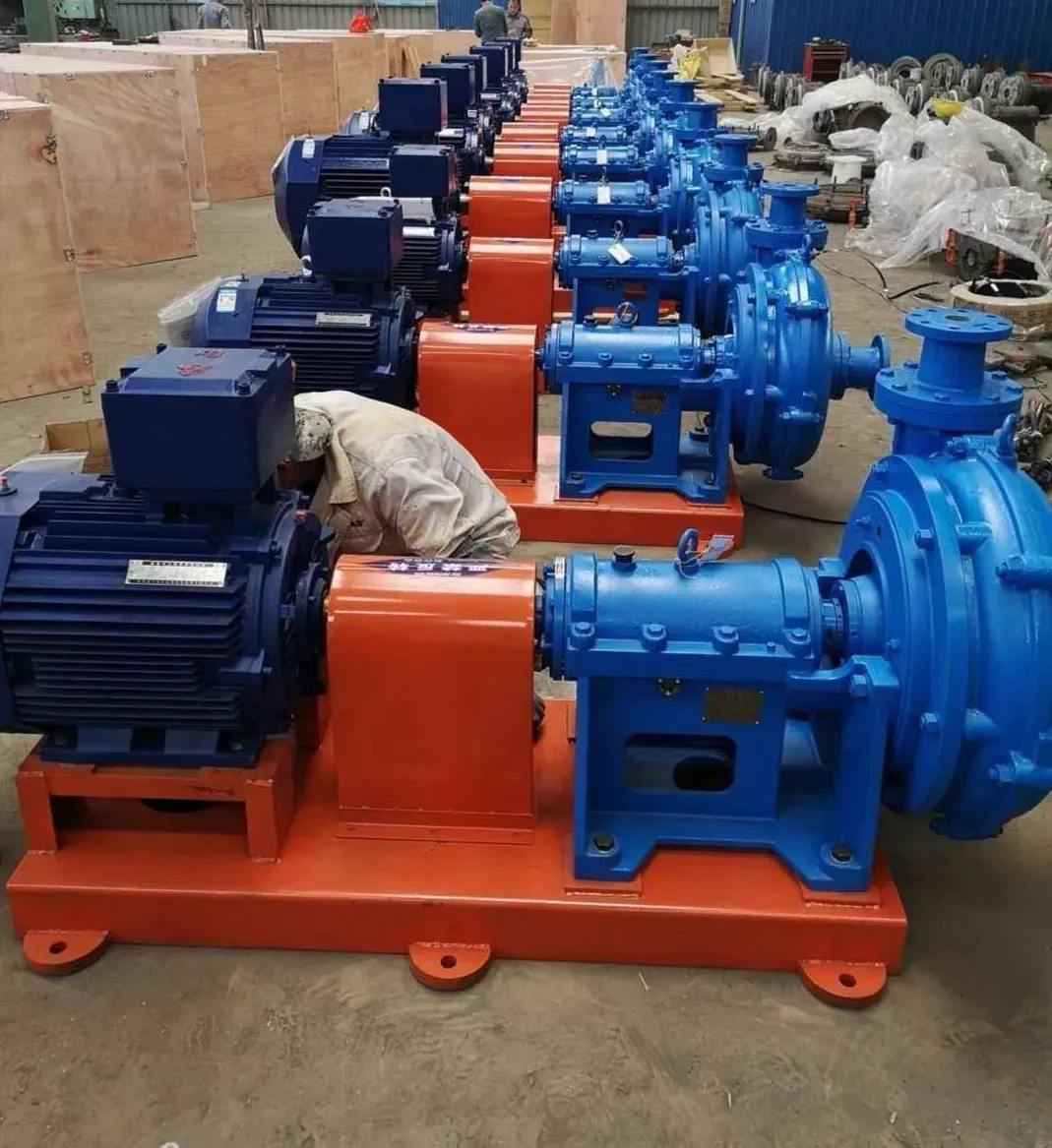
The selection of materials for slurry pump specifications is governed by the trade-off between hardness and toughness. The primary failure mechanism in these pumps is abrasive wear, which occurs through micro-cutting and plastic deformation of the surface. To counteract this, high-chrome white irons (ASTM A532) are utilized, typically featuring a martensitic matrix with embedded M7C3 carbides, providing a Rockwell C hardness often exceeding 60 HRC. For highly corrosive environments, duplex stainless steels or specialized rubber linings (natural rubber or nitrile) are employed. Rubber linings operate on the principle of elastic deformation; they absorb the kinetic energy of impacting particles and "bounce" them back, which is significantly more effective for fine-particle slurries compared to hard metals.
Manufacturing processes focus on minimizing turbulence and eliminating structural weak points. Investment casting is frequently used for impellers to ensure precise geometric tolerances and balanced mass distribution, reducing vibration-induced fatigue. The internal surfaces undergo rigorous grinding and polishing to reduce surface roughness (Ra), as any protrusion can act as a nucleation point for cavitation or accelerated erosion. Furthermore, the welding of wear plates involves specialized pre-heating and post-weld heat treatment (PWHT) to prevent the formation of brittle zones that could lead to catastrophic stress cracking under the high-pressure pulses characteristic of slurry transport.
Performance & Engineering
Engineering a slurry pump requires a deep analysis of fluid dynamics, specifically the interaction between the liquid carrier and the solid phase. A critical specification is the Net Positive Suction Head Required (NPSHr). Because slurries have higher densities than water, the risk of cavitation is amplified; if the pressure drops below the vapor pressure of the liquid, bubbles form and collapse violently, causing pitting on the impeller vanes. Engineers must calculate the "Critical Velocity," the minimum speed at which solids remain suspended. If the flow rate drops below this threshold, solids settle, leading to "sanding" of the pump and eventual motor overload.
Force analysis is also paramount. The radial thrust on the shaft is significantly higher in slurry pumps due to the asymmetric pressure distribution in the volute when operating away from the Best Efficiency Point (BEP). To mitigate this, heavy-duty bearings and reinforced shaft sleeves are specified. Compliance requirements often dictate the use of mechanical seals with external flushing systems (API Plan 32 or 54) to prevent abrasive particles from entering the seal faces, which would otherwise lead to immediate seal failure and leakage of hazardous materials.
Technical Specifications
| Pump Model Series | Max Flow Rate (m³/h) | Max Head (m) | Material Composition | Max Particle Size (mm) | Operating Temp (°C) |
|---|---|---|---|---|---|
| Heavy-Duty Mining S1 | 1200 | 80 | High-Chrome Alloy (27% Cr) | 15 | -10 to 90 |
| Corrosive Chemical C2 | 450 | 60 | Duplex Stainless Steel | 5 | -20 to 120 |
| Fine Particle Rubber R3 | 800 | 40 | Natural Rubber Lined | 2 | -10 to 60 |
| High-Pressure Slurry H4 | 300 | 150 | Tungsten Carbide Insert | 8 | -10 to 100 |
| Dredging Specialist D5 | 2500 | 30 | Hardened Cast Iron | 40 | 0 to 40 |
| Industrial Waste W6 | 600 | 50 | Alloy Steel / Polyurethane | 12 | -10 to 70 |
Failure Mode & Maintenance
Failure analysis of slurry pumps typically identifies three primary modes: erosive wear, cavitation pitting, and mechanical seal degradation. Erosive wear occurs most aggressively at the impeller eye and the volute tongue, where fluid velocity is highest. When the material's hardness is lower than the particles' hardness, the surface undergoes rapid mass loss. Cavitation manifests as "sponge-like" pitting on the suction side of the impeller, caused by the implosion of vapor bubbles. Mechanical seal failure is usually the result of "particle wedging," where solids bypass the flush system and lodge between the stationary and rotating faces, creating a grinding effect that destroys the polished surface.
Professional maintenance protocols necessitate a predictive approach. Ultrasonic thickness testing should be performed on the volute casing at scheduled intervals to monitor the wear rate and predict the remaining useful life (RUL). Impellers must be dynamically balanced after any repair or weld overlay to prevent bearing fatigue. For rubber-lined pumps, inspections must focus on "delamination"—the separation of the rubber from the metal shell—which can be caused by vacuum conditions or chemical attack. The use of high-precision laser alignment during installation is mandatory to reduce parasitic loads on the coupling and shaft.
Industry FAQ
Q: How do we determine the correct impeller material for a specific slurry?
A: The selection depends on the particle size and hardness. For large, coarse particles, high-chrome alloys are preferred due to their high impact resistance and hardness. For very fine, high-velocity particles, rubber linings are more effective as they absorb energy through elasticity rather than resisting it through hardness.
Q: What is the impact of slurry density on the pump's power requirement?
A: As the specific gravity (SG) of the slurry increases, the power required to move the fluid increases proportionally. This is because the pump must overcome greater inertial forces and internal friction. Specifications must ensure that the motor is oversized to handle the peak density loads without overheating.
Q: Why is the pump experiencing vibration despite being newly installed?
A: This is often due to "slurry slugging" or improper NPSH calculation. If the suction line is not fully primed or if air is entrained in the slurry, the pump will operate unstabley. Additionally, check for misalignment between the pump and motor, as slurry pumps are highly sensitive to shaft deflection.
Q: How does the "Critical Settling Velocity" affect pump specification?
A: If the flow velocity in the pump and discharge pipe falls below the critical settling velocity, solids will precipitate. This leads to increased friction, reduced flow, and eventually a complete blockage. Specifications must ensure the pump provides a flow rate that maintains a velocity 10-20% above the critical threshold.
Q: When should we choose a mechanical seal over a gland packing for slurry applications?
A: Gland packing is often used for its simplicity and ability to handle some solids, but it requires constant leakage for cooling. Mechanical seals are specified when zero-leakage is required for environmental compliance or when the fluid is hazardous, provided an external flush system is implemented to keep solids away from the seal faces.
Conclusion
The specification of a slurry pump is not merely a selection of size and flow rate, but a complex integration of material science and fluid dynamics. By aligning the metallurgical properties of the pump components with the specific abrasive and corrosive characteristics of the medium, operators can significantly extend the Mean Time Between Failures (MTBF) and optimize the overall operational efficiency of the processing plant. The critical balance between hardness, toughness, and hydraulic stability remains the cornerstone of high-performance slurry transport.
Looking forward, the industry is shifting toward "intelligent" slurry pumps equipped with real-time wear sensors and variable frequency drives (VFDs) to dynamically adjust flow based on slurry density. Adopting these advanced specifications, combined with rigorous adherence to international maintenance standards, will allow for a transition from reactive to prescriptive maintenance, reducing downtime and enhancing the sustainability of industrial mineral processing.
-
Sewer Line Pump Material Science and Manufacturing
News2026-05-15
-
best sewage pump Performance Analysis
News2026-05-15
-
sewage pump for basement bathroom Performance and Engineering
News2026-05-15
-
submersible sewer pump Material Science and Manufacturing
News2026-05-15
-
septic tank sump pump Performance Analysis
News2026-05-15
-
effluent pump Performance and Engineering
News2026-05-14
-
basement waste pump Performance Analysis
News2026-05-14
-
sewage water pump Material Science and Manufacturing
News2026-05-14
-
Sewage Transfer Pump Performance Analysis
News2026-05-14
-
sewage submersible pump Performance Analysis
News2026-05-14
-
sewage pumps for basements Material Science Manufacturing
News2026-05-13
-
sewage pump systems Performance and Engineering
News2026-05-13
-
sewage grinding pump Material Science and Manufacturing
News2026-05-13
-
ejector pumps for sewage Performance Analysis
News2026-05-13
-
effluent pump vs sump pump Performance Analysis
News2026-05-13




