English
- Afrikaans
- Albanian
- Amharic
- Arabic
- Armenian
- Azerbaijani
- Basque
- Belarusian
- Bengali
- Bosnian
- Bulgarian
- Catalan
- Cebuano
- Corsican
- Croatian
- Czech
- Danish
- Dutch
- English
- Esperanto
- Estonian
- Finnish
- French
- Frisian
- Galician
- Georgian
- German
- Greek
- Gujarati
- Haitian Creole
- hausa
- hawaiian
- Hebrew
- Hindi
- Miao
- Hungarian
- Icelandic
- igbo
- Indonesian
- irish
- Italian
- Japanese
- Javanese
- Kannada
- kazakh
- Khmer
- Rwandese
- Korean
- Kurdish
- Kyrgyz
- Lao
- Latin
- Latvian
- Lithuanian
- Luxembourgish
- Macedonian
- Malgashi
- Malay
- Malayalam
- Maltese
- Maori
- Marathi
- Mongolian
- Myanmar
- Nepali
- Norwegian
- Norwegian
- Occitan
- Pashto
- Persian
- Polish
- Portuguese
- Punjabi
- Romanian
- Russian
- Samoan
- Scottish Gaelic
- Serbian
- Sesotho
- Shona
- Sindhi
- Sinhala
- Slovak
- Slovenian
- Somali
- Spanish
- Sundanese
- Swahili
- Swedish
- Tagalog
- Tajik
- Tamil
- Tatar
- Telugu
- Thai
- Turkish
- Turkmen
- Ukrainian
- Urdu
- Uighur
- Uzbek
- Vietnamese
- Welsh
- Bantu
- Yiddish
- Yoruba
- Zulu

Telephone: +86 13120555503
Email: frank@cypump.com


Apr . 01, 2024 17:55 Back to list
slurry pump spare parts Technical Dimension and Performance Analysis
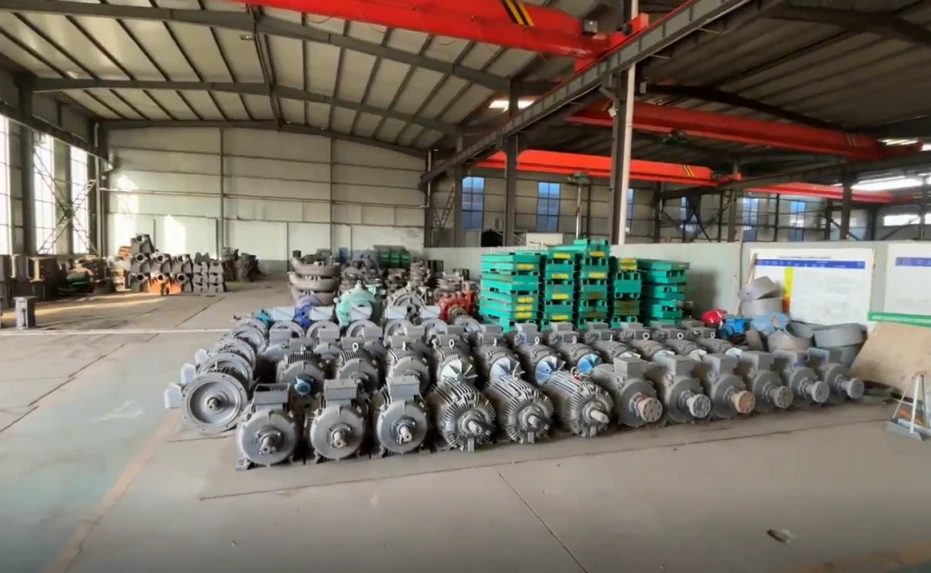
Slurry Pump Spare Parts: Technical Dimension and Performance Analysis
Slurry pumps are specialized centrifugal machines engineered to transport abrasive, viscous, and corrosive fluids—collectively termed "slurries"—which are prevalent in mining, dredging, oil and gas, and chemical processing. Within the industrial chain, slurry pump spare parts, specifically impellers, liners, and seals, serve as the primary sacrificial components that bear the brunt of hydrodynamic erosion and chemical degradation. The technical positioning of these components is critical; they are not merely replaceable parts but are the primary determinants of the Mean Time Between Failures (MTBF) and the overall operational efficiency of the pumping system. The core performance of these spare parts is measured by their resistance to abrasive wear, their ability to maintain hydraulic geometry under extreme stress, and their chemical compatibility with the transported medium, ensuring that the pump maintains its head and flow rate throughout its service life.
Material Science & Manufacturing
The selection of materials for slurry pump spare parts is a complex optimization problem balancing hardness, toughness, and corrosion resistance. The industry primarily relies on three material families: High-Chrome White Irons (HCWI), Natural Rubber, and specialized Duplex Stainless Steels.
High-Chrome White Irons (ASTM A532): These materials are engineered for extreme abrasion resistance. The metallurgical structure consists of primary M7C3 carbides embedded in a martensitic matrix. The hardness is achieved through a precise heat treatment process (quenching and tempering), where the chromium content (typically 27% to 28%) ensures the formation of hard carbides that resist the cutting and plowing actions of mineral particles. Manufacturing involves precision casting followed by CNC grinding of critical mating surfaces to ensure interference fits and concentricity.
Elastomeric Liners: For slurries with finer particles and lower velocities, natural rubber or polyurethane is employed. These materials operate on the principle of "resilient abrasion," where the elastomer absorbs the kinetic energy of the impacting particle and rebounds, thereby reducing material loss. The manufacturing process involves vulcanization, where rubber is molded under high pressure and temperature to eliminate voids and ensure a homogenous cross-linked molecular structure.
Manufacturing Parameter Control: Key controls include the cooling rate during casting to prevent the formation of brittle ledeburite and the precision control of the shore hardness in rubber components. For impellers, dynamic balancing is mandatory to prevent shaft deflection and premature bearing failure, adhering to ISO 1940 standards for vibration severity.
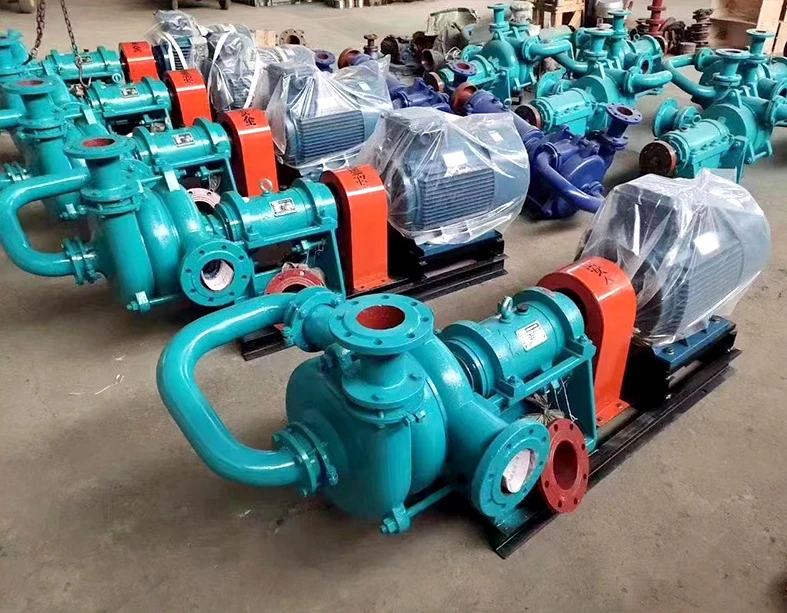
Performance & Engineering
Engineering slurry pump spare parts requires a deep understanding of fluid dynamics and tribology. The primary performance challenge is the synergy between erosive wear and corrosive attack, often referred to as "corrosion-erosion."
Force Analysis & Hydrodynamics: The impeller is subject to centrifugal forces and hydraulic thrust. Engineering focuses on the vane profile to minimize turbulence and cavitation. Cavitation occurs when local pressure drops below the vapor pressure of the fluid, creating bubbles that collapse violently, causing pitting on the impeller surface. To mitigate this, spare parts are designed with specific Suction Specific Speed (Nss) calculations to optimize the Net Positive Suction Head required (NPSHr).
Environmental Resistance: In acidic or alkaline environments, the passive layer of the material is critical. For high-chloride environments, duplex stainless steels are utilized due to their high Pitting Resistance Equivalent Number (PREN). The engineering of seals (mechanical seals or gland packing) focuses on the "flush" system, ensuring that the seal face is lubricated and cooled, preventing the ingress of abrasive particles into the bearing housing.
Compliance & Implementation: Compliance requires adherence to strict dimensional tolerances to prevent "leakage paths" between the impeller and the liner. Proper clearance settings are essential; too tight a clearance leads to seizure during thermal expansion, while too wide a clearance results in internal recirculation and a significant drop in volumetric efficiency.
Technical Specifications
| Component Material | Hardness (HRC/Shore A) | Abrasion Resistance Index | Corrosion Resistance (pH Range) | Typical Application |
|---|---|---|---|---|
| High-Chrome Alloy (27% Cr) | 60 - 65 HRC | Excellent (High) | 4.0 - 9.0 | Coarse Mine Tailings |
| Natural Rubber (NR) | 60 - 70 Shore A | Excellent (Fine Slurry) | 3.0 - 11.0 | Coal Slurry / Fine Sands |
| Duplex Stainless Steel | 25 - 35 HRC | Moderate | 2.0 - 12.0 | Acidic Chemical Slurry |
| Polyurethane (PU) | 85 - 95 Shore A | Very High | 5.0 - 10.0 | High Velocity Silt |
| Hardened Cast Iron | 45 - 55 HRC | Moderate | 6.0 - 8.0 | General Water/Slurry |
| Ceramic Composite | >70 HRC | Extreme | 1.0 - 13.0 | Severe Chemical Abrasion |
Failure Mode & Maintenance
Failure analysis in slurry pump spare parts typically revolves around four primary modes: abrasive wear, cavitation erosion, chemical corrosion, and fatigue cracking.
Abrasive Wear & Delamination: This occurs when the hardness of the slurry particles exceeds the hardness of the pump material. In rubber liners, this manifests as "chunking" or delamination, where the bond between the rubber and the metal shell fails due to overheating or improper vulcanization. Maintenance involves monitoring the wall thickness using ultrasonic testing and replacing liners once they reach the "minimum wear limit" to prevent shell penetration.
Cavitation Pitting: Identified by a "sponge-like" surface appearance on the impeller vanes. This is caused by operating the pump too far to the right of the Best Efficiency Point (BEP) or inadequate suction head. The solution involves adjusting the pump speed or increasing the suction pipe diameter to reduce fluid velocity.
Oxidation & Corrosion: In the presence of oxygen and acidic media, the chromium oxide passive layer may break down, leading to pitting corrosion. This is often exacerbated by "stagnant zones" within the pump casing. Professional maintenance requires the application of specialized epoxy coatings or upgrading to higher molybdenum alloys.
Fatigue Cracking: Often found in impeller hubs due to cyclic loading and vibration. This failure is usually rooted in poor casting quality (internal porosity) or misalignment of the pump and motor. Regular vibration analysis and laser alignment are the primary preventative measures.
Industry FAQ
Q: How do I determine whether to use a High-Chrome or a Rubber liner for a specific application?
A: The decision is primarily based on particle size and velocity. High-Chrome alloys are superior for coarse particles (>0.5mm) and high-impact environments because they resist cutting. Rubber liners are preferred for fine particles (<0.2mm) and high-velocity flows where the material can deform and rebound, significantly extending the wear life.
Q: Why is my impeller wearing unevenly, specifically on the leading edges?
A: Uneven wear on the leading edges usually indicates "impingement wear" caused by non-uniform flow distribution or the presence of oversized solids. It can also be a sign of pump misalignment or operating the pump at a flow rate significantly different from its design point, creating turbulence and localized high-velocity zones.
Q: What is the impact of slurry pH on the selection of spare part materials?
A: pH levels dictate the chemical stability of the material. In highly acidic (pH < 4) or alkaline (pH > 10) conditions, standard High-Chrome irons may suffer from accelerated corrosion. In such cases, Duplex Stainless Steels or specialized polymer composites are required to maintain the structural integrity of the components.
Q: How does the "clearance" between the impeller and the wear plate affect pump efficiency?
A: The clearance controls the internal leakage (volumetric loss). As the parts wear, the clearance increases, allowing more fluid to leak from the high-pressure discharge side back to the suction side. This results in a decrease in total head and a drop in efficiency, necessitating the replacement of the wear plate or the adjustment of the impeller position.
Q: Can I mix and match spare parts from different manufacturers for the same pump model?
A: While some parts are standardized, it is generally discouraged. Slight variations in metallurgical composition or dimensional tolerances (even by fractions of a millimeter) can lead to improper sealing, increased vibration, and accelerated wear due to mismatched hardness levels between the impeller and the liner.
Conclusion
The technical integrity of slurry pump spare parts is the cornerstone of operational stability in abrasive fluid transport. By integrating advanced material science—specifically the use of M7C3 carbides in high-chrome alloys and resilient elastomers—with precise hydrodynamic engineering, industries can significantly mitigate the effects of erosive and corrosive wear. The transition from reactive replacement to a predictive maintenance strategy, based on failure mode analysis and rigorous technical specifications, ensures maximum uptime and optimized total cost of ownership.
Looking forward, the industry is moving toward the adoption of ceramic-metal composites and "smart" wear monitoring systems. These innovations will allow for real-time tracking of component degradation, further reducing unplanned outages. For procurement and engineering teams, the priority must remain the strict adherence to international material standards and the precise matching of component metallurgy to the specific chemical and physical properties of the slurry being processed.
-
Sewer Line Pump Material Science and Manufacturing
News2026-05-15
-
best sewage pump Performance Analysis
News2026-05-15
-
sewage pump for basement bathroom Performance and Engineering
News2026-05-15
-
submersible sewer pump Material Science and Manufacturing
News2026-05-15
-
septic tank sump pump Performance Analysis
News2026-05-15
-
effluent pump Performance and Engineering
News2026-05-14
-
basement waste pump Performance Analysis
News2026-05-14
-
sewage water pump Material Science and Manufacturing
News2026-05-14
-
Sewage Transfer Pump Performance Analysis
News2026-05-14
-
sewage submersible pump Performance Analysis
News2026-05-14
-
sewage pumps for basements Material Science Manufacturing
News2026-05-13
-
sewage pump systems Performance and Engineering
News2026-05-13
-
sewage grinding pump Material Science and Manufacturing
News2026-05-13
-
ejector pumps for sewage Performance Analysis
News2026-05-13
-
effluent pump vs sump pump Performance Analysis
News2026-05-13




