English
- Afrikaans
- Albanian
- Amharic
- Arabic
- Armenian
- Azerbaijani
- Basque
- Belarusian
- Bengali
- Bosnian
- Bulgarian
- Catalan
- Cebuano
- Corsican
- Croatian
- Czech
- Danish
- Dutch
- English
- Esperanto
- Estonian
- Finnish
- French
- Frisian
- Galician
- Georgian
- German
- Greek
- Gujarati
- Haitian Creole
- hausa
- hawaiian
- Hebrew
- Hindi
- Miao
- Hungarian
- Icelandic
- igbo
- Indonesian
- irish
- Italian
- Japanese
- Javanese
- Kannada
- kazakh
- Khmer
- Rwandese
- Korean
- Kurdish
- Kyrgyz
- Lao
- Latin
- Latvian
- Lithuanian
- Luxembourgish
- Macedonian
- Malgashi
- Malay
- Malayalam
- Maltese
- Maori
- Marathi
- Mongolian
- Myanmar
- Nepali
- Norwegian
- Norwegian
- Occitan
- Pashto
- Persian
- Polish
- Portuguese
- Punjabi
- Romanian
- Russian
- Samoan
- Scottish Gaelic
- Serbian
- Sesotho
- Shona
- Sindhi
- Sinhala
- Slovak
- Slovenian
- Somali
- Spanish
- Sundanese
- Swahili
- Swedish
- Tagalog
- Tajik
- Tamil
- Tatar
- Telugu
- Thai
- Turkish
- Turkmen
- Ukrainian
- Urdu
- Uighur
- Uzbek
- Vietnamese
- Welsh
- Bantu
- Yiddish
- Yoruba
- Zulu

Telephone: +86 13120555503
Email: frank@cypump.com


Apr . 01, 2024 17:55 Back to list
slurry pump solutions Manufacturing Specifications and Performance Analysis
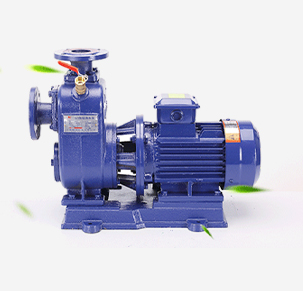
Slurry Pump Solutions: Manufacturing Specifications and Performance Analysis
Slurry pump solutions represent a specialized category of centrifugal pumping technology engineered to transport fluids containing high concentrations of suspended abrasive solids. Positioned as a critical infrastructure component in the mineral processing, dredging, and chemical industries, these pumps must bridge the gap between hydraulic efficiency and extreme mechanical durability. Unlike standard water pumps, slurry pumps must contend with the synergistic effects of erosive wear, corrosive chemical attack, and high-viscosity fluid dynamics. The core technical objective of a slurry pump solution is to maintain a consistent volumetric flow rate and discharge pressure while minimizing the rate of material loss in the impeller and volute, thereby extending the Mean Time Between Failures (MTBF) in aggressive industrial environments.
Material Science & Manufacturing
The operational longevity of slurry pump solutions is fundamentally dependent on the metallurgical properties of the wetted parts. The primary challenge is balancing hardness (to resist abrasion) with toughness (to prevent brittle fracture under impact). High-chromium white irons (ASTM A532) are the industry standard for high-abrasion applications; these alloys utilize a eutectic structure of hard chromium carbides embedded in a martensitic matrix, typically achieving hardness levels between 55 and 65 HRC. For applications involving acidic or alkaline slurries, duplex stainless steels or chemically bonded ceramic liners (such as alumina or silicon carbide) are deployed to prevent galvanic corrosion and pitting.
Manufacturing processes focus on precision casting and rigorous thermal treatment. The investment casting process is often employed to ensure complex internal geometries that minimize turbulence and dead zones where solids could accumulate. Post-casting, components undergo a controlled quenching and tempering cycle to homogenize the microstructure and relieve internal stresses. Furthermore, the integration of replaceable wear liners—manufactured via centrifugal casting to ensure a dense, pore-free surface—allows for the maintenance of hydraulic profiles without requiring the replacement of the entire pump casing. Precision machining of the impeller is critical; dynamic balancing to ISO 1940-1 standards is mandatory to reduce vibrational loads on the bearings and mechanical seals, which are the primary failure points in high-density slurry transport.
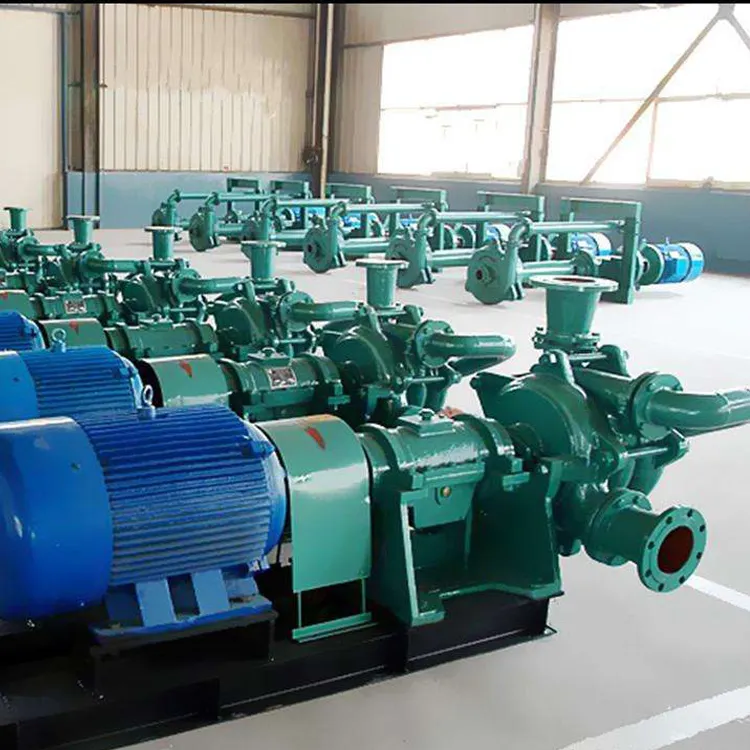
Performance & Engineering
Engineering a slurry pump requires a sophisticated force analysis of the fluid-solid interaction. The "Critical Settling Velocity" (CSV) is the primary engineering parameter; the pump must maintain a flow velocity higher than the CSV to prevent the sedimentation of solids within the pump casing, which would lead to catastrophic blockage and impeller imbalance. The hydraulic design focuses on reducing the relative velocity between the slurry and the pump walls, as abrasive wear is proportional to the cube of the velocity. This is achieved through the optimization of the impeller vane angle and the use of a widened volute passage to reduce local turbulence.
Environmental resistance is addressed through advanced sealing systems. Expeller seals (hydrodynamic seals) are frequently integrated to create a centrifugal barrier that prevents solids from entering the stuffing box, thereby protecting the primary mechanical seals from abrasive grit. From a compliance perspective, engineering must account for the Specific Gravity (SG) of the medium, as an increase in SG directly elevates the shaft torque requirements and the radial loads on the bearings. Consequently, the shafting is typically oversized and manufactured from high-tensile alloy steels with surface hardening to resist shaft-sleeve wear.
Technical Specifications
| Material Grade | Hardness (HRC) | Max Particle Size (mm) | Max Slurry Density (kg/m³) | Abrasion Resistance Index | Corrosion Rate (mm/year) |
|---|---|---|---|---|---|
| High-Chrome Alloy (27% Cr) | 60-65 | 12.0 | 2,400 | Excellent | Moderate |
| Natural Rubber Liner | - | 6.0 | 1,800 | High (Fine particles) | Low |
| Duplex Stainless Steel | 25-35 | 4.0 | 1,600 | Moderate | Very Low |
| Silicon Carbide Ceramic | >70 | 2.0 | 2,100 | Extreme | Negligible |
| Hardened Alloy Steel | 45-55 | 15.0 | 2,200 | Good | High |
| Polyurethane Liner | - | 8.0 | 1,900 | Very High | Moderate |
Failure Mode & Maintenance
The primary failure modes in slurry pump solutions are erosive wear, cavitation, and seal degradation. Erosive wear manifests as the thinning of impeller vanes and volute walls, leading to a progressive decline in pump head and efficiency. This is often accelerated by "impingement attack," where large particles strike surfaces at 90-degree angles. Cavitation occurs when the Net Positive Suction Head Available (NPSHa) falls below the Net Positive Suction Head Required (NPSHr), creating vapor bubbles that implode and create micro-jets, pitting the metal surface and accelerating chemical corrosion.
Maintenance protocols must transition from reactive to predictive. Vibration analysis is employed to detect early signs of bearing wear or impeller imbalance. A critical maintenance task is the monitoring of the "clearance gap" between the impeller and the suction liner; as this gap widens due to wear, internal recirculation increases, significantly reducing hydraulic efficiency. Professional maintenance involves the systematic replacement of wear liners before the base metal of the casing is compromised. For seal maintenance, the flush water pressure must be strictly monitored to ensure it remains 1.0 to 1.5 bar higher than the pump internal pressure, preventing the ingress of abrasive slurry into the seal faces.
Industry FAQ
Q: How do we determine whether to use a rubber-lined pump or a high-chrome alloy pump?
A: The choice depends on the particle size and angularity. Rubber liners are superior for fine, sharp particles that "cut" into metal but are absorbed by the elasticity of rubber. High-chrome alloys are mandatory for coarse, large particles that would easily tear or gouge a rubber liner through high-energy impact.
Q: What is the impact of slurry viscosity on the pump's NPSHr?
A: Increased viscosity increases friction losses in the suction piping, which reduces the NPSHa. Simultaneously, high viscosity can increase the NPSHr of the pump. If the margin narrows too far, cavitation occurs, leading to rapid material degradation and unstable flow.
Q: Why is the pump experiencing premature failure of the mechanical seal despite using premium materials?
A: The most common cause is inadequate seal flushing. If the flush water flow is insufficient or contaminated, abrasive particles migrate into the seal faces, causing rapid scoring. Check the flush line pressure and the cleanliness of the barrier fluid.
Q: How does the solids concentration (by weight) affect the power consumption?
A: Power consumption increases linearly with the specific gravity of the slurry. As the concentration of solids increases, the fluid becomes denser and more viscous, requiring higher brake horsepower (BHP) to maintain the same volumetric flow rate.
Q: Can a slurry pump be operated in a dry-run condition during startup?
A: No. Dry-running a slurry pump can cause immediate failure of the mechanical seals and may lead to overheating of the impeller and casing, potentially inducing thermal stresses that cause cracking in high-chrome components.
Conclusion
Slurry pump solutions are an exercise in balancing contradictory engineering requirements: the need for extreme hardness to combat abrasion and the need for structural toughness to withstand mechanical impact. By integrating advanced material science—specifically high-chromium alloys and specialized elastomers—with precise hydraulic engineering, it is possible to optimize the transport of aggressive media while maximizing the operational lifecycle of the equipment. The synchronization of material selection, CSV calculations, and rigorous sealing protocols forms the technical foundation of a reliable slurry handling system.
Looking forward, the industry is moving toward "Intelligent Wear Monitoring," utilizing embedded sensors to track liner thickness in real-time. This shift from scheduled maintenance to condition-based maintenance will further reduce downtime and operational costs. For procurement and engineering teams, the priority must remain the precise characterization of the slurry's physical and chemical properties to ensure the chosen pump solution is mathematically and metallurgically aligned with the application's demands.
-
Sewer Line Pump Material Science and Manufacturing
News2026-05-15
-
best sewage pump Performance Analysis
News2026-05-15
-
sewage pump for basement bathroom Performance and Engineering
News2026-05-15
-
submersible sewer pump Material Science and Manufacturing
News2026-05-15
-
septic tank sump pump Performance Analysis
News2026-05-15
-
effluent pump Performance and Engineering
News2026-05-14
-
basement waste pump Performance Analysis
News2026-05-14
-
sewage water pump Material Science and Manufacturing
News2026-05-14
-
Sewage Transfer Pump Performance Analysis
News2026-05-14
-
sewage submersible pump Performance Analysis
News2026-05-14
-
sewage pumps for basements Material Science Manufacturing
News2026-05-13
-
sewage pump systems Performance and Engineering
News2026-05-13
-
sewage grinding pump Material Science and Manufacturing
News2026-05-13
-
ejector pumps for sewage Performance Analysis
News2026-05-13
-
effluent pump vs sump pump Performance Analysis
News2026-05-13




