English
- Afrikaans
- Albanian
- Amharic
- Arabic
- Armenian
- Azerbaijani
- Basque
- Belarusian
- Bengali
- Bosnian
- Bulgarian
- Catalan
- Cebuano
- Corsican
- Croatian
- Czech
- Danish
- Dutch
- English
- Esperanto
- Estonian
- Finnish
- French
- Frisian
- Galician
- Georgian
- German
- Greek
- Gujarati
- Haitian Creole
- hausa
- hawaiian
- Hebrew
- Hindi
- Miao
- Hungarian
- Icelandic
- igbo
- Indonesian
- irish
- Italian
- Japanese
- Javanese
- Kannada
- kazakh
- Khmer
- Rwandese
- Korean
- Kurdish
- Kyrgyz
- Lao
- Latin
- Latvian
- Lithuanian
- Luxembourgish
- Macedonian
- Malgashi
- Malay
- Malayalam
- Maltese
- Maori
- Marathi
- Mongolian
- Myanmar
- Nepali
- Norwegian
- Norwegian
- Occitan
- Pashto
- Persian
- Polish
- Portuguese
- Punjabi
- Romanian
- Russian
- Samoan
- Scottish Gaelic
- Serbian
- Sesotho
- Shona
- Sindhi
- Sinhala
- Slovak
- Slovenian
- Somali
- Spanish
- Sundanese
- Swahili
- Swedish
- Tagalog
- Tajik
- Tamil
- Tatar
- Telugu
- Thai
- Turkish
- Turkmen
- Ukrainian
- Urdu
- Uighur
- Uzbek
- Vietnamese
- Welsh
- Bantu
- Yiddish
- Yoruba
- Zulu

Telephone: +86 13120555503
Email: frank@cypump.com


Apr . 01, 2024 17:55 Back to list
Slurry Pump slurry pump price Performance Analysis
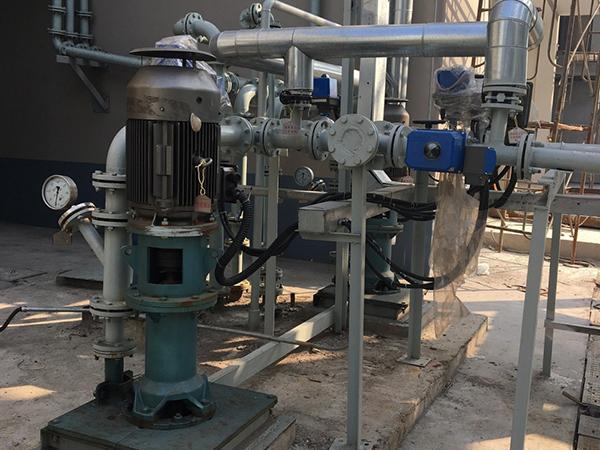
Slurry Pump Performance Analysis and Cost Determinants
A slurry pump is a specialized centrifugal pump designed to transport fluids containing high concentrations of suspended solid particles, ranging from fine silts to coarse mineral ores. In the industrial value chain, these pumps occupy a critical position in mining, dredging, wastewater treatment, and chemical processing. The valuation of a slurry pump—the slurry pump price—is not a static figure but a reflection of the engineering complexity required to combat extreme abrasion and corrosion. The primary technical objective is to balance the Total Cost of Ownership (TCO) by optimizing the initial capital expenditure (CAPEX) against the operational expenditure (OPEX), specifically focusing on the Mean Time Between Failures (MTBF) of wear parts. Core performance is defined by the pump's ability to maintain volumetric efficiency while resisting the erosive energy of high-velocity particulate flow.
Material Science & Manufacturing
The slurry pump price is fundamentally driven by the metallurgy of the wetted parts. The interaction between the slurry's chemical composition and the physical hardness of the particles dictates the selection of materials to prevent rapid wall thinning. High-chrome white irons (e.g., ASTM A532) are frequently utilized for their exceptional hardness, typically ranging from 55 to 65 HRC, which provides a robust defense against abrasive wear in mining applications. For environments where corrosive acids accompany abrasive solids, duplex stainless steels or specialized rubber linings (such as Natural Rubber or Nitrile) are implemented. Rubber-lined pumps are superior for fine particles and corrosive media, as the elastic deformation of the rubber absorbs the impact energy of the particles, whereas hard alloys are preferred for coarse, angular fragments.
Manufacturing involves precision casting and rigorous machining to ensure hydraulic efficiency. The impeller—the most critical component—is often produced via investment casting to achieve complex geometries that minimize turbulence and secondary flow losses. Key parameter control during manufacturing includes the heat treatment process for high-chrome alloys to ensure a uniform martensitic structure with dispersed primary carbides. Furthermore, the casing is often designed with a "sacrificial" liner system, allowing for the replacement of wear-prone internal components without replacing the entire pump housing, thereby optimizing long-term maintenance costs.
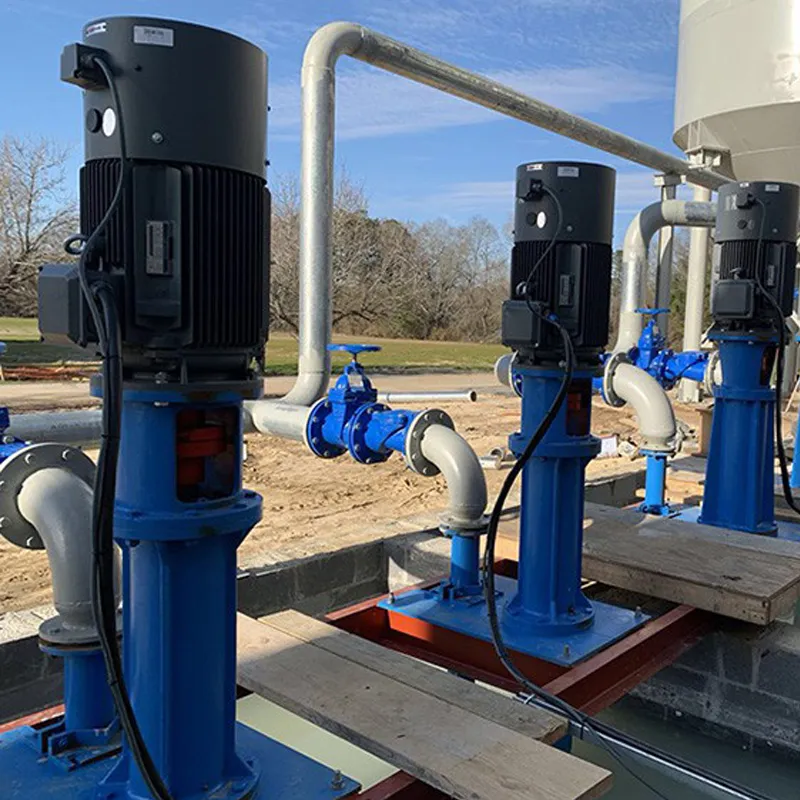
Performance & Engineering
Engineering a slurry pump requires a deep analysis of fluid dynamics and particle kinetics. The "critical velocity" is the primary engineering constraint; the pump must operate above the settling velocity of the solids to prevent sedimentation and blockage, yet below a velocity that would cause exponential increases in abrasive wear (wear rate typically increases to the power of 2.5 to 3 of the velocity). Force analysis is applied to the shaft and bearings to accommodate the radial loads generated by asymmetric wear or non-uniform slurry density.
Compliance requirements often necessitate the use of specialized sealing systems. Mechanical seals in slurry pumps must incorporate flush systems (such as API Plan 32 or 54) to prevent solids from infiltrating the seal faces, which would lead to immediate catastrophic failure. From a functional implementation perspective, the pump's Net Positive Suction Head required (NPSHr) must be carefully calculated to avoid cavitation, which in slurry applications leads to "cavitation erosion," a synergistic effect where vapor bubble collapse strips the protective oxide layer from the metal, accelerating chemical corrosion.
Technical Specifications
| Component/Metric | Hard Chrome Alloy (High-Cr) | Natural Rubber Lined | Duplex Stainless Steel | Technical Impact on Price |
|---|---|---|---|---|
| Hardness (HRC/Shore) | 58 - 65 HRC | 60 - 70 Shore A | 25 - 35 HRC | Higher hardness increases material cost |
| Abrasion Resistance | Excellent (Coarse) | Excellent (Fine) | Moderate | Determines component lifespan |
| Corrosion Resistance | Moderate | High | Excellent | Special alloys increase CAPEX |
| Max Particle Size | Up to 20mm | Up to 5mm | Up to 10mm | Larger clearances require larger pump |
| Typical MTBF | 3,000 - 8,000 Hours | 2,000 - 6,000 Hours | 5,000 - 12,000 Hours | Directly affects OPEX calculations |
| Density Handling | Up to 1.5 t/m³ | Up to 1.3 t/m³ | Up to 1.4 t/m³ | Higher density requires higher torque |
Failure Mode & Maintenance
Failure analysis of slurry pumps typically identifies three primary modes: abrasive wear, corrosive pitting, and fatigue cracking. Abrasive wear manifests as wall thinning in the volute and impeller vanes, leading to a drop in discharge pressure and volumetric efficiency. This is often caused by operating the pump too far from the Best Efficiency Point (BEP), which increases internal recirculation and localized high-velocity zones. Fatigue cracking usually occurs in the shaft or impeller hub due to cyclic loading caused by the passage of large solids or pump vibration (resonance), which can be exacerbated by misalignment during installation.
Maintenance strategies must transition from reactive to predictive. Professional maintenance involves the use of ultrasonic thickness gauging to monitor liner wear without dismantling the pump. When the liner thickness reaches a critical threshold (typically 20% of original thickness), a scheduled replacement is mandatory to prevent the slurry from eroding the outer structural shell. For bearings, vibration analysis (FFT) is used to detect early signs of bearing race degradation or lubrication failure. Replacing seals proactively based on leak-rate monitoring is essential to prevent slurry ingress into the bearing housing, which would cause immediate seizure.
Industry FAQ
Q: Why is there such a significant variance in slurry pump price between rubber-lined and high-chrome models?
A: The price variance is driven by the manufacturing process and raw material costs. High-chrome alloys require complex casting and precise heat treatment to achieve the required hardness, whereas rubber lining involves a chemical bonding process to a cast iron shell. Furthermore, high-chrome pumps are designed for higher impact energy, requiring more robust structural reinforcements.
Q: How does the concentration of solids affect the operational cost of the pump?
A: Higher solids concentration increases the fluid viscosity and density, requiring higher motor torque and power consumption. More importantly, it increases the frequency of abrasive collisions with the impeller and casing walls, which accelerates wear and shortens the interval between liner replacements, thereby increasing the OPEX.
Q: Can a pump designed for fine slurry be used for coarse minerals?
A: Generally, no. A pump designed for fine slurry (often rubber-lined) lacks the hardness to resist the impact of coarse, angular particles, which would cause "chunking" or rapid tearing of the rubber lining. Coarse slurries require high-chrome alloys to withstand the high-energy impact of larger particles.
Q: What is the impact of NPSH (Net Positive Suction Head) on slurry pump longevity?
A: If the NPSH available is lower than the NPSH required, cavitation occurs. In slurry pumps, cavitation is devastating because the collapsing bubbles remove the protective passive layer of the alloy, allowing the abrasive particles to scour the metal surface much faster than normal wear, leading to premature failure.
Q: How should I evaluate the "cheaper" options in the market regarding the slurry pump price?
A: A low initial price often indicates lower-grade alloys or inferior casting quality (e.g., porosity in the impeller). This typically results in a shorter MTBF. The evaluation should be based on the "Cost per Ton of Material Moved," which accounts for the initial price plus the cost of spare parts and downtime over a 5-year period.
Conclusion
The determination of a slurry pump price is an exercise in balancing advanced material science with operational requirements. The true value of the equipment is not found in the initial purchase price but in the synergy between metallurgical selection, hydraulic engineering, and the resulting wear life. By prioritizing high-chrome alloys for coarse applications and rubber linings for corrosive fine slurries, operators can minimize the devastating effects of abrasion and corrosion, ensuring a stable process flow.
Looking forward, the industry is moving toward "smart" slurry pumps equipped with real-time wear sensors and variable frequency drives (VFDs) to optimize the velocity-to-wear ratio. Investment in high-specification machinery, while requiring a higher initial CAPEX, ultimately reduces the total cost of ownership by extending the maintenance cycle and preventing unplanned catastrophic failures in critical industrial pipelines.
-
Comprehensive Guide to Waterproof ORings for Optimal Sealing Solutions
News2026-06-09
-
heavy duty submersible pump Performance Analysis
News2026-06-25
-
best submersible pump for septic tank Performance Analysis
News2026-06-25
-
basement sewer ejector pump Performance Analysis
News2026-06-25
-
basement pumps ejector pumps Performance Analysis
News2026-06-25
-
basement lift pump Performance and Engineering
News2026-06-25
-
basement bathroom pump systems Performance Analysis
News2026-06-24
-
basement bathroom ejector pump system Performance Engineering
News2026-06-24
-
2 hp sewage pump Performance Engineering
News2026-06-24
-
1 hp septic pump Performance Engineering
News2026-06-24
-
submersible effluent pump Performance Analysis
News2026-06-24
-
submergable pump Material Science
News2026-06-23
-
sewer injection pump Performance Engineering
News2026-06-23
-
Sewer Ejector Pump System Performance Analysis
News2026-06-23
-
septic tank pump for sale Performance Engineering
News2026-06-23




