English
- Afrikaans
- Albanian
- Amharic
- Arabic
- Armenian
- Azerbaijani
- Basque
- Belarusian
- Bengali
- Bosnian
- Bulgarian
- Catalan
- Cebuano
- Corsican
- Croatian
- Czech
- Danish
- Dutch
- English
- Esperanto
- Estonian
- Finnish
- French
- Frisian
- Galician
- Georgian
- German
- Greek
- Gujarati
- Haitian Creole
- hausa
- hawaiian
- Hebrew
- Hindi
- Miao
- Hungarian
- Icelandic
- igbo
- Indonesian
- irish
- Italian
- Japanese
- Javanese
- Kannada
- kazakh
- Khmer
- Rwandese
- Korean
- Kurdish
- Kyrgyz
- Lao
- Latin
- Latvian
- Lithuanian
- Luxembourgish
- Macedonian
- Malgashi
- Malay
- Malayalam
- Maltese
- Maori
- Marathi
- Mongolian
- Myanmar
- Nepali
- Norwegian
- Norwegian
- Occitan
- Pashto
- Persian
- Polish
- Portuguese
- Punjabi
- Romanian
- Russian
- Samoan
- Scottish Gaelic
- Serbian
- Sesotho
- Shona
- Sindhi
- Sinhala
- Slovak
- Slovenian
- Somali
- Spanish
- Sundanese
- Swahili
- Swedish
- Tagalog
- Tajik
- Tamil
- Tatar
- Telugu
- Thai
- Turkish
- Turkmen
- Ukrainian
- Urdu
- Uighur
- Uzbek
- Vietnamese
- Welsh
- Bantu
- Yiddish
- Yoruba
- Zulu

Telephone: +86 13120555503
Email: frank@cypump.com


Apr . 01, 2024 17:55 Back to list
Slurry Pump Sizing Performance Analysis

Introduction
Slurry pump sizing is a critical engineering discipline within process industries dealing with the transport of abrasive and erosive materials suspended in a liquid. This guide details the intricacies of selecting a slurry pump appropriate for a given application, encompassing hydraulic principles, materials science, and operational considerations. Unlike clean fluid pumping, slurry applications present unique challenges due to particle size, concentration, and material hardness, all impacting pump performance and longevity. Accurate sizing mitigates premature wear, reduces energy consumption, and ensures process reliability. This document will dissect the methodology involved in determining optimal pump characteristics – flow rate, head, and solids handling capability – based on system demands and slurry properties. Proper pump selection is essential for avoiding costly downtime, maintenance, and potential catastrophic failures often associated with improperly sized equipment.
Material Science & Manufacturing
The construction of slurry pumps demands materials resistant to both abrasion and corrosion, dictated by the slurry’s composition. Pump casings are commonly fabricated from high-chrome iron alloys (e.g., 27% Cr), offering excellent abrasion resistance. However, against highly corrosive slurries, duplex stainless steels (e.g., 2205, 2507) or specialized polymer linings are employed. Impeller materials are similarly selected; high-chrome iron is common for abrasive slurries, while stainless steel, ceramic, or rubber linings are utilized for corrosive environments. Manufacturing processes heavily influence pump performance. Casings are typically produced via sand casting or investment casting, providing the necessary complexity for flow passages. Impellers are cast or forged, with meticulous balancing crucial to minimize vibration and wear. Linings, when applied, use rubber vulcanization or polymer coating techniques, demanding stringent quality control to ensure adhesion and longevity. Welding procedures involving high-alloy materials require specialized techniques (e.g., gas tungsten arc welding - GTAW) to maintain material integrity and avoid weld decay. The hardness of the materials, measured by Rockwell C scale, directly correlates to abrasion resistance, but must be balanced against impact toughness to avoid brittle fracture.
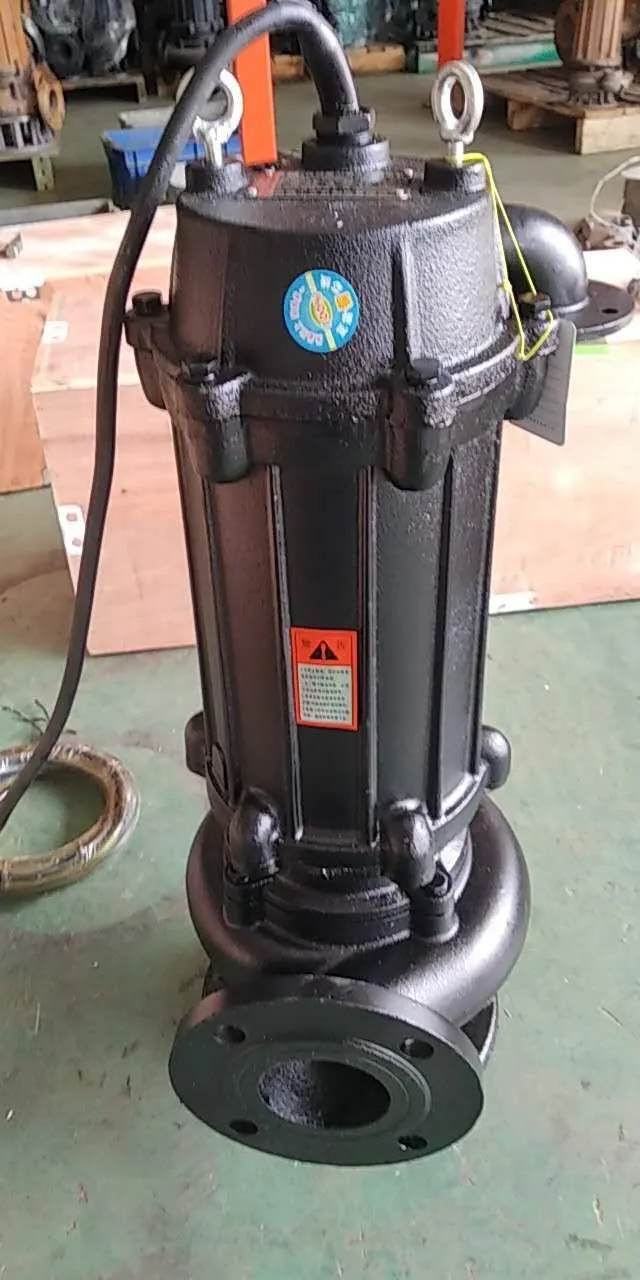
Performance & Engineering
Slurry pump performance is governed by fundamental hydraulic principles, modified by slurry characteristics. The pump's required head (total dynamic head – TDH) accounts for static lift, friction losses in piping, and velocity head. Friction losses are significantly higher in slurry pipelines compared to clean fluid lines due to increased viscosity and particle-induced turbulence. Force analysis is paramount; the pump must withstand the hydrostatic pressure of the slurry, plus dynamic forces generated by impeller rotation and potential solids impact. Cavitation, a common concern in clean fluid pumping, is exacerbated in slurries due to the higher NPSH required. Environmental resistance is a key consideration; pumps operating in harsh climates require appropriate sealing and protection against freezing, corrosion from atmospheric elements, and extreme temperatures. Compliance requirements, such as those stipulated by the EPA for effluent discharge or OSHA for worker safety, must be addressed through appropriate pump selection and system design. Solids handling capability is defined by the maximum particle size and concentration the pump can reliably convey without plugging or excessive wear. Pump curves, generated during performance testing, provide crucial data on flow rate, head, power consumption, and efficiency across a range of operating conditions.
Technical Specifications
| Parameter | Unit | Typical Range (Centrifugal Slurry Pump) | Considerations |
|---|---|---|---|
| Flow Rate | m³/hr | 10 - 1000 | Determined by process requirements; influence on velocity and solids transport. |
| Total Dynamic Head (TDH) | m | 10 - 100 | Accounts for static lift, friction loss, and velocity head; critical for overcoming system resistance. |
| Solids Concentration (by weight) | % | 5 – 60 | Affects slurry viscosity and pump wear; higher concentrations necessitate robust design. |
| Particle Size | mm | < 25 | Larger particles increase wear and risk of plugging; impacts impeller selection. |
| Slurry Specific Gravity | - | 1.2 – 2.0 | Influences pump power requirements and hydraulic performance. |
| Pump Efficiency | % | 60 – 85 | Impacts energy consumption and operating costs; dependent on pump design and operating point. |
Failure Mode & Maintenance
Slurry pump failures predominantly stem from abrasive wear, corrosion, and erosion. Abrasive wear occurs when solid particles impact pump components, gradually removing material. Corrosion manifests as chemical degradation of metallic surfaces due to slurry chemistry. Erosion combines abrasive and corrosive effects, accelerating material loss. Common failure modes include impeller erosion, casing wear, seal failure, and bearing damage. Fatigue cracking can occur in pump components subjected to cyclic loading, particularly in high-pressure applications. Delamination of protective linings (rubber, polymer) indicates insufficient adhesion or chemical incompatibility. Preventative maintenance is crucial. This includes regular visual inspections for wear, vibration analysis to detect bearing faults, seal replacement based on run-time, and periodic impeller replacement. Lubrication of bearings and seals is essential. Analyzing wear patterns provides insights into slurry characteristics and potential design modifications. Regular monitoring of pump performance (flow, head, power consumption) can identify deviations indicative of internal wear or blockage. Implementing a robust wear parts inventory minimizes downtime.
Industry FAQ
Q: What is the impact of slurry viscosity on pump selection?
A: Increased slurry viscosity dramatically increases friction losses within the pump and pipeline, requiring a higher head pump to maintain desired flow rate. Highly viscous slurries also reduce pump efficiency. Pump selection must account for the non-Newtonian behavior of some slurries, where viscosity changes with shear rate.
Q: How do you account for solids settling in long pipeline runs?
A: Solids settling can lead to blockage and increased wear. Maintaining a minimum slurry velocity (typically 2-3 m/s) prevents settling. Pipeline design should minimize bends and elevation changes. Consider using self-priming pumps or including pigging systems for periodic cleaning.
Q: What are the key considerations for selecting pump seals for abrasive slurries?
A: Mechanical seals are commonly used, but require robust designs and materials. Double mechanical seals with a barrier fluid are preferred for critical applications to prevent slurry ingress. Seal face materials should be selected for abrasion resistance (e.g., tungsten carbide). Seal flushing systems help remove abrasive particles from the seal faces.
Q: How does particle size distribution influence pump wear rates?
A: A wider particle size distribution (larger range of particle sizes) generally leads to higher wear rates. Larger particles cause more significant impact damage, while finer particles contribute to abrasive wear through micro-cutting action. The pump’s impeller design should be optimized for the specific particle size distribution.
Q: What is the role of NPSH in slurry pump operation?
A: Net Positive Suction Head (NPSH) is critical. Slurries require significantly higher NPSH available than clean fluids due to increased viscosity and the potential for vapor lock. Insufficient NPSH leads to cavitation, causing damage to the impeller and reducing pump performance.
Conclusion
Accurate slurry pump sizing is a multifaceted engineering challenge demanding a thorough understanding of slurry properties, hydraulic principles, and materials science. This guide has detailed the critical parameters governing pump selection, emphasizing the importance of considering solids concentration, particle size, slurry viscosity, and corrosion potential. Failure to adequately address these factors can result in premature pump failure, increased maintenance costs, and process disruptions.
Moving forward, advancements in computational fluid dynamics (CFD) and wear modeling will enable more precise pump selection and optimization. Proactive maintenance strategies, incorporating condition monitoring and wear analysis, will further extend pump lifespan and minimize downtime. Continued research into advanced materials and surface treatments will enhance pump resistance to abrasion and corrosion, driving greater efficiency and reliability in slurry handling operations.
-
Precision at the Pump: How Better Machining Protects Flow and Uptime
News2026-11-20
-
Why Pump Reliability Begins Before the First Drop of Fluid
News2026-11-20
-
Beyond the Pump: Designing Safer Access Around Critical Water Infrastructure
News2026-11-20
-
Why Pumping Stations Depend on the Infrastructure Beneath the Pumps
News2026-11-20
-
Beyond the Pump Room: How Smarter Loading Protects Industrial Equipment
News2026-11-19
-
When Pumps Stop: Designing More Resilient Power for Critical Pumping Systems
News2026-11-19
-
The Hidden Role of Dust and Gas Monitoring in Reliable Pump Operations
News2026-11-19
-
The Hidden Role of Mineral Compounds in Extending Industrial Pump Lifespan
News2026-10-12
-
Why Pump System Reliability Depends on Precision Hose Assembly Methods
News2026-09-15
-
How Advanced Imaging Films Are Transforming Pump Component Quality Control
News2026-08-25
-
How Advanced Filtration Protects Pump Systems from Premature Wear and Costly Downtime
News2026-08-25
-
How Steel Material Selection Drives Pump Reliability in Heavy-Duty Systems
News2026-08-25
-
Ensuring Pump System Efficiency: The Role of High-Quality Pipe Fittings and Tubing
News2026-08-24
-
Optimizing Fluid Dynamics and Material Consistency in Industrial Processing
News2026-08-18
-
Innovations and Challenges in Hydraulic Systems for Heavy Machinery
News2026-08-13




