English
- Afrikaans
- Albanian
- Amharic
- Arabic
- Armenian
- Azerbaijani
- Basque
- Belarusian
- Bengali
- Bosnian
- Bulgarian
- Catalan
- Cebuano
- Corsican
- Croatian
- Czech
- Danish
- Dutch
- English
- Esperanto
- Estonian
- Finnish
- French
- Frisian
- Galician
- Georgian
- German
- Greek
- Gujarati
- Haitian Creole
- hausa
- hawaiian
- Hebrew
- Hindi
- Miao
- Hungarian
- Icelandic
- igbo
- Indonesian
- irish
- Italian
- Japanese
- Javanese
- Kannada
- kazakh
- Khmer
- Rwandese
- Korean
- Kurdish
- Kyrgyz
- Lao
- Latin
- Latvian
- Lithuanian
- Luxembourgish
- Macedonian
- Malgashi
- Malay
- Malayalam
- Maltese
- Maori
- Marathi
- Mongolian
- Myanmar
- Nepali
- Norwegian
- Norwegian
- Occitan
- Pashto
- Persian
- Polish
- Portuguese
- Punjabi
- Romanian
- Russian
- Samoan
- Scottish Gaelic
- Serbian
- Sesotho
- Shona
- Sindhi
- Sinhala
- Slovak
- Slovenian
- Somali
- Spanish
- Sundanese
- Swahili
- Swedish
- Tagalog
- Tajik
- Tamil
- Tatar
- Telugu
- Thai
- Turkish
- Turkmen
- Ukrainian
- Urdu
- Uighur
- Uzbek
- Vietnamese
- Welsh
- Bantu
- Yiddish
- Yoruba
- Zulu

Telephone: +86 13120555503
Email: frank@cypump.com


Apr . 01, 2024 17:55 Back to list
slurry pump services Engineering Analysis and Performance Specifications
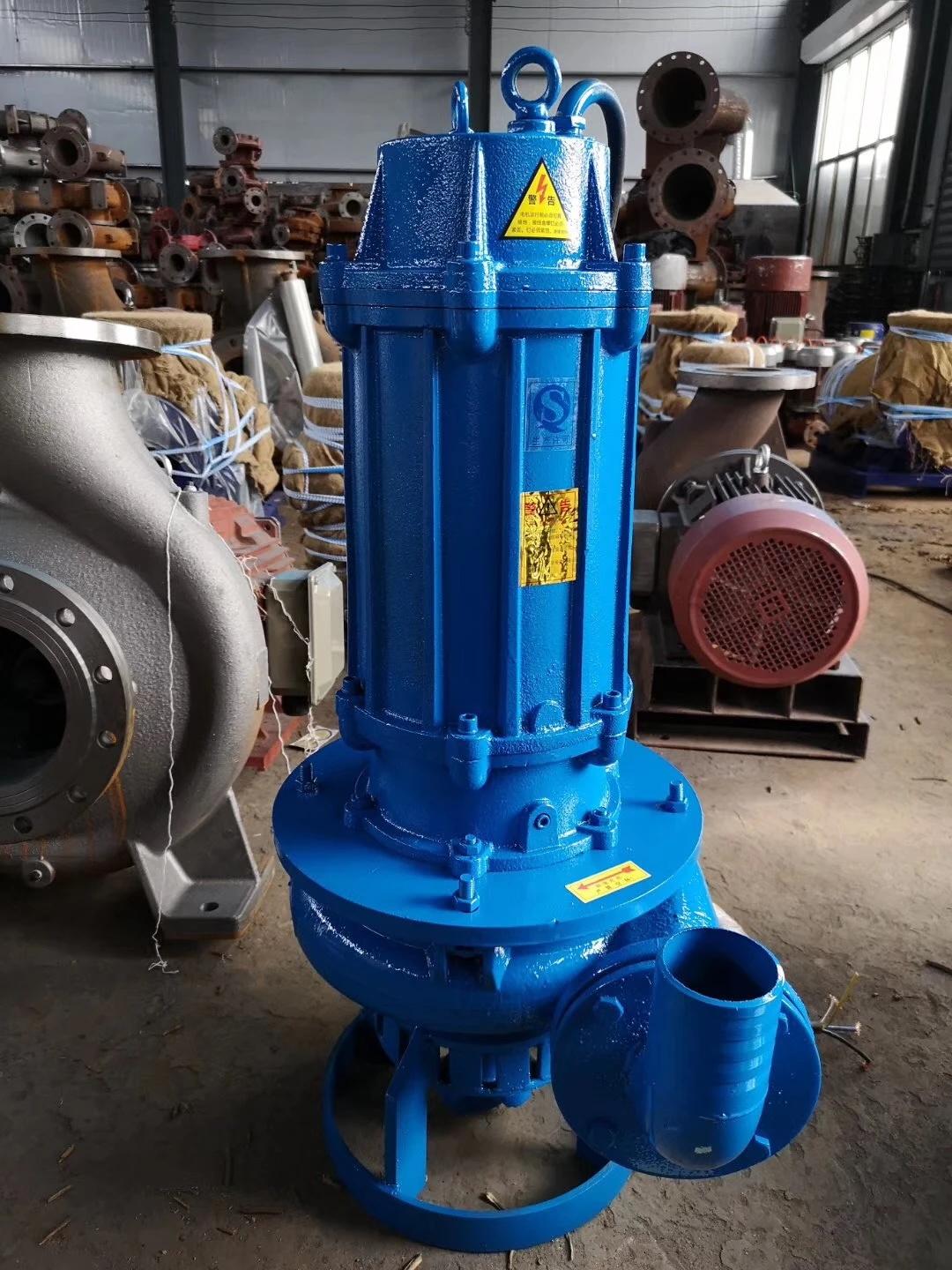
Slurry Pump Services: Engineering Analysis and Performance Specifications
Slurry pump services encompass the specialized engineering, procurement, and maintenance of centrifugal and positive displacement pumps designed to transport abrasive, corrosive, or viscous fluids containing suspended solid particles. Within the industrial value chain, these services sit at the critical intersection of mineral processing, wastewater management, and chemical manufacturing. The primary technical challenge in slurry transport is the management of the fluid-solid interface, where the kinetic energy of the pump must be optimized to maintain solids in suspension while minimizing the erosive wear on internal components. High-performance slurry pump services focus on calculating the critical settling velocity and optimizing the Net Positive Suction Head required (NPSHr) to prevent cavitation, which can lead to catastrophic premature failure in heavy-duty industrial environments.
Material Science & Manufacturing
The longevity of a slurry pump is fundamentally determined by the metallurgical properties of its wetted parts. Material selection is governed by the abrasive nature of the slurry (e.g., silica, alumina, or iron ore) and the chemical aggressiveness of the carrier fluid. High-chrome alloys (ASTM A532), typically containing 25% to 28% Chromium, are employed for their exceptional hardness and resistance to abrasive wear due to the presence of M7C3 carbides. In environments where corrosion predominates over abrasion, duplex stainless steels or high-nickel alloys are specified to prevent pitting and stress corrosion cracking (SCC).
Manufacturing processes for slurry pump components utilize advanced casting and precision machining. Investment casting is frequently used for impellers to ensure a smooth hydraulic profile, reducing turbulence and localized erosion. Key parameter control during manufacturing focuses on the heat treatment process—specifically quenching and tempering—to achieve a balanced Rockwell C hardness (HRC) that provides wear resistance without inducing brittleness. Furthermore, the integration of rubber liners (using natural rubber or polyurethanes) involves a bonding process that accounts for the coefficient of thermal expansion, ensuring that the liner remains secure under fluctuating operating temperatures while absorbing the impact of larger particles.
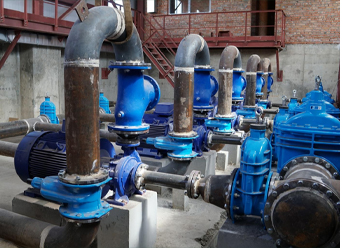
Performance & Engineering
Engineering slurry pump systems requires a rigorous force analysis of the hydraulic circuit. The primary objective is to ensure that the flow velocity remains above the critical deposition velocity to prevent sedimentation in the piping, yet below the threshold where erosive wear increases exponentially (as wear is typically proportional to the cube of the velocity). Computational Fluid Dynamics (CFD) is utilized to analyze the velocity vectors within the volute and impeller, identifying "dead zones" and high-turbulence areas that would accelerate material degradation.
Environmental resistance is managed through sophisticated sealing systems. Mechanical seals in slurry services are often augmented by external flush systems (API Plan 32 or 54) to prevent abrasive particles from entering the seal faces. Engineering compliance also mandates the analysis of the specific gravity (SG) of the slurry; an increase in SG directly affects the brake horsepower (BHP) requirements of the motor. Performance optimization involves the adjustment of the impeller diameter and the use of Variable Frequency Drives (VFDs) to maintain an efficient operating point on the pump curve, thereby reducing energy consumption and extending the Mean Time Between Failures (MTBF).
Technical Specifications
| Component/Parameter | High-Chrome Alloy (27% Cr) | Natural Rubber Lined | Duplex Stainless Steel | Polyurethane Lined |
|---|---|---|---|---|
| Hardness (HRC/Shore A) | 60 - 65 HRC | 60 - 70 Shore A | 25 - 35 HRC | 90 - 95 Shore A |
| Wear Resistance Type | High Abrasion/Impact | Fine Particle Abrasion | Corrosion/Erosion | Moderate Abrasion |
| Max Operating Temp | Up to 400°C | Up to 70°C | Up to 250°C | Up to 90°C |
| Chemical Compatibility | Moderate (Acidic) | High (Alkaline) | Very High (Chlorides) | Moderate (Oil/Grease) |
| Typical Application | Mining Tailings | Coal Slurry | Chemical Processing | Dredging/Sand |
| Maintenance Interval | Medium (Periodic Change) | Long (Liner Replace) | Very Long | Medium (Wear Check) |
Failure Mode & Maintenance
Failure analysis in slurry pump services reveals several recurring modes. Fatigue cracking often occurs in the impeller vanes due to cyclic loading and the impact of oversized solids. Delamination of rubber liners typically results from "cavitation pitting" or improper bonding during installation, where trapped air or moisture creates voids that collapse under pressure. Oxidation and galvanic corrosion are prevalent in pumps handling saline slurries, leading to the degradation of the pump casing and shaft sleeves.
Professional maintenance solutions involve a predictive approach. Vibration analysis is employed to detect bearing wear and shaft misalignment before they lead to catastrophic seal failure. For erosion management, the use of ultrasonic thickness gauges allows technicians to monitor the wear rate of the volute and impeller without dismantling the pump. Maintenance protocols specify the "rotation" of liners to distribute wear evenly and the rigorous inspection of the gland packing or mechanical seals to prevent leakage of hazardous slurries into the environment.
Industry FAQ
Q: How do we determine the optimal material between high-chrome alloy and rubber lining?
A: The selection depends on the particle size and nature of the abrasive. High-chrome alloys are superior for large, sharp particles that would cut through rubber. Rubber linings are more effective for fine, sandy particles where the elasticity of the material allows it to "bounce back" from the impact, significantly reducing the wear rate.
Q: What is the impact of slurry viscosity on the NPSHr?
A: Increased viscosity increases the frictional losses in the suction piping, which reduces the available NPSH (NPSHa). If the viscosity is too high, the NPSHa may fall below the NPSHr of the pump, leading to cavitation, which manifests as loud noise and rapid pitting of the impeller eye.
Q: How can we mitigate the effect of "plugging" in high-concentration slurry services?
A: Plugging occurs when the flow velocity drops below the critical settling velocity. This can be mitigated by increasing the pump speed via a VFD, optimizing the pipe diameter to maintain turbulent flow, or introducing a recirculation loop to ensure continuous movement of the solids.
Q: Why is the specific gravity of the slurry critical for motor sizing?
A: The power required by the pump is directly proportional to the density of the fluid. A slurry with a specific gravity of 1.5 requires 50% more power than clear water to move the same volume at the same head. Failure to account for SG leads to motor overload and burnout.
Q: What are the signs of premature impeller wear in a centrifugal slurry pump?
A: The primary indicators are a gradual decrease in discharge pressure (head) and a corresponding increase in the flow rate at a constant RPM. Additionally, an increase in vibration levels often suggests an unbalanced impeller due to uneven erosive wear.
Conclusion
The operational efficiency of slurry pump services is contingent upon a precise synergy between material science and hydraulic engineering. By prioritizing the selection of high-chrome alloys or specialized elastomers based on the specific abrasion-corrosion profile of the medium, industrial operators can significantly extend the service life of their assets. The integration of CFD analysis and predictive maintenance ensures that these systems operate within their optimal performance envelope, minimizing energy loss and reducing unplanned downtime.
Looking forward, the industry is shifting toward "smart" slurry pumping solutions, incorporating real-time wear sensors and automated viscosity compensation. For procurement and engineering managers, the focus must remain on the total cost of ownership (TCO) rather than initial capital expenditure, as the long-term value is derived from the reduction of failure modes and the optimization of the mean time between overhauls.
-
Comprehensive Guide to Waterproof ORings for Optimal Sealing Solutions
News2026-06-09
-
heavy duty submersible pump Performance Analysis
News2026-06-25
-
best submersible pump for septic tank Performance Analysis
News2026-06-25
-
basement sewer ejector pump Performance Analysis
News2026-06-25
-
basement pumps ejector pumps Performance Analysis
News2026-06-25
-
basement lift pump Performance and Engineering
News2026-06-25
-
basement bathroom pump systems Performance Analysis
News2026-06-24
-
basement bathroom ejector pump system Performance Engineering
News2026-06-24
-
2 hp sewage pump Performance Engineering
News2026-06-24
-
1 hp septic pump Performance Engineering
News2026-06-24
-
submersible effluent pump Performance Analysis
News2026-06-24
-
submergable pump Material Science
News2026-06-23
-
sewer injection pump Performance Engineering
News2026-06-23
-
Sewer Ejector Pump System Performance Analysis
News2026-06-23
-
septic tank pump for sale Performance Engineering
News2026-06-23




