English
- Afrikaans
- Albanian
- Amharic
- Arabic
- Armenian
- Azerbaijani
- Basque
- Belarusian
- Bengali
- Bosnian
- Bulgarian
- Catalan
- Cebuano
- Corsican
- Croatian
- Czech
- Danish
- Dutch
- English
- Esperanto
- Estonian
- Finnish
- French
- Frisian
- Galician
- Georgian
- German
- Greek
- Gujarati
- Haitian Creole
- hausa
- hawaiian
- Hebrew
- Hindi
- Miao
- Hungarian
- Icelandic
- igbo
- Indonesian
- irish
- Italian
- Japanese
- Javanese
- Kannada
- kazakh
- Khmer
- Rwandese
- Korean
- Kurdish
- Kyrgyz
- Lao
- Latin
- Latvian
- Lithuanian
- Luxembourgish
- Macedonian
- Malgashi
- Malay
- Malayalam
- Maltese
- Maori
- Marathi
- Mongolian
- Myanmar
- Nepali
- Norwegian
- Norwegian
- Occitan
- Pashto
- Persian
- Polish
- Portuguese
- Punjabi
- Romanian
- Russian
- Samoan
- Scottish Gaelic
- Serbian
- Sesotho
- Shona
- Sindhi
- Sinhala
- Slovak
- Slovenian
- Somali
- Spanish
- Sundanese
- Swahili
- Swedish
- Tagalog
- Tajik
- Tamil
- Tatar
- Telugu
- Thai
- Turkish
- Turkmen
- Ukrainian
- Urdu
- Uighur
- Uzbek
- Vietnamese
- Welsh
- Bantu
- Yiddish
- Yoruba
- Zulu

Telephone: +86 13120555503
Email: frank@cypump.com


Apr . 01, 2024 17:55 Back to list
Slurry Pump Selection Technical Dimension and Performance Analysis
Slurry Pump Selection: Technical Dimension and Performance Analysis
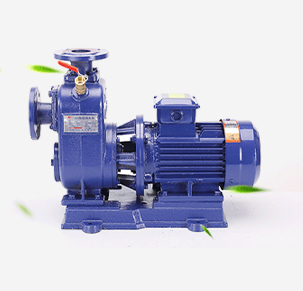
Slurry pumps are specialized rotating machinery designed to transport fluids containing suspended solid particles, ranging from fine silts to coarse abrasive minerals. Within the industrial value chain, the slurry pump serves as the critical nexus between extraction/processing and downstream refining, where the failure of a single unit can lead to catastrophic systemic downtime. The selection of a slurry pump is not merely a matter of flow rate and head, but a complex engineering optimization involving the rheology of the medium, the abrasive nature of the solids, and the chemical aggressiveness of the carrier fluid. Core performance is defined by the pump's ability to maintain volumetric efficiency while minimizing the rate of erosive wear on the impeller and casing, ensuring a balanced Mean Time Between Failure (MTBF) in high-stress environments such as mining, dredging, and chemical processing.
Material Science & Manufacturing
The fundamental challenge in slurry pump manufacturing is the mitigation of abrasive wear and corrosive attack. Material selection is dictated by the Mohs hardness of the transported solids and the pH levels of the slurry. High-chrome white irons (ASTM A532) are the industry standard for high-abrasion applications, utilizing a martensitic matrix with primary M7C3 carbides to provide extreme hardness. For applications combining abrasion with acidity or alkalinity, duplex stainless steels or specialized elastomer linings (such as Natural Rubber or Polyurethane) are deployed to utilize the principle of elastic deformation, where the material absorbs the impact of particles rather than eroding.
The manufacturing process emphasizes precision casting and dynamic balancing. Investment casting is often employed for impellers to ensure complex hydraulic geometries that minimize turbulence—as turbulence accelerates localized erosion (impingement wear). Critical parameter control includes the heat treatment cycle of high-chrome alloys to prevent brittle fracture and the precision machining of the wear plate-to-impeller clearance. A tight clearance is essential to prevent "recirculation," where slurry leaks back to the suction side, creating high-velocity vortices that rapidly erode the pump casing.
Performance & Engineering
Engineering a slurry transport system requires a rigorous force analysis of the fluid-solid interaction. The primary concern is the "Critical Settling Velocity," the minimum velocity required to keep solids suspended in the pipeline to prevent clogging. If the pump cannot provide sufficient kinetic energy to overcome the settling velocity of the heaviest particles (determined by Stokes' Law), the system will experience sedimentation and eventual blockage.
Net Positive Suction Head (NPSH) is a critical engineering constraint. Slurries have a higher density and viscosity than clean water, significantly increasing the risk of cavitation. Cavitation in slurry pumps is particularly destructive; the implosion of vapor bubbles creates localized high-pressure jets that strip the protective oxide layers from metals, accelerating both corrosion and erosion (synergistic wear). Engineering solutions include increasing the suction pipe diameter to reduce friction loss or installing the pump at a lower elevation relative to the source to increase the static head. Furthermore, the pump's performance curve must be shifted to account for the "slurry correction factor," adjusting the head and efficiency based on the concentration by weight (Cw) and the specific gravity (Sg) of the solids.
Technical Specifications
| Material Grade | Hardness (HRC) | Wear Resistance | Chemical Compatibility |
|---|---|---|---|
| High-Chrome Alloy (27% Cr) | 60 - 65 | Excellent (Abrasive) | Moderate (Oxidizing) |
| Natural Rubber Lining | N/A (Shore A) | Superior (Fine Slurry) | Excellent (Acidic/Alkaline) |
| Duplex Stainless Steel | 25 - 35 | Moderate | Superior (Corrosive) |
| High-Silicon Iron | 45 - 55 | Good | Poor (Highly Corrosive) |
| Polyurethane Lining | N/A (Shore D) | Excellent (Impact) | Good (Hydrocarbons) |
| Hardened Steel (Case Hardened) | 55 - 62 | Good (Heavy Coarse) | Low |
Failure Mode & Maintenance
Failure analysis in slurry pumps typically reveals three primary modes: Erosive Wear, Cavitation Damage, and Mechanical Seal Failure. Erosive wear occurs most aggressively at the impeller vane tips and the volute tongue, where fluid velocity is highest. This is characterized by "scalloping" of the metal surface. To mitigate this, a structured maintenance schedule involving the rotation of liners and the timely replacement of wear plates is mandatory.
Cavitation is identified by a characteristic "gravel-like" noise and erratic discharge pressure. Long-term cavitation leads to pitting and fatigue cracking of the impeller. Maintenance involves auditing the suction line for obstructions and verifying the NPSH available versus NPSH required. Mechanical seal failure is often caused by the ingress of abrasive particles into the seal faces. The professional solution is the implementation of an external seal flush system (API Plan 32 or 54) to maintain a pressurized barrier of clean fluid, preventing slurry from entering the sealing interface. Regular vibration analysis is recommended to detect bearing degradation before it leads to shaft misalignment and catastrophic seal breach.
Industry FAQ
Q: How does the solid concentration (Cw) affect the pump's efficiency and head?
A: As the concentration of solids increases, the apparent viscosity of the slurry rises, increasing the friction loss within the pump. This results in a "derating" of the pump's performance; the total dynamic head (TDH) decreases and the power consumption increases compared to pumping clear water.
Q: When should I choose a rubber-lined pump over a high-chrome alloy pump?
A: Rubber lining is superior for fine, sandy slurries with high velocity but low particle size, where the elastic nature of the rubber "bounces" the particles back. High-chrome alloys are required for coarse, large-particle slurries or high-temperature applications where rubber would thermally degrade or be pierced.
Q: What is the impact of particle size distribution (PSD) on impeller selection?
A: PSD determines the minimum allowable passage width in the impeller. If the maximum particle size exceeds 1/3 of the passage width, the risk of plugging increases significantly. An open impeller design is typically selected for slurries with larger solids to reduce the probability of clogging.
Q: How do I determine the correct Critical Settling Velocity for my pipeline?
A: This is calculated using the Durand equation or modified Stokes' laws, considering the particle diameter, the density difference between the solid and the liquid, and the fluid viscosity. Operating below this velocity leads to "sanding" of the pipe, which increases pressure drop and can lead to complete blockage.
Q: Why is the pump vibrating excessively despite being balanced?
A: In slurry applications, excessive vibration is often caused by uneven wear of the impeller or the accumulation of solids in the volute, creating a hydraulic imbalance. It can also indicate cavitation or a misalignment caused by the thermal expansion of the piping system.
Conclusion
The selection of a slurry pump is a multi-dimensional engineering challenge that requires a deep integration of fluid dynamics, material science, and operational analysis. By prioritizing the relationship between particle rheology and material hardness—and by strictly accounting for the derating factors associated with solid concentration—engineers can optimize the system for maximum volumetric efficiency and minimum lifecycle cost. The transition from generic pump selection to a technically rigorous analysis of NPSH and critical settling velocity is what separates a high-performance installation from one prone to premature failure.
Looking forward, the industry is moving toward the integration of smart monitoring—utilizing acoustic emission sensors and real-time vibration analysis—to predict wear patterns before they result in downtime. It is recommended that procurement and engineering teams collaborate to establish a "wear-life baseline" for every specific slurry type, ensuring that maintenance cycles are driven by empirical data rather than generic manufacturer guidelines, thereby maximizing the operational availability of the industrial plant.
-
Comprehensive Guide to Waterproof ORings for Optimal Sealing Solutions
News2026-06-09
-
heavy duty submersible pump Performance Analysis
News2026-06-25
-
best submersible pump for septic tank Performance Analysis
News2026-06-25
-
basement sewer ejector pump Performance Analysis
News2026-06-25
-
basement pumps ejector pumps Performance Analysis
News2026-06-25
-
basement lift pump Performance and Engineering
News2026-06-25
-
basement bathroom pump systems Performance Analysis
News2026-06-24
-
basement bathroom ejector pump system Performance Engineering
News2026-06-24
-
2 hp sewage pump Performance Engineering
News2026-06-24
-
1 hp septic pump Performance Engineering
News2026-06-24
-
submersible effluent pump Performance Analysis
News2026-06-24
-
submergable pump Material Science
News2026-06-23
-
sewer injection pump Performance Engineering
News2026-06-23
-
Sewer Ejector Pump System Performance Analysis
News2026-06-23
-
septic tank pump for sale Performance Engineering
News2026-06-23




