English
- Afrikaans
- Albanian
- Amharic
- Arabic
- Armenian
- Azerbaijani
- Basque
- Belarusian
- Bengali
- Bosnian
- Bulgarian
- Catalan
- Cebuano
- Corsican
- Croatian
- Czech
- Danish
- Dutch
- English
- Esperanto
- Estonian
- Finnish
- French
- Frisian
- Galician
- Georgian
- German
- Greek
- Gujarati
- Haitian Creole
- hausa
- hawaiian
- Hebrew
- Hindi
- Miao
- Hungarian
- Icelandic
- igbo
- Indonesian
- irish
- Italian
- Japanese
- Javanese
- Kannada
- kazakh
- Khmer
- Rwandese
- Korean
- Kurdish
- Kyrgyz
- Lao
- Latin
- Latvian
- Lithuanian
- Luxembourgish
- Macedonian
- Malgashi
- Malay
- Malayalam
- Maltese
- Maori
- Marathi
- Mongolian
- Myanmar
- Nepali
- Norwegian
- Norwegian
- Occitan
- Pashto
- Persian
- Polish
- Portuguese
- Punjabi
- Romanian
- Russian
- Samoan
- Scottish Gaelic
- Serbian
- Sesotho
- Shona
- Sindhi
- Sinhala
- Slovak
- Slovenian
- Somali
- Spanish
- Sundanese
- Swahili
- Swedish
- Tagalog
- Tajik
- Tamil
- Tatar
- Telugu
- Thai
- Turkish
- Turkmen
- Ukrainian
- Urdu
- Uighur
- Uzbek
- Vietnamese
- Welsh
- Bantu
- Yiddish
- Yoruba
- Zulu

Telephone: +86 13120555503
Email: frank@cypump.com


Apr . 01, 2024 17:55 Back to list
Slurry Pump Rebuild Performance Analysis

Introduction
Slurry pump rebuild is a critical maintenance procedure employed across numerous industries, including mining, wastewater treatment, dredging, and chemical processing, to restore the operational capability of pumps handling abrasive and corrosive materials. Unlike simple component replacement, a rebuild encompasses a thorough dismantling, inspection, repair, and reassembly process, extending the pump’s lifespan and reducing lifecycle costs. These pumps are characterized by their robust construction, utilizing specialized materials designed to withstand the erosive and corrosive action of slurries. The technical challenge lies in accurately assessing wear patterns, selecting appropriate repair methodologies (welding, coating, component replacement), and ensuring precise reassembly to maintain hydraulic efficiency and mechanical integrity. A properly executed rebuild restores pump performance to near-original specifications, preventing catastrophic failures and maximizing operational uptime. The industry faces increasing pressure to optimize maintenance schedules and minimize downtime, making effective slurry pump rebuild strategies paramount. This guide provides an in-depth analysis of the materials, processes, and standards governing successful slurry pump rebuilding operations.
Material Science & Manufacturing
Slurry pumps are constructed from materials selected for their resistance to abrasion, corrosion, and impact. Common materials include high-chrome cast irons (typically 15-30% chromium content), which provide excellent abrasion resistance due to the formation of hard chromium carbides within the iron matrix. For highly corrosive environments, stainless steels (304, 316, duplex stainless steels) are utilized, offering superior chemical resistance, although with generally lower abrasion resistance than high-chrome irons. Pump casings may be manufactured from carbon steel with a rubber or epoxy lining to protect against corrosion and erosion. Impellers and volute liners are frequently constructed from the aforementioned high-chrome irons or utilize specialized ceramic inserts for enhanced wear protection. Manufacturing processes vary depending on component complexity. Casings are often produced through sand casting or investment casting. Impellers are typically investment cast to achieve intricate geometries and tight tolerances. Shafts are machined from high-strength alloy steel and subjected to heat treatment to optimize hardness and tensile strength. Welding is extensively used in rebuild operations for repairing casing cracks and rebuilding worn impeller vanes, often employing specialized welding electrodes designed for high-chrome alloys. Critical parameters during welding include pre-heating temperature to prevent cracking, interpass temperature control to minimize distortion, and post-weld heat treatment to restore material properties. Rubber lining application involves vulcanization processes, requiring precise temperature and pressure control to ensure adhesion and durability. Accurate dimensional control throughout all manufacturing and repair stages is vital for maintaining pump efficiency and preventing premature failure.
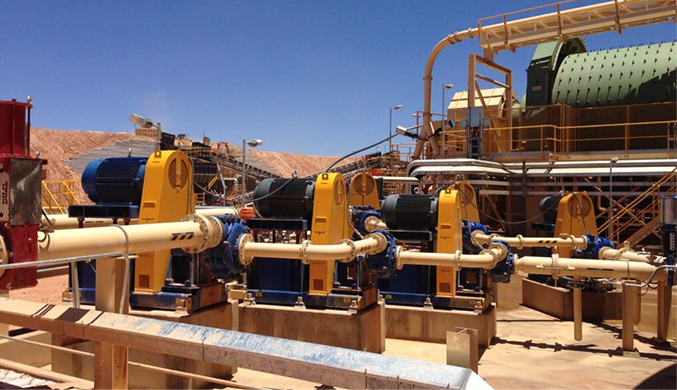
Performance & Engineering
The performance of a slurry pump is critically linked to its hydraulic design and the mechanical integrity of its components. Force analysis focuses on stresses induced by fluid pressure, impeller loading, and bearing loads. Impeller stresses are particularly high due to centrifugal forces and the impact of abrasive particles. Bearing loads are influenced by slurry density, pump speed, and impeller geometry. Environmental resistance is a key consideration, especially concerning corrosion and erosion. Corrosion rates depend on slurry pH, temperature, and the concentration of corrosive agents. Erosion rates are dictated by the slurry’s particle size, concentration, and velocity. Compliance requirements vary by region and application, often governed by standards related to environmental protection (discharge limits), worker safety (pump guarding), and material traceability (pressure vessel regulations). Functional implementation revolves around maintaining the pump's specified head, flow rate, and efficiency. Rebuild procedures must ensure these parameters are restored to within acceptable tolerances. This necessitates precise impeller balancing, accurate bearing adjustment, and meticulous alignment of pump components. Cavitation, a common failure mode, is mitigated through proper Net Positive Suction Head Available (NPSHA) calculations and impeller design. Seal performance is crucial for preventing leakage and maintaining pump efficiency, requiring careful selection of seal materials and installation procedures. The analysis of pump curves before and after a rebuild verifies performance restoration and identifies potential issues.
Technical Specifications
| Parameter | Typical Range (New Pump) | Acceptable Variance After Rebuild | Testing Method |
|---|---|---|---|
| Head (m) | 10-100 | ± 5% | Hydrostatic Test, Performance Curve Analysis |
| Flow Rate (m³/h) | 5-500 | ± 7% | Volumetric Measurement, Performance Curve Analysis |
| Impeller Diameter (mm) | 100-400 | ± 1% (After Machining/Welding) | Dimensional Measurement, Non-Destructive Testing |
| Shaft Runout (mm) | ≤ 0.05 | ≤ 0.03 | Dial Indicator Measurement |
| Bearing Clearance (mm) | 0.05-0.15 | Within Original Specification | Feeler Gauge, Axial Play Measurement |
| Casing Thickness (mm) | 5-20 | Minimum 80% of Original Thickness (After Welding) | Ultrasonic Thickness Measurement |
Failure Mode & Maintenance
Slurry pump failures commonly arise from a combination of abrasive wear, corrosion, and mechanical fatigue. Abrasive wear manifests as erosion of impeller vanes, volute liners, and casing walls, reducing pump efficiency and capacity. Corrosion, particularly in acidic or alkaline slurries, weakens pump materials, leading to cracking and leakage. Fatigue cracking can occur in shafts, impellers, and casings due to cyclical loading and stress concentration. Specific failure modes include impeller vane breakage due to impact loading, seal failure resulting from abrasive particles or chemical attack, and bearing failure due to overload or contamination. Cavitation damage, characterized by pitting and erosion, occurs when the slurry pressure drops below the vapor pressure of the liquid. Preventative maintenance strategies include regular inspections to detect wear patterns and corrosion, lubrication of bearings, and seal replacement. Predictive maintenance techniques, such as vibration analysis and thermography, can identify potential failures before they occur. When rebuilding, thorough non-destructive testing (NDT) – including ultrasonic testing, radiographic testing, and liquid penetrant inspection – is crucial for detecting cracks and defects. Proper welding procedures and heat treatment are essential for restoring the integrity of repaired components. Regular monitoring of pump performance (head, flow rate, power consumption) provides valuable insights into pump condition and allows for timely intervention. Maintaining accurate records of rebuilds, inspections, and repairs facilitates informed decision-making regarding pump replacement or further maintenance.
Industry FAQ
Q: What is the typical rebuild cycle for a high-chrome slurry pump operating in a highly abrasive mining application?
A: The rebuild cycle typically ranges from 12 to 24 months, depending on the slurry’s abrasiveness, the pump’s operating hours, and the effectiveness of preventative maintenance. Continuous monitoring of pump performance and regular inspections for wear are crucial for determining the optimal rebuild interval. More aggressive slurries will necessitate more frequent rebuilds.
Q: How do you assess the cost-effectiveness of rebuilding versus replacing a slurry pump?
A: A cost-benefit analysis should consider the initial pump cost, the rebuild cost (parts, labor, downtime), and the estimated remaining lifespan after rebuild. If the rebuild cost exceeds 60-70% of the new pump cost, replacement should be seriously considered, especially if the pump is nearing the end of its design life.
Q: What welding procedures are recommended for repairing cracks in high-chrome iron pump casings?
A: Shielded Metal Arc Welding (SMAW) with specialized high-chrome electrodes is commonly used. Pre-heating to 150-200°C is crucial to prevent cracking, and low-hydrogen welding techniques are essential. Post-weld heat treatment at a controlled temperature helps restore material properties and reduce residual stress.
Q: How do you ensure proper impeller balancing after rebuilding?
A: After welding or machining, the impeller must be dynamically balanced to minimize vibration and ensure smooth operation. Balancing is typically performed on a dynamic balancing machine, with adjustments made by removing material from the impeller vanes or adding counterweights. The acceptable imbalance tolerance is typically specified by the pump manufacturer.
Q: What are the key considerations when selecting seal materials for slurry pump rebuilds?
A: Seal material selection depends on the slurry’s composition, pH, and abrasive content. Common materials include mechanical seals with tungsten carbide or silicon carbide faces, along with elastomers compatible with the slurry’s chemical properties. Consideration must be given to the potential for abrasive particle ingress and the need for robust seal designs.
Conclusion
Effective slurry pump rebuild practices are foundational to optimizing operational efficiency and minimizing lifecycle costs across a wide range of industries. This guide has detailed the complexities involved, spanning material science, manufacturing processes, performance engineering, and failure analysis. A successful rebuild transcends simple component replacement, demanding a systematic approach based on thorough inspection, accurate repair methodologies, and adherence to stringent quality control standards.
The ongoing evolution of slurry pump technology and the increasing demands for sustainable operations necessitate continuous improvement in rebuild techniques. Investing in advanced NDT methods, embracing predictive maintenance strategies, and fostering skilled technicians are key to ensuring the long-term reliability and performance of slurry pumping systems. Furthermore, collaboration between pump manufacturers, operators, and repair facilities will drive innovation and optimize rebuild procedures for specific applications.
-
Precision at the Pump: How Better Machining Protects Flow and Uptime
News2026-11-20
-
Why Pump Reliability Begins Before the First Drop of Fluid
News2026-11-20
-
Beyond the Pump: Designing Safer Access Around Critical Water Infrastructure
News2026-11-20
-
Why Pumping Stations Depend on the Infrastructure Beneath the Pumps
News2026-11-20
-
Beyond the Pump Room: How Smarter Loading Protects Industrial Equipment
News2026-11-19
-
When Pumps Stop: Designing More Resilient Power for Critical Pumping Systems
News2026-11-19
-
The Hidden Role of Dust and Gas Monitoring in Reliable Pump Operations
News2026-11-19
-
The Hidden Role of Mineral Compounds in Extending Industrial Pump Lifespan
News2026-10-12
-
Why Pump System Reliability Depends on Precision Hose Assembly Methods
News2026-09-15
-
How Advanced Imaging Films Are Transforming Pump Component Quality Control
News2026-08-25
-
How Advanced Filtration Protects Pump Systems from Premature Wear and Costly Downtime
News2026-08-25
-
How Steel Material Selection Drives Pump Reliability in Heavy-Duty Systems
News2026-08-25
-
Ensuring Pump System Efficiency: The Role of High-Quality Pipe Fittings and Tubing
News2026-08-24
-
Optimizing Fluid Dynamics and Material Consistency in Industrial Processing
News2026-08-18
-
Innovations and Challenges in Hydraulic Systems for Heavy Machinery
News2026-08-13




