English
- Afrikaans
- Albanian
- Amharic
- Arabic
- Armenian
- Azerbaijani
- Basque
- Belarusian
- Bengali
- Bosnian
- Bulgarian
- Catalan
- Cebuano
- Corsican
- Croatian
- Czech
- Danish
- Dutch
- English
- Esperanto
- Estonian
- Finnish
- French
- Frisian
- Galician
- Georgian
- German
- Greek
- Gujarati
- Haitian Creole
- hausa
- hawaiian
- Hebrew
- Hindi
- Miao
- Hungarian
- Icelandic
- igbo
- Indonesian
- irish
- Italian
- Japanese
- Javanese
- Kannada
- kazakh
- Khmer
- Rwandese
- Korean
- Kurdish
- Kyrgyz
- Lao
- Latin
- Latvian
- Lithuanian
- Luxembourgish
- Macedonian
- Malgashi
- Malay
- Malayalam
- Maltese
- Maori
- Marathi
- Mongolian
- Myanmar
- Nepali
- Norwegian
- Norwegian
- Occitan
- Pashto
- Persian
- Polish
- Portuguese
- Punjabi
- Romanian
- Russian
- Samoan
- Scottish Gaelic
- Serbian
- Sesotho
- Shona
- Sindhi
- Sinhala
- Slovak
- Slovenian
- Somali
- Spanish
- Sundanese
- Swahili
- Swedish
- Tagalog
- Tajik
- Tamil
- Tatar
- Telugu
- Thai
- Turkish
- Turkmen
- Ukrainian
- Urdu
- Uighur
- Uzbek
- Vietnamese
- Welsh
- Bantu
- Yiddish
- Yoruba
- Zulu

Telephone: +86 13120555503
Email: frank@cypump.com


Apr . 01, 2024 17:55 Back to list
Slurry Pump Power Calculation Analysis
Introduction
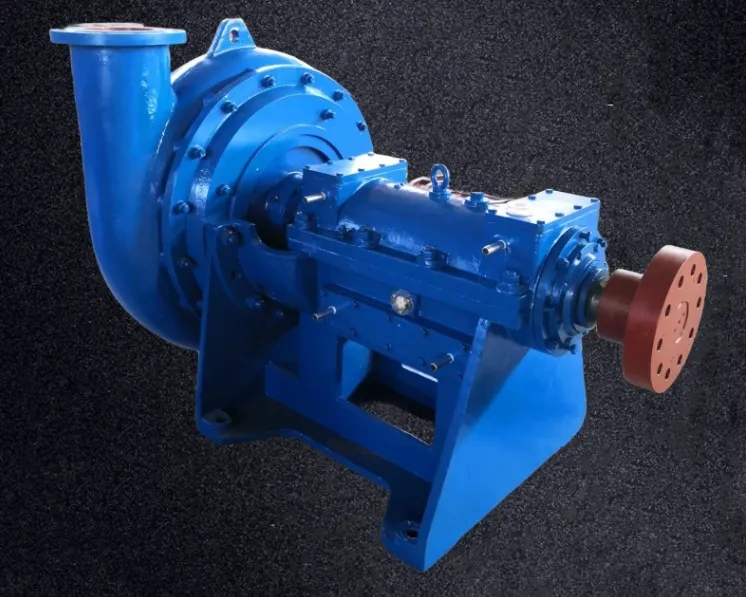
Slurry pump power calculation is a critical engineering discipline within the broader field of fluid mechanics, specifically addressing the energy requirements for transporting abrasive and erosive mixtures of solid particles and liquids. Unlike clean fluid pumping, slurry handling introduces complexities due to increased density, viscosity, and the potential for wear and blockage. This guide provides an in-depth analysis of the factors influencing slurry pump power requirements, covering material science, manufacturing considerations, performance engineering, typical specifications, failure modes, and relevant industry standards. The accurate determination of power demand is paramount for selecting an appropriately sized pump, ensuring optimal efficiency, minimizing operational costs, and preventing premature equipment failure. A miscalculation can result in insufficient flow rates, excessive wear, or motor overload, leading to costly downtime and repairs. This document is targeted towards process engineers, procurement managers, maintenance personnel, and anyone involved in the design, operation, or maintenance of slurry pumping systems.
Material Science & Manufacturing
The materials used in slurry pump construction directly influence the pump's ability to withstand abrasive wear and corrosion. Common materials include high-chrome cast iron (for its excellent abrasion resistance), various stainless steels (for corrosion resistance, particularly in acidic or alkaline slurries), and rubber linings (for damping impact and protecting against wear). The impeller, volute casing, and liner plates are the primary components subjected to wear. Impeller materials often incorporate tungsten carbide or ceramic inserts for enhanced hardness in highly abrasive applications. Manufacturing processes involve several critical steps. Impellers are commonly produced using investment casting or sand casting, with careful attention paid to surface finish and dimensional accuracy. Volute casings are typically manufactured using sand casting, followed by machining and coating. Liner plates are often made from rubber or polyurethane and bonded to the casing using adhesive bonding or vulcanization. Key parameter control during manufacturing includes: chemical composition verification of casting alloys, hardness testing (Brinell or Vickers), dimensional inspection using coordinate measuring machines (CMMs), and non-destructive testing (NDT) methods like ultrasonic testing or radiographic inspection to detect internal flaws. The choice of elastomer for rubber linings is also critical, considering temperature range, chemical compatibility, and abrasion resistance. Material selection is dictated by the slurry’s composition, particle size distribution, concentration, and operating temperature.
Performance & Engineering
Slurry pump power calculation is fundamentally based on the principles of hydraulic power, but requires adjustments to account for slurry-specific characteristics. The theoretical hydraulic power (Ph) is calculated as: Ph = (Q ΔP) / ηt, where Q is the volumetric flow rate, ΔP is the total head (pressure difference), and ηt is the total pump efficiency. However, calculating ΔP for slurries is complex. It comprises static head, friction losses in the piping system, and velocity head. Friction losses are significantly higher for slurries due to increased viscosity and turbulence caused by particle interaction. The Froude number (Fr) and Reynolds number (Re) are crucial parameters. A high Fr indicates turbulent flow, increasing energy dissipation. Re determines the flow regime (laminar or turbulent) and influences the choice of friction factor correlations. Force analysis involves considering the drag force on particles, settling velocity, and the impact force of particles on the pump components. Environmental resistance is a key consideration. Operating temperature affects slurry viscosity and material properties. Abrasive wear rates increase with temperature and slurry velocity. Compliance requirements are dictated by industry standards (see Section 7) and may include limitations on noise levels, energy consumption, and environmental emissions. Proper pump selection ensures adequate net positive suction head required (NPSHr) to prevent cavitation, a significant cause of impeller damage. Computational Fluid Dynamics (CFD) modeling is increasingly used to optimize impeller design and predict pump performance with various slurry compositions.
Technical Specifications
| Parameter | Unit | Typical Range (Low) | Typical Range (High) |
|---|---|---|---|
| Flow Rate | m3/hr | 10 | 1500 |
| Total Head | m | 5 | 100 |
| Slurry Specific Gravity | - | 1.2 | 2.0 |
| Slurry Concentration (by weight) | % | 5 | 70 |
| Power Input | kW | 1.5 | 300 |
| Impeller Diameter | mm | 100 | 800 |
Failure Mode & Maintenance
Slurry pump failures are primarily attributed to abrasive wear, erosion, corrosion, and cavitation. Fatigue cracking can occur in the impeller and volute due to cyclic loading. Delamination of rubber linings is common due to bond failure or impact damage. Degradation of elastomer materials can occur due to chemical attack or exposure to high temperatures. Oxidation of metallic components can lead to corrosion. Common failure modes include: impeller wear (leading to reduced head and flow), casing wear (increasing clearances and reducing efficiency), seal failures (resulting in leakage), and bearing failures (due to contamination or overload). Preventative maintenance is crucial. This includes regular visual inspections for wear, vibration analysis to detect bearing issues, and performance monitoring (flow rate, pressure, power consumption) to identify deviations from baseline values. Scheduled impeller and liner replacements are essential. Lubrication of bearings and seals must be performed according to manufacturer recommendations. Periodic cleaning of the pump and piping system is necessary to remove accumulated solids. In the event of failure, a thorough failure analysis (including metallurgical examination, wear pattern analysis, and fluid analysis) should be conducted to determine the root cause and prevent recurrence. Proper pump alignment is also critical to minimize bearing wear and vibration.
Industry FAQ
Q: What is the impact of particle size distribution on pump power requirements?
A: A wider particle size distribution, especially with a significant proportion of larger particles, significantly increases the power requirement. Larger particles have a higher settling velocity and contribute more to increased friction losses and turbulence within the pump and piping system. They also exert greater impact forces on the impeller and casing, accelerating wear and potentially leading to increased power consumption to overcome the increased resistance.
Q: How does slurry viscosity affect pump selection and power calculation?
A: Increased slurry viscosity directly increases friction losses within the pump and piping system, resulting in a higher total head requirement and, consequently, greater power demand. Highly viscous slurries may necessitate the use of positive displacement pumps (e.g., progressing cavity pumps) rather than centrifugal pumps. Accurate viscosity measurements are crucial for proper power calculation. Temperature also affects viscosity, requiring adjustments to calculations based on operating temperature.
Q: What are the key considerations for selecting a pump material for a highly corrosive slurry?
A: Material selection must prioritize corrosion resistance. Stainless steel alloys (e.g., 316, duplex stainless steels) are commonly used, but the specific alloy must be compatible with the slurry's chemical composition and concentration. Rubber linings or plastic coatings can provide an additional barrier against corrosion. Electrochemical corrosion tests should be conducted to assess the material's resistance in the specific slurry environment.
Q: How can I minimize cavitation in a slurry pump?
A: Cavitation is caused by insufficient NPSH. To minimize it, ensure adequate suction head, minimize suction line losses (e.g., through larger diameter piping and fewer fittings), and select a pump with a lower NPSHr. Reducing slurry temperature can also increase NPSHa. Regularly inspect the impeller for cavitation damage (pitting). Operating the pump at a lower speed can also help prevent cavitation, but this may reduce flow rate.
Q: What role does pump efficiency play in overall operating costs?
A: Pump efficiency directly impacts energy consumption. Even a small improvement in efficiency can result in significant cost savings over the pump's lifespan. Selecting a high-efficiency pump, maintaining proper impeller clearance, and minimizing fouling or scaling within the pump and piping system are all crucial for maximizing efficiency. Regular performance monitoring can help identify efficiency losses and prompt maintenance actions.
Conclusion
Accurate slurry pump power calculation is a multifaceted engineering challenge requiring a thorough understanding of fluid mechanics, material science, and slurry characteristics. The presented analysis highlights the importance of considering factors beyond basic hydraulic power calculations, including slurry density, viscosity, particle size distribution, and the potential for abrasive wear and corrosion. Careful material selection, meticulous manufacturing processes, and diligent preventative maintenance are all essential for ensuring reliable and efficient pump operation.
Future advancements in pump design and monitoring technologies will likely focus on incorporating real-time slurry analysis, optimizing impeller geometry using CFD modeling, and developing more durable and wear-resistant materials. The implementation of predictive maintenance strategies based on sensor data and machine learning algorithms will further enhance pump reliability and minimize downtime, ultimately reducing the total cost of ownership for slurry pumping systems.
-
Precision at the Pump: How Better Machining Protects Flow and Uptime
News2026-11-20
-
Why Pump Reliability Begins Before the First Drop of Fluid
News2026-11-20
-
Beyond the Pump: Designing Safer Access Around Critical Water Infrastructure
News2026-11-20
-
Why Pumping Stations Depend on the Infrastructure Beneath the Pumps
News2026-11-20
-
Beyond the Pump Room: How Smarter Loading Protects Industrial Equipment
News2026-11-19
-
When Pumps Stop: Designing More Resilient Power for Critical Pumping Systems
News2026-11-19
-
The Hidden Role of Dust and Gas Monitoring in Reliable Pump Operations
News2026-11-19
-
The Hidden Role of Mineral Compounds in Extending Industrial Pump Lifespan
News2026-10-12
-
Why Pump System Reliability Depends on Precision Hose Assembly Methods
News2026-09-15
-
How Advanced Imaging Films Are Transforming Pump Component Quality Control
News2026-08-25
-
How Advanced Filtration Protects Pump Systems from Premature Wear and Costly Downtime
News2026-08-25
-
How Steel Material Selection Drives Pump Reliability in Heavy-Duty Systems
News2026-08-25
-
Ensuring Pump System Efficiency: The Role of High-Quality Pipe Fittings and Tubing
News2026-08-24
-
Optimizing Fluid Dynamics and Material Consistency in Industrial Processing
News2026-08-18
-
Innovations and Challenges in Hydraulic Systems for Heavy Machinery
News2026-08-13




