English
- Afrikaans
- Albanian
- Amharic
- Arabic
- Armenian
- Azerbaijani
- Basque
- Belarusian
- Bengali
- Bosnian
- Bulgarian
- Catalan
- Cebuano
- Corsican
- Croatian
- Czech
- Danish
- Dutch
- English
- Esperanto
- Estonian
- Finnish
- French
- Frisian
- Galician
- Georgian
- German
- Greek
- Gujarati
- Haitian Creole
- hausa
- hawaiian
- Hebrew
- Hindi
- Miao
- Hungarian
- Icelandic
- igbo
- Indonesian
- irish
- Italian
- Japanese
- Javanese
- Kannada
- kazakh
- Khmer
- Rwandese
- Korean
- Kurdish
- Kyrgyz
- Lao
- Latin
- Latvian
- Lithuanian
- Luxembourgish
- Macedonian
- Malgashi
- Malay
- Malayalam
- Maltese
- Maori
- Marathi
- Mongolian
- Myanmar
- Nepali
- Norwegian
- Norwegian
- Occitan
- Pashto
- Persian
- Polish
- Portuguese
- Punjabi
- Romanian
- Russian
- Samoan
- Scottish Gaelic
- Serbian
- Sesotho
- Shona
- Sindhi
- Sinhala
- Slovak
- Slovenian
- Somali
- Spanish
- Sundanese
- Swahili
- Swedish
- Tagalog
- Tajik
- Tamil
- Tatar
- Telugu
- Thai
- Turkish
- Turkmen
- Ukrainian
- Urdu
- Uighur
- Uzbek
- Vietnamese
- Welsh
- Bantu
- Yiddish
- Yoruba
- Zulu

Telephone: +86 13120555503
Email: frank@cypump.com


Apr . 01, 2024 17:55 Back to list
slurry pump mechanical seal Performance Analysis and Engineering Specifications
Slurry Pump Mechanical Seal: Performance Analysis and Engineering Specifications
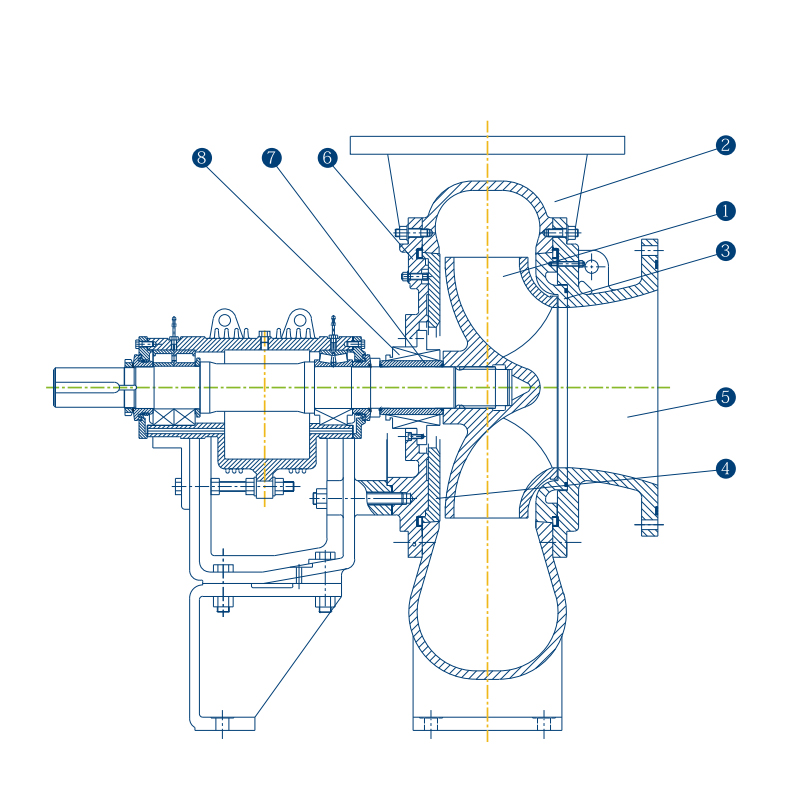
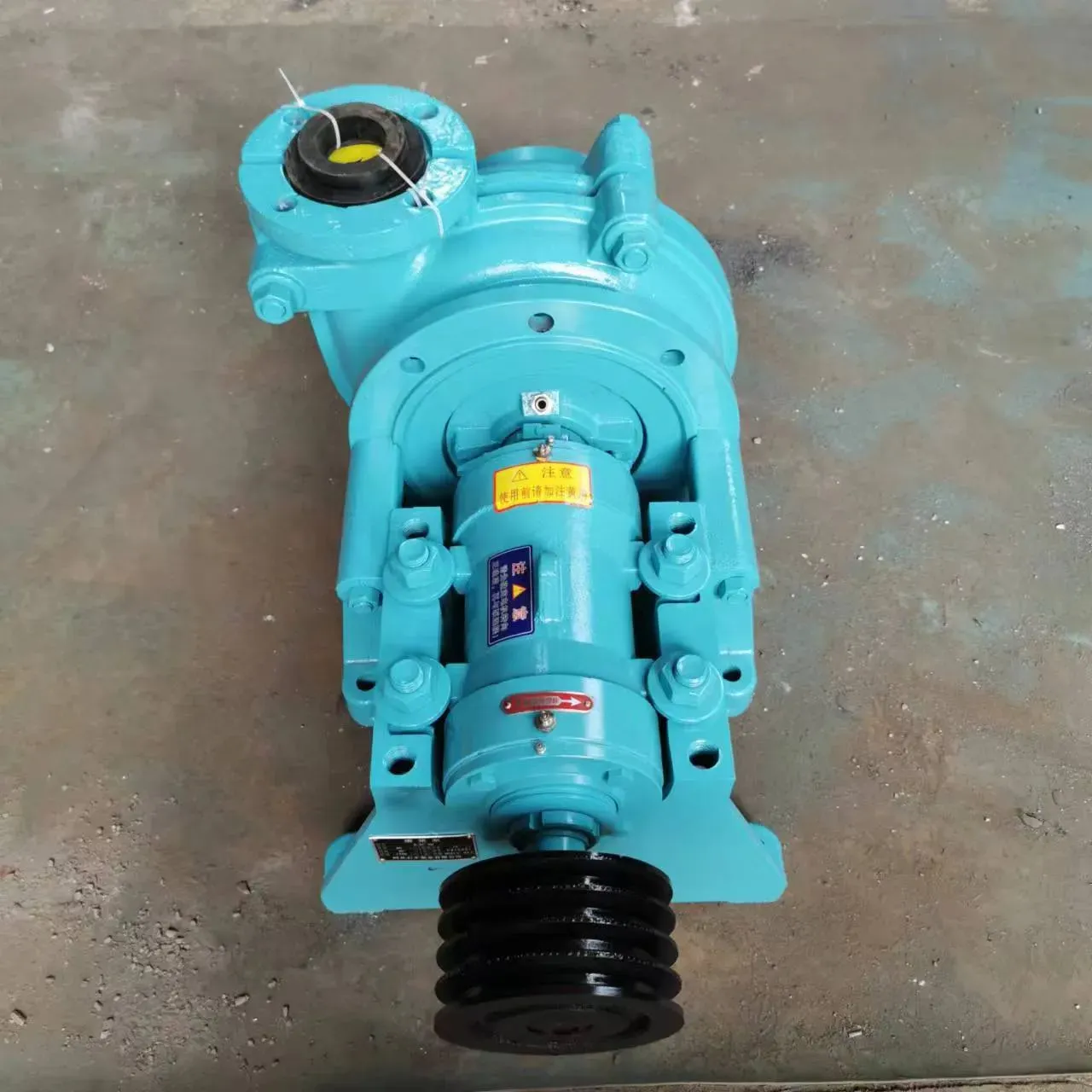
A slurry pump mechanical seal is a high-precision engineered component designed to prevent the leakage of abrasive, viscous, or chemically aggressive fluids from the pump casing along the rotating shaft. Positioned at the critical junction of the pump's hydraulic section and the drive system, the mechanical seal replaces traditional gland packing to reduce maintenance frequency and eliminate the need for constant leakage for lubrication. In the industrial chain, these seals are essential for the operational integrity of mining, dredging, chemical processing, and wastewater treatment systems. The core performance of a slurry pump mechanical seal is measured by its ability to maintain a liquid-tight seal while resisting extreme erosive wear from suspended solids, managing thermal loads generated by friction, and resisting corrosion from the processed medium.
Material Science & Manufacturing
The manufacturing of slurry pump mechanical seals necessitates a sophisticated approach to material science to combat the dual threats of abrasion and corrosion. The sealing faces, which are the primary wear components, are typically engineered from advanced ceramics or hardened alloys. Silicon Carbide (SiC) is the industry standard due to its extreme hardness (approx. 2500 Vickers) and high thermal conductivity, which facilitates the dissipation of heat from the seal interface. For more aggressive environments, Tungsten Carbide (WC) is utilized for its superior fracture toughness and resistance to mechanical shock.
The secondary sealing elements (O-rings and gaskets) are manufactured from high-performance elastomers. Fluoroelastomers (FKM/Viton) are employed for chemical resistance and thermal stability, while Perfluoroelastomers (FFKM) are reserved for extreme chemical incompatibility. The metal components, including the spring assembly and the seat, are typically constructed from 316L Stainless Steel or Hastelloy to prevent pitting and crevice corrosion in chloride-rich environments.
The manufacturing process involves precision grinding and lapping of the seal faces to achieve a flatness within 0.8 microns. This surface finish is critical; too smooth a surface prevents the formation of a lubricating fluid film, while too rough a surface leads to premature leakage. The assembly process incorporates strict tolerance controls for the spring preload, ensuring that the seal faces remain in contact during pump startup, shutdown, and transient pressure fluctuations.
Performance & Engineering
From an engineering perspective, the performance of a slurry pump mechanical seal is governed by the fluid dynamics of the seal chamber. The primary challenge is the prevention of solid particles from infiltrating the seal faces. To achieve this, engineers implement "Flush Plans" based on API 682 standards. A common configuration is the use of an external clean-water flush (Plan 32 or 53), which creates a positive pressure barrier that prevents abrasive slurry from entering the seal faces, thereby shifting the wear mechanism from abrasive erosion to hydrodynamic lubrication.
Force analysis indicates that the seal must withstand axial thrust and radial vibrations. The spring-loaded design provides the necessary closing force to compensate for shaft deflection and thermal expansion. Furthermore, environmental resistance is critical; the seal must operate across wide temperature gradients without losing elasticity in the O-rings or experiencing thermal cracking in the ceramic faces. The engineering of the "Quench" system is also vital, as it cools the atmospheric side of the seal, preventing the buildup of crystallized solids that could otherwise cause "hang-up" or catastrophic face failure.
Technical Specifications
| Parameter Dimension | Standard Slurry Seal | High-Abrasion Grade | Chemical Process Grade | Extreme Temp Grade |
|---|---|---|---|---|
| Face Material Combination | SiC vs SiC | TC vs TC (Tungsten) | SiC vs Carbon | Alumina vs Alumina |
| Max Operating Pressure | 1.6 MPa | 2.5 MPa | 1.0 MPa | 1.2 MPa |
| Temperature Range | -20°C to 120°C | -10°C to 150°C | -30°C to 200°C | -50°C to 280°C |
| Elastomer Material | NBR / EPDM | FKM (Viton) | FFKM (Kalrez) | PTFE / FKM |
| Face Flatness Tolerance | < 1.0 μm | < 0.8 μm | < 0.5 μm | < 0.8 μm |
| Max Shaft Speed | 3600 RPM | 3000 RPM | 4000 RPM | 3000 RPM |
Failure Mode & Maintenance
Failure analysis of slurry pump mechanical seals typically reveals four primary modes: abrasive wear, thermal shock, chemical degradation, and mechanical fatigue. Abrasive wear occurs when solid particles penetrate the seal faces, acting as an abrasive medium that scores the surface, leading to increased leakage. This is often caused by a failure in the flush water system or an incorrect flush pressure. Thermal shock occurs when the seal faces overheat due to dry running or insufficient lubrication, causing the brittle ceramic materials to crack or "heat check."
Chemical degradation manifests as the swelling or hardening of elastomers, resulting in a loss of sealing pressure. Mechanical fatigue is often the result of excessive shaft vibration or misalignment, which causes uneven wear on the seal faces (coning) and eventual leakage. Maintenance protocols must include the regular monitoring of flush water flow rates and the use of vibration analysis on the pump housing. When replacing seals, it is imperative to inspect the shaft sleeve for grooving; if the sleeve is worn, the new seal will fail prematurely. Proper installation requires the use of lubricant on O-rings to prevent twisting and the precise torqueing of gland bolts to avoid distorting the seal assembly.
Industry FAQ
Q: Why is Silicon Carbide preferred over Tungsten Carbide for certain slurry applications?
A: While Tungsten Carbide offers higher toughness and impact resistance, Silicon Carbide provides superior hardness and better corrosion resistance in acidic or alkaline environments, making it more suitable for chemical slurries where surface oxidation must be minimized.
Q: How does a "dead-end" seal differ from a flushed seal in slurry pumps?
A: A dead-end seal relies entirely on the pumped medium for lubrication, which is highly risky in slurry applications as solids will inevitably enter the faces. A flushed seal introduces an external clean fluid to keep solids away from the interface, significantly extending the seal's mean time between failures (MTBF).
Q: What is the primary cause of "hang-up" in mechanical seals?
A: Hang-up occurs when solids or crystals accumulate in the space between the seal collar and the gland, preventing the spring from applying the necessary closing force to the faces. This is typically mitigated by implementing a quench system to wash the atmospheric side of the seal.
Q: Can I replace an NBR O-ring with an FKM O-ring without changing other components?
A: In most cases, yes, provided the dimensions are identical. However, FKM has different compression set characteristics and chemical compatibility. It is recommended to ensure that the FKM material is compatible with the specific chemical composition of the slurry to avoid premature hardening.
Q: How do I identify if a seal failure was caused by dry running or abrasion?
A: Dry running typically leaves "heat checking" or concentric circular cracks on the seal faces due to thermal stress. Abrasion is characterized by deep linear scratches (scoring) and a matte finish on the faces where the polished surface has been eroded by particles.
Conclusion
The reliability of a slurry pump mechanical seal is not merely a function of the materials used, but a systemic result of precise material selection, rigorous manufacturing tolerances, and the correct application of auxiliary flush plans. By integrating high-hardness ceramics like Silicon Carbide with chemically inert elastomers and API-compliant lubrication strategies, industrial operators can significantly mitigate the erosive and corrosive forces inherent in slurry transport, thereby reducing operational downtime and increasing energy efficiency.
Moving forward, the industry is shifting toward smarter sealing solutions, incorporating real-time leakage monitoring and advanced composite materials to further enhance durability. For engineers and procurement managers, the focus must remain on the synergy between the seal hardware and the supporting piping systems, as the most advanced seal will fail if the fluid environment is not properly managed through consistent flush and quench protocols.
-
Comprehensive Guide to Waterproof ORings for Optimal Sealing Solutions
News2026-06-09
-
heavy duty submersible pump Performance Analysis
News2026-06-25
-
best submersible pump for septic tank Performance Analysis
News2026-06-25
-
basement sewer ejector pump Performance Analysis
News2026-06-25
-
basement pumps ejector pumps Performance Analysis
News2026-06-25
-
basement lift pump Performance and Engineering
News2026-06-25
-
basement bathroom pump systems Performance Analysis
News2026-06-24
-
basement bathroom ejector pump system Performance Engineering
News2026-06-24
-
2 hp sewage pump Performance Engineering
News2026-06-24
-
1 hp septic pump Performance Engineering
News2026-06-24
-
submersible effluent pump Performance Analysis
News2026-06-24
-
submergable pump Material Science
News2026-06-23
-
sewer injection pump Performance Engineering
News2026-06-23
-
Sewer Ejector Pump System Performance Analysis
News2026-06-23
-
septic tank pump for sale Performance Engineering
News2026-06-23




