English
- Afrikaans
- Albanian
- Amharic
- Arabic
- Armenian
- Azerbaijani
- Basque
- Belarusian
- Bengali
- Bosnian
- Bulgarian
- Catalan
- Cebuano
- Corsican
- Croatian
- Czech
- Danish
- Dutch
- English
- Esperanto
- Estonian
- Finnish
- French
- Frisian
- Galician
- Georgian
- German
- Greek
- Gujarati
- Haitian Creole
- hausa
- hawaiian
- Hebrew
- Hindi
- Miao
- Hungarian
- Icelandic
- igbo
- Indonesian
- irish
- Italian
- Japanese
- Javanese
- Kannada
- kazakh
- Khmer
- Rwandese
- Korean
- Kurdish
- Kyrgyz
- Lao
- Latin
- Latvian
- Lithuanian
- Luxembourgish
- Macedonian
- Malgashi
- Malay
- Malayalam
- Maltese
- Maori
- Marathi
- Mongolian
- Myanmar
- Nepali
- Norwegian
- Norwegian
- Occitan
- Pashto
- Persian
- Polish
- Portuguese
- Punjabi
- Romanian
- Russian
- Samoan
- Scottish Gaelic
- Serbian
- Sesotho
- Shona
- Sindhi
- Sinhala
- Slovak
- Slovenian
- Somali
- Spanish
- Sundanese
- Swahili
- Swedish
- Tagalog
- Tajik
- Tamil
- Tatar
- Telugu
- Thai
- Turkish
- Turkmen
- Ukrainian
- Urdu
- Uighur
- Uzbek
- Vietnamese
- Welsh
- Bantu
- Yiddish
- Yoruba
- Zulu

Telephone: +86 13120555503
Email: frank@cypump.com


Apr . 01, 2024 17:55 Back to list
Slurry Pump Manufacturers Performance Analysis
Introduction
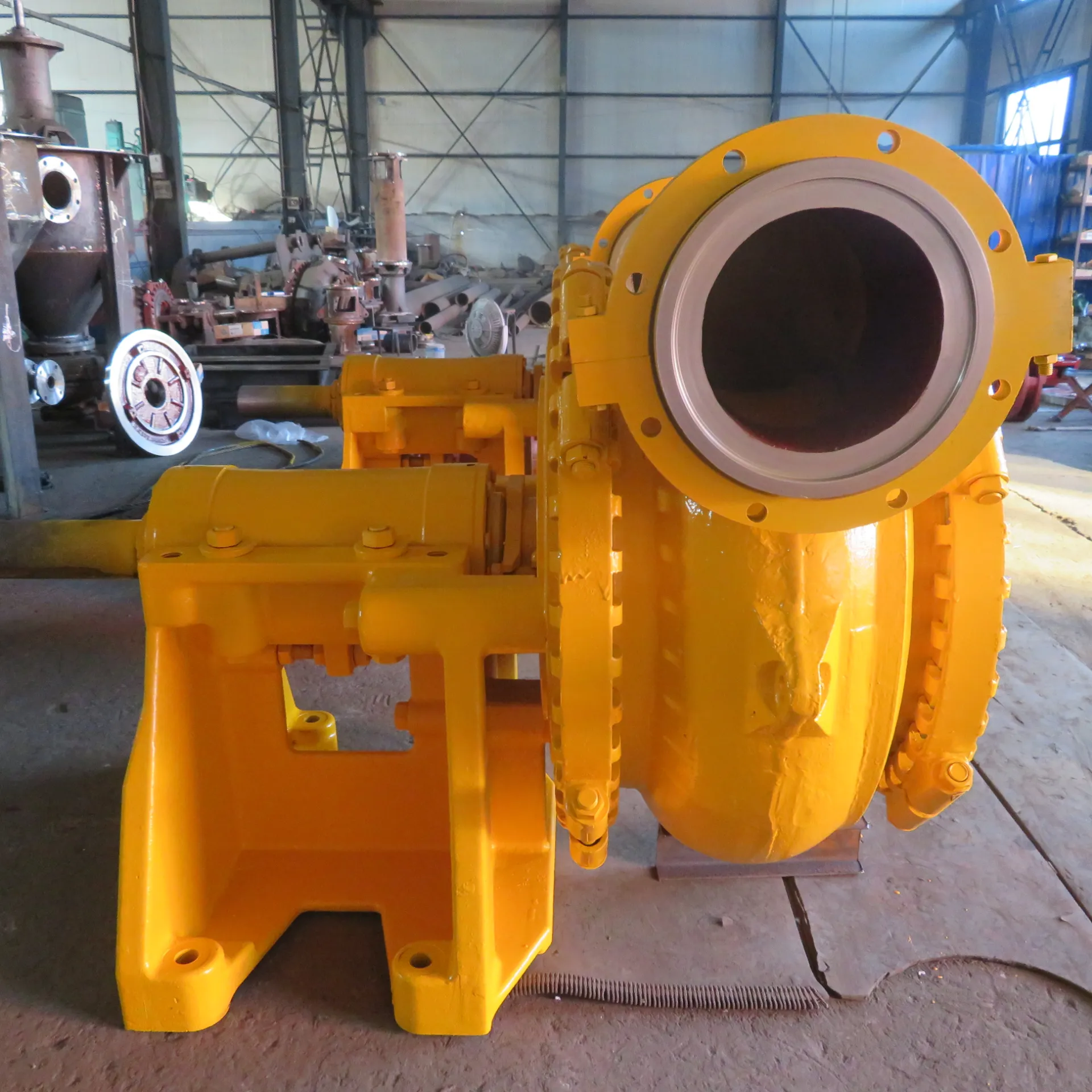
Slurry pumps are heavy-duty pumps specifically designed for the transportation of abrasive, corrosive, and erosive slurries. They are integral to numerous industries including mining, mineral processing, wastewater treatment, chemical processing, and dredging. Their technical position in the industry chain is critical, bridging raw material extraction/processing with downstream refinement or disposal. Core performance characteristics defining slurry pump suitability include flow rate (m³/hr), head (meters), solids handling capability (percentage by weight and particle size), abrasion resistance (measured by wear rate in mm/year), and material compatibility (resistance to chemical attack). A primary industry pain point centers around premature wear of pump components, leading to costly downtime, maintenance, and replacement. Selecting the correct pump materials, impeller design, and sealing mechanisms is paramount to mitigate these issues. Achieving optimal pump efficiency while maximizing component lifespan remains a continuous engineering challenge.
Material Science & Manufacturing
Slurry pump construction predominantly utilizes high-chrome cast iron (typically 27-30% chromium), stainless steels (304, 316, duplex stainless steel), and specialized alloys like Hastelloy and ceramic-lined materials. High-chrome cast iron offers exceptional abrasion resistance due to the formation of hard chromium carbides within the iron matrix. However, it’s susceptible to corrosion in acidic or saline environments. Stainless steels provide superior corrosion resistance but generally exhibit lower abrasion resistance compared to high-chrome iron. Hastelloy and ceramic linings are employed for extremely corrosive applications. Manufacturing processes vary based on component. Pump casings are often manufactured via sand casting or investment casting. Impellers can be cast, molded from rubber, or machined from solid stock. Shafts are typically forged from alloy steel and undergo heat treatment for increased strength and toughness. Critical parameter control during manufacturing includes chemical composition verification of castings, hardness testing (Brinell or Vickers), dimensional accuracy checks using Coordinate Measuring Machines (CMM), and non-destructive testing (NDT) – specifically radiographic testing (RT) and ultrasonic testing (UT) – to identify internal flaws. Welding processes, frequently used for repairs and fabrication, must adhere to strict standards (AWS D1.1 for steel welding) with qualified welders and post-weld heat treatment to prevent cracking and maintain material integrity.
Performance & Engineering
Slurry pump performance is governed by hydraulic principles, primarily Bernoulli's equation and the affinity laws. Force analysis focuses on impeller loading, shaft bending moments, and bearing loads. The impeller design (radial, axial, or mixed flow) dictates the pump's head-capacity curve and solids handling capability. Radial impellers are commonly used for high-head, low-flow applications, while axial impellers are better suited for low-head, high-flow applications. Mixed flow designs offer a compromise. Environmental resistance is a key consideration. Pumps operating in harsh environments require robust sealing systems (mechanical seals, packing glands) to prevent leakage and ingress of contaminants. The selection of seal materials (e.g., silicon carbide, tungsten carbide) depends on the slurry's composition and operating temperature. Compliance requirements include adherence to API 610 (Centrifugal Pumps), ISO 13709 (Petroleum and natural gas industries – Design and operation of subsea production systems), and potentially ATEX directives for pumps operating in explosive atmospheres. Cavitation is a significant concern, especially when handling low NPSHA (Net Positive Suction Head Available) slurries. Proper pump sizing and impeller design are crucial to avoid cavitation damage. Erosion velocity, a critical engineering parameter, dictates the wear rate of pump components and influences material selection. Understanding the slurry’s particle size distribution and impact angle is essential for predicting erosion rates.
Technical Specifications
| Parameter | Unit | Typical Range (High-Chrome Iron Pump) | Typical Range (Stainless Steel Pump) |
|---|---|---|---|
| Flow Rate | m³/hr | 10 – 1500 | 5 – 800 |
| Head | meters | 10 – 100 | 5 – 60 |
| Solids Handling | % by weight | Up to 70 | Up to 60 |
| Particle Size | mm | Up to 100 | Up to 50 |
| Impeller Material | - | High-Chrome Cast Iron (27-30% Cr) | 304/316 Stainless Steel, Duplex Stainless Steel |
| Casing Material | - | High-Chrome Cast Iron (27-30% Cr) | 304/316 Stainless Steel, Duplex Stainless Steel |
Failure Mode & Maintenance
Common failure modes in slurry pumps include abrasive wear (impeller, volute liner), corrosion (casing, impeller), erosion (impeller vanes, discharge nozzle), cavitation (impeller), mechanical seal failure, and bearing failure. Abrasive wear is the most prevalent, caused by the impact of solid particles on pump components. Corrosion is accelerated by the presence of corrosive chemicals in the slurry. Erosion results from high-velocity slurry flow. Cavitation damages the impeller due to the formation and collapse of vapor bubbles. Failure analysis often involves metallographic examination to assess wear mechanisms and corrosion patterns. Maintenance solutions include regular inspection of pump components, replacement of worn parts, proper lubrication of bearings, and monitoring of seal performance. Preventive maintenance programs based on runtime or operating hours are crucial. Implementing wear-resistant coatings (e.g., tungsten carbide) on critical components can significantly extend their lifespan. Monitoring vibration levels can indicate bearing wear or impeller imbalance. A key preventative measure is maintaining proper slurry velocity to minimize erosion and deposition.
Industry FAQ
Q: What is the impact of slurry particle size distribution on pump selection?
A: Particle size distribution dramatically impacts pump selection. Larger particles necessitate pumps with larger free passage areas to prevent clogging and increased wear. Finer particles contribute to increased abrasive wear rates. Pump manufacturers use particle size distribution data to determine the appropriate impeller type, casing design, and erosion velocity limits.
Q: How do you mitigate corrosion in slurry pumps handling acidic slurries?
A: Corrosion mitigation involves selecting corrosion-resistant materials such as stainless steels (316, duplex), Hastelloy, or ceramic linings. Coatings can also be applied to protect pump components. Maintaining a slightly alkaline pH (if possible) can reduce corrosion rates. Regular inspection for corrosion is vital.
Q: What is the significance of NPSH (Net Positive Suction Head) in slurry pump operation?
A: NPSH is critical. Insufficient NPSH leads to cavitation, which damages the impeller and reduces pump performance. The pump must be installed at a sufficient depth or the suction lift minimized to ensure adequate NPSH. The pump curve provides NPSH requirements at various flow rates.
Q: What are the best practices for mechanical seal maintenance in slurry pumps?
A: Best practices include ensuring proper seal flushing, maintaining adequate cooling, and regularly inspecting the seal faces for wear or damage. Selecting the correct seal material for the slurry composition is paramount. Using a seal support system (barrier fluid) can extend seal life.
Q: How does impeller design affect pump efficiency and solids handling capability?
A: Impeller design significantly influences both. Radial impellers generally offer higher head but lower solids handling capability. Axial impellers provide higher flow but lower head. Impeller vane angle, number of vanes, and vane width are key design parameters. Open impellers are preferred for slurries with high solids content to minimize clogging.
Conclusion
Slurry pump selection and operation require a comprehensive understanding of material science, hydraulic principles, and failure mechanisms. The industry's continuous drive towards increased efficiency, extended component life, and reduced downtime necessitates a rigorous approach to pump design, manufacturing, and maintenance. Careful consideration of slurry characteristics, including particle size distribution, solids concentration, and chemical composition, is essential for optimal pump performance.
Future trends in slurry pump technology focus on advanced materials (e.g., ceramic matrix composites), intelligent monitoring systems (predictive maintenance based on vibration analysis and wear rate monitoring), and optimized impeller designs (using computational fluid dynamics – CFD – to minimize erosion and cavitation). Continuous innovation in sealing technology will also be vital to enhance pump reliability and reduce environmental impact.
-
Effluent vs Sump Pump Performance Analysis
News2026-05-22
-
effluent septic pump Performance Engineering
News2026-05-22
-
best sewer pumps Performance Engineering
News2026-05-22
-
best sewer pump Performance Analysis
News2026-05-22
-
best sewage pumps Performance Engineering
News2026-05-22
-
basement bathroom sewage pump Material Science Manufacturing
News2026-05-21
-
wastewater treatment plant pumps Material Science Manufacturing
News2026-05-21
-
waste water pump for basement Material Science Manufacturing
News2026-05-21
-
sump pump sewage Performance Analysis
News2026-05-21
-
sump pump for sewage Material Science and Manufacturing
News2026-05-21
-
sump pump for septic systems Material Science Manufacturing
News2026-05-20
-
sump pump and ejector pump Material Science Manufacturing
News2026-05-20
-
sewage treatment plant pumps Performance Analysis
News2026-05-20
-
sewage tank pump Material Science and Manufacturing
News2026-05-20
-
sewage pump for septic tank Performance Analysis
News2026-05-20




