English
- Afrikaans
- Albanian
- Amharic
- Arabic
- Armenian
- Azerbaijani
- Basque
- Belarusian
- Bengali
- Bosnian
- Bulgarian
- Catalan
- Cebuano
- Corsican
- Croatian
- Czech
- Danish
- Dutch
- English
- Esperanto
- Estonian
- Finnish
- French
- Frisian
- Galician
- Georgian
- German
- Greek
- Gujarati
- Haitian Creole
- hausa
- hawaiian
- Hebrew
- Hindi
- Miao
- Hungarian
- Icelandic
- igbo
- Indonesian
- irish
- Italian
- Japanese
- Javanese
- Kannada
- kazakh
- Khmer
- Rwandese
- Korean
- Kurdish
- Kyrgyz
- Lao
- Latin
- Latvian
- Lithuanian
- Luxembourgish
- Macedonian
- Malgashi
- Malay
- Malayalam
- Maltese
- Maori
- Marathi
- Mongolian
- Myanmar
- Nepali
- Norwegian
- Norwegian
- Occitan
- Pashto
- Persian
- Polish
- Portuguese
- Punjabi
- Romanian
- Russian
- Samoan
- Scottish Gaelic
- Serbian
- Sesotho
- Shona
- Sindhi
- Sinhala
- Slovak
- Slovenian
- Somali
- Spanish
- Sundanese
- Swahili
- Swedish
- Tagalog
- Tajik
- Tamil
- Tatar
- Telugu
- Thai
- Turkish
- Turkmen
- Ukrainian
- Urdu
- Uighur
- Uzbek
- Vietnamese
- Welsh
- Bantu
- Yiddish
- Yoruba
- Zulu

Telephone: +86 13120555503
Email: frank@cypump.com


Apr . 01, 2024 17:55 Back to list
Slurry Pump Manufacturer Technical Dimensions and Performance Analysis
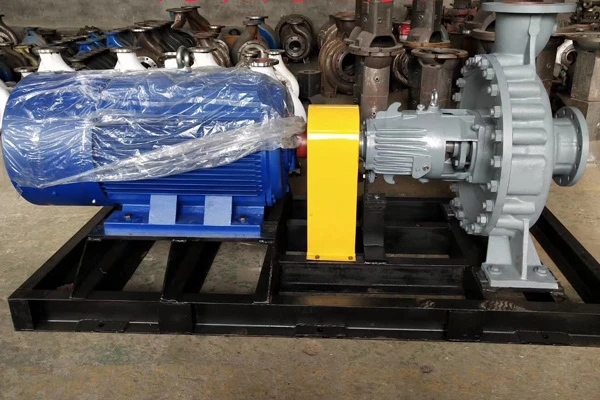
Slurry Pump Manufacturing: Technical Dimensions and Performance Analysis
Slurry pumps represent a specialized class of centrifugal pumps engineered to transport abrasive, corrosive, and high-density fluids known as slurries. In the industrial value chain, the slurry pump manufacturer occupies a critical position, bridging the gap between raw mineral extraction and chemical processing. Unlike standard water pumps, these machines must manage the complex rheology of non-Newtonian fluids, where the concentration of suspended solids significantly alters viscosity and flow behavior. The core performance of these systems is defined by their ability to maintain volumetric efficiency and hydraulic capacity while resisting the catastrophic erosive wear caused by particle impingement. The technical positioning of high-performance slurry pumps involves a precise balance between impeller geometry, rotational velocity, and the material hardness of the wetted components, ensuring operational longevity in environments such as tailings management, dredging, and metallurgical processing.
Material Science & Manufacturing
The manufacturing of slurry pumps begins with advanced material science to combat the dual threats of abrasion and corrosion. The industry standard relies heavily on High-Chrome White Irons (ASTM A532), which utilize a eutectic structure of chromium carbides embedded in a martensitic matrix. This microstructure provides the necessary hardness (typically 60-65 HRC) to resist the cutting and plowing actions of abrasive particles. For environments where corrosive acids are present alongside abrasives, duplex stainless steels or specialized rubber linings (such as Natural Rubber or Nitrile) are deployed. The rubber lining functions through an elastic deformation mechanism, where the material absorbs the energy of particle impact and "bounces" the abrasive away, rather than resisting it through hardness.
Manufacturing processes are centered on precision casting and rigorous thermal treatment. The casting of impellers and volutes requires controlled cooling rates to prevent internal stresses and shrinkage porosity, which could lead to premature structural failure. Once cast, components undergo a precise quenching and tempering process to optimize the hardness-to-toughness ratio. Precision machining is then applied to the wear plates and impeller vanes, utilizing CNC grinding to achieve the tight tolerances required to minimize the clearance between the impeller and the suction liner. This gap control is critical; excessive clearance leads to internal recirculation and an exponential increase in wear rates due to high-velocity turbulence within the pump casing.
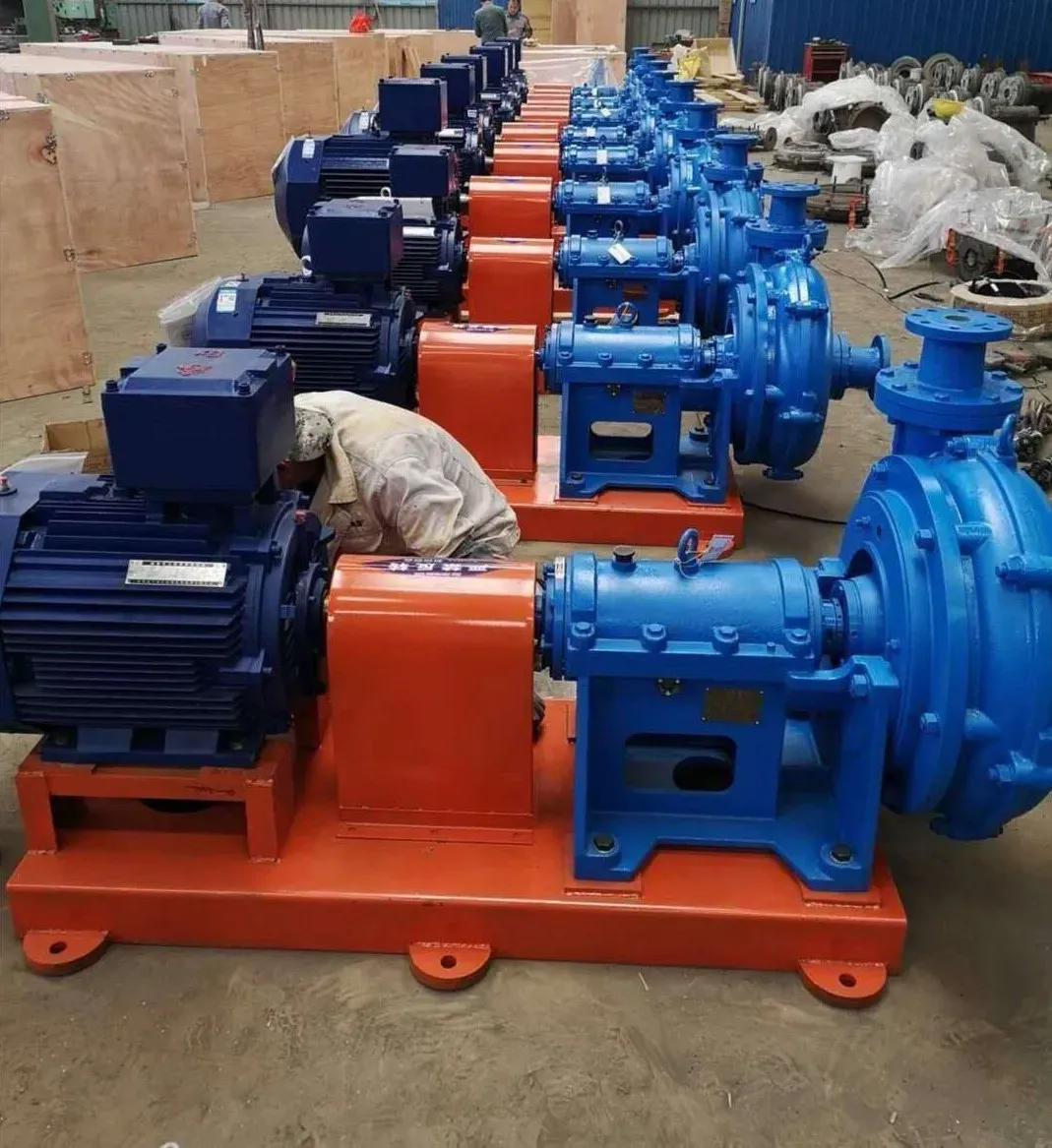
Performance & Engineering
Engineering a slurry pump requires a deep analysis of fluid dynamics and force distribution. The primary engineering challenge is managing the "critical settling velocity," the minimum velocity required to keep solids in suspension and prevent pipeline blockage. Engineers utilize the Durand equation to calculate the necessary flow velocity based on particle diameter, density, and fluid viscosity. From a force analysis perspective, the pump must handle significant radial loads caused by the asymmetric distribution of solids within the impeller, which can induce shaft deflection and premature bearing failure.
To mitigate these forces, high-performance designs incorporate heavy-duty shafting and reinforced bearing housings. The hydraulic design focuses on optimizing the Net Positive Suction Head Required (NPSHr) to prevent cavitation, which is exacerbated in slurry applications as gas bubbles can collapse near abrasive particles, leading to localized "pitting" and accelerated material loss. Furthermore, the implementation of an expeller (booster) on the back of the impeller is often required to increase the suction pressure, allowing the pump to handle higher concentrations of solids without losing prime. Compliance with international hydraulic standards ensures that the pump maintains a stable efficiency curve even as the slurry density fluctuates during operation.
Technical Specifications
| Component / Parameter | High-Chrome Alloy (ASTM A532) | Natural Rubber Lining | Duplex Stainless Steel | Hardness/Resistance Value |
|---|---|---|---|---|
| Abrasion Resistance | Extreme (Fine Particles) | High (Coarse Particles) | Moderate | 60-65 HRC / 40-60 Shore A |
| Corrosion Resistance | Moderate | High (Chemicals) | Excellent (Chlorides) | PREN > 35 |
| Max Slurry Density | 1.8 t/m³ | 1.5 t/m³ | 1.6 t/m³ | Specific Gravity (SG) |
| Operating Temp Range | -20°C to 150°C | -10°C to 70°C | -40°C to 200°C | Celsius (°C) |
| Typical Wear Life | 12-24 Months | 8-18 Months | 10-20 Months | Operational Hours |
| Material Thickness | 15mm - 50mm | 10mm - 30mm | 12mm - 40mm | Millimeters (mm) |
Failure Mode & Maintenance
Failure analysis in slurry pumps reveals several recurring modes. The most prevalent is erosive wear, where high-velocity particles strike the impeller vanes and volute liners, leading to a gradual decrease in hydraulic efficiency and eventual breakthrough. Another critical failure mode is "cavitation erosion," characterized by the formation of microscopic pits on the suction side of the impeller, which can quickly evolve into structural cracks. Fatigue cracking in the pump shaft often occurs due to excessive vibration caused by impeller imbalance or the accumulation of solids in the pump casing.
Professional maintenance necessitates a predictive approach rather than a reactive one. Regular ultrasonic thickness testing (UT) of the liners allows operators to monitor wear rates and schedule replacements before the casing is compromised. For seal maintenance, the transition from traditional packing to mechanical seals with external flushing systems (API Plan 32 or 54) is recommended to prevent abrasive particles from entering the seal faces. When replacing impellers, dynamic balancing to ISO 1940 G2.5 standards is mandatory to reduce radial loads. Finally, lubrication analysis for the bearings should be conducted monthly to detect metallic debris, which serves as an early indicator of bearing race fatigue or lubricant contamination.
Industry FAQ
Q: How do we determine whether to choose a rubber-lined pump or a high-chrome alloy pump?
A: The decision depends primarily on particle size and chemistry. High-chrome alloys are superior for fine, sharp-edged particles that cause "cutting" wear. Rubber linings are more effective for larger, rounded particles that cause "impact" wear, as the elastic nature of the rubber absorbs the energy. Chemical compatibility must also be verified; rubber is generally better for acidic slurries, while alloys handle higher temperatures.
Q: Why is my slurry pump experiencing premature impeller failure despite using high-hardness materials?
A: This is often caused by operating the pump too far from its Best Efficiency Point (BEP). Operating at low flow rates increases internal turbulence and recirculation, creating localized high-velocity zones that accelerate erosion. Additionally, if the slurry concentration exceeds the design limit, the resulting increase in viscosity can cause cavitation, which destroys even the hardest materials.
Q: What is the impact of "sanding in" during pump shutdown on the equipment's lifespan?
A: "Sanding in" occurs when solids settle in the pump and piping during downtime, potentially locking the impeller. This creates immense torque during startup, which can shear the shaft or damage the motor. To prevent this, a flush system must be implemented to clear the pump of solids before shutdown, or a specialized "break-away" torque analysis must be performed.
Q: How does the slurry density affect the NPSHr of the pump?
A: As slurry density increases, the effective viscosity rises, which increases the frictional pressure drop in the suction line. This reduces the Net Positive Suction Head Available (NPSHa). If the NPSHa falls below the NPSHr, the pump will cavitate. Engineering solutions include lowering the pump elevation or increasing the suction pipe diameter to reduce velocity.
Q: Can we increase the impeller speed to achieve higher flow rates in high-density applications?
A: While increasing RPM increases flow, the wear rate in slurry pumps typically increases exponentially (often to the power of 2.5 or 3) relative to the velocity. Doubling the speed can reduce the component lifespan by a factor of five or more. It is generally more sustainable to use a larger pump at a lower speed to move the same volume of slurry.
Conclusion
The engineering of slurry pumps is a sophisticated intersection of metallurgical science and fluid dynamics. The ability of a slurry pump manufacturer to deliver a reliable product depends on the strict control of material microstructure—specifically the distribution of chromium carbides—and the optimization of hydraulic geometries to minimize turbulence and cavitation. By addressing the core pain points of erosive wear and radial instability, these systems enable the efficient transport of the world's most challenging industrial fluids.
Looking forward, the integration of IoT-based wear monitoring and Computational Fluid Dynamics (CFD) is transforming slurry pump design. Transitioning from scheduled maintenance to condition-based monitoring will further reduce operational downtime and enhance safety. For industrial operators, the focus must remain on selecting materials that align with the specific morphology of their slurry and maintaining strict adherence to hydraulic operating envelopes to ensure maximum asset longevity.
-
Comprehensive Guide to Waterproof ORings for Optimal Sealing Solutions
News2026-06-09
-
heavy duty submersible pump Performance Analysis
News2026-06-25
-
best submersible pump for septic tank Performance Analysis
News2026-06-25
-
basement sewer ejector pump Performance Analysis
News2026-06-25
-
basement pumps ejector pumps Performance Analysis
News2026-06-25
-
basement lift pump Performance and Engineering
News2026-06-25
-
basement bathroom pump systems Performance Analysis
News2026-06-24
-
basement bathroom ejector pump system Performance Engineering
News2026-06-24
-
2 hp sewage pump Performance Engineering
News2026-06-24
-
1 hp septic pump Performance Engineering
News2026-06-24
-
submersible effluent pump Performance Analysis
News2026-06-24
-
submergable pump Material Science
News2026-06-23
-
sewer injection pump Performance Engineering
News2026-06-23
-
Sewer Ejector Pump System Performance Analysis
News2026-06-23
-
septic tank pump for sale Performance Engineering
News2026-06-23




