English
- Afrikaans
- Albanian
- Amharic
- Arabic
- Armenian
- Azerbaijani
- Basque
- Belarusian
- Bengali
- Bosnian
- Bulgarian
- Catalan
- Cebuano
- Corsican
- Croatian
- Czech
- Danish
- Dutch
- English
- Esperanto
- Estonian
- Finnish
- French
- Frisian
- Galician
- Georgian
- German
- Greek
- Gujarati
- Haitian Creole
- hausa
- hawaiian
- Hebrew
- Hindi
- Miao
- Hungarian
- Icelandic
- igbo
- Indonesian
- irish
- Italian
- Japanese
- Javanese
- Kannada
- kazakh
- Khmer
- Rwandese
- Korean
- Kurdish
- Kyrgyz
- Lao
- Latin
- Latvian
- Lithuanian
- Luxembourgish
- Macedonian
- Malgashi
- Malay
- Malayalam
- Maltese
- Maori
- Marathi
- Mongolian
- Myanmar
- Nepali
- Norwegian
- Norwegian
- Occitan
- Pashto
- Persian
- Polish
- Portuguese
- Punjabi
- Romanian
- Russian
- Samoan
- Scottish Gaelic
- Serbian
- Sesotho
- Shona
- Sindhi
- Sinhala
- Slovak
- Slovenian
- Somali
- Spanish
- Sundanese
- Swahili
- Swedish
- Tagalog
- Tajik
- Tamil
- Tatar
- Telugu
- Thai
- Turkish
- Turkmen
- Ukrainian
- Urdu
- Uighur
- Uzbek
- Vietnamese
- Welsh
- Bantu
- Yiddish
- Yoruba
- Zulu

Telephone: +86 13120555503
Email: frank@cypump.com


Apr . 01, 2024 17:55 Back to list
slurry pump liner Manufacturing Specification and Performance Analysis
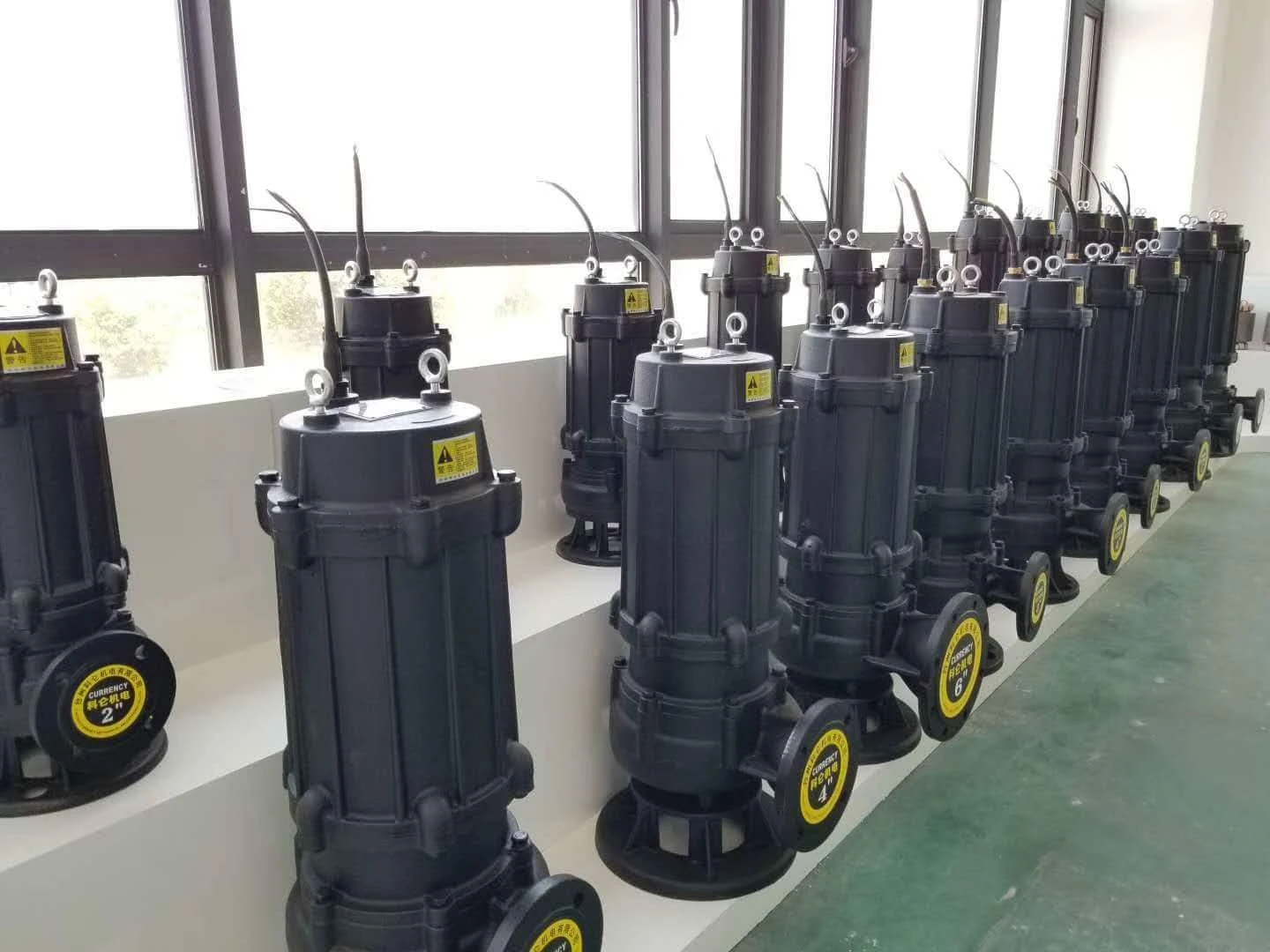
Slurry Pump Liner Manufacturing Specification and Performance Analysis
A slurry pump liner serves as the primary sacrificial barrier within the pump volute and casing, designed to protect the structural integrity of the pump housing from the highly abrasive and corrosive nature of mineral slurries. In the industrial chain, the liner occupies a critical position between the impeller discharge and the piping system, absorbing the kinetic energy of suspended solids. The core performance of a liner is defined by its ability to resist erosive wear—the combined effect of mechanical abrasion and chemical corrosion—while maintaining a precise hydraulic profile to prevent turbulence and energy loss. High-performance liners are engineered to withstand extreme volumetric concentrations of solids, ensuring the operational longevity of the pump in mining, dredging, and chemical processing environments.
Material Science & Manufacturing
The efficacy of a slurry pump liner is fundamentally dependent on its metallurgical composition and the precision of its manufacturing process. Industry-standard materials are categorized primarily by their hardness-to-toughness ratio. High-Chromium (Hi-Cr) white irons (typically 25% to 28% Cr) are employed for severe abrasion, where the formation of M7C3 carbides provides a hard matrix that resists micro-ploughing. Alternatively, Natural Rubber liners are utilized for fine-particle slurries where impact absorption is more critical than surface hardness, leveraging the polymer's elasticity to "bounce back" particles rather than be eroded by them.
The manufacturing process involves rigorous parameter control. For metallic liners, centrifugal casting is the preferred method; this process ensures that the heavier carbides migrate toward the outer diameter (the wearing surface), creating a functionally graded material with a hard exterior and a tougher, more ductile core. Thermal treatment, specifically quenching and tempering, is applied to optimize the martensitic structure of the matrix, reducing internal stresses and preventing brittle fracture. For rubber liners, the process involves precision molding and vulcanization, where the cross-linking density of the sulfur bonds is strictly controlled to ensure the material does not degrade under the chemical influence of the slurry or the thermal heat generated by friction.
Performance & Engineering
From an engineering perspective, the performance of a slurry pump liner is analyzed through fluid dynamics and force distribution. The primary challenge is "localized wear," where high-velocity eddies create vortices that accelerate material removal at specific points of the volute. Engineers implement Computational Fluid Dynamics (CFD) to optimize the liner's internal geometry, ensuring a laminar flow that minimizes the angle of attack of the particles against the liner wall. A lower angle of impact generally reduces the erosion rate in ductile materials but may increase it in brittle materials, requiring a precise match between material selection and flow characteristics.
Environmental resistance is another critical engineering dimension. In acidic or alkaline slurry applications, the liner must exhibit high chemical compatibility to prevent "corrosion-enhanced erosion." In such cases, the passive chromium oxide layer in Hi-Cr alloys is essential. Engineering compliance also requires the liner to maintain tight tolerances to prevent "leak-by," where slurry bypasses the liner and attacks the pump casing. This is achieved through precision machining of the mating surfaces and the use of high-compression gaskets or bonding agents for rubberized systems.
Technical Specifications
| Material Grade | Hardness (HRC/Shore A) | Abrasion Resistance Index | Operating Temp Range | Max Particle Size | Corrosion Resistance |
|---|---|---|---|---|---|
| High-Chrome Iron (A05) | 60 - 65 HRC | Extreme (High) | -20°C to 150°C | Up to 20mm | Moderate (Acidic) |
| Chrome-Moly Alloy | 50 - 55 HRC | High | -40°C to 200°C | Up to 15mm | High |
| Natural Rubber (NR) | 60 - 70 Shore A | Moderate (Impact) | -30°C to 70°C | Up to 5mm | High (Alkaline) |
| Polyurethane (PU) | 85 - 95 Shore A | High (Fine) | -40°C to 80°C | Up to 8mm | Moderate |
| Ceramic Lined (Al2O3) | > 90 HRC | Maximum | -100°C to 400°C | Up to 3mm | Extreme |
| Hardened Steel | 45 - 50 HRC | Moderate | -50°C to 250°C | Up to 25mm | Low |
Failure Mode & Maintenance
The failure of slurry pump liners typically manifests in four primary modes. First is "Cavitation Erosion," characterized by pitting on the liner surface caused by the collapse of vapor bubbles in low-pressure zones, which creates micro-jets that blast away the material. Second is "Abrasive Thinning," a uniform loss of wall thickness that eventually leads to casing breakthrough. Third is "Delamination," common in rubber or coated liners, where the bonding agent fails due to thermal cycling or chemical infiltration, causing the liner to peel away. Fourth is "Brittle Fracture," often seen in Hi-Cr liners during cold-startups or severe hydraulic shocks, resulting in catastrophic cracking.
Professional maintenance requires a systematic approach. Ultrasonic Thickness Testing (UTT) should be conducted periodically to map the wear profile without dismantling the pump. When a liner reaches 20% of its original thickness, replacement is mandatory to avoid casing damage. During installation, liners must be checked for "flushness" to ensure no steps exist in the flow path, as any protrusion will create localized turbulence and accelerate wear. For rubber liners, surface preparation using grit-blasting and chemical primers is essential to ensure a void-free bond between the liner and the housing.
Industry FAQ
Q: How do I choose between a High-Chrome liner and a Rubber liner for my specific application?
A: The selection depends on the particle size and the nature of the wear. High-Chrome liners are superior for coarse, sharp particles and high-pressure environments where surface hardness is the primary defense. Rubber liners are far more effective for fine-particle slurries and high-impact applications, as they absorb the kinetic energy of the particles rather than resisting it through hardness.
Q: Why am I experiencing premature failure in the volute tongue area of the liner?
A: The volute tongue is a high-velocity zone where fluid direction changes abruptly. Failure here is usually due to "impingement erosion." This can be mitigated by installing a reinforced wear plate or upgrading the material in that specific zone to a higher chromium grade or a ceramic insert to withstand the increased shear stress.
Q: Can polyurethane liners replace natural rubber in all slurry applications?
A: No. While polyurethane offers higher abrasion resistance to fine particles and better tensile strength, it has lower thermal stability and can be susceptible to hydrolysis in certain chemical environments. Natural rubber remains the standard for high-temperature elasticity and specific alkaline chemical resistances.
Q: What is the impact of "dry running" on the lifespan of a slurry pump liner?
A: Dry running is catastrophic for rubber liners as the friction generates heat that exceeds the vulcanization temperature, leading to rapid thermal degradation and melting. For metallic liners, dry running causes overheating and potential thermal shock, which can induce stress cracks in the brittle martensitic structure.
Q: How does the slurry concentration (percentage of solids) affect the wear rate?
A: Wear rate does not increase linearly with concentration. At low concentrations, wear increases as more particles strike the surface. However, at very high concentrations, a "buffer effect" occurs where particles collide with each other rather than the liner wall, potentially reducing the wear rate per unit of material transported.
Conclusion
The selection and maintenance of a slurry pump liner are not merely procurement decisions but critical engineering requirements that dictate the Total Cost of Ownership (TCO) of a pumping system. By aligning metallurgical properties—such as the carbide distribution in Hi-Cr alloys or the cross-linking density in elastomers—with the specific hydraulic conditions of the slurry, operators can significantly extend the Mean Time Between Failures (MTBF) and protect the structural integrity of the primary pump assets.
Looking forward, the industry is shifting toward hybrid material composites and "smart liners" embedded with wear sensors to enable predictive maintenance. It is recommended that industrial facilities move away from scheduled replacements toward condition-based monitoring using ultrasonic diagnostics, ensuring that liners are replaced exactly when their protective capacity is exhausted, thereby optimizing operational uptime and reducing material waste.
-
Comprehensive Guide to Waterproof ORings for Optimal Sealing Solutions
News2026-06-09
-
heavy duty submersible pump Performance Analysis
News2026-06-25
-
best submersible pump for septic tank Performance Analysis
News2026-06-25
-
basement sewer ejector pump Performance Analysis
News2026-06-25
-
basement pumps ejector pumps Performance Analysis
News2026-06-25
-
basement lift pump Performance and Engineering
News2026-06-25
-
basement bathroom pump systems Performance Analysis
News2026-06-24
-
basement bathroom ejector pump system Performance Engineering
News2026-06-24
-
2 hp sewage pump Performance Engineering
News2026-06-24
-
1 hp septic pump Performance Engineering
News2026-06-24
-
submersible effluent pump Performance Analysis
News2026-06-24
-
submergable pump Material Science
News2026-06-23
-
sewer injection pump Performance Engineering
News2026-06-23
-
Sewer Ejector Pump System Performance Analysis
News2026-06-23
-
septic tank pump for sale Performance Engineering
News2026-06-23




